

You've requested three car-shipping quotes for a move across the country, and the prices look close enough to compare. Then one broker asks for money before naming a carrier, another promises a “guaranteed” rate but adds a processing fee, and the third says you'll pay part at booking and the rest when the vehicle arrives. Those offers aren't financially equivalent.
Upfront charges describe when money leaves your hands, not whether the charge is legitimate. In auto transport, timing matters because a quote-stage fee, a post-assignment deposit, and a balance due at delivery expose you to very different risks. The same distinction applies whether you're moving a sedan between major cities in the 48 contiguous states, sending a vehicle to San Juan, relocating for military orders, helping a student move, or arranging dealership and business transport.
Table of Contents
- What Upfront Charges Really Mean in Car Shipping
- The Three Stages Where Money Changes Hands
- Booking Deposits Versus Red-Flag Fees
- How Upfront Charges Work in Real Bookings
- Smart Questions to Ask Before You Pay
- What Transparent Flat-Rate Pricing Should Include
- When Paying Upfront Actually Protects You
What Upfront Charges Really Mean in Car Shipping
Timing is the first question
In plain English, an upfront charge is any amount a broker or carrier collects before the truck arrives with your vehicle. That can include a booking payment, a dispatch deposit, an administrative fee, or a full prepayment. The label alone tells you very little.
A dispatcher sees this confusion every day. A customer may hear “deposit,” “reservation fee,” and “broker fee” used as if they mean the same thing. They don't. A fee requested before a carrier is assigned gives you little evidence that transportation has been secured. A deposit collected after a specific carrier accepts the order can represent a genuine booking step. A balance paid at pickup or delivery is tied to a later service milestone.
That's why I judge every payment by three tests:
- What value has been delivered?
- Who is legally and operationally responsible for the vehicle?
- What happens to the money if the shipment is canceled, delayed, or never assigned?
The Federal Motor Carrier Safety Administration says both interstate brokers and carriers must be registered, and it tells consumers to verify registration before arranging automobile transport. The broker arranges transportation, while the carrier physically moves the vehicle, so the party taking payment may not be the truck operator. Check the company and assigned carrier through the FMCSA consumer advisory on automobile transporters.
Dispatcher's rule: A charge becomes easier to defend when the seller can identify the service it buys, the party responsible for delivering that service, and the refund condition in writing.
A clean quote should also make the pricing structure readable before you pay. Use this car shipping cost guide to compare the route, vehicle type, transport method, and payment milestones rather than comparing only the largest number on the page.
The working definition is simple: an upfront charge is a payment collected before delivery, and its legitimacy depends on timing, documentation, value, and refundability.
The Three Stages Where Money Changes Hands
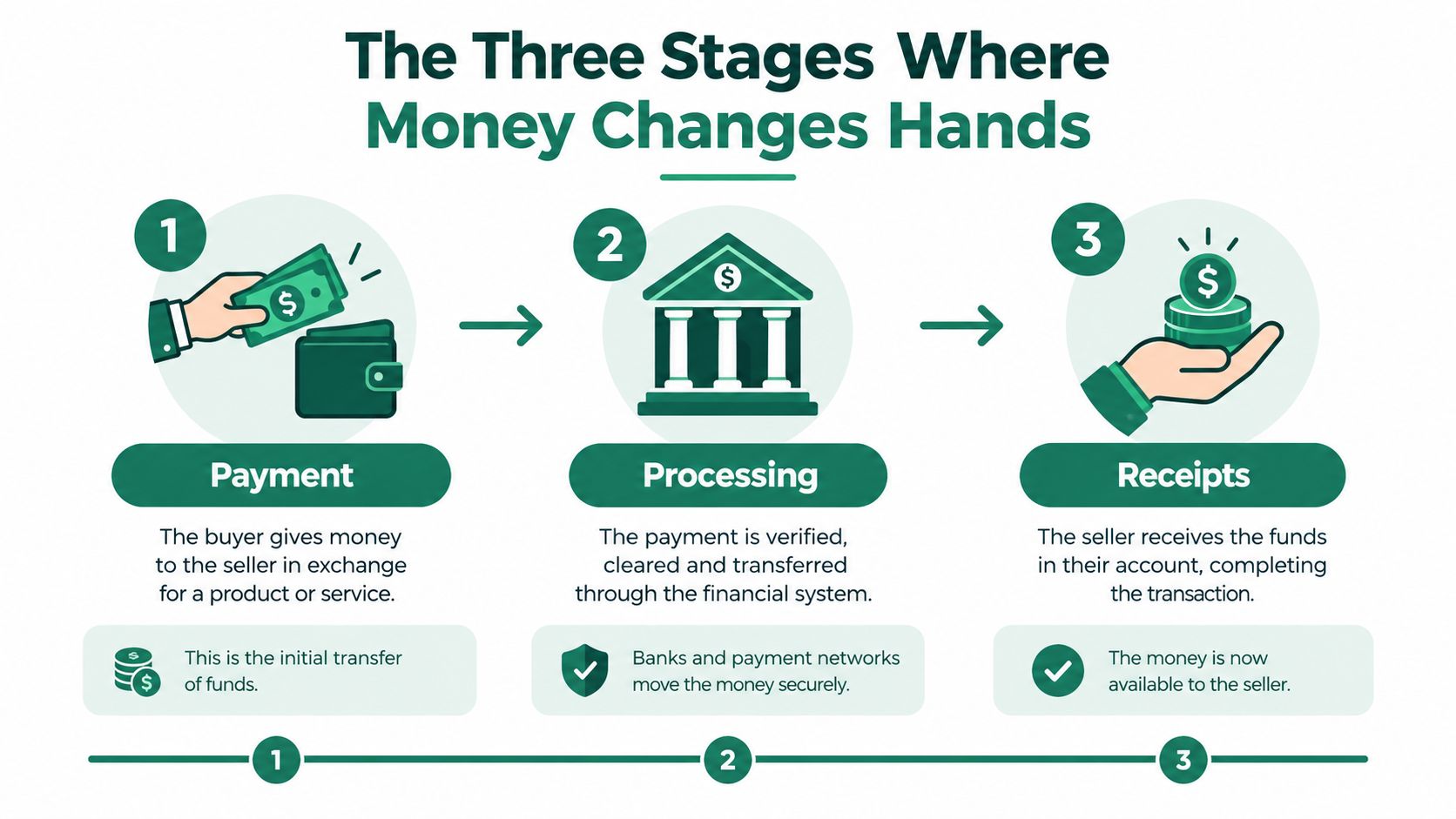
Quote stage
At the quote stage, no truck may be committed. Be cautious with administrative, processing, reservation, or “ logistics” fees requested before the company identifies a carrier. These charges often transfer the broker's risk to you without proving that a driver has accepted the shipment.
A legitimate quote should show the route, vehicle, transport method, total price, payment schedule, and conditions that could change the amount. Ask whether the number is binding, what it includes, and whether the company can collect anything beyond the written terms.
Dispatch stage
After a carrier accepts the order, a booking deposit can make sense. It should be tied to a named carrier, recorded in the order, and credited against the final balance. The written confirmation should identify the carrier's MC and DOT numbers, pickup window, vehicle details, and the exact deposit and refund terms.
The federal household-goods estimate rules provide a useful principle for transport pricing. A shipper should receive a written estimate, and the estimate should distinguish the base transportation price from contingent accessorial charges, as shown in the federal motor-carrier estimate requirements. Auto transport quotes should follow the same practical discipline, even when the shipment isn't household goods.
Delivery stage
At delivery, the remaining balance may be collected from the customer or the driver under the written order. The driver should complete a Bill of Lading, documenting the vehicle's condition at pickup and delivery. That document is your record of the shipment, including visible damage notes and delivery acknowledgment.
| Payment moment | Legitimate evidence |
|---|---|
| Quote | Itemized written estimate |
| Dispatch | Carrier assignment with MC and DOT details |
| Delivery | Bill of Lading and final payment receipt |
A payment schedule is not automatically suspicious. The problem starts when the company takes money without connecting it to a verifiable transportation milestone.
Booking Deposits Versus Red-Flag Fees
A legitimate booking deposit and a red-flag fee can look similar in a text message. One may say “pay to reserve your spot,” while the other says “pay to reserve your spot.” The difference is the evidence behind the request.
A clean deposit follows the shipment. The carrier has accepted the order, the amount appears in writing, and the payment is applied to the final balance. If the assigned carrier cancels, the company can explain whether the deposit transfers to another carrier or returns to you, and under what timeline.
A red-flag fee arrives before meaningful service. The broker may demand a large amount before matching a carrier, pressure you to pay immediately, or describe the amount with vague terms such as “reservation” or “logistics.” The company may also call the fee nonrefundable without explaining what event makes it nonrefundable.
| Trait | Legitimate Booking Deposit | Red-Flag Upfront Fee |
|---|---|---|
| Carrier status | Assigned carrier identified | No carrier matched |
| Documentation | Written amount and terms | Verbal promise or vague invoice |
| Application | Credited to final balance | Separate charge with unclear purpose |
| Refund | Conditions stated clearly | “Nonrefundable” without a trigger |
| Payment method | Traceable card or documented method | Wire, gift card, or pressure to use instant transfer |
| Accountability | Company and carrier contacts provided | No dispatcher name or evasive answers |
Ask for the assigned carrier's MC and DOT numbers, the deposit amount in writing, and the exact refund conditions. The FMCSA advisory cited earlier explains why broker and carrier verification matters. You need to know whether you're speaking with the party arranging the shipment or the party operating the truck.
Walk away when a company adds undisclosed fees after a verbal quote, demands a wire transfer or gift card, refuses to identify the assigned carrier, or requires an excessive deposit without a clear reason and written protection. A low headline price doesn't excuse a weak payment structure.
A deposit should secure a shipment, not purchase the broker's promise to start looking for one.
How Upfront Charges Work in Real Bookings
A customer shipping a 2021 sedan from Miami to San Juan receives a written order that names the transportation provider and identifies the assigned carrier's MC and DOT numbers. The customer pays a small, refundable dispatch deposit by credit card after the carrier is assigned. The order states that the deposit will be deducted from the final amount, and the remaining balance is settled at drop-off with cash or certified funds.
The customer also knows what document closes the transaction. The driver completes the Bill of Lading, records the vehicle's condition, and confirms delivery. For Puerto Rico shipments, the customer should also confirm whether the destination triggers an export process. A useful reference for the broader paperwork and routing questions is this Vektracer import process overview, although Puerto Rico-specific requirements must be confirmed with the transportation provider handling the route.
Now compare that with a second booking. The customer sees the same Miami to San Juan lane advertised at a suspiciously low price, sends a large deposit through Zelle or a wire, and receives no carrier assignment. The broker keeps saying a truck is being sourced, then stops answering. The customer spends weeks trying to recover money without a carrier name, dispatch confirmation, or clear cancellation clause.
The second situation could have been stopped at several points:
- No carrier assignment before payment.
- No MC or DOT number tied to the order.
- A large deposit that wasn't clearly applied to the final balance.
- Wire or Zelle payment with limited practical recovery options.
- No written refund deadline or named person responsible for the account.
For mainland routes, the carrier may be paid later under broker-carrier settlement terms, so a customer's initial payment doesn't necessarily mean the driver has already been paid. Published industry agreements show that brokers and carriers can operate under separate invoice and payment terms, which is another reason to ask who holds your money and what event releases it.
A sound booking leaves a paper trail before the vehicle moves. A risky one asks you to trust urgency instead of documentation.
Smart Questions to Ask Before You Pay
Don't swipe a card until the company answers these questions in writing. The answers reveal whether the price is real, whether the carrier exists, and whether you have a workable remedy if the shipment changes.
At the quote stage
- Is this a binding estimate or a market-based quote? A company should explain whether the price can change and which events permit a revision.
- What does the total include? Ask whether fuel, tolls, route charges, terminal handling, and the selected transport method are already included.
- Which fees could appear later? Get every mandatory charge listed before payment. A low quote that excludes known costs isn't a useful quote.
- Who is collecting the money? Confirm whether the company is a broker, a carrier, or both, and ask for the legal business identity.
The aim isn't to force every shipment into an identical price. It's to make sure you're comparing the same service.
At dispatch
- Which carrier accepted the order? You should receive the carrier name and contact details.
- What are the carrier's MC and DOT numbers? Use them to verify the operating party through FMCSA.
- What does the deposit cover? It should relate to booking, dispatch, or another defined service, not an unexplained administrative label.
- Is it refundable or transferable? Ask what happens if the carrier cancels, misses the pickup window, or cannot serve the route.
- Who handles a problem after assignment? Get a dispatcher or advisor's name and a direct contact method.
If you're also arranging insurance for a newly purchased or relocated vehicle, keep transport coverage separate from your auto policy review. A practical guide to finding better auto insurance rates can help you compare the insurance side without confusing it with the carrier's cargo coverage.
At delivery
- What payment methods does the driver accept? Confirm whether the balance is due at pickup, delivery, or another milestone.
- What triggers extra fees? Ask about inaccessible addresses, storage, re-delivery, changes in destination, and vehicle condition issues.
- Who pays for re-dispatch if the truck doesn't show? The order should state whether a failed pickup creates a new charge.
- What document confirms delivery? Expect a Bill of Lading and a final receipt.

Keep the quote, order, payment receipt, carrier assignment, messages, and delivery paperwork together. If a dispute arises, a complete timeline is more useful than a vague memory of what a salesperson said.
What Transparent Flat-Rate Pricing Should Include
A transparent flat-rate quote isn't a magic promise that nothing can ever change. It's a clear price for a defined service, with the exceptions identified before booking.
For a domestic shipment, the quote should identify the base transport price for the lane and vehicle type. It should also state whether fuel is folded into that amount or listed as a separate surcharge. If the route uses a bridge or tunnel with a special toll, the quote should identify it. Seasonal or route-specific surcharges belong on the page too, not in a surprise invoice after the vehicle is loaded.
For Puerto Rico, the quote needs even more detail because island transportation can involve port, container, sailing, and inland delivery arrangements. A vehicle moving from the mainland to San Juan isn't priced exactly like a vehicle traveling between mainland cities. A reputable provider should explain the ocean segment, the port handoff, the destination delivery, and the payment milestone for each part.
| Line item | Transparent quote | Red-flag quote |
|---|---|---|
| Base transport | Lane and vehicle type identified | “Starting at” price with no defined service |
| Fuel | Included or separately labeled | Added after booking without notice |
| Tolls | Named when applicable | Hidden inside an unexplained adjustment |
| Seasonal or route surcharge | Clearly described | Introduced at pickup |
| Broker service | Disclosed in the total | Buried behind an artificially low headline |
| Insurance or gap coverage | Explained in writing | Mandatory-sounding add-on with no details |
The worst quote is often not the highest one. It's the low quote that becomes expensive after a carrier is assigned and the customer has already made plans around the delivery date. Compare the real total, not the first number shown.
A door-to-door order should also state whether “door-to-door” means the truck can reach the requested address or whether a nearby safe meeting point may be required. Review the service definition in door-to-door auto transport before comparing providers.
One useful contract principle comes from Victoria, Australia, where an upfront price is the amount disclosed at or before contract formation, while consideration triggered by later events is treated separately in consumer-contract guidance. That distinction supports a practical rule here: itemize deposits, service fees, and event-based surcharges separately instead of letting later charges masquerade as part of the original price.
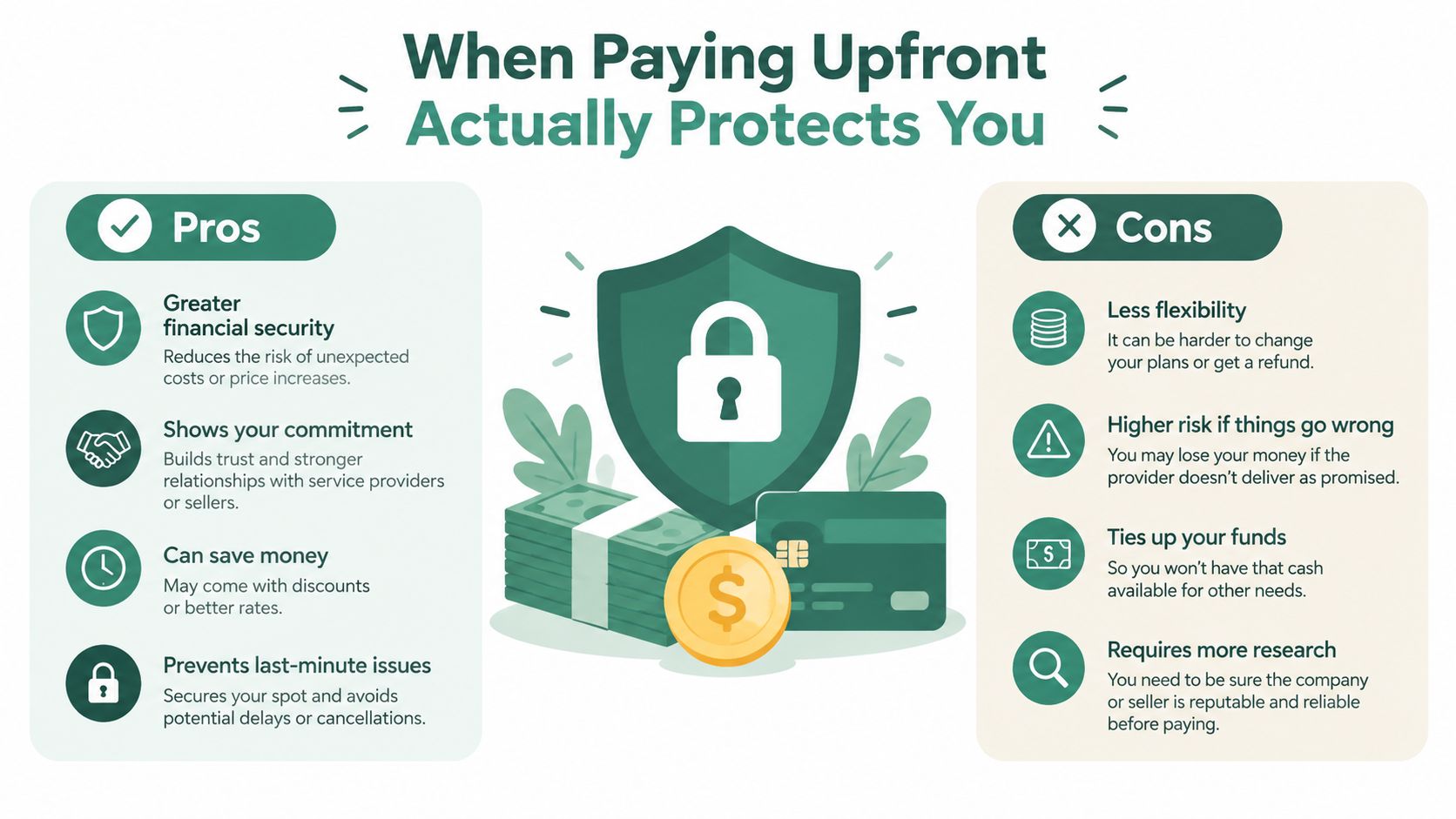
When Paying Upfront Actually Protects You
The blanket rule, “Never pay upfront,” is too simple for auto transport. A small payment can protect your booking when it secures a real carrier commitment, fixes the agreed service, and gives you a documented path to a refund if the carrier fails.
A legitimate deposit can reserve dispatch attention and prevent the company from treating your order as an uncommitted quote. For difficult lanes, island routes, enclosed transport, classic vehicles, and time-sensitive moves, the provider may need a payment commitment before arranging the next operational step. That's especially relevant for Puerto Rico, Hawaii, and Alaska shipments where a sailing spot may need to be secured at booking.
The payment becomes protective only when the conditions are visible:
- Carrier identified: The order names the carrier and provides MC and DOT information.
- Purpose defined: The deposit pays for a stated booking or dispatch obligation.
- Balance explained: The deposit is credited against the final amount.
- Refund path documented: Cancellation, carrier failure, and reassignment terms are specific.
- Payment traceable: A credit card or another documented payment rail creates a usable record.
- Human accountability: A named advisor or dispatcher remains available after payment.
A risky arrangement has the opposite profile. The broker wants a wire-only payment, labels it nonrefundable, refuses to identify a carrier, and gives you no dispatcher name. That isn't a booking commitment. It's an unsecured promise.
The timing also affects refunds. In other consumer markets, regulators have addressed situations where businesses collected estimated payments and delayed overpayment refunds for more than a year. Arizona's settlement with SimonMed required average refunds within 60 days after insurance adjudication, according to this report on the Arizona Attorney General and SimonMed settlement. The lesson applies to shipping: ask when unused money returns, not merely whether a refund is technically available.
Consumer-finance history shows why fee design deserves scrutiny. The CFPB reported that some fee-harvester credit cards charged upfront fees exceeding 25% of the initial credit limit, and the CARD Act limited first-year fees to no more than 25% of the initial credit line, excluding penalty fees, as described in the CFPB CARD Act report. In mortgage lending, the Philadelphia Fed reported that out-of-pocket upfront costs for home-purchase mortgages rose nearly 33% from 2021 to 2023, reaching almost $6,500 by 2023, based on HMDA fee data in its analysis of mortgage fees. Different industries, same warning: money collected early can materially change the cost.
For specialty vehicles, the same discipline applies to classic car shipping. Pay small at booking only when the carrier has earned the right to hold the money through a verified assignment, clear terms, and a practical refund route.
National Car Transport provides transparent payment milestones, domestic and Puerto Rico vehicle shipping, door-to-door coordination, and access to a network of 25,000+ vetted carriers, backed by more than 25 years of experience and an A+ BBB rating. Visit National Car Transport for a clear quote, and ask for guidance from bilingual English and Spanish agents based in the USA, with more than 20 years of auto transport logistics experience, who can help simplify your specific move.