

If you've just landed in San Juan, picked up a rental, and rolled onto PR-26 without a second thought, the first toll lane can feel like a trap. There's no booth, no attendant waving you down, just a clean overhead setup and the uneasy realization that the road is already deciding how you'll pay. That's normal in Puerto Rico, where the toll system is built to keep traffic moving and where the rules make more sense once you see how the pieces fit together.
For mainland drivers, snowbirds, military families, students, and anyone arranging car shipping to the island, the biggest mistake is assuming Puerto Rico works like a standard cash toll road. It doesn't. The island's toll network is mostly electronic, renters get handled differently, and some corridors have their own quirks that catch first-time drivers off guard. If you're moving a vehicle, visiting for a season, or planning business travel, understanding the system ahead of time keeps you from paying extra just because the road looked unfamiliar.
Table of Contents
- Driving in Puerto Rico for the First Time
- How AutoExpreso Works
- The Main Toll Highways and What They Connect
- Toll Rates and Payment Options
- Renters, Snowbirds, and Transported Vehicles
- Enforcement, Fines, and How to Avoid Surprise Bills
- Express Toll Lanes and Rush-Hour Strategy
- Practical Tips and Planning Your Move or Trip
Driving in Puerto Rico for the First Time
The first confusing moment usually happens fast. You land at Luis Muñoz Marín, collect the keys, merge onto PR-26, and before your brain has fully switched from airplane mode to driving mode, you're already approaching a toll lane with no visible booth. A driver who expects to stop and pay in cash can miss the exit or drift into the wrong lane without even meaning to.
That moment sets the tone for toll roads in Puerto Rico. The island's main corridors are tied to AutoExpreso, and the system is designed for smooth movement, not for casual guesswork. The best way to think about it is simple, if you've used E-ZPass or FasTrak on the mainland, you already understand the basic idea. The difference is that Puerto Rico leans even harder into electronic flow, and in some places that means your lane choice matters as much as your route choice.
Practical rule: if you're unsure whether a lane takes cash, assume it doesn't until you see clear signs telling you otherwise.
For a first-time visitor, that means two things. First, don't panic if you don't see a booth. Second, don't treat the toll as an afterthought. The system is built around the idea that the tag, account, and lane all work together, so the easiest drive is the one you prepare for before you leave the rental lot.
If you're shipping a car to the island rather than renting one, the same logic applies even more strongly once the vehicle arrives. You'll want the paperwork, account setup, and toll plan in place before you start relying on the highways. For door-to-door coordination on the mainland side, door-to-door auto transport services can help simplify the handoff before the vehicle reaches Puerto Rico.
How AutoExpreso Works
AutoExpreso is the tag-based payment system that keeps Puerto Rico's toll roads moving. It's a coffee loyalty card that doesn't sit in your wallet; it lives on your windshield and handles the charge every time you pass a reader. When the tag is registered and funded correctly, the toll clears without a stop, and the lane keeps flowing.
The tag, the reader, and the charge
Here's the basic sequence. You mount the transponder on the windshield, the overhead sensor reads it, the plaza records the trip, and the toll gets deducted from the account linked to that tag. There's no barrier dropping down in front of you, so the experience feels closer to passing under a scanner than paying at a booth.
That's why people who already know E-ZPass or FasTrak usually catch on quickly. The hardware is small, but the system behind it is doing several jobs at once, identifying the vehicle, matching it to an account, and settling the toll in the background. Puerto Rico's toll network has long been treated as a major electronic tolling model, with the island handling more than 600 lane miles, close to 200 toll lanes, over 750,000 transactions per day, and annual revenue above $100 million in a federal engineering case summary (FHWA toll-road monetization materials).
What happens without a tag
If there's no valid tag, the system doesn't just shrug and let you go. Cameras capture the plate, the trip gets tied back to the registered owner, and the billing process starts from there. That's why a driver who assumes “I'll sort it out later” often ends up with a much less pleasant surprise later on.
The system rewards preparation, not improvisation.
The useful habit is to treat AutoExpreso like fuel. You don't wait until the tank is empty before thinking about it, because the whole point is to keep the trip moving. Once the tag is active and the account has money in it, the road becomes much easier to read, especially on the corridors where lane-by-lane compatibility matters.
The Main Toll Highways and What They Connect
A first-time driver in Puerto Rico can read the toll map a lot faster once the roads are tied to real trips. The network is not just a list of paid highways. Each corridor serves a different kind of movement, from airport runs in the metro area to longer cross-island drives, and that is what makes the system easier to understand once you know which road goes where.
The backbone corridors
PR-22 is the north-coast spine. Independent toll references place it at about 52.2 miles long, with plazas at Fort Buchanan, Toa Baja, Vega Alta, Manatí, Arecibo, and Hatillo ([PR-22 toll-road listing](https://en.wikipedia.org/wiki/List_of_toll_roads_in_the_United States)). It links the San Juan metro area to Hatillo and Arecibo, so drivers often treat it as the main road for heading west from the capital. It also stands out because parts of the corridor include express toll lanes, so the lane choice matters as much as the route choice. A Federal Highway Administration project profile describes the corridor as part of a concession asset rather than a simple fee collection program (FHWA project profile).
PR-52 is the central north-south connector, running roughly 67 miles and serving the route from San Juan toward Ponce and the island's interior. This is the road many locals use when they want a straight shot between the capital region and the south, especially when time matters more than scenic detours. The 2023 Puerto Rico Public-Private Partnerships Committee report says the main toll network's four large roads, PR-20, PR-52, PR-53, and PR-66, total about 622.25 lane miles and handled nearly 118 million vehicle transactions in the referenced period, with PR-52 alone recording 76.8 million vehicle transactions and $79.4 million in toll revenue in fiscal year 2019 (committee report).
PR-53 serves the southeast coast, PR-66 acts as the eastern metro connector, and PR-20 ties together parts of San Juan. Those roads do different jobs, and that difference matters on the ground. A short connector can save time inside the metro area, while a coastal toll road may make more sense for a longer regional drive. For a visitor, the key is recognizing that a toll road here usually signals access control, faster movement, and a more direct line between major destinations.
Match the road to the trip
- San Juan to Ponce: PR-52 is the main spine.
- San Juan to Arecibo or Hatillo: PR-22 is the route many drivers expect to use.
- Eastern metro movement: PR-66 fits the shorter connector role.
- Southeast coast travel: PR-53 serves that corridor.
- Inner San Juan movement: PR-20 is part of the city network.
The useful habit is not memorizing every road number on day one. It is understanding what each corridor is built to do. Once you see that pattern, the toll system starts to feel less like a surprise fee and more like a set of tools for different kinds of trips.
Toll Rates and Payment Options
A toll can look small at the booth and still add up fast once traffic is heavy. That is the basic math behind Puerto Rico's toll system, and it is why a road like PR-52 can collect so much revenue even when each trip feels inexpensive to the driver. The committee report notes a high daily traffic count on that corridor and $79.4 million in toll revenue for the fiscal year it reviewed, which helps explain why the island relies on these roads to keep traffic moving (committee report). For a first-time driver, that is the key idea, a modest fee repeated many times becomes the funding stream that supports a busy highway network.
How people usually pay
The most straightforward setup is a personal AutoExpreso tag with enough balance loaded on the account. It works the way the system was built to work, so the toll is handled in the background and the driver does not have to stop and think about it.
Rental-car toll programs are common for visitors because they save a lot of hassle at the wheel. The trade-off is that the convenience usually comes with extra fees folded into the rental agreement, so the cost can be higher than it first appears.
Plate-based billing is another option for drivers who do not have a tag. It can be useful for occasional use, but it shifts the trip's paperwork to the back office, which is where confusion often starts.
One-time passes, where they are offered, can help in limited situations. They are better treated as a short-term backup than as the normal way to use the roads.
| Payment Method | Best For | Typical Cost | Setup Effort |
|---|---|---|---|
| AutoExpreso tag | Frequent drivers, residents, long stays | Lowest ongoing toll friction | Moderate, you need a tag and funded account |
| Rental-car toll program | Tourists, short visits | Usually higher because of added fees | Low, the rental company handles it |
| Plate-based billing | One-off users | Varies by invoice and admin handling | Low at the moment, higher later |
| One-time pass | Occasional, limited-use drivers | Usually situational | Low to moderate |
A plain example
If you drive round trip between San Juan and Ponce on PR-52, you may pass more than one toll point, so the payment method matters as much as the route. With a tag, the process is automatic and quiet, like a pass getting stamped without you having to pause for it. With a rental program, the day of travel is simpler, but the rental company's extra charges can make the trip cost more later. With plate billing, the toll still gets collected, only the bill shows up after the drive, which is exactly the kind of surprise many travelers want to avoid.
That same logic matters for people bringing a car to the island. Once the vehicle is delivered in Puerto Rico, the owner is the one who has to make sure the toll setup is in place, even if the transport part was handled elsewhere. If you are comparing services while sorting out that move, car shipping to Puerto Rico is one of the options people usually look at first.
The practical takeaway is simple. For regular driving, AutoExpreso is usually the least stressful choice. For a short visit, the rental-company option is easier, but it pays to read the terms before you leave the lot.
Renters, Snowbirds, and Transported Vehicles
A rental agreement in Puerto Rico can feel simple until a toll plaza gets involved. The car may be easy to pick up, but the toll responsibility often sits in the fine print, and that is where renters, seasonal residents, and people shipping a vehicle into the island tend to get tripped up.
A rental car story that happens all the time
A visitor lands, signs the rental contract, and skips the toll add-on because it looks like an extra charge they may not need. A few days later, the same driver passes through a cashless plaza, the plate is recorded, and the rental company starts its billing process. The toll itself may be small, but the added admin fee can be the part that surprises people.
Rental companies use that program because it keeps the tolls moving without putting the renter in charge of every separate charge. For a short trip, that can feel like paying a little more for less worry. For a longer stay, it helps to ask exactly how the company handles tolls before the keys leave your hand, because the rules can vary from one contract to another.
Snowbirds usually have a different problem. They are not trying to learn a new system every day, they are trying to make sure a car that comes and goes with the season is ready when they are. A personal AutoExpreso tag often makes more sense for them than relying on a rental-style setup, since it keeps the tolls tied to their own vehicle instead of to a temporary agreement.
For drivers moving a vehicle to the island, the timing matters. A mainland carrier handles the transport part, but once the car is delivered in Puerto Rico, the owner is the one who has to make sure the toll setup is ready for local roads. If you are comparing services while sorting out that move, car shipping to Puerto Rico is one of the first options people usually review.
Who should do what
- Renters: read the toll clause before leaving the lot, and choose the rental company's toll program if you expect to use express highways.
- Snowbirds: set up a personal AutoExpreso tag before you start driving regular routes, so the account is ready for repeat trips.
- Shipped vehicles: confirm that the vehicle's toll setup is handled after delivery, not just during transport, because the road system does not care who moved the car.
| Situation | Best fit | What usually matters most | What to check first |
|---|---|---|---|
| Rental car with tolls expected | Rental company toll program | Convenience and how the company bills extra charges | Daily fees, admin charges, and whether the agreement covers every toll road you plan to use |
| Seasonal resident using the same car often | Personal AutoExpreso tag | Keeping the tolls tied to one vehicle over time | Account setup, tag placement, and balance management before long drives |
| Vehicle arriving after shipping | Owner-managed local toll setup | Making sure the car is ready once it reaches the island | Delivery timing, registration details, and whether the plate is already linked correctly |
| Rare, one-off driving | Situational use only | Avoiding unnecessary setup for a short stay | Whether your route will actually pass through toll plazas |
The cleanest rule is simple. If you will be using toll roads more than once, set up the option that fits your situation before you start driving, because improvising at the plaza usually costs more than planning at home.
Enforcement, Fines, and How to Avoid Surprise Bills
The enforcement side of a cashless system feels harsh only when you don't know the rules. Once you understand the process, it's mostly predictable. The cameras see the vehicle, the account gets checked, and if there's no valid tag or payment path, the owner is the one who hears about it later.
What happens after a missed toll
The system photographs every vehicle that passes without proper payment. The registered owner is mailed an invoice or violation notice, and late payment can trigger escalating fees. That's why a short vacation mistake can turn into a long administrative headache if it sits too long.
A driver who wants to check whether anything is outstanding should use the AutoExpreso website or account tools directly. If a charge looks wrong, the smart move is to document the date, route, and rental paperwork, then file a dispute as soon as possible. If you only passed through once and forgot about the tag or payment setup, it's still better to act quickly than to wait for the bill to mature into a bigger problem.
Before you return the rental: check the toll agreement, verify the car was enrolled correctly, and save your final receipt.
That one habit catches more mistakes than you might expect. It also helps if you're flying home and won't be around to answer follow-up notices.
The important thing is not to treat enforcement as a mystery. Puerto Rico's toll system is built to be machine-readable and account-driven, so if something was missed, there's usually a clear paper trail. The earlier you look, the easier it is to fix.
Express Toll Lanes and Rush-Hour Strategy
A late-morning drive on PR-22 can feel straightforward until the traffic pattern changes near San Juan. Puerto Rico has one toll-road feature that many first-time drivers do not expect, an express toll lane corridor on a toll road. Independent coverage describes a 7.7-mile reversible dynamic toll lane corridor on PR-22 in San Juan, which makes the island unusual because the road is not only collecting tolls, it is also pricing time (Reason Foundation coverage).
When the premium is worth it
Dynamic toll lanes work by changing price as congestion changes. As traffic builds, the rate rises. As traffic clears, the rate falls. The goal is to move drivers who care more about a quicker, steadier trip into a lane that is less likely to bog down during peak periods.
The question for a driver is simple, whether the time saved is worth the cost. In the cited coverage, users in the dynamic toll lanes saved an average of seven minutes compared with regular toll lanes, while the dynamic lane price was at or above $2.70 about 50% of the time in the system data discussed there (Reason Foundation coverage). That is the kind of tradeoff you treat as a timing decision, not as an impulse purchase.
A simple decision rule
- Use the express lane if you are late for a flight, an appointment, or a time-sensitive handoff.
- Stay in the general lanes if your schedule can absorb a few extra minutes.
- Watch the variable signs before you commit, because dynamic pricing can shift with congestion.
- Keep AutoExpreso active, because the express lanes require it.
Practical rule: pay for the lane when time matters more than toll cost, not when you are curious about the experience.
For a first-time driver, that is the easiest way to read Puerto Rico's express toll setup. It works best as a planning tool for people who want a more predictable trip and are willing to pay for that predictability.
Practical Tips and Planning Your Move or Trip
A few habits make the whole system less stressful. Keep a small AutoExpreso balance ready before long drives, watch for AutoExpreso Only signs, and don't assume every road choice is the fastest route if your timing is flexible. When you have room in your schedule, free alternatives like PR-1 and PR-3 can reduce toll use, even if they take longer.
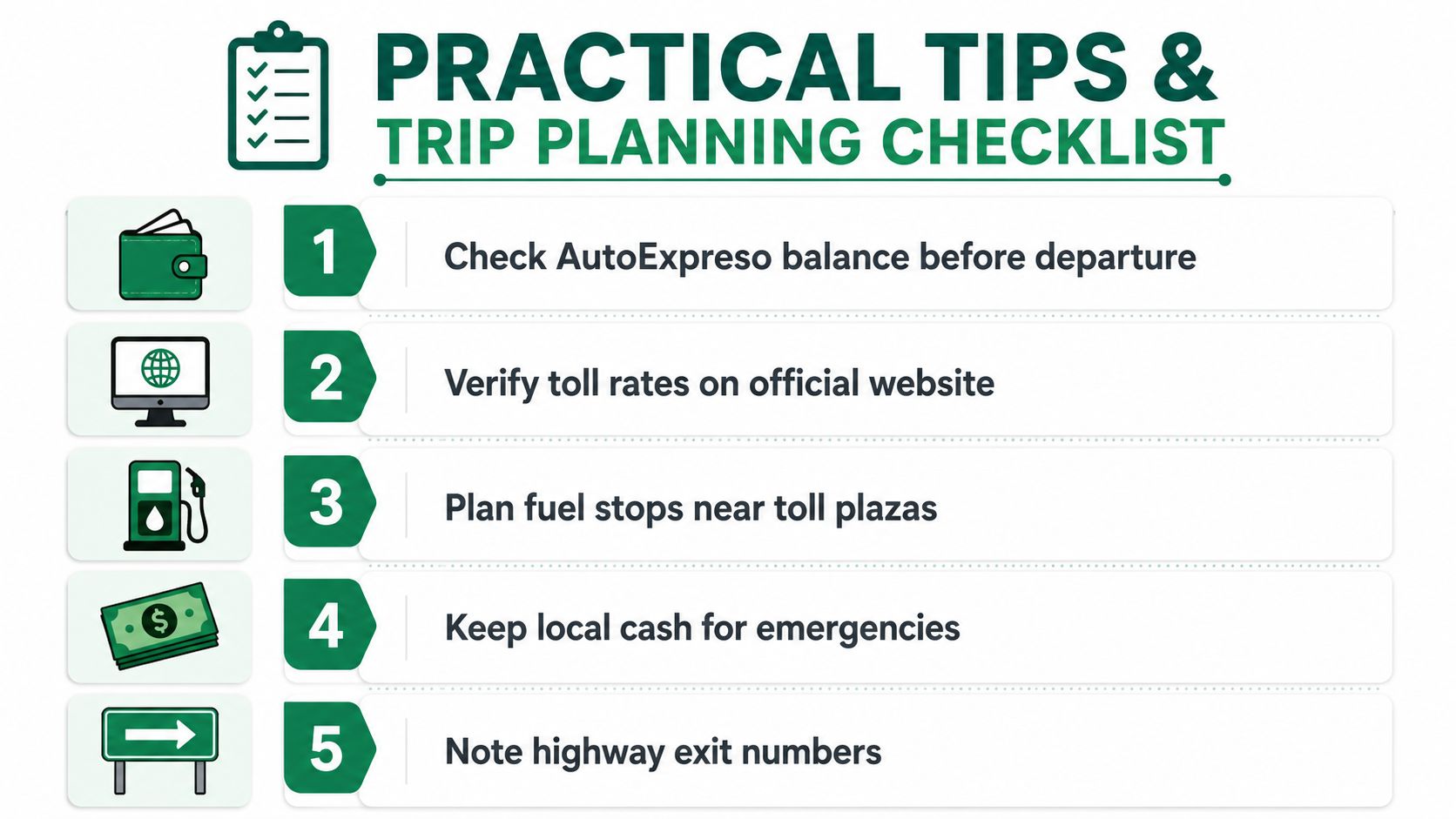
A short planning checklist
- Check the tag balance before departure so you're not searching for a reload point after the fact.
- Confirm the route in advance because toll plazas are spaced along the corridor, not always grouped at one end.
- Keep local cash as a backup for older plaza setups where it's still accepted.
- Note the exit numbers so you don't depend on memory in unfamiliar traffic.
- Watch the signage early because lane choice often matters before the plaza itself comes into view.
If you're also arranging the vehicle move itself, it helps to plan the shipping and the toll setup together rather than separately. For pricing comparisons on that side of the trip, car shipping cost information is useful when you're budgeting the move before the car ever reaches Puerto Rico.
The easiest Puerto Rico driving experience comes from two decisions made early: pick the right road and make sure your toll setup matches the way you'll use it.
If you're shipping a car to or from Puerto Rico and want the paperwork, timing, and delivery details handled without guesswork, National Car Transport can help coordinate the move from the mainland to San Juan or the other way around. Visit National Car Transport to compare options, talk with a bilingual agent, and get a clear plan for your vehicle before the next trip or relocation.