

You've signed the lease, accepted the new job, or received relocation orders. The household move is already complicated, and then one question creates a second project: what happens to the car? Driving it may add fatigue, mileage, and scheduling problems. Shipping it may be the cleaner choice, but only if you understand the carrier type, pickup window, paperwork, and destination rules before moving day.
State to state moving isn't just a longer local move. It can involve household transportation, vehicle shipping, title and registration changes, insurance updates, inspections, storage, and coordination with schools, employers, landlords, military reporting dates, or a Puerto Rico sailing. The vehicle needs to be planned as carefully as the furniture, not added at the last minute.
Table of Contents
- What a State to State Move Really Involves in 2026
- Building a Realistic Budget for an Interstate Move
- Choosing Between Full-Service Movers, Containers, and DIY
- Shipping Your Vehicle Across State Lines or to Puerto Rico
- Registration, Titles, Insurance, and Inspections by State
- Adapting the Move for Military, Snowbirds, Students, and Dealerships
- Day-of-Move Checklist and Common Questions
What a State to State Move Really Involves in 2026
A relocation from Los Angeles to New York, Dallas to Atlanta, Chicago to Miami, or Seattle to Phoenix creates several connected timelines. Your lease end, closing date, school start, work reporting date, household pickup, vehicle pickup, and delivery all need room for real-world changes. If the car arrives after the family, you may need a rental. If the household arrives before the vehicle, you may need to rearrange work and school transportation.
The scale of interstate relocation is substantial. In 2022, about 8.2 million people moved between U.S. states, compared with nearly 7.9 million in 2021, and state-to-state movers represented 19.9% of all movers in 2022, compared with 18.8% the year before, according to the U.S. Census Bureau's state-to-state migration tables. The same Census resource provides historical state-to-state flow tables going back to 2005 and broader mobility estimates reaching back to 1948.
That volume matters for auto transport. Pickup capacity tightens during popular relocation periods, especially when families, students, military personnel, and seasonal residents are all booking around similar dates. You shouldn't wait until the moving truck is loaded to decide how the car will travel.
Start planning when the move becomes likely
Begin by confirming the destination, access conditions, vehicle condition, and the date you need the car. A quote should account for whether the vehicle is operable, whether the pickup address can accommodate a carrier, and whether delivery must occur at a home, office, dealership, military installation, or nearby public meeting point.
Then gather competing quotes and compare what each one includes. A low number can exclude service details that later create trouble, such as terminal handling, residential access limitations, storage, or changes to the pickup window.
For mainland moves across the 48 contiguous states, open transport is the normal choice for everyday cars, SUVs, and trucks. Enclosed transport is more appropriate for collector, luxury, exotic, or especially vulnerable vehicles. Alaska and Hawaii require different logistics, while Puerto Rico involves ocean freight even though vehicle shipments follow a distinct domestic-territory process rather than a standard foreign import workflow. Crowley's Puerto Rico shipping guidance explains that vehicles going to foreign ports, including the U.S. Virgin Islands, require U.S. Customs and Border Protection inspection, which separates those shipments from Puerto Rico vehicle moves.
Keep the timeline visible
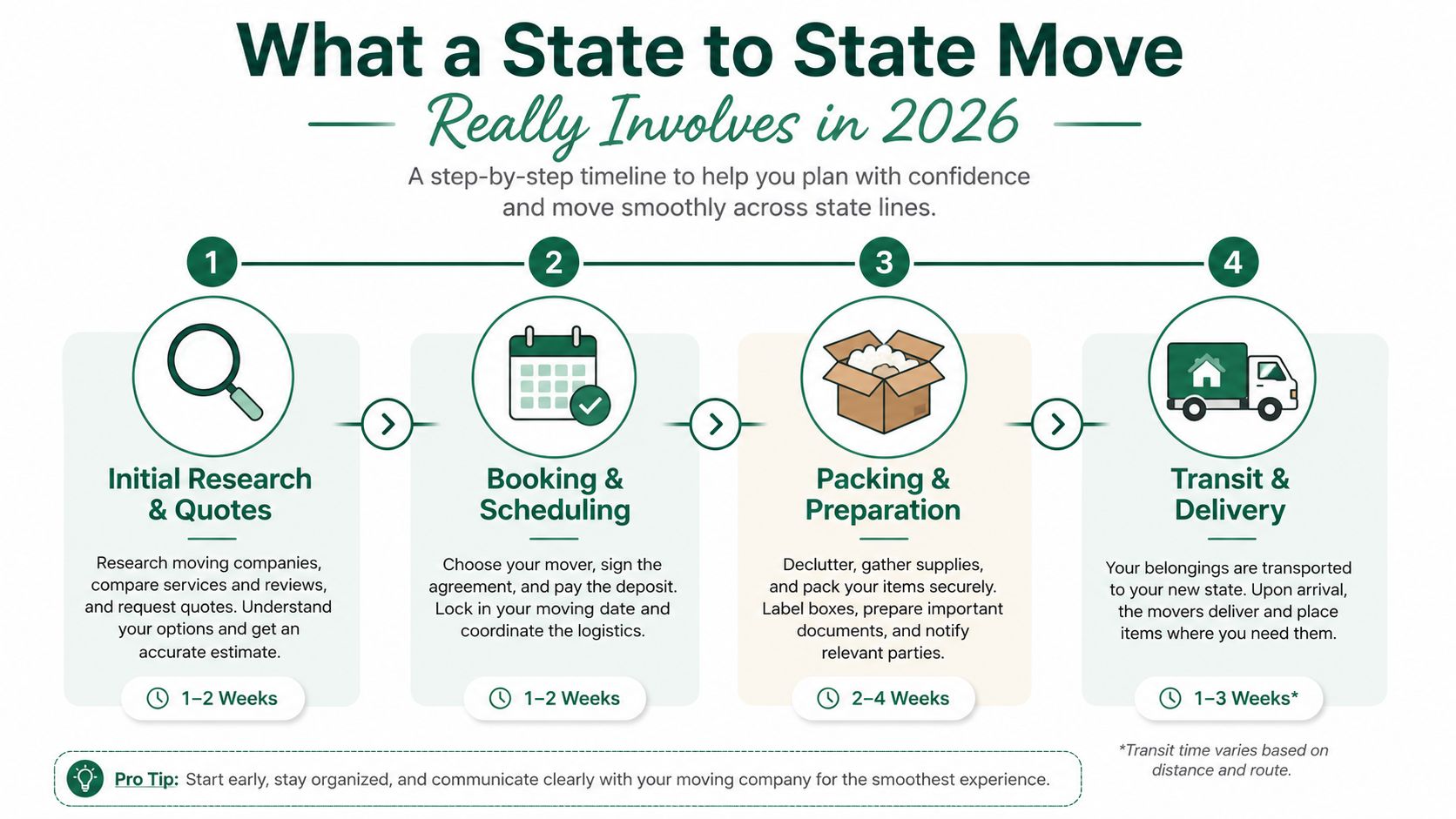
Use this practical sequence:
- Research and quotes: Confirm the route, vehicle type, household plan, and required delivery date.
- Booking and scheduling: Reserve transportation after checking cancellation terms and pickup flexibility.
- Preparation: Remove personal property from the vehicle, document its condition, and gather keys and paperwork.
- Transit and delivery: Stay reachable, inspect the car at delivery, and record any condition differences before signing.
For a Puerto Rico move, the port handoff must align with the mainland pickup and sailing schedule. From the mainland to Puerto Rico, that usually means planning the vehicle's arrival at the port early enough to avoid a missed cutoff. From Puerto Rico to the mainland, Crowley identifies Jacksonville, Florida, and Eddystone, Pennsylvania, as principal U.S. ports, with paperwork requirements that include the original registration, an original title free of liens, and a Puerto Rican attorney affidavit with specified stamp requirements.
Building a Realistic Budget for an Interstate Move
The reliable way to budget a state to state move is to separate the bill into categories instead of trusting one advertised average. Household charges may change with shipment size, distance, packing labor, stairs, storage, access, season, and fuel policies. Your vehicle adds a separate transportation decision, and that cost can be affected by route, vehicle size, carrier type, operability, timing, and delivery conditions.
Ask every provider to explain these items in writing:
- Transportation: The base charge for moving the household or vehicle.
- Labor and packing: Packing supplies, professional packing, loading, unloading, and specialty handling.
- Access: Narrow streets, steep driveways, apartment rules, elevators, or a truck that can't reach the address.
- Storage: Warehouse handling and additional delivery coordination if the destination isn't ready.
- Protection: Basic carrier coverage versus optional valuation or insurance arrangements.
- Timing: Flexible pickup generally gives a coordinator more options than a fixed, narrow appointment.
For vehicle planning, compare a true flat-rate quote with a quote that can change after booking. Ask whether the price includes door-to-door service, whether the carrier is open or enclosed, how the pickup window works, and what happens if the address is inaccessible. National Car Transport's car shipping cost guide is useful for reviewing the factors that shape an auto transport quote before you speak with an agent.
Budget rule: A suspiciously low quote deserves questions, not immediate acceptance. Find out what service has been removed from the number.
Build your schedule around checkpoints rather than a generic calendar. Early research should cover the move date, household provider, vehicle provider, storage needs, and destination access. Booking should happen once the route and delivery priorities are clear. Preparation should finish before the carrier arrives, not while the driver is waiting. Keep a reserve for lodging, local transportation, temporary storage, and changes to the closing or lease date.
One coordinator can also reduce confusion when household and vehicle vendors are separate. That doesn't guarantee a lower total, but it gives you one person tracking the relationship between the truck, the car, your arrival, and any temporary gap.
Choosing Between Full-Service Movers, Containers, and DIY
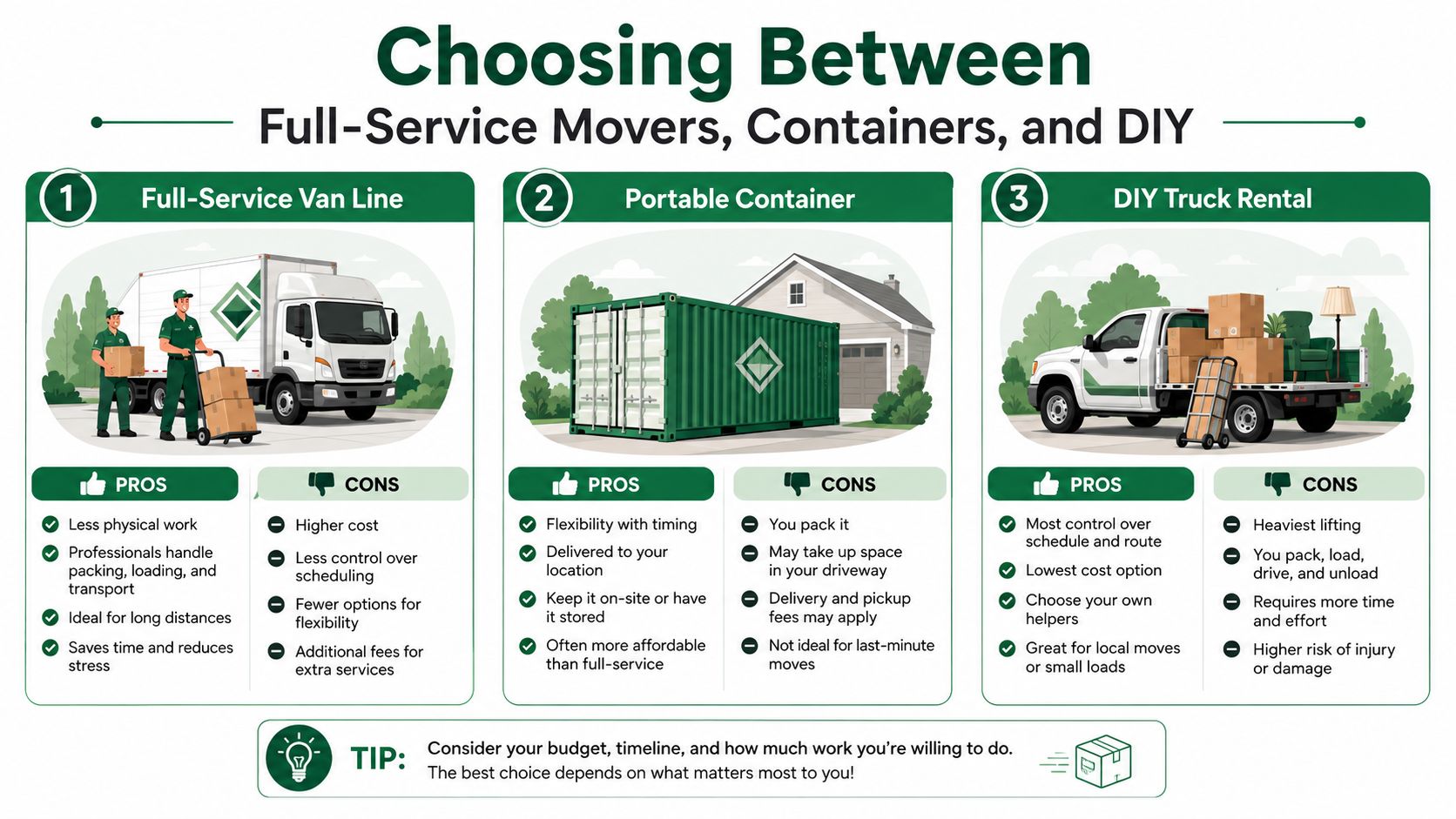
There are three practical household models, and each fits a different customer.
Full-service movers handle the most physical work. A family with limited time, young children, medical needs, or a demanding job may reasonably pay for packing, loading, transportation, unloading, and placement. The tradeoff is less control over the exact handling sequence and a higher total than doing the work yourself.
Portable containers suit renters, flexible homeowners, and people who need time between packing and delivery. You load the container, the provider transports it, and delivery can be arranged around the destination's readiness. You're still responsible for packing and protecting the contents, and neighborhood rules may limit where the container can sit.
DIY truck rental gives you the most direct control. It can fit someone with a flexible schedule, strong driving confidence, and help for loading and unloading. The work includes route planning, fuel, truck access, driving fatigue, damage risk, and the physical burden of handling furniture.
A hybrid plan often makes sense. Put furniture and boxes in a container, then ship a vehicle separately if driving would interfere with work, childcare, or the delivery schedule. A snowbird might send a second car while carrying only personal essentials. A student may drive a reliable car and send a small amount of belongings through a compact shipment.
Your decision should rest on four questions: how much physical work can you handle, how fixed is your delivery date, how much control do you need, and what would a delay cost you? For vehicle coordination, door-to-door auto transport can be evaluated alongside the household method, especially when the home address has access limitations or the family won't be traveling with the car.
Don't treat the household method and the vehicle method as one decision. A full-service mover may be right for the furniture while an open auto carrier is right for the everyday SUV.
Shipping Your Vehicle Across State Lines or to Puerto Rico
A car can arrive after the household goods, miss the delivery window, or require a port handoff. Choose the vehicle plan separately from the furniture plan, then coordinate both schedules before booking.
For routine mainland routes, open carrier transport is the practical starting point. A multi-car trailer suits standard sedans, pickups, and SUVs traveling between cities such as Boston, Philadelphia, Charlotte, Orlando, Houston, Denver, Los Angeles, Portland, and Chicago. Confirm that the pickup address can accommodate the carrier and that the vehicle is ready for loading.
Enclosed transport fits a classic, luxury, exotic, restored, or highly valuable vehicle. It provides more protection from road exposure, while the equipment carries fewer vehicles and usually costs more. Select it when the car's condition or value justifies the added protection, not just because the service sounds premium.
Container and ocean services apply to routes that cross open water. Hawaii and Alaska require ocean logistics from the mainland. Puerto Rico is the key exception in a state-to-state move. The vehicle is not handled like a conventional foreign import, but it still travels through a port and sails across the water. Review Puerto Rico car shipping requirements before setting a pickup date.
Match the shipping method to the vehicle
An everyday vehicle moving from New Jersey to Florida generally needs a clean inspection, working brakes and tires, an accessible pickup location, and a carrier that matches the schedule. A collector vehicle may need enclosed loading, detailed handling instructions, and delivery away from unnecessary street exposure. A dealership may need several appointments coordinated with inventory, auction release, or customer delivery.
Puerto Rico demands closer document control. For a Puerto Rico-to-mainland shipment, Crowley lists the original registration, original title free of liens, and a licensed Puerto Rican attorney affidavit among the required paperwork. A published Puerto Rico vehicle release procedure also lists separate government charges, including an $8.25 tire recycle tax and a $35.00 ACAA insurance sticker purchased at the Hacienda office in Old San Juan. Confirm that the procedure applies to your shipment before using it.
Give the agent the complete address, vehicle condition, title status, preferred delivery point, and deadline. National Car Transport coordinates open and enclosed mainland transport, along with container and ocean options for island routes, through bilingual English and Spanish agents based in the United States.
Registration, Titles, Insurance, and Inspections by State
Vehicle shipping gets the car to the destination. It doesn't complete the owner's legal work. After moving, contact the destination motor vehicle agency and confirm the current requirements for title transfer, registration, emissions testing, safety inspection, insurance, taxes, lien documents, and proof of address.
Rules vary sharply. Some locations require emissions testing in selected counties or metro areas. Others focus on safety inspections, while some use both or neither. Insurance minimums also differ, and a policy that was valid in the origin state may need to be rewritten after residency changes.
The Census Bureau's state-to-state flow measure is built from American Community Survey and Puerto Rico Community Survey responses that compare current residence with residence one year earlier. That means migration figures are survey-based estimates with sampling error and timing limitations, not a direct administrative count, as explained in this methodology reference on interstate migration measurement. The same practical caution applies to planning: confirm requirements with the destination agency rather than relying on a general moving checklist.
Registration and Inspection Snapshot for Common Destination States
| State | Registration Window | Inspection Type | Notes |
|---|---|---|---|
| Florida | Confirm with the Florida Highway Safety and Motor Vehicles agency | Confirm local requirements | Verify title, insurance, address, and county-specific procedures |
| Texas | Confirm with the Texas Department of Motor Vehicles | Safety and emissions rules vary by location | Check county requirements before scheduling registration |
| California | Confirm with the California Department of Motor Vehicles | Emissions requirements may apply | Ask about out-of-state title and smog documentation |
| New York | Confirm with the New York Department of Motor Vehicles | Safety and emissions rules may apply | Prepare title, insurance, and proof of residence |
| North Carolina | Confirm with the North Carolina Division of Motor Vehicles | Safety and emissions rules vary by county | Check the destination county before the appointment |
Commercial operators and dealerships also need federal transportation compliance. A useful starting point is the Creative Graphic Solutions DOT guide, which provides context for understanding DOT numbering requirements before assigning interstate work or reviewing a carrier's credentials.
Puerto Rico adds a separate administrative path. Confirm port paperwork, title status, lien release, release fees, insurance requirements, and local registration or tax obligations before the vehicle sails. Don't assume mainland registration documents alone will satisfy the receiving office.
Adapting the Move for Military, Snowbirds, Students, and Dealerships
A military family moving under PCS orders has a hard reporting date and often limited flexibility at the pickup location. The agent needs the orders, base access instructions, vehicle details, and a delivery plan that accounts for gate restrictions. If a carrier can't enter the installation, arrange an approved nearby handoff rather than discovering the problem on pickup day.
Snowbirds usually care about repeatability. The same person may move a vehicle between Florida, Arizona, New York, Michigan, or another seasonal home more than once. An enclosed carrier may be appropriate for a second vehicle that sits unused for part of the year, while an open carrier is generally adequate for a standard daily driver.
Students need simplicity. Confirm whether the car runs, identify a safe pickup point near campus or home, remove belongings, and keep the keys and documents accessible. A student shouldn't be responsible for solving an address-access problem while also managing a lease or semester schedule.
Dealerships, auctions, and businesses need operational coordination rather than a one-off household appointment. Provide stock numbers, release instructions, vehicle condition notes, pickup contacts, and delivery priorities in one file. A carrier network can then group appointments by route, but the dealership still needs a clear process for inspections and signatures.
Puerto Rico dealerships should treat the vehicle as a port shipment from the beginning. Confirm whether the title has liens, whether the required affidavit is ready, which mainland port will receive the vehicle, and who handles release and local fees. Bilingual English and Spanish support can make document questions and handoffs easier, especially when multiple parties are involved.
Day-of-Move Checklist and Common Questions
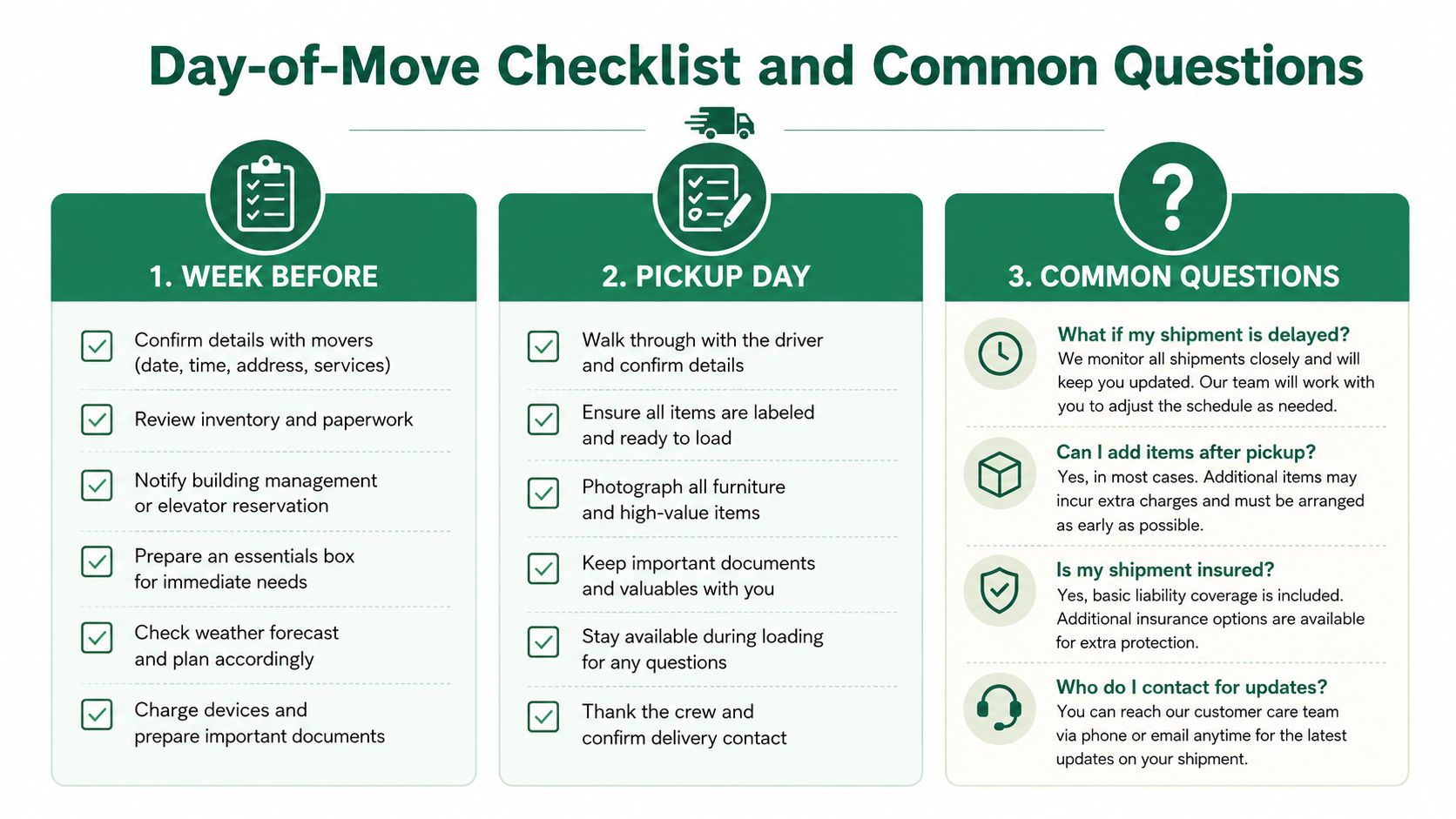
The final week is for verification, not major decisions. Confirm the household pickup, vehicle appointment, addresses, contact numbers, access instructions, payment method, and delivery destination. Remove toll tags and personal items from the vehicle, leave only what the carrier permits, and photograph the exterior, wheels, glass, interior, odometer, and existing damage.
On pickup day, walk around the car with the driver. Compare the inspection report with your photographs, note every visible mark, confirm the pickup and delivery details, and keep a copy of the signed paperwork. Don't hand over the only key if the carrier needs a separate set for loading or delivery.
Keep a first-day bag with medications, chargers, documents, basic clothing, toiletries, snacks, and items needed for work or school. If the car is traveling separately, arrange transportation from the airport, station, or new home rather than assuming delivery will happen immediately.
Questions customers ask before booking
How long will my shipment take? Transit depends on route, weather, carrier availability, vehicle condition, pickup access, and whether the route includes a port. Ask for a pickup window and delivery estimate rather than treating a single date as guaranteed.
Does insurance cover damage? Ask for the carrier's cargo coverage details, exclusions, deductible information, and the inspection procedure. Your personal auto policy may not cover every part of an in-transit claim, so confirm before pickup.
What happens if delivery is late? Contact the coordinator early, keep your phone available, and ask whether the delay involves weather, mechanical trouble, a port schedule, access, or a change in the delivery location. Make a backup plan for work, school, lodging, or rental transportation.
What changes when shipping from Puerto Rico to the mainland? The vehicle follows a port-based process and requires specific documentation. Crowley's published guidance identifies Jacksonville and Eddystone as principal receiving ports and lists original registration, a lien-free original title, and a Puerto Rican attorney affidavit among the paperwork. Verify every document before release.
A student, snowbird, military family, classic car owner, and dealership can all use the same basic discipline: identify the vehicle's needs, match the transport method, document condition, and keep the delivery plan flexible enough to survive real-world delays.
National Car Transport offers door-to-door vehicle shipping across the mainland, Puerto Rico, Alaska, and Hawaii, with open or enclosed carriers plus container and ocean options for island routes. Visit National Car Transport to discuss your route with a U.S.-based bilingual English and Spanish agent who can coordinate the vehicle details, paperwork, timing, and delivery plan around your state to state move.