
You've accepted a Seattle job transfer, planned a military move, or bought a vehicle on the mainland, and the pickup date is getting close. The question sounds simple, shipping a car to Hawaii from Seattle, but the actual move rarely involves a vehicle sailing straight out of Seattle to your destination island. Your car usually travels by truck to a West Coast port first, then continues by ocean freight.
That distinction affects the quote, the delivery estimate, the inspection process, and the date when you need to collect the vehicle. It also affects storage costs if the car reaches Hawaii before you're ready. This guide explains the route, preparation requirements, sailing options, timing risks, and the practical questions to ask before you book.
Table of Contents
- What Shipping a Car From Seattle to Hawaii Really Involves
- Choosing How Your Vehicle Sails to Hawaii
- How the Seattle to Hawaii Shipping Process Works
- Documents and Vehicle Prep You Need Before Port Drop
- Costs Transit Times and Seattle Port Tips That Save Money
- Booking Timeline Insurance and Next Steps With National Car Transport
What Shipping a Car From Seattle to Hawaii Really Involves
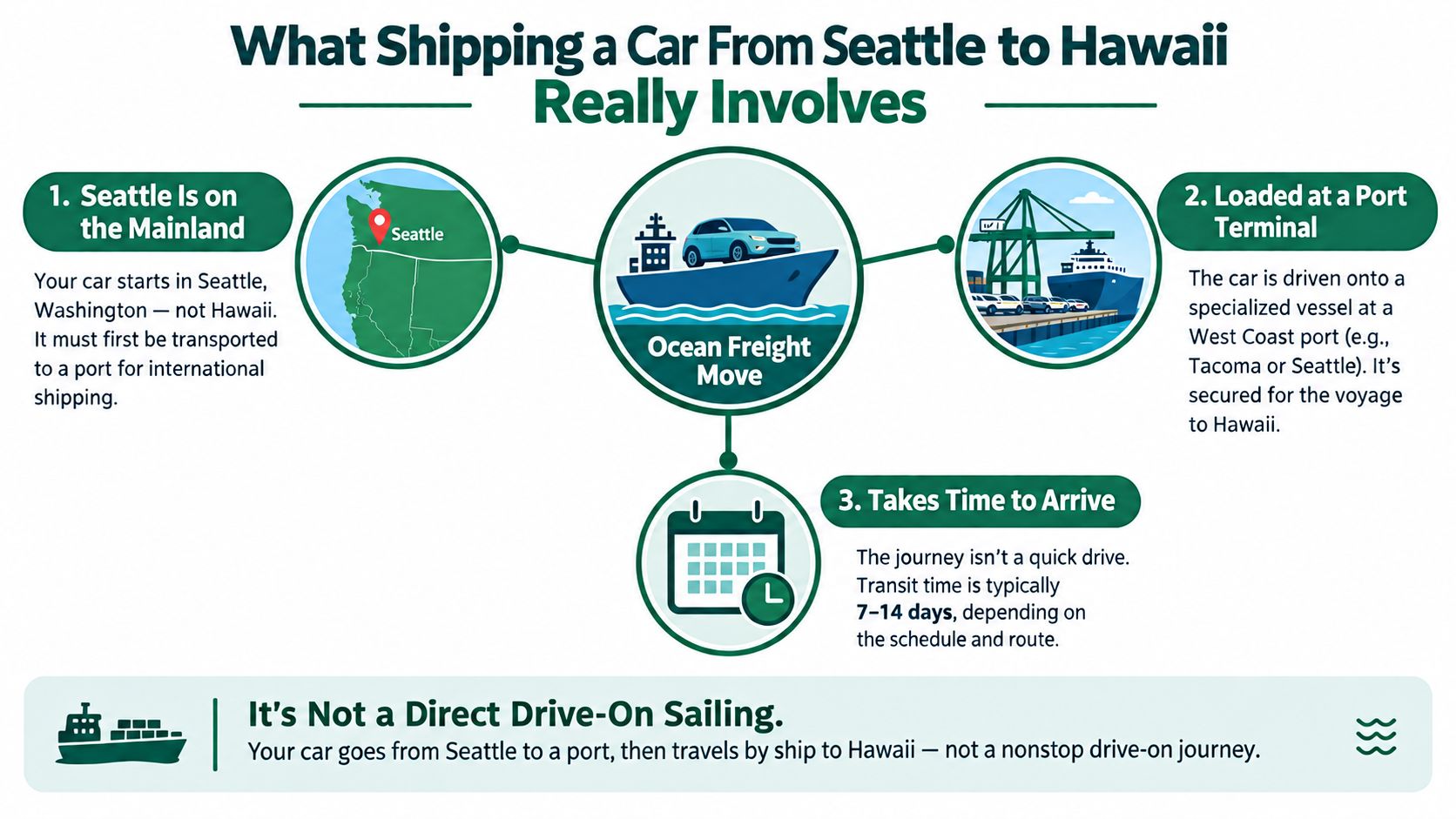
A Seattle resident moving to Honolulu may hand over the keys in a driveway, but the vehicle's journey is more like a freight transfer than a long-distance road trip. The first leg usually moves the car from Seattle toward a West Coast departure port. The second leg places it into an ocean freight network serving Hawaii.
Hawaii's logistics system depends heavily on maritime cargo. State trade data recorded 2,676,195 metric tons of total imports in 2023, while marine cargo studies have measured an average of about 12.4 million tons of maritime cargo entering the state annually during the covered period. Those figures help explain why vehicle shipments rely on established vessel and terminal systems rather than a simple direct auto route. Hawaii's 2024 economic data book also shows the scale of vessel shipments carrying goods into the islands.
Why the Seattle origin can be misleading
Seattle has a deep maritime history. The Port of Seattle's history notes that it was the first public port created under state legislation and later became the second busiest port in the country during World War I. That history doesn't mean a modern vehicle shipment has a direct Seattle-to-Hawaii auto-vessel option.
Published 2026 rate information indicates that Hawaii auto service through Tacoma was suspended, with Oakland and Long Beach listed as mainland ports for Hawaii rates. Other industry guidance identifies Oakland and Los Angeles or Long Beach as common departure points and says there's no direct Seattle-to-Hawaii auto-vessel service. In practice, your quote should identify both the Seattle pickup and the actual ocean port.
What you're really planning
The total charge reflects the inland move, port handling, ocean freight, vehicle dimensions, and chosen transport method. A practical quote must also clarify whether the service is door-to-port, port-to-port, port-to-door, or coordinated through the full chain.
Practical rule: Don't approve a Seattle quote until you know where the car will enter the vessel network and who handles the handoff at that port.
That question matters to relocating families, snowbirds, students, dealerships, and businesses moving fleet vehicles. A coordinator such as National Car Transport can arrange the mainland transport and island shipping legs, but you should still request the confirmed port pathway and pickup instructions in writing.
Choosing How Your Vehicle Sails to Hawaii
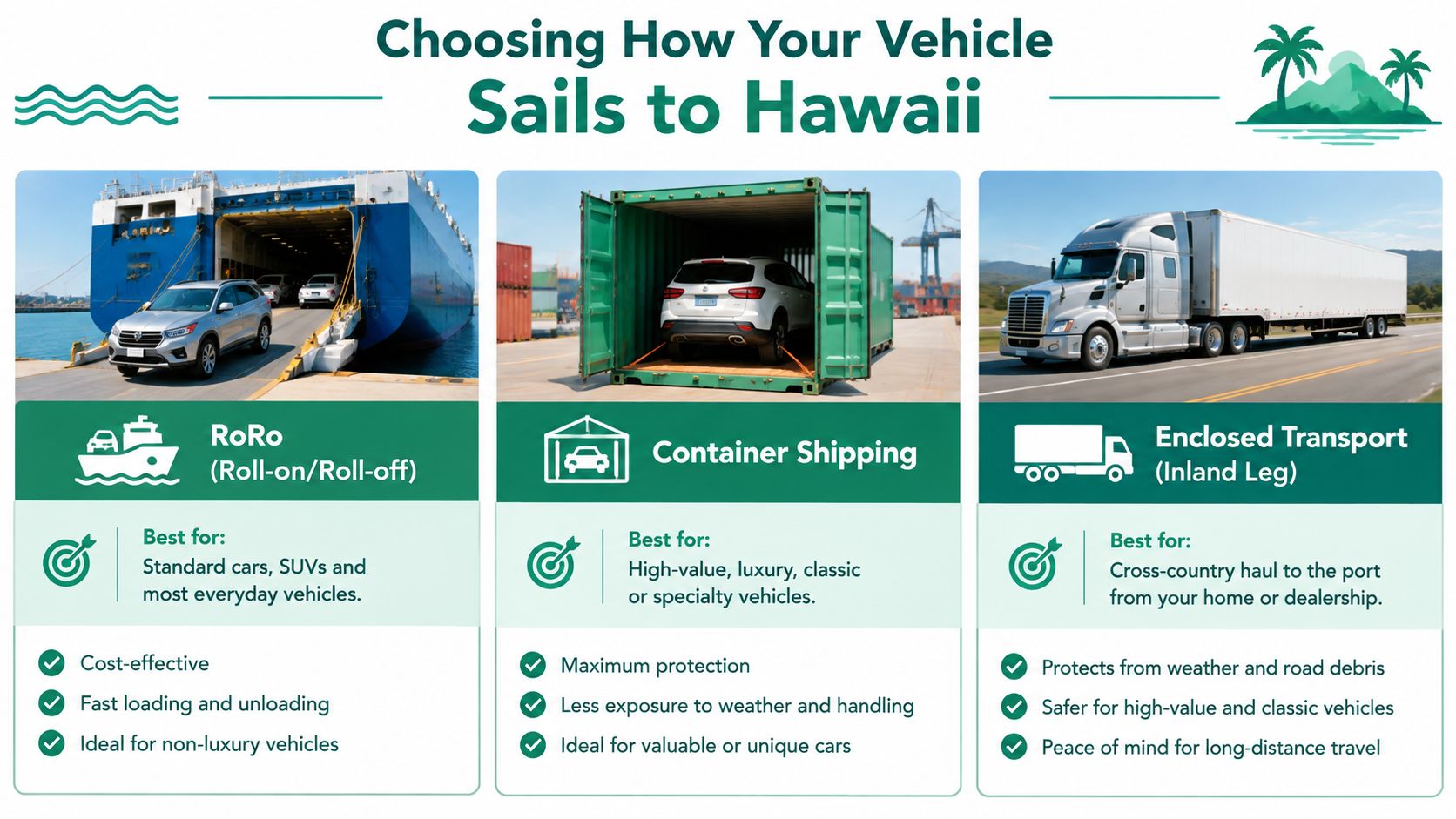
The right shipping method depends on whether the car runs, how much protection it needs, and how flexible you are about scheduling. Most standard vehicles fit a roll-on/roll-off, or RoRo, process. A container can be more appropriate for a non-running vehicle or a valuable car, while enclosed transport usually applies to the inland leg when weather and exposure are concerns.
RoRo for a normal, operable vehicle
RoRo is generally the practical value choice for a clean, drivable sedan, crossover, or standard truck. The vehicle must be able to start, steer, brake, and move under its own power. The process is straightforward, but it provides less privacy than a sealed container and doesn't let you treat the car as a household-goods box.
A RoRo booking works well for a military family shipping a daily driver, a student sending a compact car, or a snowbird moving a vehicle for seasonal use. It's less suitable if the car has mechanical problems, extensive modifications, or valuable loose equipment inside.
Container shipping for special handling needs
Container service can make sense for a high-value vehicle, a non-running car, or a shipment requiring additional enclosure. It can also reduce concerns about open terminal exposure and unauthorized access. The trade-off is that container availability, loading requirements, and pricing can be less predictable than standard RoRo service.
Don't assume a container allows personal belongings. Hawaii vehicle checklists commonly prohibit personal items in the car, regardless of the method. Ask the carrier or freight provider for written instructions before placing anything inside.
Enclosed transport for the mainland leg
An enclosed truck protects the car during the over-the-road move from Seattle to the departure port. That premium may be justified for a classic Porsche, restored muscle car, luxury vehicle, or freshly finished collector car. It usually makes less sense for an everyday vehicle where normal road exposure is acceptable.
The most useful comparison is not just “cheap versus expensive.” Consider vehicle condition, port availability, handling sensitivity, and the consequences of a delay. For a standard running car, open inland transport paired with RoRo may be efficient. For a valuable or fragile vehicle, enclosed inland movement and a carefully selected ocean method may reduce risk.
For customers who want the carrier to manage the mainland movement rather than coordinating a separate trucker, door-to-door auto transport can be part of the service discussion, although island shipments still require port and vessel coordination.
How the Seattle to Hawaii Shipping Process Works
A Seattle booking starts with the route, not only the pickup address. The coordinator needs the vehicle's year, make, model, condition, destination island, and preferred delivery timing. Those details determine whether the car fits a standard sailing, requires special handling, or must move through a particular mainland port.
Pickup and inland movement
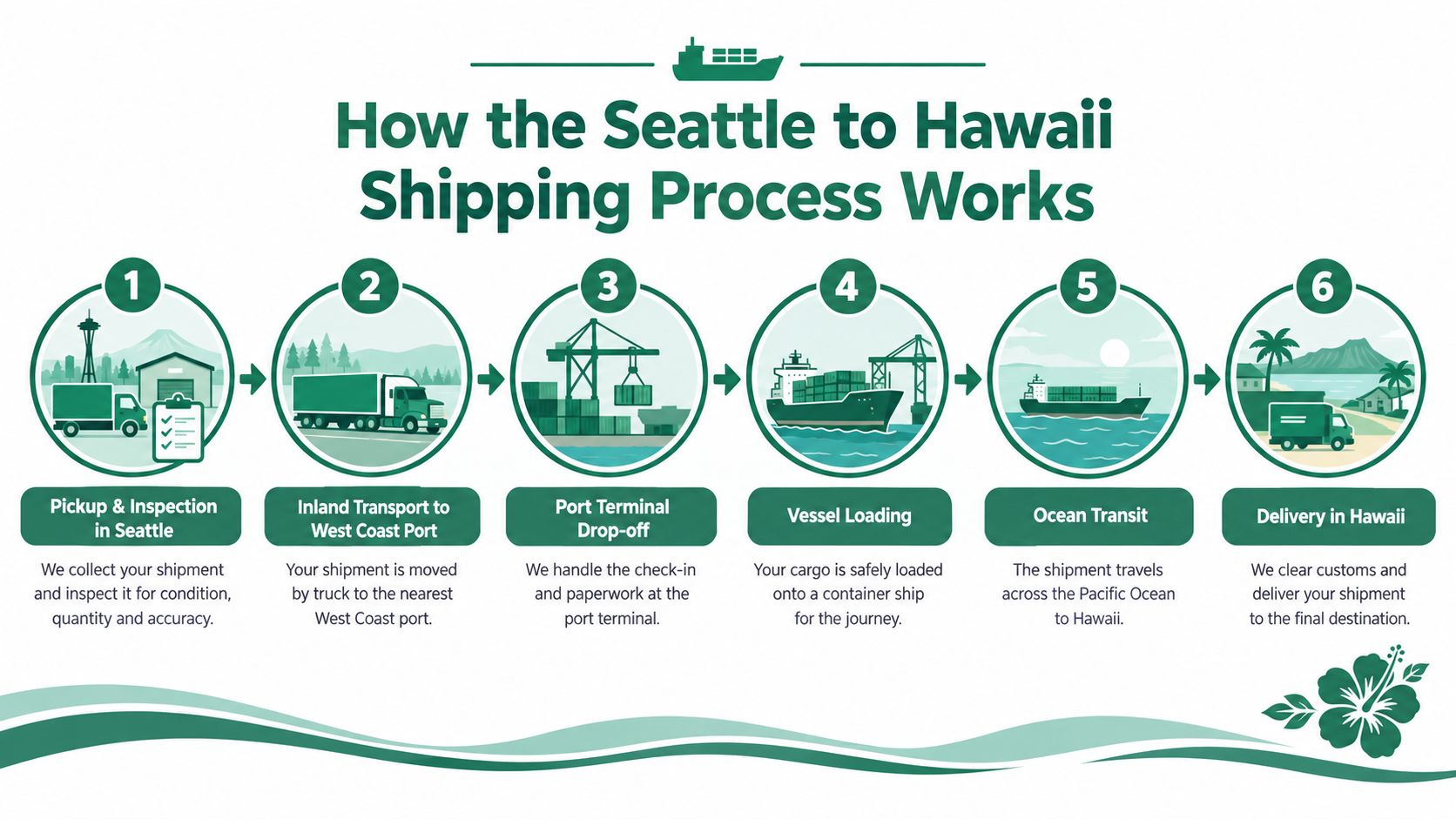
At pickup, the driver and customer inspect the vehicle together. Record existing scratches, dents, glass damage, wheel condition, and the odometer reading on the condition report. Take clear daylight photos, including close-ups of every existing defect.
The truck then moves the car from Seattle to the confirmed mainland port. Oakland and the Los Angeles and Long Beach area commonly serve Hawaii sailings. Seattle does not have direct auto-vessel service for this route, so the mainland truck leg is part of the shipment plan. Its timing can affect the vessel cutoff and the date the vehicle becomes available after arrival.
Terminal handoff and vessel loading
The port terminal checks the booking, paperwork, vehicle condition, fuel level, and operability. A failed inspection can require correction or reinspection before loading. Confirmed booking details and complete documents therefore matter more than a sailing estimate discussed by phone.
After acceptance, the terminal controls the vehicle through loading. The ocean leg follows the vessel schedule, which can change with port congestion, sailing frequency, weather, and terminal operations.
Arrival and island release
After docking, Hawaii port processing usually takes 2 to 5 business days, according to Hawaii Guide's vehicle-shipping guidance. This stage can include inspection, release coordination, and pickup instructions. Arrange pickup promptly after release, because a vehicle left at the destination terminal may incur holding or storage charges. Delivery timing is therefore part of cost control, not just convenience.
At collection, inspect the car before leaving the terminal. Compare its condition with the origin report and photographs. If you find damage, document it immediately and follow the carrier's claim procedure before driving away.
The video below shows the transport chain and its handoffs.
Documents and Vehicle Prep You Need Before Port Drop
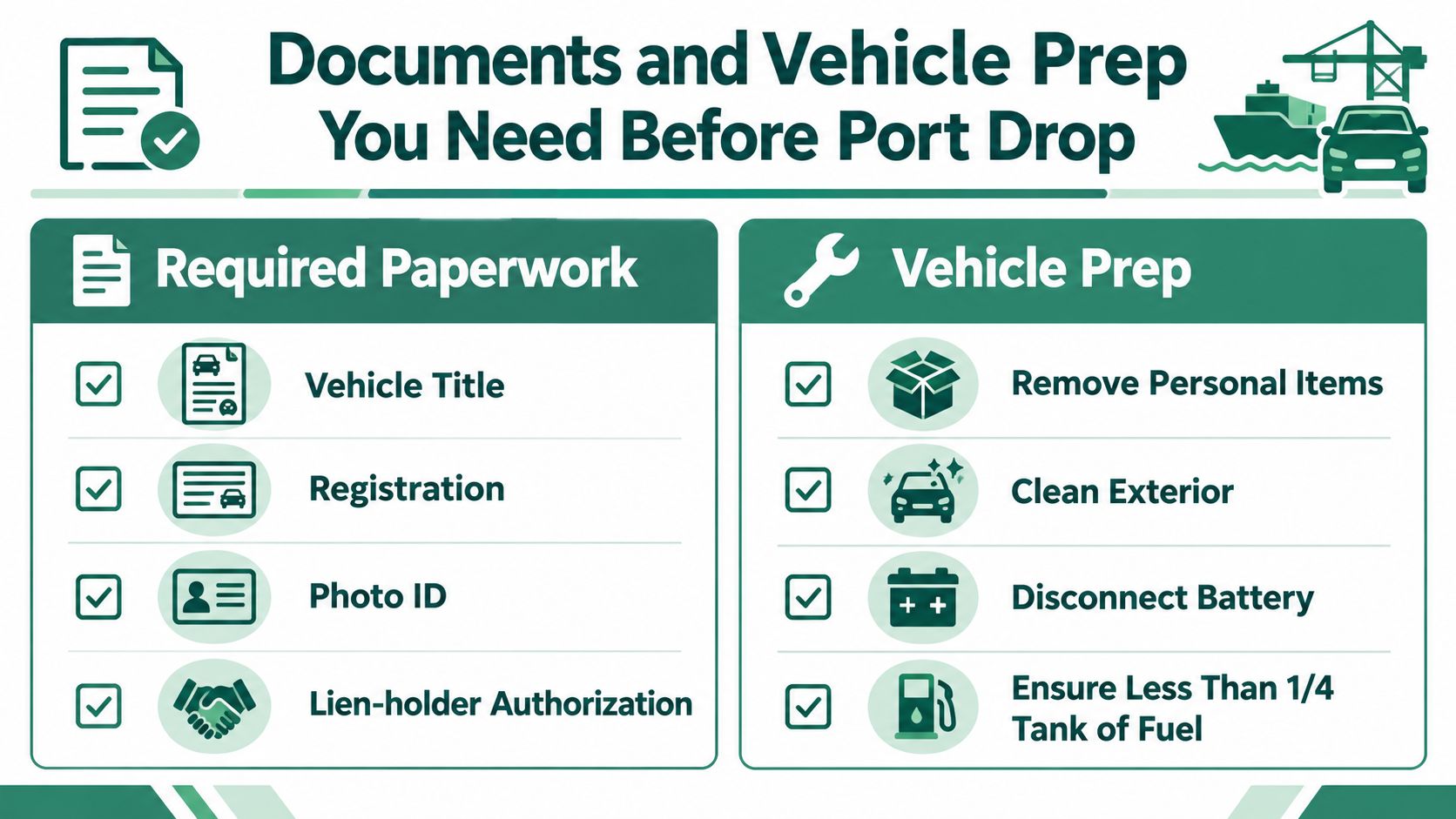
Hawaii terminal acceptance depends on paperwork and vehicle condition. Missing lien authorization or an inoperable car can interrupt the schedule even when the vessel booking is correct.
Have the following available before pickup:
- Title: Provide the vehicle title or the ownership documentation requested by the carrier.
- Current registration: Keep registration information consistent with the vehicle and booking.
- Photo ID: The shipper's identification must match the release and booking records.
- Lien-holder authorization: If the vehicle is financed or leased, obtain written permission from the lien-holder or leasing company.
The Hawaii shipping checklist identifies the physical requirements that commonly determine acceptance. The car should be washed so the inspector can see the exterior, have no more than a quarter tank of fuel, and have intact windows. Brakes, steering, and transmission must function properly, and the vehicle can't have fluid leaks.
The day-before handoff check
Remove personal belongings from the cabin, trunk, glove box, and storage compartments. Loose items can create acceptance problems, and belongings aren't a substitute for approved household-goods shipping.
Walk around the vehicle after washing it. Look for a cracked windshield, broken mirror, tire issue, warning light, or visible leak. If the vehicle doesn't run, tell the coordinator before booking so the terminal and inland carrier can plan loading equipment.
Disconnecting the battery may be required by a particular carrier or terminal, but don't assume it applies to every shipment. Confirm that instruction in writing. Keep spare keys, remotes, and required documents available according to the carrier's handoff instructions, and don't leave valuable items in the vehicle.
For customers arranging a broader island move, Hawaii car shipping service can be evaluated alongside the paperwork and port requirements, not separately from them.
Costs Transit Times and Seattle Port Tips That Save Money
A Seattle-to-Hawaii quote covers more than ocean freight. The vehicle first travels over the road to the confirmed departure port, then crosses the Pacific, followed by destination processing and release. Vehicle size, sailing availability, port handling, and the selected service all affect the total. A larger SUV, lifted truck, or modified vehicle may need different handling from a compact sedan.
Published industry guidance places typical Hawaii vehicle shipping in a broad $1,500 to $3,000 range, depending on origin, vehicle, and service choice. Treat that figure as a planning reference, not a guaranteed Seattle price. Montway's Hawaii cost guide notes that California ports are common and that route availability can affect timing.
Timing needs more than an ocean estimate
Seattle-origin routing may be less frequent than California-origin service and can add 1 to 2 weeks in some situations. Include pickup scheduling, inland movement, terminal acceptance, sailing, destination processing, and release in the ETA. The vessel's docking date is only one milestone.
Storage is a separate cost risk. Matson states that Tacoma, Oakland, Honolulu, Long Beach, and other ports provide free storage for a limited number of business days. Tacoma lists 4 business days of grace before port-assessed daily storage charges begin. Matson's destination pickup guidance distinguishes those charges from carrier fees, so confirm who bills each part.
| Cost or Time Factor | What to Expect | Planning Tip |
|---|---|---|
| Mainland inland leg | Seattle to the confirmed West Coast port | Get the port and handoff location in writing |
| Ocean method | RoRo or container, depending on vehicle condition | Compare fit and availability, not just price |
| Vehicle size | Larger or modified vehicles may require different handling | Provide accurate dimensions and modifications |
| Sailing frequency | Seattle-area routing may have fewer departures | Build schedule flexibility into the move |
| Hawaii processing | 2 to 5 business days after docking | Don't schedule island transportation for the vessel's dock date |
| Destination storage | Limited free time, then port-assessed charges | Arrange pickup before the grace period ends |
Plan pickup around terminal release, not the ship's arrival. A delay of a few business days can turn a workable schedule into a storage bill, particularly when flights, rental transportation, or island delivery are already arranged.
A flat-rate quote helps only when its inclusions are written clearly. Ask whether it covers Seattle pickup, inland port movement, terminal handling, ocean freight, destination release, and final delivery. National Car Transport offers flat-rate pricing and coordinates domestic and island transport through a network of 25,000+ vetted carriers, with U.S.-based bilingual English and Spanish support and more than 20 years of auto-transport logistics experience. Review these car shipping cost factors before comparing offers.
Booking Timeline Insurance and Next Steps With National Car Transport
Start by requesting a quote as soon as your move date is known. Provide the exact vehicle details, Seattle pickup location, destination island, running condition, lien status, and preferred service. Ask for the likely mainland port, the inland handoff plan, and whether the quote covers the complete chain.
Once the sailing and carrier are confirmed, lock down the inspection and document requirements. Keep the title, registration, photo ID, and lien authorization ready before pickup. Your schedule should allow time for inland movement, vessel availability, destination processing, and terminal collection rather than treating the sailing date as the delivery date.
Insurance questions deserve direct answers. Ask what coverage applies during the inland leg and what coverage applies while the vehicle is in ocean transit. Before release, inspect the car at the destination terminal, photograph any new damage, and make sure the condition report records it. Notify the carrier promptly and follow its written claim process, including any deadline or supporting-document requirement.
National Car Transport has operated for 25+ years, holds an A+ BBB rating, and offers transparent flat-rate pricing with no upfront charge until the vehicle is matched with a carrier. Its network includes 25,000+ vetted, licensed, and bonded drivers, and its U.S.-based bilingual English and Spanish agents support personal moves, military relocations, snowbirds, students, dealerships, auctions, and business fleets. Service is available 365 days a year, but availability and sailing pathways still need confirmation for each vehicle.
No two vehicle transports are alike. A knowledgeable agent can identify whether your car needs open or enclosed inland movement, RoRo or container handling, special port coordination, or a schedule built around your move-in date.
If you're shipping a car to Hawaii from Seattle, National Car Transport can coordinate the inland move, mainland port handoff, ocean shipment, and destination planning with you. Request a route-specific quote and speak with a bilingual U.S.-based advisor so your paperwork, timing, and pickup arrangements are clear before the car leaves Seattle.