

Shipping a car from Portland to Honolulu usually lands around $1,900 to $2,400 in 2026, and the full move typically runs about 9 to 17 days. If you want the wider Hawaii door-to-door planning window, think 2 to 3 weeks from a West Coast origin, depending on port schedules and processing.
Many get tripped up because they ask for one Hawaii quote when the move is really a two-leg job. The first leg is the truck haul out of Portland to a West Coast port, then the car goes by ocean to Hawaii, and those pieces don't always appear clearly in the first number you're shown.
Table of Contents
- What Shipping a Car From Portland to Hawaii Actually Costs in 2026
- Container vs RoRo for a Portland-to-Hawaii Shipment
- Choosing Your West Coast Port and Scheduling the Pickup
- Paperwork, Insurance, and Vehicle Preparation
- Hidden Fees and Schedule Risk Most Quotes Don't Show
- Arriving in Hawaii and Picking Up Your Car
- Key Takeaways and Booking Checklist for Portland Shippers
What Shipping a Car From Portland to Hawaii Actually Costs in 2026
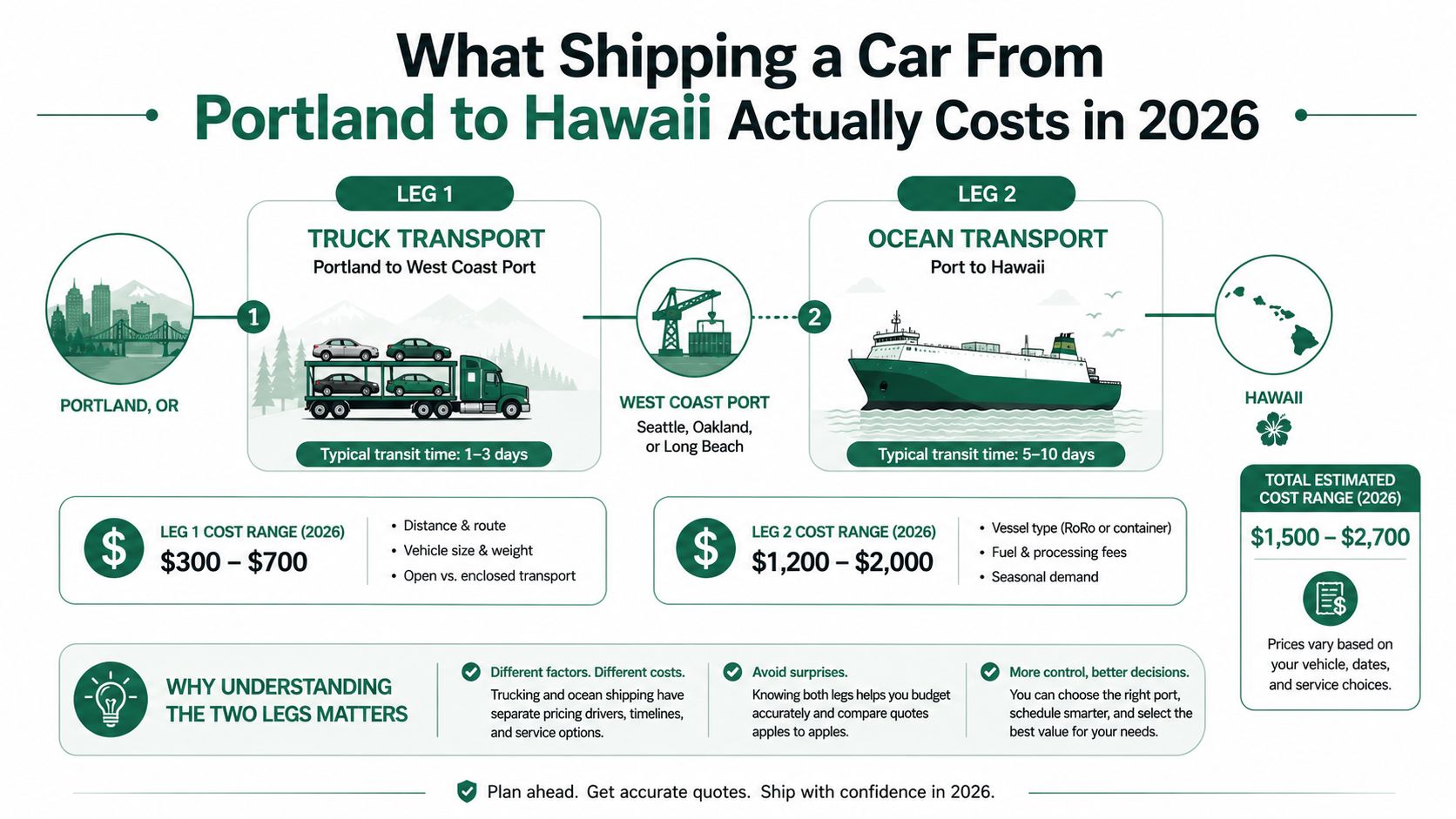
Shipping a car from Portland to Hawaii is not one shipment, it's a two-stage move. The vehicle leaves Portland by truck, reaches a West Coast port, then crosses the Pacific to Hawaii, so a single quote only makes sense if it clearly shows both legs.
The realistic 2026 pricing band for the Portland-to-Honolulu lane is $1,900 to $2,400 per current route pricing estimates. Broader West Coast-to-Honolulu ranges sit around $1,500 to $2,500, while standard sedans from West Coast ports to Honolulu often run about $1,600 to $2,200, with container shipping adding roughly $700 to $1,200 for extra protection as outlined in Hawaii shipping guides.
The timing is just as important. Route guidance for Oregon-to-Hawaii shipments puts the total distance at about 4,159 miles and the process at roughly 9 to 17 days, while Hawaii-focused logistics guides describe 2 to 3 weeks door-to-door for West Coast origins from Oregon-to-Hawaii route guidance. That range is normal, and if someone promises a perfectly fixed arrival date, they're overselling the move.
Know the terms before you price shop
RoRo means roll-on/roll-off, the car is driven onto the vessel and driven off at arrival. Container means the vehicle rides in a sealed container, which adds protection and cost.
Port-to-port is the ocean leg only. Door-to-port includes inland trucking from your Portland address to the departure port, which is why Portland owners should never accept a Hawaii number without asking what the inland leg includes.
If you're also moving pets or coordinating an island household move, use the same planning mindset and streamline pet paperwork for island moves before your ship date gets too close.
For a simple cost reference on mainland moves and how a quoted price is usually built, the car shipping cost guide from National Car Transport is useful as a baseline, especially if you're comparing a mainland rate against a Hawaii quote that includes port handling.
Practical rule: If the quote doesn't spell out the Portland pickup, the mainland port leg, and the ocean leg separately, it's not a real all-in number yet.
Container vs RoRo for a Portland-to-Hawaii Shipment
RoRo is the value play. Container shipping is the protection play. If your car is a clean, road-worthy daily driver and you're trying to keep the bill sane, RoRo usually makes more sense. If the vehicle is a classic, a low-clearance project, or something you don't want exposed to the port environment, pay for the container and stop worrying about it.
Container is for protection, RoRo is for efficiency
Container shipping gives the car a harder shell around it, which is why it costs more, and Hawaii route guides note that premium protection can add roughly $700 to $1,200 to the West Coast-to-Hawaii move. RoRo is usually the cleaner choice for standard vehicles because you're not paying for a layer of protection you may not need.
| Factor | Container | RoRo |
|---|---|---|
| Protection | Highest protection from port exposure and handling | Basic protection, vehicle is shipped as a drive-on unit |
| Cost | Higher, with a premium over standard Hawaii ocean rates | Lower, usually the better budget choice |
| Vehicle fit | Better for classics, specialty cars, and sensitive loads | Better for standard sedans and daily drivers |
| Scheduling | Can be tighter because container space is more limited | Often easier to book for ordinary vehicles |
| Best use case | High-value, low-clearance, or restored vehicles | Clean, operable commuter cars |
Here's the blunt recommendation. If you're shipping a sedan commuter, choose RoRo unless you have a specific reason not to. If it's a project car or classic, container shipping is the safer call because a cheap quote isn't helpful if the car needs extra handling later.
Dispatcher rule of thumb: Match the method to the vehicle's value and condition, not your hope that “it'll probably be fine.”
If you need a mainland-to-home comparison on method and pickup style before choosing the island leg, the door-to-door auto transport page is a useful reference point for how origin pickup is usually handled on the truck side.
Choosing Your West Coast Port and Scheduling the Pickup
Portland cars don't go straight onto a Hawaii ship. They get trucked to a West Coast port first, and the port choice matters because it changes price, transit timing, and how much room you have to miss a deadline without blowing up the shipment.
Pick the port first, then lock the calendar
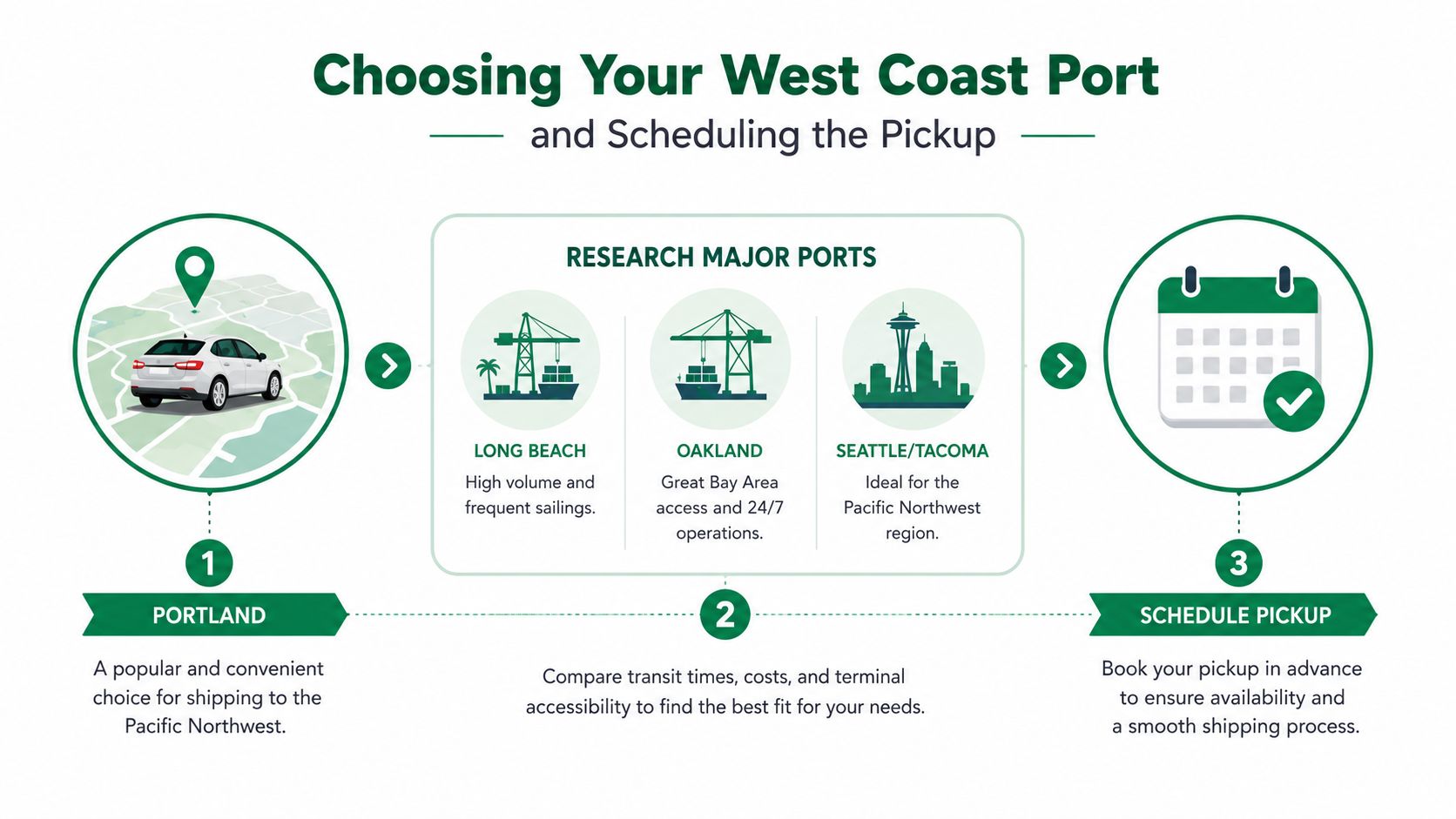
The major West Coast Hawaii departure ports people usually compare are Long Beach, Oakland, and Seattle/Tacoma. The right one for a Portland move depends on the trucking distance from your address, sailing frequency, and what the carrier can book without creating dead time on the road.
Book the move 4 to 6 weeks ahead. That gives you enough runway to match the Portland pickup with the vessel schedule instead of paying for last-minute scrambling as Hawaii shipping guidance recommends. Then plan to drop the vehicle at the departure port 3 to 5 days before sailing, because the port window is not forgiving.
What the Portland-side pickup actually looks like
If you're doing residential pickup, the carrier collects the car from your Portland address and moves it to the port side of the chain. If you prefer a terminal drop-off, you bring the vehicle to the staging point yourself, which can be cleaner if your schedule is tight or your street is hard for a truck to access.
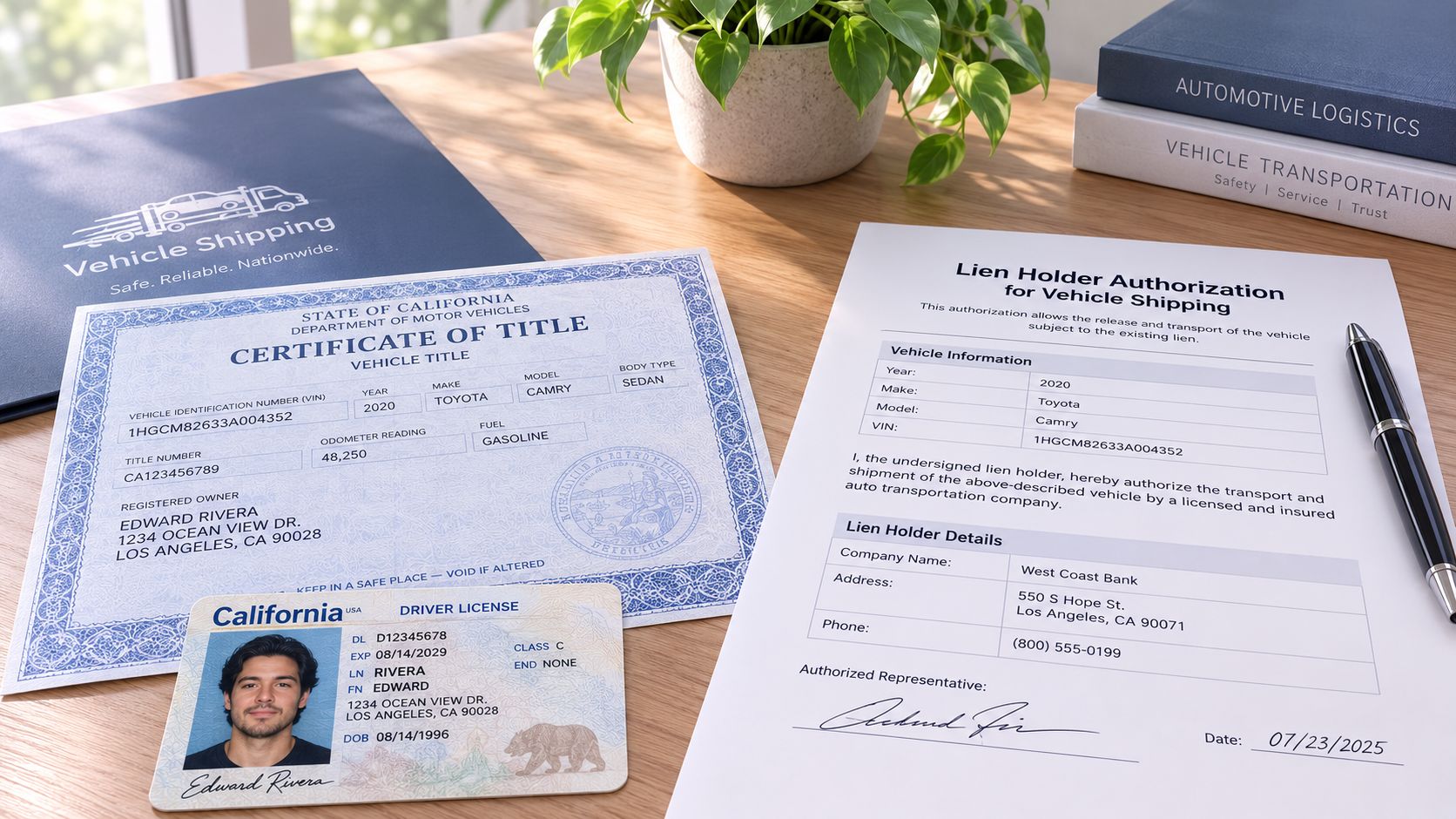
The carrier will want the basics ready when the driver arrives. Keep the title, ID, and any authorization papers handy, and make sure the car can be moved without drama. The ocean transit itself is usually 5 to 14 days, with another 2 to 5 business days for destination port processing according to Hawaii shipment guidance.
If you're comparing a single-contact service model with a managed pickup and port handoff, the National Car Transport Hawaii shipping page is a reasonable place to see how a coordinated route is usually presented.
Paperwork, Insurance, and Vehicle Preparation
The most common delay isn't the ship. It's the paperwork that wasn't ready when the driver showed up.
Get the documents in order first
Have your vehicle title, photo ID, and, if the car is financed, lien holder authorization ready before pickup. If a lender still owns the paper title, don't assume the carrier can work around that, because they can't.
The other piece people miss is Hawaii's mandatory clean-vehicle agricultural inspection. The inspector is looking for dirt, plant matter, and anything that suggests the car might carry unwanted material onto the islands. If the car fails, cleaning can add $100 to $200 and delay release per Hawaii shipping guidance.
Insurance and prep should be simple, not sloppy
Carrier insurance usually covers transit damage tied to the transport process, but it doesn't cover everything. Personal items are a bad idea to leave in the car, and anything loose inside creates avoidable risk. If the vehicle has unusual value or custom work, ask whether supplemental coverage makes sense before you book.
Before the truck shows up, do a quick prep pass:
- Lower the fuel level: Keep just enough fuel for loading and unloading.
- Check tire pressure: Make sure the car rolls cleanly and doesn't sit underinflated.
- Charge the battery: A dead battery slows the whole chain down.
- Disable alarms: Nobody wants a false alarm on a port lot.
- Remove personal items: The car should be empty unless your carrier specifically approves an exception.
A clean car is easier to inspect, easier to load, and less likely to get stuck in a rework cycle. That part sounds basic because it is basic.
Hidden Fees and Schedule Risk Most Quotes Don't Show
Portland-to-Hawaii quotes often get inflated or misread. The number you see online often leaves out the inland move, port handling, or the island-specific differences that show up later.
The real quote is usually a split quote
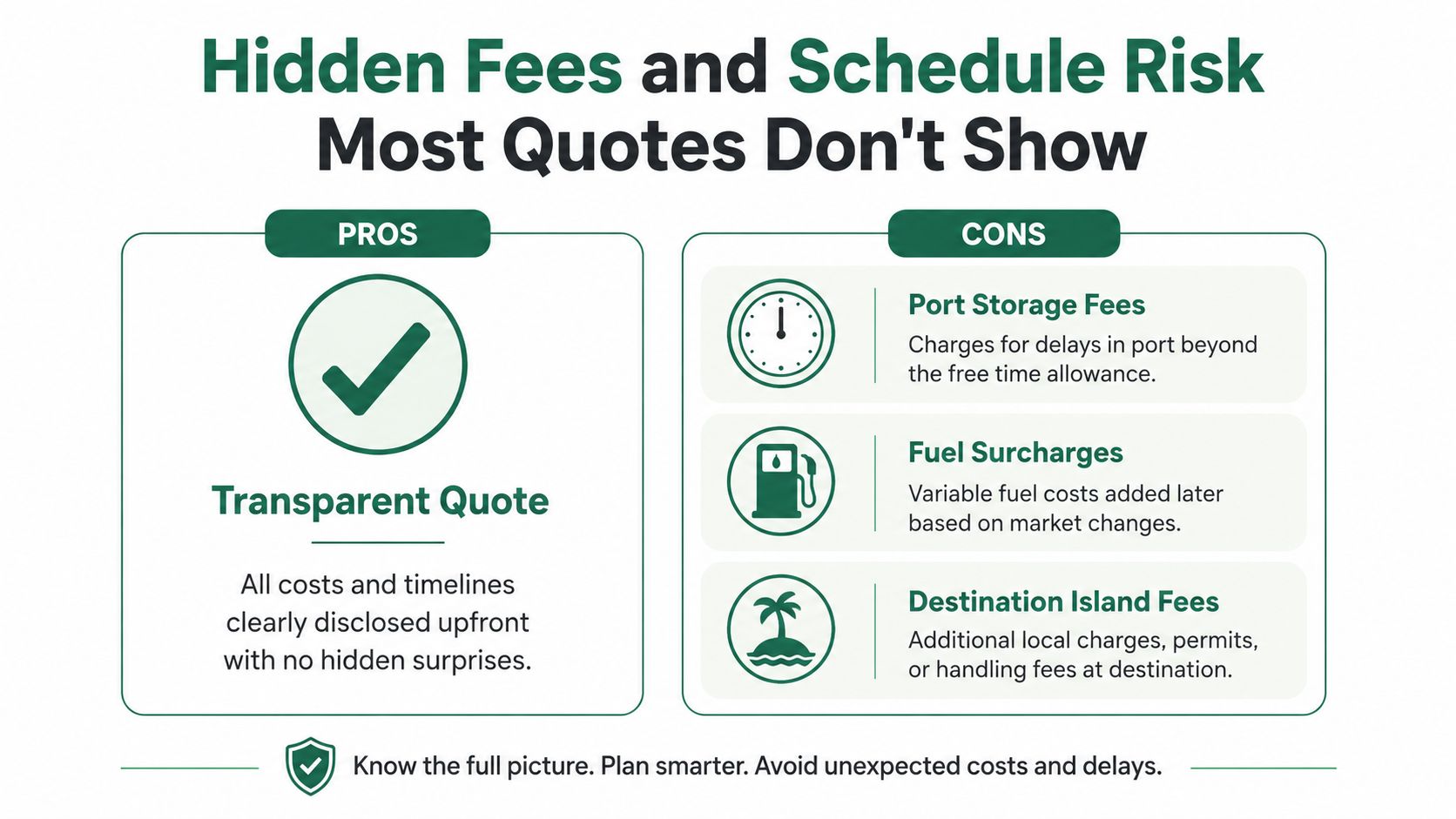
The ocean leg alone can run about $1,300 to $1,600 to Oahu and $2,100 to $2,500 to Maui, Kauai, or the Big Island, before you layer on inland trucking from Portland as highlighted in route guidance. That's why a quote that looks strangely cheap is usually missing one of the legs.
The other hidden cost is schedule risk. If the port pickup gets delayed, storage can start eating the budget fast. One recent explainer warns that storage in Washington can run about $25 to $50 per day after a short grace period, and that same kind of pressure shows up anywhere the handoff slips in a video explainer on shipping timing and fees.
Ask these questions before you pay a deposit
- What port is named in the quote? If it's vague, the inland leg may be missing.
- Does the price include port handling? If not, expect surprises.
- Which island is priced? Honolulu and the neighbor islands do not always price the same.
- What happens if the car misses the sailing window? Delay risk should be explained up front.
- Are cleaning or agricultural fees excluded? They often are.
If you keep the car in good condition before pickup, a basic detailing pass can help it pass inspection cleanly. For that reason, the advice in fleet car detailing Perth is relevant even if you're not in Australia, because the point is simple, clean vehicles move more smoothly through handoff points.
A fair quote should name the port, the island, and the service assumptions. If it doesn't, keep shopping.
Arriving in Hawaii and Picking Up Your Car
The shipment is not over when the ship ties up at the port. The car still has to clear destination handling before you can take it home, and that is the part first-time shippers usually underestimate.
What happens after the vessel lands
Once the car reaches Hawaii, port staff unload it and move it through paperwork before release. The usual destination-port window is 2 to 5 business days before pickup is complete according to Hawaii shipping guidance. Treat that as normal processing, not a problem.
Miss the pickup window and storage can start eating into your budget fast. A recent explainer says port storage can run roughly $25 to $50 per day after a short grace period in the shipping timing video. That is how a clean shipment turns into an avoidable parking bill.
The first day on the island should be mechanical, not chaotic
Pickup day should be about the car, not scrambling. Check the vehicle's condition, complete any registration steps that apply, and make sure it is legal for Hawaii roads before you drive away. If your shipment lands on Honolulu but the car still needs to reach a neighbor island, set that transfer up early so the vehicle does not sit in limbo while you sort out the next move.
A lot of owners ask how the arrival side fits into the larger shipment. If you want a mainland carrier that already handles Hawaii route coordination as part of its network, the National Car Transport Hawaii shipping page is a straightforward place to see how that route is commonly organized.
Keep the handoff tight. Know who is signing, who is collecting, and where the car goes next. That is the difference between a clean landing and a string of avoidable calls.
Key Takeaways and Booking Checklist for Portland Shippers
Shipping a car from Portland to Hawaii is a two-leg move, not a single flat rate. The 2026 band is $1,900 to $2,400, the transit window is usually 9 to 17 days, and the biggest mistake is accepting a quote that doesn't clearly name the inland port leg, the ocean leg, and the destination island.
Use this checklist before you book:
- Gather the title and ID: Add lien authorization if the car is financed.
- Get a written all-in quote: Make sure it names the port and the island.
- Confirm the sailing schedule: Don't rely on a vague “around then” estimate.
- Prep the vehicle for inspection: Clean it, remove personal items, and disable the alarm.
- Plan the pickup window: Know who's collecting the car in Hawaii and when.
If you want a single U.S.-based point of contact with bilingual support, a good advisor can keep the pickup, port drop, and Hawaii arrival from turning into three separate headaches.
A CTA for National Car Transport.