
Shipping a car from Maryland to Texas typically costs between $950 and $1,200 and takes about 3 to 6 days for an open carrier on this roughly 1,500-mile route. Those are useful averages, but the final quote changes based on your exact pickup and delivery locations, your vehicle, the carrier type, and timing.
If you're relocating for work, heading to school, making a military move, or trying to line up your car before a household move is complete, this route is common enough to be straightforward but long enough that details matter. A Baltimore pickup going into Houston won't price the same as a smaller town in Maryland heading to San Antonio, and that's where many customers get frustrated. They see one headline number online, then wonder why their actual quote looks different.
The good news is that Maryland to Texas is a mature interstate lane with steady carrier traffic. When the shipment is planned correctly, the process is predictable, the paperwork is simple, and the handoff from pickup to delivery doesn't need to feel complicated. What usually causes problems isn't the route itself. It's unclear expectations, missed prep steps, or working with someone who only explains the easy part.
Table of Contents
- Your Maryland to Texas Car Shipping Journey Begins Here
- Understanding Your Maryland to Texas Shipping Quote
- Choosing Your Transport Service Open vs Enclosed
- The Step-by-Step Guide to Shipping Your Car
- How to Prepare Your Vehicle for Transport
- Shipping Solutions for Every Maryland-to-Texas Move
- Frequently Asked Questions About Car Shipping
Your Maryland to Texas Car Shipping Journey Begins Here
A lot of customers start in the same place. The moving date is approaching, flights are booked, and the car becomes the one piece that still doesn't have a plan. Driving it yourself sounds possible until you factor in time off work, hotels, fuel, road fatigue, and arrival timing.
For this lane, current market data gives a solid baseline. RoadRunner Auto Transport's Maryland to Texas route data places the average cost at about $923 with a typical transit time of 3 to 5 days for roughly 1,447 miles, while also noting prices can range from $721 to over $1,200 depending on city pair, carrier type, and season.
That spread matters more than many people realize. A standard sedan moving between major metro areas is usually easier to place than a large SUV going to a less trafficked destination. A flexible pickup window usually works better than trying to force one exact day. If you want to ship car from maryland to texas with fewer surprises, the planning has to match the route reality.
What a smooth shipment usually looks like
The shipments that go well tend to share a few traits:
- Clear pickup and delivery addresses: City pairs drive pricing and scheduling more than state names do.
- An accurate vehicle description: Carriers need to know if it's a sedan, SUV, truck, lowered vehicle, or non-runner.
- A realistic date range: Flexibility helps with dispatch and often improves options.
- A good contact plan: Someone needs to be reachable at pickup and delivery.
The easiest long-distance shipments aren't the ones with the cheapest headline quote. They're the ones where the customer knows what was priced, what was promised, and what could affect timing.
This is also where experienced coordination helps. A company that handles complex lanes, including island shipping and long-haul domestic moves, usually brings better process discipline to ordinary interstate routes too. That matters when weather shifts, pickup access is tight, or a handoff has to be timed around a closing date or PCS schedule.
Understanding Your Maryland to Texas Shipping Quote
Most confusion around car shipping starts with one question: why did one company say one number and another company say something very different? On this lane, that isn't unusual. The state-to-state route is the same in name, but the actual shipment can vary a lot.
What the market range actually tells you
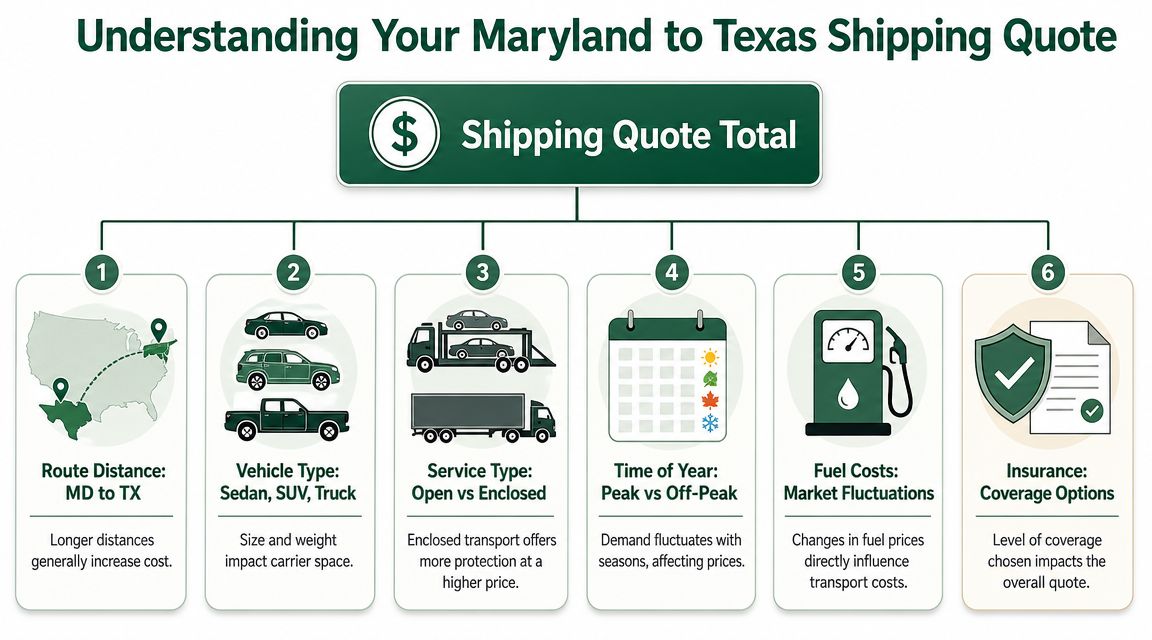
The most helpful way to read a quote is to treat it as route-specific, not state-specific. MoveBuddha's Maryland to Texas examples show Baltimore to Dallas at $1,008 to $1,649 and Baltimore to San Antonio at $1,261 to $1,729, which makes one point very clear: pickup and delivery ZIP codes are a primary cost driver.
A quote also reflects how attractive that load is to a carrier at the time it needs to move. Major metros generally offer better carrier flow. Rural pickups or deliveries can require the truck to come off its main path, which affects rate and sometimes adds time.
The following generally affects the number:
- Exact route: Baltimore to a major Texas city is different from a smaller Maryland town going to a less dense Texas destination.
- Vehicle profile: Larger or heavier vehicles take more trailer space and can limit loading options.
- Operable status: A running car is simpler to load than one that needs special handling.
- Trailer choice: Open transport is the standard option. Enclosed service costs more because capacity is more limited.
- Season and timing: High-demand periods can tighten availability and move pricing upward.
The quote changes when the route details change
A good quote should make operational sense. If two estimates are far apart, compare what each one assumed. Was one based on terminal access while the other was true door-to-door? Did one assume a compact sedan while the other priced a crossover? Was one flexible on dates and the other urgent?
A practical move planning tip is to look beyond the transport line item and calculate your interstate moving budget as part of the full relocation picture. That helps you decide where flexibility exists and where it doesn't.
Practical rule: Ask what would change the quote after booking. If the answer is vague, the estimate probably is too.
Some providers use flat-rate pricing models so the customer knows the transport amount before carrier assignment, while others quote a market range first and confirm later. Neither approach is automatically wrong. What matters is whether the company explains the assumptions clearly and updates you if the shipment details change.
Choosing Your Transport Service Open vs Enclosed
Choosing between open and enclosed shipping often decides how this move feels. Straightforward and cost-conscious, or more controlled and protective. On a Maryland-to-Texas route, both are standard services. The better option depends on what you are shipping, how particular you are about condition on arrival, and how much schedule flexibility you have.
A lot of customers assume this choice is only about price. It is also about equipment availability, handling requirements, and the level of exposure you are willing to accept over a long interstate haul. Companies that regularly coordinate harder moves, including island shipments and restricted-port logistics, tend to make better recommendations here because they are used to matching the service to the vehicle instead of pushing a one-size-fits-all answer. That experience matters even on a domestic lane like Maryland to Texas.
When open transport makes sense
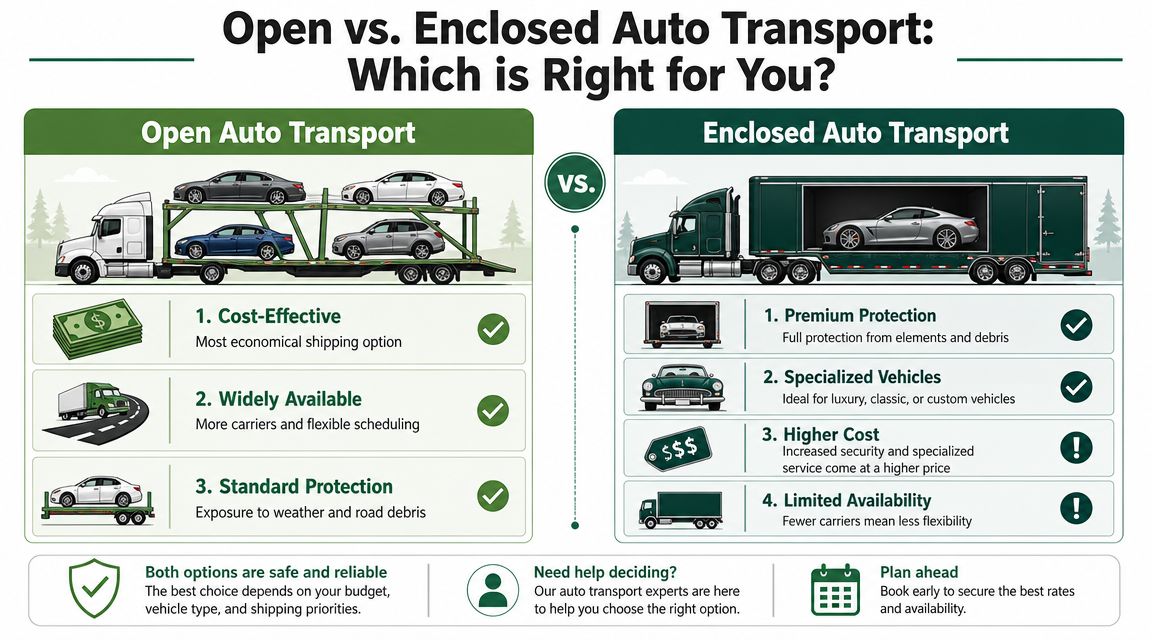
Open transport is the standard service for this route. It is how many new vehicles move between markets, and it remains the practical fit for daily drivers, family SUVs, college cars, and most leased vehicles.
Open transport usually makes sense if:
- The vehicle is a regular-use car: For a commuter sedan or family crossover, open shipping is usually the reasonable choice.
- You want better carrier availability: More open trailers run this lane, so scheduling is often easier.
- You want to keep the quote lower: Open service usually gives the best value for standard vehicles.
The trade-off is simple. Your vehicle rides exposed to weather, dust, and normal road conditions, just as it would if driven that distance, but without the added mileage, tire wear, or travel time.
Open transport is the right fit for many Maryland-to-Texas moves because it balances cost, transit efficiency, and wide carrier availability.
When enclosed transport is worth the extra cost
Enclosed service adds another layer of protection. The vehicle is shielded from weather and road debris, and the trailers usually carry fewer cars. That lower capacity is one reason enclosed shipping commonly costs more than open transport, often by roughly a third, though the exact gap depends on the vehicle, route timing, and equipment availability.
For some vehicles, that premium is justified.
Enclosed transport is usually the better option for:
- Classic or collector vehicles
- High-end luxury or exotic cars
- Custom builds with delicate paint or bodywork
- Low-clearance vehicles that need more careful loading
- Cars heading to shows, auctions, or private sales where condition matters closely
I usually give customers one practical test. If a small amount of road exposure would bother you throughout the trip, enclosed is probably the better choice. If the car is a normal daily driver and your main goal is safe, efficient delivery, open is usually enough.
The real decision is about fit, not fear
Enclosed transport is not automatically "safer" in the broad sense that open transport is unsafe. Both are legitimate, insured services used every day. The difference is the type of protection and the level of handling attention your vehicle may need.
A quick comparison helps:
| Service type | Best fit | Main trade-off |
|---|---|---|
| Open transport | Standard daily drivers, most relocations | More exposure to normal road and weather conditions |
| Enclosed transport | Classic, luxury, collector, custom vehicles | Higher cost and fewer carrier options |
At National Car Transport, we walk customers through that choice based on the actual vehicle and delivery priorities, not a script. Our bilingual agents handle these conversations every day, which helps families coordinate details clearly across households, dealerships, and relocation timelines. That human support is a big reason a standard interstate move goes more smoothly.
The Step-by-Step Guide to Shipping Your Car
When customers know the sequence, the process feels much easier. The workflow on this route is consistent, even though carrier timing can shift with traffic, weather, and load planning.
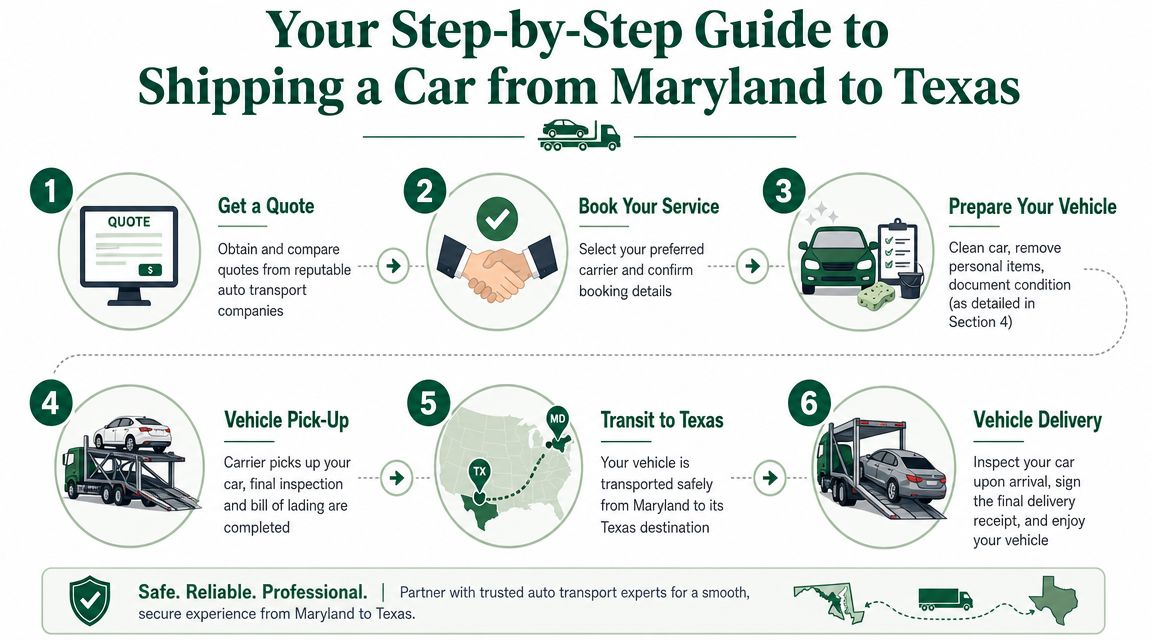
A good visual makes that easier to follow:
From quote to pickup
Sherpa Auto Transport's Maryland to Texas workflow overview outlines the standard process as obtaining a quote, booking, carrier assignment, pickup inspection, transport, and delivery inspection. For the roughly 1,445-mile trip, the full process typically runs 3 to 9 days, and route variability plus weather are common reasons for delays.
That process usually unfolds like this:
Request the quote
Provide the exact pickup city, delivery city, vehicle year, make, model, and whether it runs and steers.Confirm the order
Once you book, dispatch begins looking for a licensed carrier whose route and equipment match your shipment.Schedule pickup
The assigned driver or dispatcher contacts you to coordinate the pickup window and meeting location.
Before moving on, it's helpful to see the overall flow in action.
What happens in transit and at delivery
Pickup day is where the paperwork matters most. The driver inspects the vehicle with you and records visible condition on the bill of lading. This is the document used at delivery to compare the car's condition.
A few practical points make pickup smoother:
- Meet somewhere truck-accessible: Large carriers may not fit on narrow residential streets.
- Have the keys ready: Even for open transport, the vehicle may need to be repositioned on the trailer.
- Review the inspection carefully: Don't rush the pre-load condition report.
During transit, communication quality varies by carrier, so many customers prefer working through an agent who tracks the load and relays updates. National Car Transport is one option customers use for this type of shipment. The company handles domestic routes as well as Puerto Rico vehicle logistics, offers bilingual U.S.-based agents, and coordinates with a vetted carrier network rather than leaving customers to manage dispatch questions on their own.
At delivery, inspect the vehicle before signing the final receipt. If the truck can't safely enter your neighborhood, the driver will arrange a nearby meeting point such as a shopping center or wide roadside access area. That's normal on large transport equipment.
How to Prepare Your Vehicle for Transport
A well-prepared vehicle is easier to load, easier to inspect, and less likely to create last-minute problems on pickup day. On a Maryland-to-Texas route, small oversights can turn into real delays if the carrier has a full schedule and limited time at each stop.
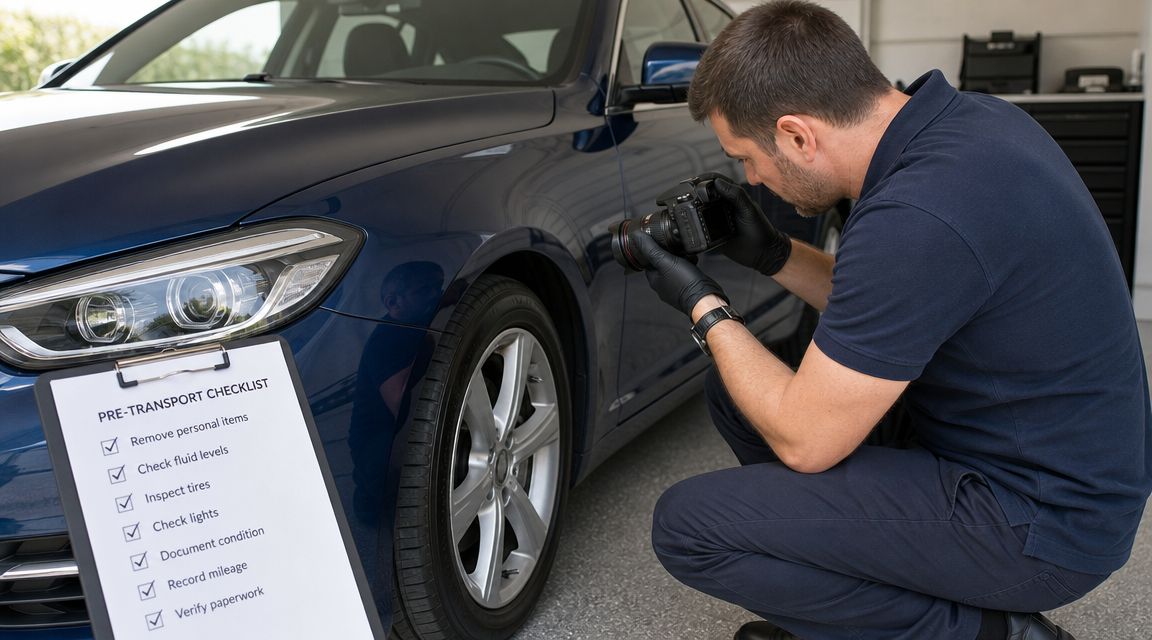
Your pre-pickup checklist
Start with visibility. A basic wash helps the driver spot existing scratches, chips, or scuffs during the condition report. The car does not need to be detailed. It just needs to be clean enough for an accurate inspection.
Then handle the items that affect loading and transport:
- Remove personal items: Loose belongings in the cabin or trunk can shift during transit, and many carriers limit or prohibit them.
- Take your own photos: Photograph all sides of the vehicle in daylight, plus close-ups of any existing damage.
- Check battery, tires, and brakes: If the vehicle is booked as operable, it needs to start, steer, roll, and stop without issue.
- Leave only a partial tank: The car needs enough fuel for loading and unloading, not a full tank that adds unnecessary weight.
- Turn off alarms: Repeated alarm triggers slow down loading and create avoidable problems on the road.
One detail customers miss often is paperwork tied to the vehicle itself. Remove toll tags, parking permits, and garage access devices if they could register charges while the car is in transit.
What not to overlook
Accurate vehicle condition matters at booking, not just at pickup. If the car is non-running, has a dead battery, sits unusually low, has oversized tires, or has a mechanical issue that affects loading, say so upfront. Those details change the trailer requirements, the equipment needed, and sometimes the price.
Inoperable vehicles usually cost more to ship because the carrier may need a winch, extra labor, or a different loading plan. If an order is dispatched as operable and the driver arrives to find a car that will not start, the pickup can be delayed or repriced on the spot.
That is one reason experienced coordination matters. A company that regularly handles harder moves, including Puerto Rico vehicle shipping with port timelines, document checks, and multiple handoffs, tends to be better at catching these issues before they become pickup-day surprises. National Car Transport uses bilingual agents to confirm the details clearly with customers and carriers, which helps prevent miscommunication on vehicle condition, access, and scheduling.
A clear condition record protects the customer and the carrier. It gives both sides a shared reference before the vehicle is loaded.
If the driver asks you to fold mirrors, remove custom accessories, or secure loose exterior parts, do it before loading begins. Aftermarket spoilers, removable racks, and low-hanging components deserve special attention. A few minutes of preparation can prevent avoidable claims and keep the shipment on schedule.
Shipping Solutions for Every Maryland-to-Texas Move
Not every move on this route looks the same. The shipment for a military family, a college student, and a collector car owner may all run on the same interstate corridor, but the planning priorities are different.
Military and student moves
For military families handling a PCS, timing is often tighter and less flexible. Delivery may need to line up with base housing access, temporary lodging, or staged household goods arrival. In these cases, the best approach is to build in a buffer and make sure your transport contact can coordinate with someone other than the vehicle owner if you're already traveling.
Students usually care most about cost control and simple scheduling. Their vehicle is often a daily driver, not a showpiece, and the key issue is getting the car there without losing several days on the road. The route is established enough that standard open transport is often the practical fit, especially when pickup and delivery are near major cities.
Snowbirds, families, and specialty vehicles
Snowbirds and relocating families usually focus on convenience. They want the vehicle to arrive near the same time they do, without having to manage a long drive through multiple states. If there are multiple moving parts, such as pets, children, flights, or a closing date, shipping the car can remove one major variable from the trip.
Classic and luxury car owners tend to focus on trailer type, loading care, and handling consistency. That's where enclosed service and very clear inspection documentation matter most. These customers usually don't want a vague answer about who is moving the vehicle or when it will be loaded.
This is also where deeper logistics experience shows up. A provider that coordinates not only domestic routes but also more complex moves, such as vehicle shipping to and from Puerto Rico, is used to managing documentation, handoffs, changing schedules, and customer communication across more demanding transport chains. On a domestic lane like Maryland to Texas, that level of process discipline often translates into a calmer experience for the customer.
Frequently Asked Questions About Car Shipping
Can I pack personal items in my car
Sometimes customers ask to use the trunk as extra moving space. The safer answer is to assume personal items shouldn't travel in the car unless the transporter specifically allows limited contents and explains the rules. Loose items can shift, add weight, and complicate inspection at pickup and delivery. If you do place anything in the vehicle with prior approval, keep it light, secured, and out of sight.
What happens if my vehicle is damaged during transport
Start with the delivery inspection before signing the final receipt. Compare the vehicle to the bill of lading prepared at pickup. If you see a new issue, document it immediately on the delivery paperwork and take clear photos before the driver leaves. The condition report is the first place any claim discussion starts, so accuracy at both ends matters.
How far in advance should I book my shipment
Earlier is usually better, especially if your dates are firm or your route involves less common pickup points. More lead time gives dispatch more flexibility to match the order to the right carrier and route. Last-minute bookings can still work on active lanes, but they leave less room to solve problems if access, weather, or timing changes.
If you're ready to ship car from maryland to texas, get the route details together first. Exact addresses, vehicle condition, transport type, and your date window will do more to improve the outcome than chasing the lowest headline number.
If you want a clear Maryland to Texas auto transport quote with real route-specific guidance, National Car Transport is one option to consider. Their U.S.-based bilingual agents work in English and Spanish, and the company notes 25+ years of experience, an A+ BBB rating, transparent flat-rate pricing, and a carrier network of 25,000+ vetted transport partners, which can be useful when you need one person to coordinate the details and keep the process simple.