
You've got a start date in Charlotte or Raleigh, a lease ending in California, and a car that has to be there when real life resumes. Driving it yourself means days on the road, hotels, and arriving too tired to unpack. Shipping it sounds simple until you realize pickup timing and transit time aren't the same thing, and that gap is where most moves go sideways.
Table of Contents
- What Shipping a Car From California to North Carolina Actually Looks Like
- Booking the Shipment and Getting a Real Quote
- Preparing Your Car for Pickup
- California to North Carolina Pricing and Transit Times
- Pickup Day and Delivery Day Logistics
- Title, Registration, and Inspection in North Carolina
- Planning Around the Move Without Getting Burned
What Shipping a Car From California to North Carolina Actually Looks Like
Take a common version of this move. A family leaves San Diego for a job near Raleigh. They fly out on a Friday, the movers take the household goods, and their SUV needs to arrive before school and work start the following week. They don't need a sales pitch. They need to know when a truck can realistically collect the car, how long it'll be gone, and what they'll drive in between.
That's the shape of most requests to ship a car from California to North Carolina. It's a long domestic run from West Coast origins like Los Angeles, San Francisco, San Diego, and Sacramento to Southeast destinations like Charlotte, Raleigh, Greensboro, and Wilmington. Most standard vehicles move on an open carrier with door to door service where access allows. Classic, low clearance, or high value cars often move enclosed instead. Plan on a multi day transit after pickup, plus a separate pickup window before the truck ever rolls.
Who makes this move
Military families reporting to a new duty station, employees relocating for work, students, snowbirds returning to the Southeast, online buyers, and specialty vehicle owners all use this corridor. The scale isn't niche. Vehicle registration and household access data for California and North Carolina shows California had 30,398,249 registered vehicles in 2020 and North Carolina had 8,739,280, for more than 39.1 million combined. Raleigh also recorded 96.1% household vehicle access and Charlotte 95.1% in that analysis.
In plain terms, you're moving between places where not having a car disrupts everything. You can't treat delivery like a package arrival estimate.
Don't plan your flight, rental car, or first workday around the transit estimate alone. Plan around the pickup window plus transit plus a buffer.
A U.S. based advisor who coordinates dispatch across time zones matters here. You're not just buying space on a truck. You're buying someone who'll tell you when to release the car, who the actual carrier is, and what to do if the window moves.
Booking the Shipment and Getting a Real Quote
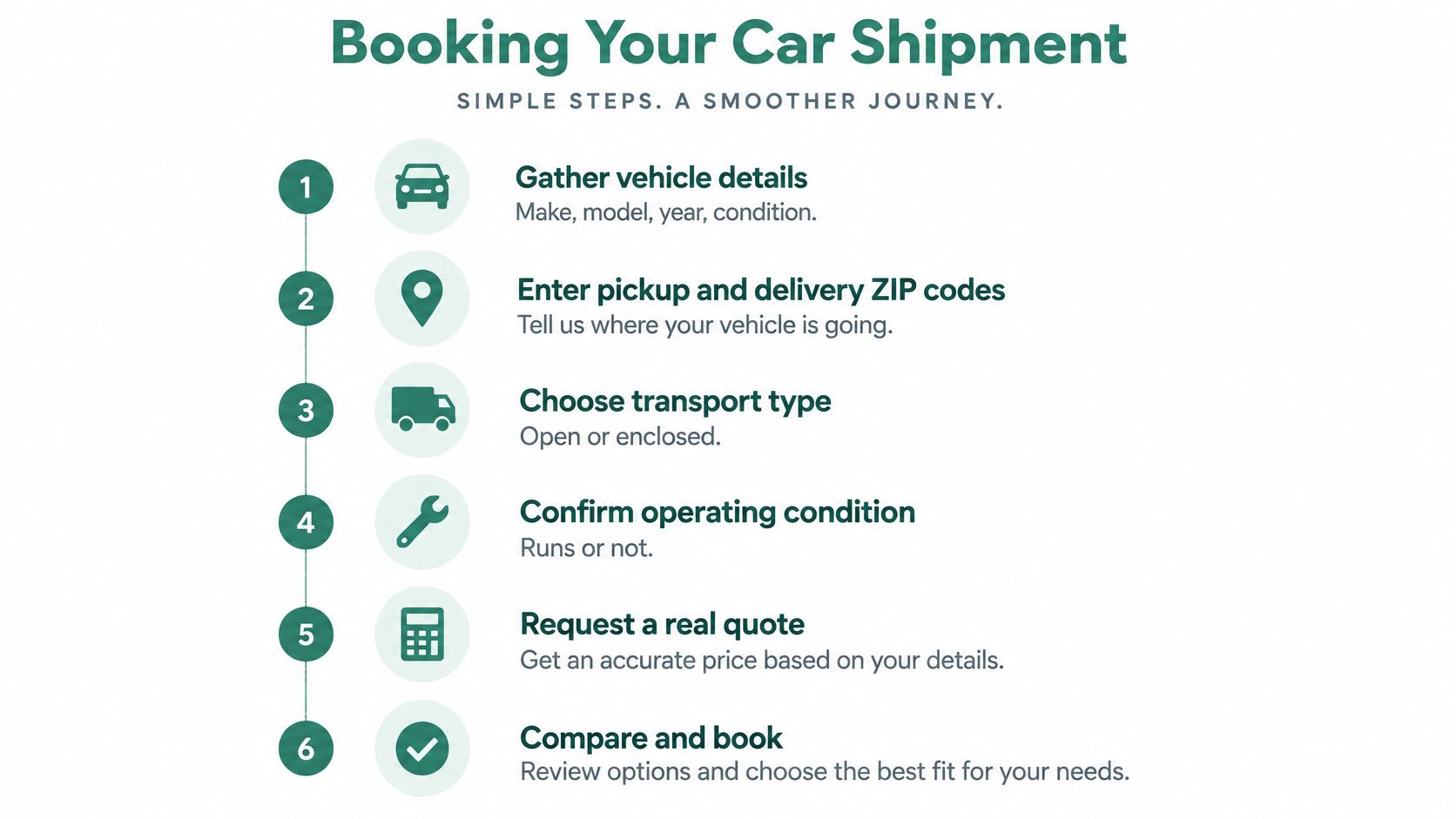
Start with accurate inputs or your quote is fiction. A dispatcher needs the year, make, and model, pickup and delivery ZIP codes, open or enclosed preference, and whether the vehicle runs and drives. A lowered coupe in San Francisco and a stock pickup in Sacramento don't price or load the same way, even if both are headed to North Carolina.
Once you submit those details, ask what kind of number you're getting. An estimate can change when a carrier is assigned. A binding flat rate should state the full amount, what's included, and what would legitimately change it, such as you switching to enclosed transport or disclosing that the car doesn't run after booking. If a company won't put that in writing, don't book.
What to confirm before you pay anything
Don't pay the full amount up front before a carrier is assigned. That's a red flag. Confirm deposit timing, cancellation terms, and the balance due method, then ask these questions directly.
- Are you the carrier or a broker: Both can be legitimate, but you need to know who's hauling the car.
- What's the pickup window: Get a range, not a promised hour, and ask how updates are sent.
- Who insures the vehicle in transit: Ask for the carrier's insurance confirmation and claim contact before release.
- Can the price change after dispatch: If yes, make them name the conditions in writing.
One option people compare on this route is National Car Transport, which describes 25+ years of experience, an A+ BBB rating, transparent flat rate pricing, and a network of 25,000+ vetted carriers, with bilingual English and Spanish agents based in the USA. Whoever you choose, judge them on those basics. Clear terms, a named carrier before pickup, and an agent who answers scheduling questions will save you more than a low teaser quote.
A confirmed order should leave you with the carrier's legal name, USDOT number, pickup window, delivery contact, payment terms, and escalation procedure. If you've only got a booking confirmation and a vague promise, you don't have a truck yet.
Preparing Your Car for Pickup
Wash the car and photograph it in daylight before the driver arrives. Dirty paint hides chips, and you'll argue about damage later without clean evidence. Walk every panel, glass surface, roof, wheel, and bumper. Photograph the odometer and every existing scratch, dent, curb mark, and windshield chip up close and from a few steps back.
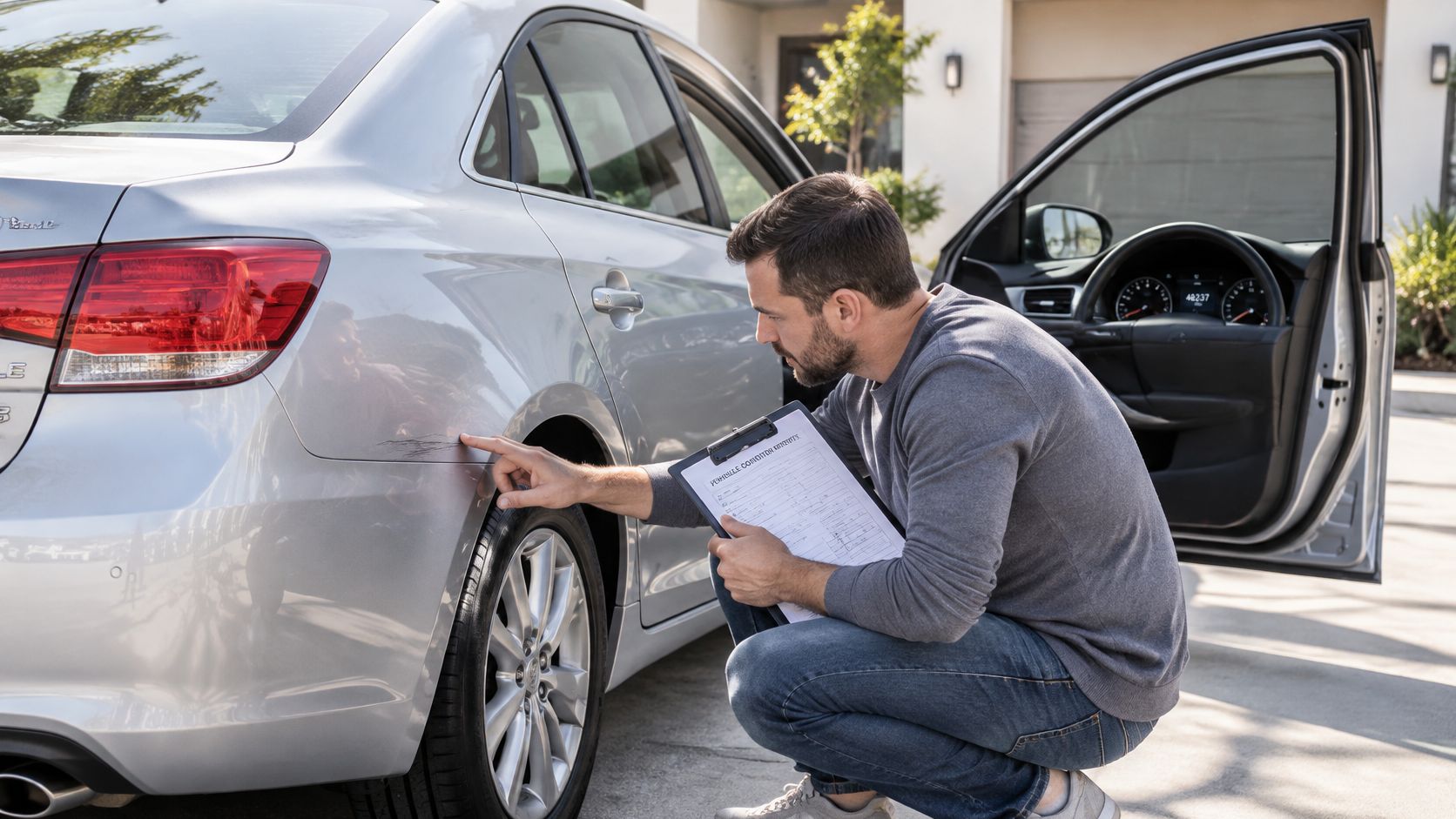
That photo set protects you if there's a claim. It also forces an honest pickup inspection instead of a rushed signature on the curb.
Mechanical readiness and what stays out of the car
Confirm the vehicle starts, rolls, steers, and brakes. If it doesn't, say so before booking. Inoperable vehicles need different equipment and loading time, and surprising a driver at pickup is the fastest way to get refused or repriced. Leave about a quarter tank of fuel unless your carrier tells you otherwise. That's enough to load and unload without hauling unnecessary weight.
Take out personal items, valuables, loose accessories, garage remotes, and toll transponders. Carriers generally don't cover personal property inside the vehicle, and loose items can damage the interior in transit. Remove E-ZPass and toll tags so you don't collect phantom charges while the car rides across the country. Disable custom alarms and write down any special starting instructions for modified vehicles.
If you're deciding between trailer types during prep, open car transport options for standard vehicle shipping work for most daily drivers. Enclosed service makes sense when weather exposure, low clearance, or vehicle value changes the risk calculation. Either way, keep one set of keys ready, fold in mirrors, lower or remove antennas where possible, and note leaks before the driver finds them on the ramp. Small leaks become other customers' problems on a multi car carrier, and drivers notice.
Practical rule: If you can't prove the condition at pickup with dated photos, don't expect to prove new damage at delivery.
California to North Carolina Pricing and Transit Times
Price this route by your exact city pair, vehicle, dates, and carrier availability, not by a statewide average you saw in an ad. Los Angeles to Charlotte moves through a heavily traveled corridor. A rural California pickup going to coastal North Carolina can take longer to dispatch because fewer trucks pass both points on the same run.
Use the table as a planning framework, then get a route specific flat rate in writing.
California to North Carolina Shipping Estimates
| Origin | Destination | Estimated Price | Transit Time |
|---|---|---|---|
| Los Angeles | Charlotte | Request a route specific flat rate | Multi day transit after pickup |
| San Francisco | Raleigh | Request a route specific flat rate | Multi day transit after pickup |
| San Diego | Greensboro | Request a route specific flat rate | Multi day transit after pickup |
| Sacramento | Wilmington | Request a route specific flat rate | Multi day transit after pickup |
Four factors move your price most. Distance and route direction set the base. Fuel and carrier capacity at booking change what drivers will accept. Season matters because summer relocations, college moves, and snowbird traffic tighten supply. Vehicle size and condition matter because an inoperable SUV takes more space, time, and equipment than a running sedan.
Open transport is the lower cost workhorse for standard cars. Enclosed costs more because you're buying covered equipment, lower vehicle counts, and better protection from road debris and weather. Pay for enclosed when the car is classic, exotic, freshly restored, or too low for standard ramps. For a daily driver, open usually delivers the better value.
Before you chase the lowest number, use car shipping cost factors and quote guidance to compare what's included. Consumer complaint records describing delayed interstate vehicle shipments include a customer who reported renting a car for $389 after a shipment arrived outside the promised window. That's the pricing lesson. A cheap quote that slips can cost more once you add a rental, a changed flight, or extra nights without your car.
Transit time starts after pickup, not after you click book. Build your calendar around both pieces, and don't let anyone sell you a guaranteed delivery date without putting remedies in the contract.
Pickup Day and Delivery Day Logistics
Don't hand over keys until the driver matches your dispatch information. Confirm the driver's name, company, truck, and USDOT number on the vehicle. Guidance on verifying interstate auto transport companies and FMCSA registration is useful background, but your real control is at the curb. Match the paperwork to the truck in front of you.
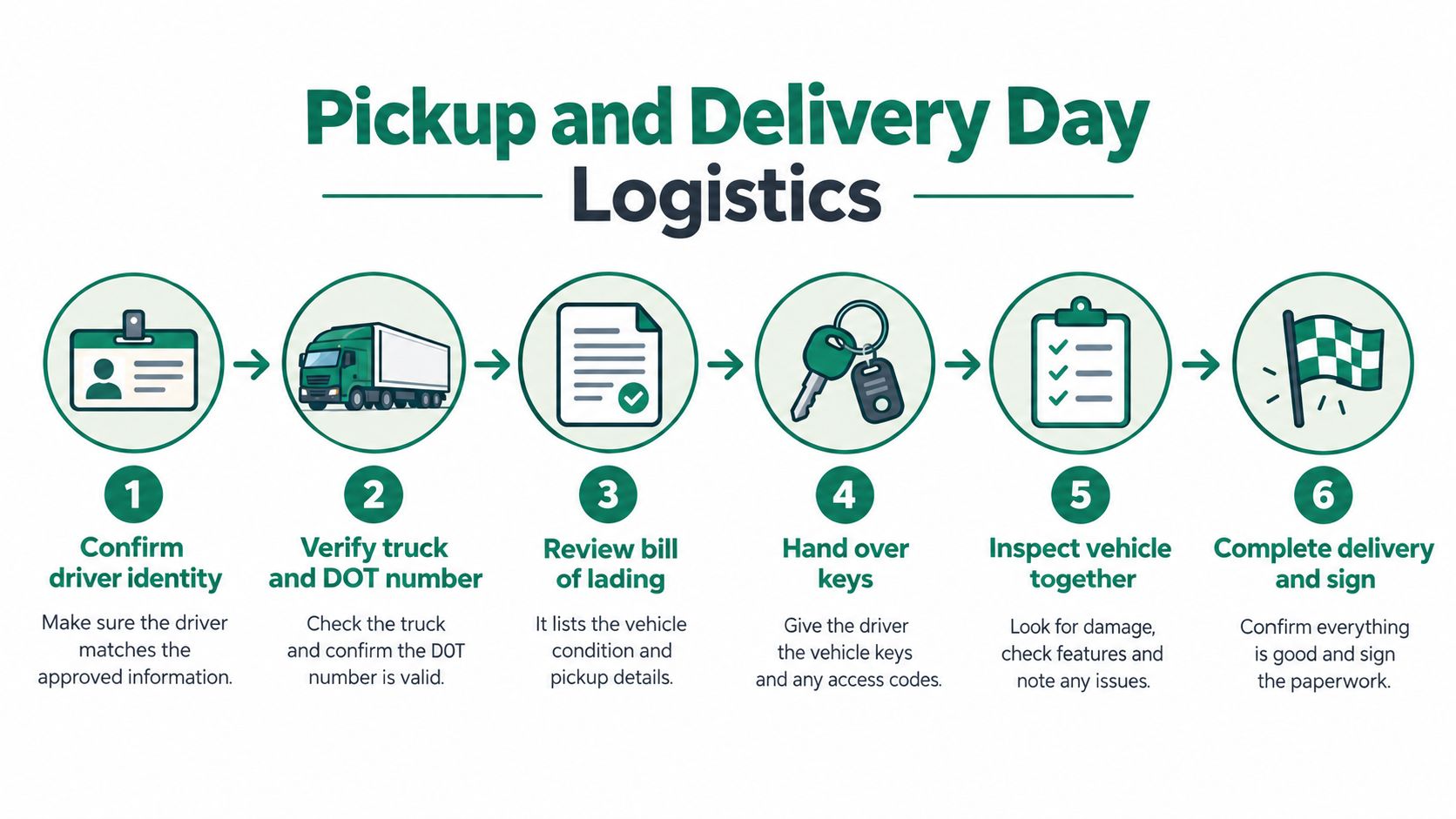
The bill of lading is your condition record and receipt. Walk the car with the driver, make sure existing damage is marked, record the odometer, and sign only after the notes match your photos. Keep your copy. At delivery, inspect against that same document before you sign clean. If something's new, write the exception on the delivery bill of lading first, then call your agent.
Big carriers can't always reach narrow residential streets, gated communities, or tight apartment lots. Meeting at a nearby shopping center or wide lot isn't a downgrade. It's often safer and faster. That's still consistent with door to door auto transport pickup and delivery service when the driver gets as close as access and safety allow. Businesses setting up local handoffs can also learn from this 2026 pickup and delivery service guide on staging, communication, and meeting point discipline.
This short walkthrough shows what a normal handoff should look like before the vehicle is released.
During transit, expect proactive updates when the truck is dispatched, loaded, delayed, and approaching delivery. If calls stop, escalate through your booking agent with the carrier name and USDOT number from your order. You can also verify a carrier through FMCSA enforcement and inspection terminology for carrier checks, which covers credentials, hours of service records, brakes, cargo securement, tires, lighting, steering, and suspension. Never accept an unexplained cash demand at delivery that contradicts your written balance.
Title, Registration, and Inspection in North Carolina
Transport ends at delivery. North Carolina paperwork starts there, and it's a separate job. Don't assume California compliance transfers automatically or that a clean delivery means you're legally finished.
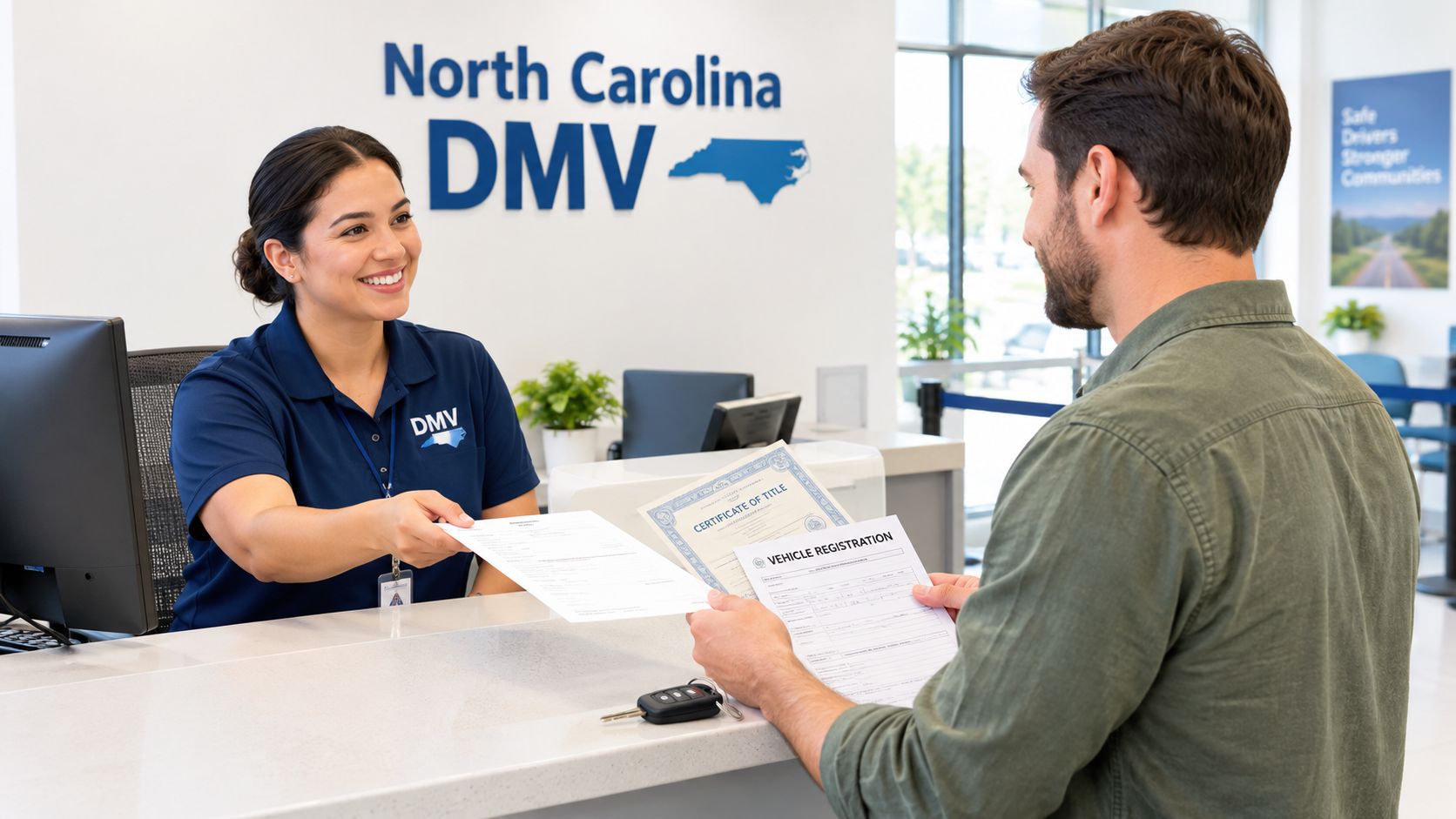
New residents generally must title an out of state vehicle in North Carolina before registration. Review North Carolina DMV title and registration requirements for vehicle owners before the car ships so title, lienholder, odometer, and power of attorney problems don't surface at the counter. If a bank holds your title, start that conversation in California, not after delivery in Charlotte.
Documents to line up before shipment
- Title path: Secure the original title or electronic title instructions, plus lienholder authorization if the vehicle is financed.
- Identity and insurance: Prepare photo identification and proof of insurance that North Carolina will accept.
- Transfer records: Keep the bill of sale or reassignment documents, odometer information, and any required power of attorney with you, not inside the shipped car.
- Delivery records: Retain the bill of lading and your pickup photos until registration is complete and any claim window is closed.
North Carolina permits initial registration without an inspection, with an inspection required before a later annual renewal. Emissions requirements can vary by county and vehicle circumstances, so confirm your destination county's current rules directly. Raleigh, Charlotte, Greensboro, and Wilmington may not present identical inspection situations for every vehicle.
Schedule delivery in daylight at a well lit location where you can inspect every panel. Accepting a car after dark or in heavy rain is a common failure point because paint, glass, wheel, and underbody damage are easy to miss. If the driver arrives late, document what you can, note limited visibility on the paperwork, and photograph everything immediately. Don't sign a clean delivery receipt just to be polite.
Planning Around the Move Without Getting Burned
Treat the pickup window as a range and transit as a second range that starts after loading. Add buffer days before a job start, college move in, military report date, or housing handover. If you must have wheels on arrival, budget a rental instead of betting your first week on a truck crossing the country.
A realistic relocation plan should also include the costs around the shipment, and this realistic moving out budget is a helpful way to account for deposits, temporary transport, and overlap expenses beside the carrier invoice.
Save this checklist
- Before booking: Confirm flat rate terms, carrier verification steps, insurance contact, and whether delays trigger any reimbursement.
- Before pickup: Photograph condition, remove personal items, confirm driver identity, and keep title documents with you.
- At delivery: Inspect in daylight, compare against pickup records, write exceptions before signing, and start North Carolina titling promptly.
Pay a little more for a tighter, better communicated window when your calendar is fixed. It's often cheaper than rebuilding travel plans around a missed truck.
If you're ready to ship a car from California to North Carolina, get a written flat rate, a named carrier before pickup, and a bilingual U.S. based agent who'll coordinate the handoff and updates for you. Visit National Car Transport to request your route specific quote and book with a clear pickup plan instead of a teaser price.