

Most advice about how to send car by rail skips the part that matters most. For individual consumers in the U.S., rail is not a broad national car-shipping network. It's a narrow, route-specific option that works in one very particular situation.
That gap causes a lot of bad planning. People assume they can book rail from California to Texas, from Chicago to Arizona, or from New York to Puerto Rico. In real-world auto transport, that isn't how it works. If you're moving a personal vehicle, truck transport usually does the heavy lifting, and for island moves such as San Juan, Puerto Rico, the job becomes a coordinated truck-plus-ocean process.
Table of Contents
- The Reality of Sending a Car by Rail in the U.S.
- When Does the Amtrak Auto Train Make Sense?
- The Nationwide Solution Professional Auto Transport
- Your Step-by-Step Guide to Booking and Preparation
- Special Logistics Shipping Cars to and from Puerto Rico
- Frequently Asked Questions About Vehicle Shipping
The Reality of Sending a Car by Rail in the U.S.
If you picture a nationwide consumer rail network where you can drop off a car in one state and pick it up in another, you're really thinking of freight infrastructure, not a mainstream personal shipping system.
U.S. rail is enormous in freight terms. According to Union Pacific's rail facts overview, freight railroads haul about 1.7 billion tons of raw materials and finished goods in a typical year, and one train can carry the equivalent of about 300 trucks. The same verified industry context also notes that the U.S. Vehicle Shipping Services industry is projected by IBISWorld at $10.5 billion in 2026, and rail is part of that ecosystem, but truck transport remains the main method for individual vehicle moves.

Freight rail and consumer car shipping aren't the same thing
Freight operators move massive volumes through commercial rail networks. That doesn't mean a retail customer can book personal vehicle transport on demand between most cities.
For consumers, rail-based vehicle shipping is highly constrained. The only widely available passenger auto-rail service in the U.S. is the Amtrak Auto Train route between Virginia and Florida, not a flexible coast-to-coast service for the general public.
Practical rule: If your route doesn't line up with a dedicated consumer auto-rail corridor, rail usually isn't your answer.
What this means for real moves
Typically, moving a car from Phoenix to Boston, Dallas to Seattle, Los Angeles to Miami, or anywhere to San Juan requires a truck-based plan. That's also why experienced shippers focus less on the idea of rail and more on actual route design, pickup access, delivery timing, port coordination, and vehicle type.
A practical transport plan has to match the route you have, not the route you wish existed.
When Does the Amtrak Auto Train Make Sense?
For a small slice of customers, rail is a real option. That slice is the Amtrak Auto Train between Lorton, Virginia, and Sanford, Florida.
If the route lines up with your trip, the service can work well. I would consider it for snowbirds, seasonal residents, families heading between the Mid-Atlantic and Florida, and some East Coast moves where both ends are already close to the terminals. In those cases, the train can be a practical travel choice, not just a vehicle-shipping idea.
What the Auto Train offers
The appeal is straightforward. You travel with your vehicle on the same route, on the same schedule, using a fixed corridor that is built for that purpose. For the right traveler, that can compare well with hiring a truck carrier on that one lane.
The trade-off is just as straightforward. This is a terminal-based service, not a door-to-door transport plan. You need to deliver the car to the departure terminal, follow Amtrak's check-in rules, take the trip yourself, then pick the vehicle up at the arrival terminal. If your home, destination, or schedule sits outside that setup, the convenience drops fast.
The Auto Train makes sense when your personal travel plans and your vehicle route are the same trip.
Rail vs. Truck Transport (VA to FL Corridor)
| Factor | Amtrak Auto Train | National Car Transport (Truck) |
|---|---|---|
| Best use case | Travelers already moving between the Virginia and Florida terminals | People who want flexible pickup and delivery beyond fixed rail terminals |
| Route coverage | One fixed corridor only | Broad U.S. routing, including major cities and hard-to-reach residential moves |
| Customer involvement | Higher. You handle terminal timing and handoff | Lower. Carrier or broker coordinates pickup and delivery logistics |
| Travel style | You and the vehicle move on the same trip | Vehicle shipping is separate from your own travel |
| Convenience | Strong if you live near Lorton and Sanford | Strong if you need route flexibility or doorstep service |
| Puerto Rico fit | Not suitable | Practical as part of a truck-plus-ocean move |
When it doesn't make sense
The Auto Train stops being useful once the route stops matching your move.
Common examples include:
- You're not near the corridor: Customers in the West, Midwest, Gulf states outside the route, or much of New England still need a different transport method.
- You want pickup and delivery built around your address: Terminal handoff adds extra driving, timing constraints, and personal involvement.
- Your shipment is separate from your own travel: If you're flying, already relocated, or sending the car for someone else, truck transport is usually the cleaner plan.
- Your route involves Puerto Rico: That move requires truck coordination to port and ocean transport. Rail does not solve that chain.
- You need wider scheduling options: Truck dispatch gives more flexibility when pickup windows, residential access, or final delivery details are tight.
So yes, the Auto Train has a place. For one East Coast lane, it can be a smart fit. For almost every other consumer move in the U.S., truck transport is the method that matches the route, the schedule, and the handoff points people deal with in real life.
The Nationwide Solution Professional Auto Transport
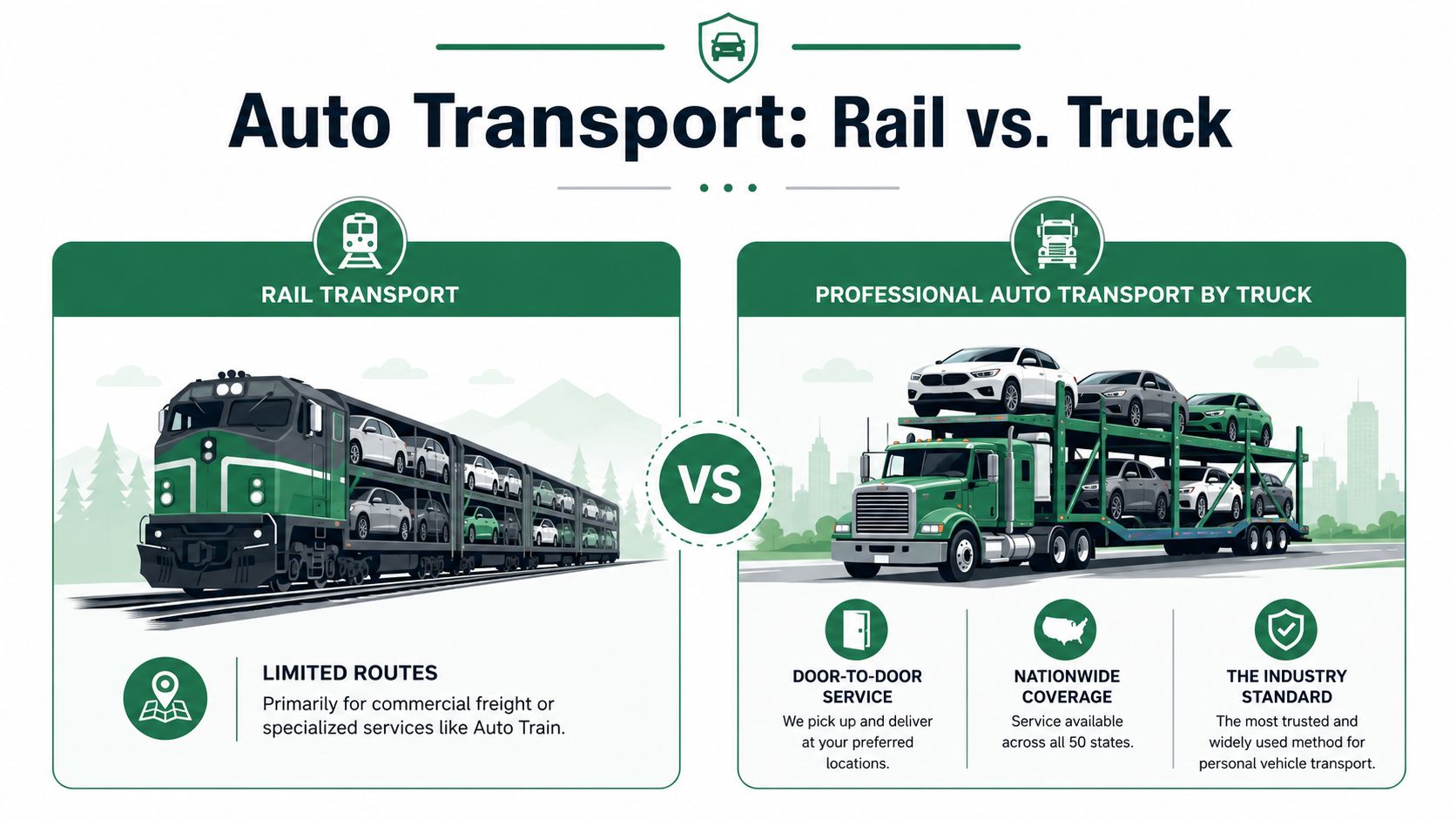
Most successful car shipments in the U.S. move by truck because truck transport matches how people live. Homes, apartment buildings, dealerships, military bases, college campuses, auction yards, repair shops, and port terminals rarely sit on a consumer rail line built for personal vehicle handoff.
Truck transport also adapts to the full map. It works for major metro routes like Los Angeles to Dallas, Chicago to Atlanta, and Newark to Miami, but it also works for smaller handoffs in suburbs, rural areas, gated communities, and port access points tied to island shipping.
Why truck transport became the standard
Rail is terminal-driven and route-limited. Trucking is flexible enough to build around the customer.
That matters in everyday situations:
- Relocation moves: A family can ship from a neighborhood in Denver to a residence near Tampa without designing the move around a rail station.
- Military orders: A service member may need vehicle movement coordinated around reporting dates, base access, and household moves.
- Student transport: Pickup may need to happen near a dorm, apartment complex, or family home.
- Dealer and auction logistics: Vehicles often move between commercial locations that need scheduling precision, inspection control, and scalable dispatch.
- Puerto Rico shipments: Ground transport gets the car to the departure port before ocean freight takes over.
What works in practice: Use rail only when the route is already built for you. Use truck transport when the route has to fit your life.
Open carriers and enclosed carriers
Most personal vehicles ship on open carriers. That's the standard setup you see on highways carrying multiple vehicles. It's usually the most practical choice for everyday sedans, SUVs, pickup trucks, and family vehicles.
Enclosed carriers serve a different job. They're often used for classics, luxury models, exotic cars, restored vehicles, and other units where extra protection matters more than minimum cost. Move.org's analysis of nearly 700 quotes found that enclosed transport averages about $1,490 and is about 40% more expensive than open transport. That doesn't make enclosed better for every shipment. It makes it more specialized.
Why multimodal planning matters
The best transport providers don't treat every shipment as a simple highway move. Some jobs need multimodal planning, where a truck move connects with another leg such as port handling and ocean shipping.
That's especially important for Puerto Rico. A customer in Atlanta, Houston, Charlotte, or Orlando doesn't need a lecture about rail theory. They need the vehicle picked up, routed to the correct port workflow, documented correctly, and delivered through the proper handoff chain.
A good transport plan is less about a single mode and more about controlling the whole sequence from origin to final release.
Your Step-by-Step Guide to Booking and Preparation
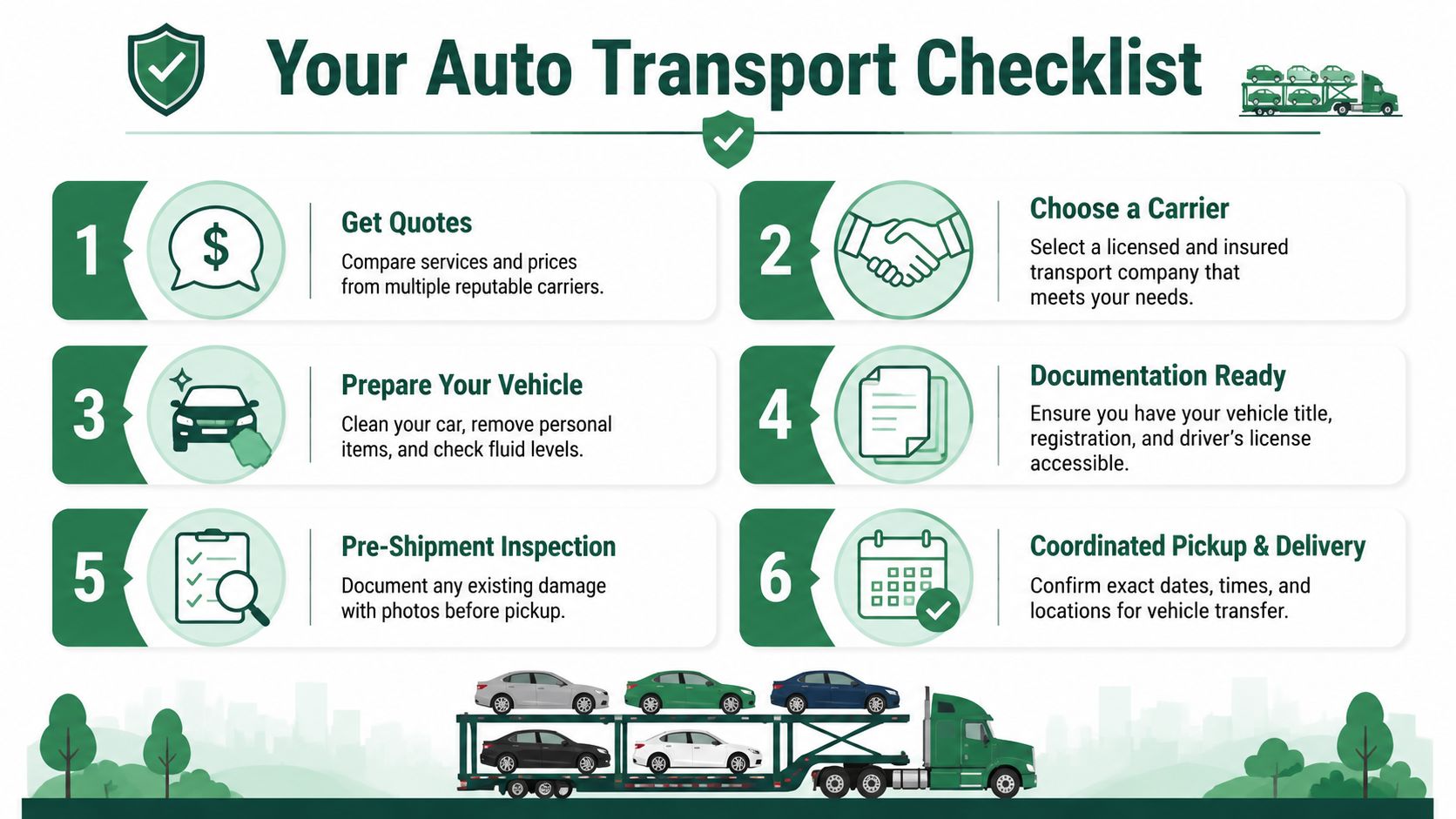
Booking goes smoothly when the route is defined clearly, the vehicle is described accurately, and the handoff is documented well. Problems usually start earlier. A vague address, an undisclosed mechanical issue, or missing paperwork can delay pickup faster than any weather report.
Before you book
Start with facts, not estimates.
A carrier or broker needs the full route, the vehicle type, whether it runs, and whether the delivery point can handle a large truck. That sounds basic, but it is where many customer files go wrong. A condo in a dense downtown area, a house on a narrow rural lane, a base access point, and a port terminal all require different pickup planning.
Use this checklist before you place the order:
- Confirm the exact origin and destination. Full addresses matter because access limits affect scheduling and truck size.
- Choose open or enclosed service. Open transport fits standard daily-driver moves. Enclosed service makes sense for high-value, restored, or highly sensitive vehicles.
- Disclose operable status. If the car does not run, the carrier may need a winch or other loading equipment.
- Have your documents ready. Registration and photo ID are common starting points. Port moves and title-sensitive shipments may require more.
- Ask where the handoff will happen. If a full-size carrier cannot safely enter your street, pickup may happen at a nearby lot or other agreed meeting point.
Vehicle prep that prevents problems
Preparation for truck and rail follows many of the same principles because the risks are similar. As Sherpa Auto Transport's guide to shipping a car by train notes, smart prep includes removing personal belongings, leaving about one-quarter tank of fuel, and photographing the vehicle before transport.
Keep the prep simple and thorough:
- Remove personal items: Loose items create inspection disputes and may shift during transport.
- Photograph the vehicle carefully: Take clear, dated photos from multiple angles in good light.
- Leave about a quarter tank: That gives enough fuel for loading and unloading without adding unnecessary weight.
- Secure loose parts: Antennas, spoilers, racks, and removable accessories should be tightened, removed, or protected.
- Check for leaks or mechanical issues: Drivers need advance notice about anything that affects safe loading.
A dirty exterior can hide chips and scratches. A trunk packed with household goods can create liability problems. Ten extra minutes before pickup often saves days of argument later.
Pickup, inspection, and delivery
Inspection is the part customers should take seriously every time.
At pickup, review the vehicle with the driver and record visible damage on the Bill of Lading. That document is both the shipping receipt and the condition record. At delivery, compare the car to that same record before signing off.
AmeriFreight's explanation of shipping a car by train across the country makes a point that applies even more strongly to consumer truck transport. Good outcomes depend on accurate paperwork, clear coordination, and careful inspection at both ends.
A few habits reduce avoidable disputes:
- Be present or assign a trusted representative for pickup and delivery.
- Read the inspection notes before signing instead of treating the form as routine paperwork.
- Inspect the vehicle before the driver leaves at delivery.
- Keep your photos and documents organized until the shipment is fully closed out.
For consumer moves in the U.S., this truck-based process is what matters. Rail is rarely the booking decision. The actual decision involves choosing a company that can line up the right truck, the right schedule, and the right paperwork for the route you have.
Special Logistics Shipping Cars to and from Puerto Rico
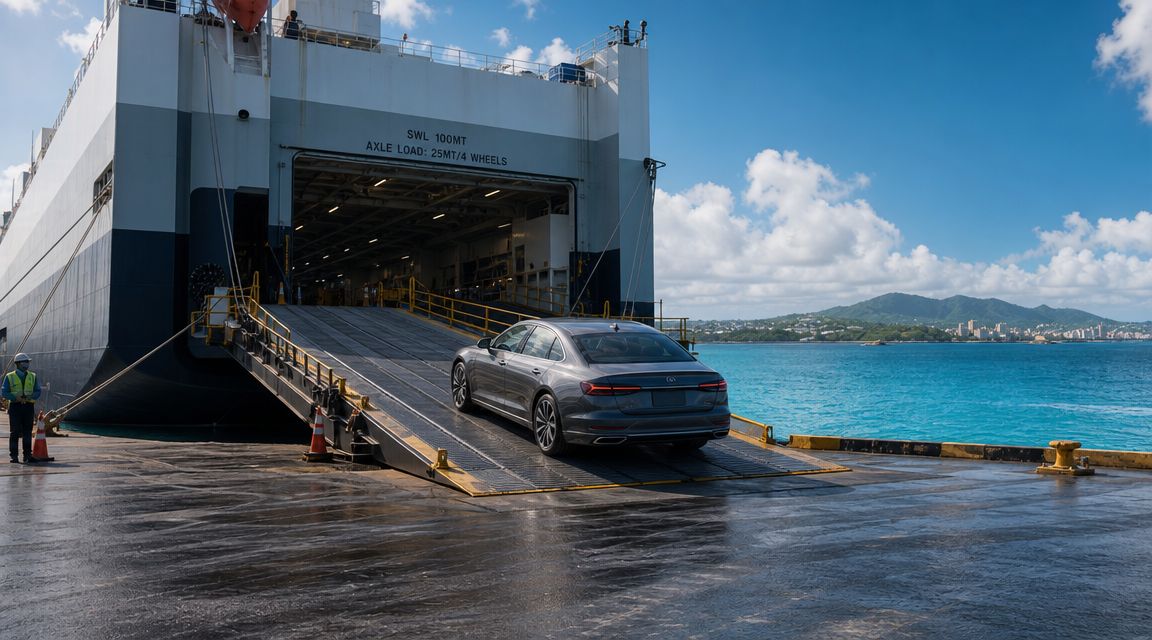
If you're moving a vehicle between the mainland and Puerto Rico, rail isn't part of the solution. This is a multimodal shipment, usually built around ground transport to a port and then ocean freight to San Juan.
That distinction matters because many customers search "send car by rail" when what they really need is a company that can coordinate several linked steps without losing control of the file.
How the mainland to island process actually works
A typical Puerto Rico move starts with a truck pickup somewhere on the mainland. That may be a home in Orlando, a dealership in Houston, a military-related move from Virginia, or a student relocation out of a city in the Northeast or Midwest.
From there, the vehicle is transported to the appropriate port workflow, then loaded into the ocean-shipping process bound for San Juan, Puerto Rico. Once the vehicle arrives, release procedures, identity checks, and local requirements determine the final handoff.
In such circumstances, experienced coordination matters most. The shipment has more than one custody point, more than one schedule dependency, and more than one documentation review.
Where people get stuck
The common issues are rarely dramatic. They're administrative.
- Title problems: If ownership documents aren't clear, the shipment can stall before the ocean leg.
- Tax and import questions: Customers often need guidance on Puerto Rico excise tax, commonly referred to as arbitrios.
- Port timing: Missing a cutoff can affect the whole chain.
- Communication gaps: Mainland pickup, port processing, and island release all need clean status updates.
A bilingual support team helps here because questions may come from family members, port contacts, local offices, or commercial buyers who prefer English or Spanish.
For a look at the island shipping side of the process, this video gives useful context:
For Puerto Rico, the right question isn't "Can I send my car by rail?" The right question is "Who can manage the handoffs cleanly from mainland pickup to island release?"
Frequently Asked Questions About Vehicle Shipping
Can I send my car by rail across the country
For most U.S. consumers, no. Rail for personal vehicles is not a general nationwide option. If you're not moving along the narrow Virginia-to-Florida corridor discussed earlier, you'll usually need truck transport.
That includes West Coast moves, Midwest moves, mountain-state routes, and shipments involving Alaska, Hawaii, or Puerto Rico.
Is rail cheaper than truck transport
Sometimes, but only in a very specific situation. On the Auto Train corridor, rail can be competitive and even cheaper for that route, especially if you're traveling with the vehicle yourself.
Outside that lane, truck transport usually wins because it's the service you can book for real-world origins and destinations. Price only matters after availability, route fit, and handoff practicality.
What protects my vehicle during shipping
Protection starts with the inspection process, not with a slogan. The pickup inspection records pre-existing condition, and the delivery inspection compares the vehicle on arrival. Good photos, accurate paperwork, and careful review of the Bill of Lading matter more than most customers realize.
Carrier insurance also plays a role, but documentation is what supports any claim review. That's why rushed pickup appointments often create avoidable disputes.
The cleanest claims process is the one you prepared for before the vehicle ever moved.
What about inoperable vehicles and complex routes
They can be shipped, but they require advance disclosure and the right equipment. A non-running vehicle may need a winch-equipped carrier or added handling steps.
Complex routes also aren't unusual. Some customers need transport from a small town to a major city. Others need a car moved from a dealership to a port, or from a mainland residence to San Juan through a multimodal handoff. Those jobs succeed when the logistics plan matches the vehicle's condition, the route's constraints, and the paperwork.
How should I think about timing
Think in terms of windows, coordination, and handoffs, not just mileage. A short route with bad access, limited availability, or port deadlines can require more planning than a longer highway move.
The customers who have the easiest experience usually do three things well. They book early, prepare the vehicle correctly, and stay reachable during pickup and delivery.
If you need a practical vehicle shipping plan instead of a rail myth, National Car Transport is built for the routes people utilize across the mainland U.S., Puerto Rico, Alaska, and Hawaii. With 25+ years of experience, an A+ BBB rating, transparent flat-rate pricing, and a network of 25,000+ vetted carriers, the company handles door-to-door transport, enclosed service, and multimodal island shipments with experienced USA-based bilingual agents in English and Spanish. Every shipment is different, and having a seasoned advisor who can simplify the process from quote to final delivery makes a real difference.