
Auto transport companies coordinate vehicle pickup, carrier assignment, paperwork, and delivery for moves across the mainland and to Puerto Rico. A typical mainland or Puerto Rico shipment may fall within a $845 to $1,795 price band and a 7-to-14-day transit window, but the route and service terms determine the actual quote and timing.
If you're relocating, buying a car online, heading south for the season, or coordinating a military move, the quote is only the start. The work is managing handoffs, paperwork, vehicle condition, and timing, especially when a shipment includes an ocean leg to San Juan. Treat the move as a logistics plan, not just a price comparison.
Table of Contents
- What a Moving Transport Company Actually Does
- Service Types and How to Choose the Right One
- The Booking Journey From Quote to Delivery
- Red Flags, Fraud, and How to Verify a Provider
- How Auto Transport Pricing Actually Works
- Shipping a Car to Puerto Rico and What Changes
- Real Use Cases and How the Right Provider Helps
- Smart Next Steps and Common Questions
What a Moving Transport Company Actually Does
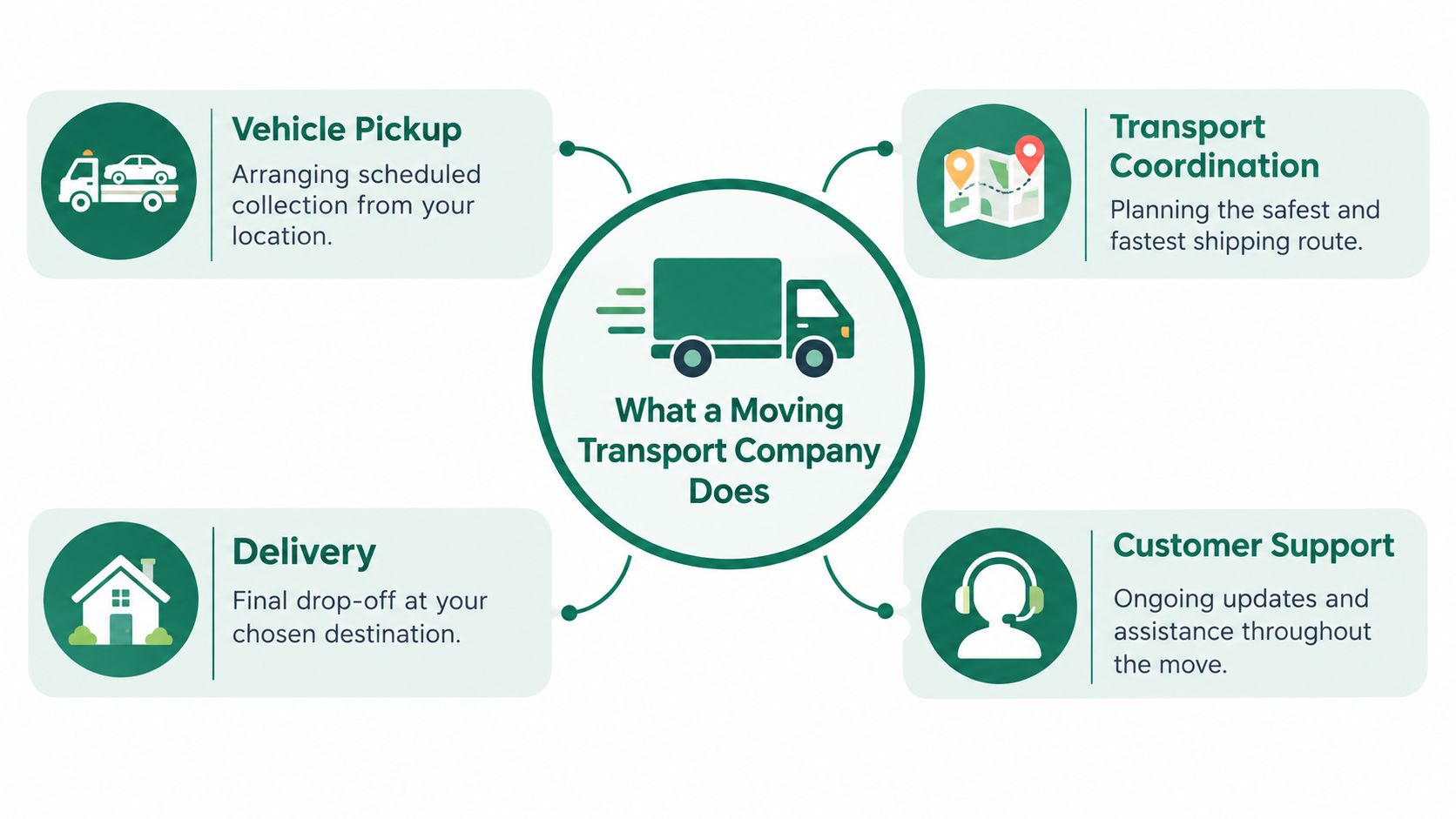
A moving transport company arranges the steps that get your vehicle from its current location to its destination. That usually means confirming vehicle and route details, scheduling pickup, assigning a carrier, coordinating transport, and keeping you informed through delivery. The company may be a broker, which arranges a carrier, or the actual carrier, which operates the truck. Know which role you're hiring before you book.
The process typically works like this:
- Provide accurate details. Give the company the pickup and delivery addresses, vehicle year and model, whether it runs, and any access constraints. A tight residential street, low clearance, or non-operable vehicle can change the equipment and pickup plan.
- Confirm the service and handoff. Ask whether pickup and delivery are door-to-door, terminal-based, or routed through a port. For Puerto Rico, clarify where the mainland truck handoff ends and who coordinates the ocean leg.
- Inspect and document. At pickup, you and the driver record the vehicle's condition on the bill of lading. Repeat the walk-around at delivery before signing.
- Stay reachable. Dispatch timing can shift with weather, traffic, equipment availability, or port schedules. Keep your phone on and make sure the carrier has the right contacts at both ends.
Individuals, snowbirds, military families, students, dealerships, auctions, and online car buyers all use auto transport. The U.S. Census Bureau estimated that 25.624 million people aged one year and older moved to a different residence in 2023, including 5.821 million interstate moves; these are people, not a count of vehicle shipments or moving jobs (Census Bureau mobility estimates). That scale helps explain why dependable scheduling and clear responsibility matter.
Practical rule: Get the name of the carrier, the name of the broker if there is one, and the person responsible for updates. If nobody can tell you who owns the next handoff, don't treat the quote as a complete plan.
Service Types and How to Choose the Right One
The right service depends on the vehicle, route, and your flexibility. Open transport is the sensible default for a standard sedan or SUV. Enclosed transport costs more, but it can make sense for a classic, exotic, modified, or low-clearance vehicle where added protection and loading care matter.
| Service Option | Typical Price Premium | Best Use Case |
|---|---|---|
| Open carrier | Lower than enclosed | Everyday vehicles and flexible budgets |
| Enclosed carrier | Higher than open; confirm the quote | Classics, luxury vehicles, and low-clearance cars |
| Door-to-door | Route-dependent | Convenient pickup and delivery near accessible addresses |
| Terminal-to-terminal | May reduce the cost | Customers who can drop off and collect the vehicle at terminals |
| Port-to-port or door-to-port | Depends on inland and ocean legs | Mainland-to-Puerto Rico routes, including shipments ending at San Juan |
| Container shipping | Quote varies by route and vehicle | Island routes when a container arrangement fits the shipment |
For island shipments, ask who handles the mainland transport, port delivery, ocean booking, and Puerto Rico release. A door-to-port plan can be practical when the destination is San Juan and the mainland carrier can't deliver directly to the island. Don't assume “door-to-door” means a truck will carry the car all the way across the water.
For a useful way to compare providers and service terms on a household move, see this guide to how to pick a mover. The same principle applies to auto transport: compare scope, accountability, and written terms, not just the headline quote. For mainland moves, review what door-to-door auto transport includes and confirm that your addresses are accessible for the planned equipment.
The Booking Journey From Quote to Delivery
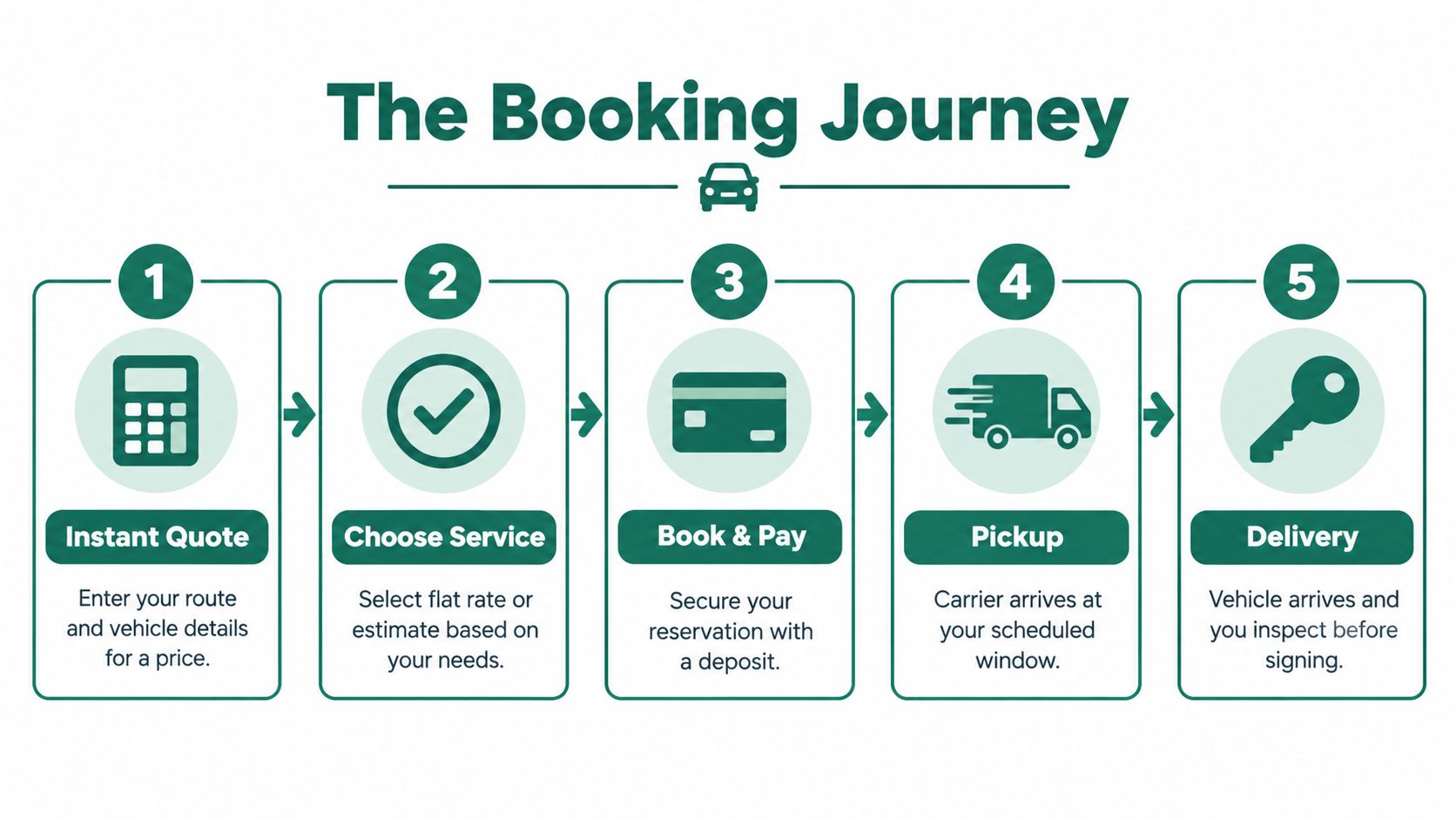
A good booking is a sequence of confirmed decisions, not a vague promise that a truck will "be there soon." Start with a quote based on the vehicle and route. Before paying anything, ask whether the price is a firm flat rate or an estimate that can change when a carrier is assigned.
Make the quote specific
Give the provider the vehicle's make, model, year, condition, pickup and delivery locations, preferred dates, and any special handling needs. For a Puerto Rico shipment, state whether you want port-to-port, terminal-to-terminal, or inland service on either end. Confirm what the quoted amount includes, what could change it, and when payment is due.
Confirm dispatch and pickup
Once you accept the terms, the company may collect a deposit or payment to reserve the service. Ask what event triggers any charge and what happens if no carrier is assigned within the agreed window. When the carrier is confirmed, get the carrier's contact details, the pickup window, and instructions for preparing the vehicle.
At pickup, remove personal items unless the company has explicitly approved them, and take clear photos of every side of the vehicle. Review the bill of lading with the driver before signing. It should record existing damage and the vehicle's condition, not just confirm that a pickup occurred.
For a shipment with several handling stages, it helps to think in terms of who is responsible at each handoff. This overview of understanding white glove delivery options offers a useful comparison for customers who want to understand what added coordination can look like.
At delivery, walk around the vehicle with the driver and compare its condition with the pickup record. Note new damage on the delivery paperwork before signing, take photos, and follow the written payment terms. Keep copies of the bill of lading, quote, and messages until the shipment is fully closed.
Red Flags, Fraud, and How to Verify a Provider
The lowest bid isn't automatically a bargain. A late-2025 survey of 59 vehicle shippers found that nearly one in three said they had experienced transportation fraud in the prior three years; 98% expected delivery within eight days, and nearly half expected it in under four (survey coverage on vehicle-shipping fraud and expectations). Those expectations can clash with real dispatch and transit conditions, so don't accept an aggressive promise without asking how it will be met.
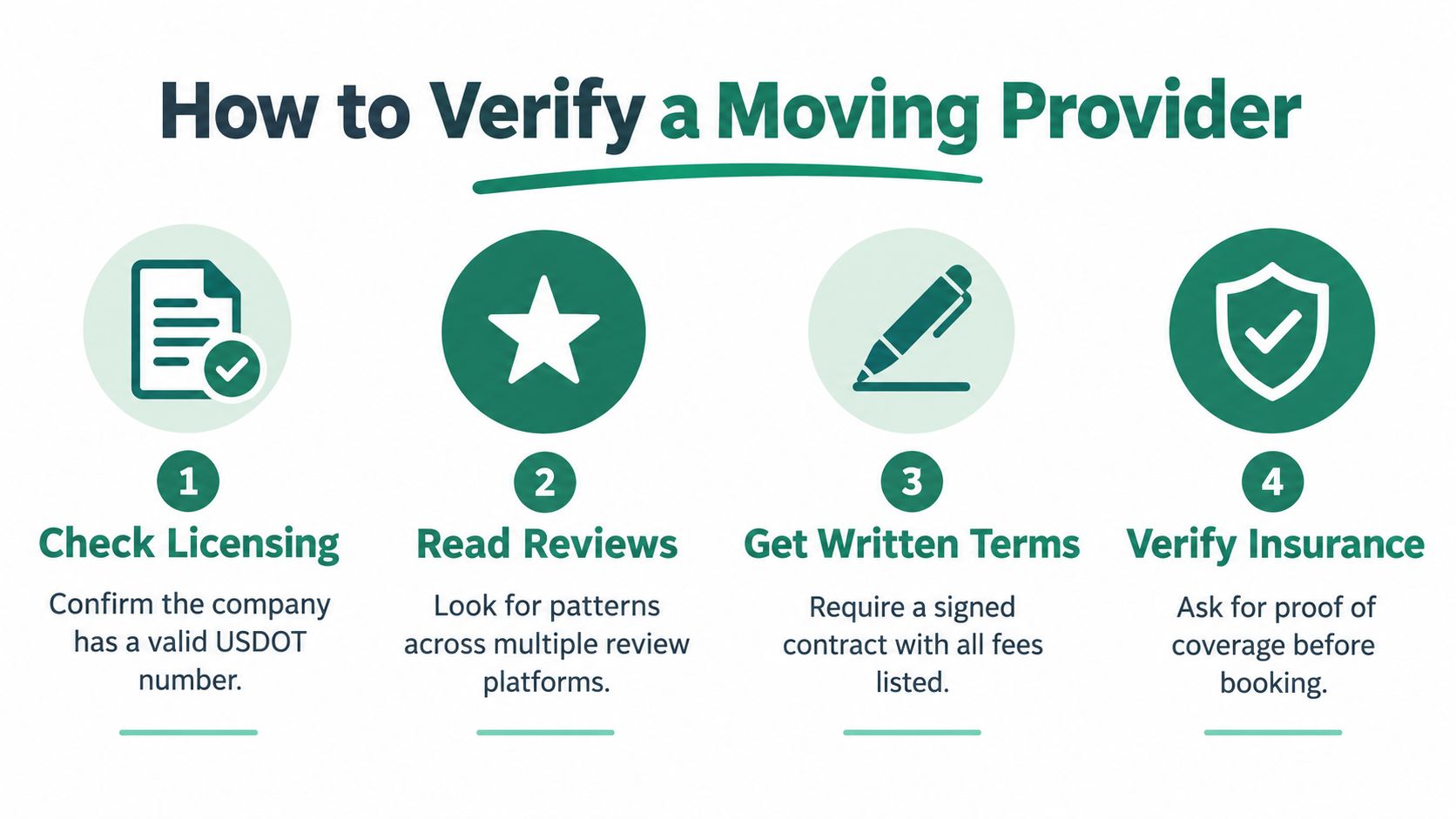
Start by checking the company's identity and authority. Ask for its USDOT and MC numbers, then verify that the business you're speaking with matches the records. Don't assume the company taking your call owns the truck. If it's a broker, ask which carrier will transport the vehicle and who remains responsible for communication if the shipment is reassigned.
Check the handoffs, not just the rating
- Match the company name. Confirm the legal business name on the quote, contract, and payment instructions.
- Ask about insurance. Request proof of the carrier's cargo coverage and confirm how to handle a damage claim.
- Get all terms in writing. The contract should spell out the price, payment timing, cancellation terms, service type, and conditions that could change the quote.
- Clarify reassignment. Ask who contacts you if the first carrier declines or the shipment changes hands.
- Look for specific reviews. Focus on recurring complaints about surprise charges, missed updates, or unresolved damage, not isolated praise.
Transparent pricing helps, but it doesn't make a shipment safe by itself. You need verifiable licensing, clear insurance responsibility, and an accountable contact. For another practical checklist, review these red flags for moving scams and apply the same caution to vehicle transport.
How Auto Transport Pricing Actually Works
A quote reflects the work needed to move a specific vehicle on a specific route. Distance matters, but so do vehicle size and weight, whether the car runs, pickup access, timing, carrier type, and whether the route includes an ocean leg. A disabled vehicle may need winch loading, while a large or heavy model can affect how a carrier plans its load.
Compare price structures carefully
A flat-rate quote should clearly state the amount and the conditions under which it can change. An estimate may be based on expected carrier availability and can shift when dispatch begins. Ask which one you're receiving, what the deposit covers, and whether the balance is paid at pickup, delivery, or another milestone.
For mainland-to-Puerto Rico shipping, the example price bands below reflect the requested planning ranges, not guaranteed quotes. Confirm both the route and the service scope directly with the provider.
| Origin Region | Estimated Price Band | Total Transit Time |
|---|---|---|
| Orlando area to San Juan | $895 to $1,295 | 7 to 14 days |
| Los Angeles area to San Juan | $1,395 to $1,795 | 7 to 14 days |
These examples don't replace a route-specific quote. A change in vehicle condition, service type, pickup location, port handling, or schedule can affect the total. Ask whether the price covers only mainland transport, the ocean leg, Puerto Rico terminal handling, or final delivery as well.
A quote is only useful when you can explain what it includes and who is responsible for each leg.
The broader freight network affects auto transport capacity. The American Trucking Associations reported that trucks moved 11.27 billion tons of freight in the United States in 2024, down from 11.41 billion tons in 2023 (ATA's 2025 trucking trends report). That figure covers all truck freight, not car-shipping jobs, but it illustrates the scale of the road network that auto carriers depend on. To compare quote components, use this guide to car shipping cost, then request written confirmation of any fuel, seasonal, enclosed-carrier, or port-related charges.
Shipping a Car to Puerto Rico and What Changes
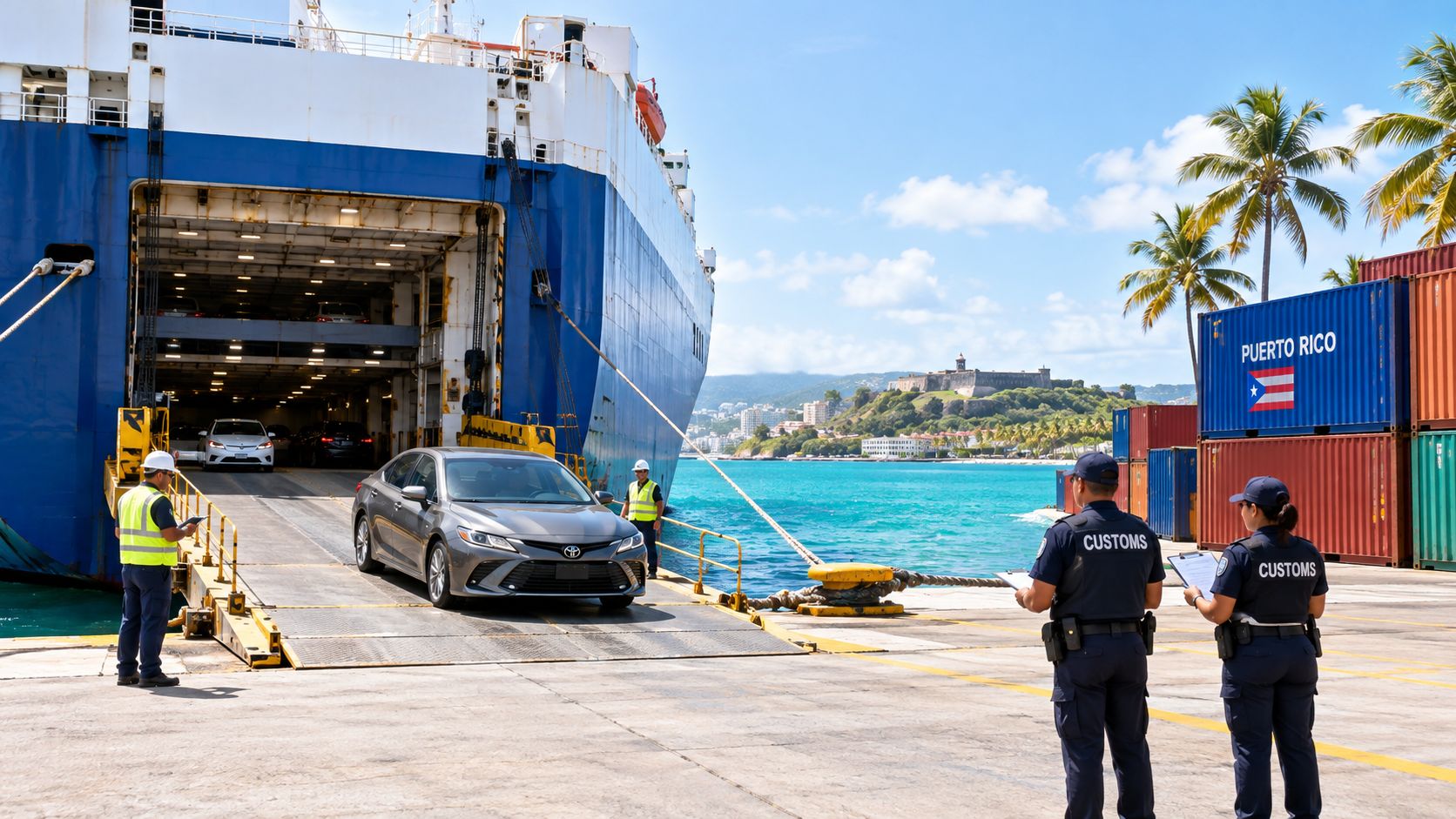
Puerto Rico shipping adds an ocean leg and destination requirements that don't apply to an ordinary overland move between mainland states. Plan the port, vessel, paperwork, tax, insurance, and registration steps as part of one shipment. A quote that covers pickup but says little about release in Puerto Rico isn't a complete plan.
Confirm ocean arrangements and owner obligations
The Maritime Administration explains that the Merchant Marine Act of 1920, commonly called the Jones Act, generally requires vessels transporting merchandise between U.S. points by water to be U.S.-built, U.S.-owned, and properly coastwise-endorsed (Maritime Administration guidance on domestic shipping). Ask the provider to identify the port, ocean leg, and whether your booking is port-to-port, terminal-to-terminal, or includes inland delivery. Don't assume the mainland trucker handles the vessel booking or destination release.
The vehicle owner must also prepare for Puerto Rico's import and registration requirements. MilitaryINSTALLATIONS says owners generally need proof of import excise tax payment unless exempt, followed by a garage inspection or emissions test and registration through the CESCO system. Puerto Rico also requires ACAA mandatory injury-liability coverage, unless qualifying private insurance applies; the coverage proof may be needed to collect the vehicle (Fort Buchanan vehicle guidance).
Military rules depend on the type of move. For moves within the 48 contiguous states, service members generally pay to ship privately owned vehicles themselves. For overseas or otherwise outside-CONUS moves, the government may pay to ship one vehicle or store one during the tour, subject to the applicable PCS rules; vehicles may need to go through a designated Vehicle Processing Center and the PCSmyPOV system (Military OneSource PCS vehicle guidance).
At Fort Buchanan, active-duty personnel and civilian employees traveling under orders may qualify for a tax exemption on one vehicle, while additional vehicles can face local import taxes. Confirm eligibility and required documents with the appropriate military and Puerto Rico authorities before shipment (Fort Buchanan installation guidance). A carrier can help coordinate transport, but the owner remains responsible for tax and registration obligations.
Real Use Cases and How the Right Provider Helps
A snowbird moving from Chicago to San Juan needs more than a low rate. The key decisions are timing, a reachable mainland pickup point, a clear port handoff, and enough flexibility around the sailing and final release. If the vehicle must be available by a fixed date, build a buffer rather than planning around a best-case delivery promise.
A military family reporting to Fort Buchanan should ask early whether the shipment is a privately arranged move or part of an authorized PCS vehicle process. The family needs to confirm whether the vehicle goes through a Vehicle Processing Center, what paperwork applies to their status, and who handles the Puerto Rico release steps.
A college student buying a car online from a Texas dealer should give the transport company the dealership's loading hours and the car's operability status. If the vehicle is valuable or especially vulnerable to weather and road debris, compare enclosed transport with open transport instead of assuming one is automatically right.
Dealerships moving pre-owned inventory from Florida auctions to Puerto Rico showrooms need a provider that can coordinate repeat shipments, consistent documentation, and port handoffs. Businesses should ask how the provider tracks each vehicle and handles exceptions across multiple pickups. Review the available dealer transport services and compare their scope with the dealership's actual workflow.
An online buyer in New Jersey purchasing a low-clearance exotic should disclose ground clearance, modifications, and loading instructions before booking. Enclosed transport may be the better fit, but the buyer still needs written confirmation of carrier assignment, insurance, inspection steps, and final delivery access.
For any of these moves, the provider's value is coordination and accountability, not a slogan. National Car Transport describes its service as backed by 25+ years of experience, an A+ BBB rating, and a network of 25,000+ vetted carriers, with bilingual English- and Spanish-speaking agents based in the U.S. who have over 20 years of auto transport logistics experience. Those are company-provided credentials, so ask how they apply to your specific route and shipment before booking.
Smart Next Steps and Common Questions
Before you commit, save this checklist:
- Confirm the route, pickup window, and destination handoff.
- Choose open or enclosed transport based on the vehicle, not guesswork.
- Gather your ID and any route-specific ownership or military documents.
- Verify licensing, insurance, written terms, and who is responsible after reassignment.
- Confirm when payment is due and what happens if dispatch is delayed.
- Photograph the car at pickup and delivery, and keep the bill of lading.
What if the vehicle is an EV or hybrid? Tell the provider the model, weight, operability, and any charging or loading instructions. An EV doesn't automatically require enclosed transport, but weight, ground clearance, battery state, and safe handling should be discussed before dispatch.
What if it doesn't run? Say so before booking. Confirm that the assigned carrier can winch-load it and that the pickup and delivery locations allow the equipment to operate safely.
What if pickup slips or there's new damage? Contact the named advisor, ask for a revised written window, and document the vehicle's condition with photos and notes on the bill of lading before signing. Don't rely on an unrecorded verbal promise.
National Car Transport offers door-to-door auto shipping across the mainland and Puerto Rico, with open, enclosed, and ocean-shipping options and bilingual U.S.-based advisors to help coordinate the details. Share your route, vehicle, and timing needs, then visit National Car Transport to request a quote and clarify the handoffs before you book.