
PCS orders hit your inbox, and your first thought usually isn't excitement. It's logistics. Where are you living, when do you leave, what happens to the kids' schedule, and how are you getting your vehicle from one duty station to the next without turning the move into a second full-time job?
That last question matters more than people think. Vehicle shipping during a PCS isn't a side task. It's part of keeping your household functional while everything else changes at once. Military transport has always depended on serious freight networks. Freight rail has supported U.S. military operations for nearly 200 years, and during World War II railroads carried over 90% of military freight and 98% of personnel between 1942 and 1944, which shows how central heavy-lift transport has long been to military mobility, according to the Association of American Railroads overview of military rail support.
If you're also sorting out the household side of the move, get your packing plan organized early. A simple checklist and the right packaging for home relocation can prevent the classic last-week scramble where the car shipment, household goods, and travel dates all collide.
Table of Contents
- Your PCS Move and Your Vehicle
- Understanding Your Military Transport Options
- Navigating PCS Costs and Reimbursement
- The Vehicle Shipping Process Step by Step
- Special Routes to Alaska Hawaii and Puerto Rico
- How to Prepare Your Vehicle for Shipment
- Frequently Asked Questions About Military Shipping
Your PCS Move and Your Vehicle
PCS season usually starts the same way. You get orders, then the calendar starts shrinking fast. One spouse is looking at travel dates, the other is trying to figure out whether the family car gets driven, shipped, or left behind for a second trip that nobody wants to make.
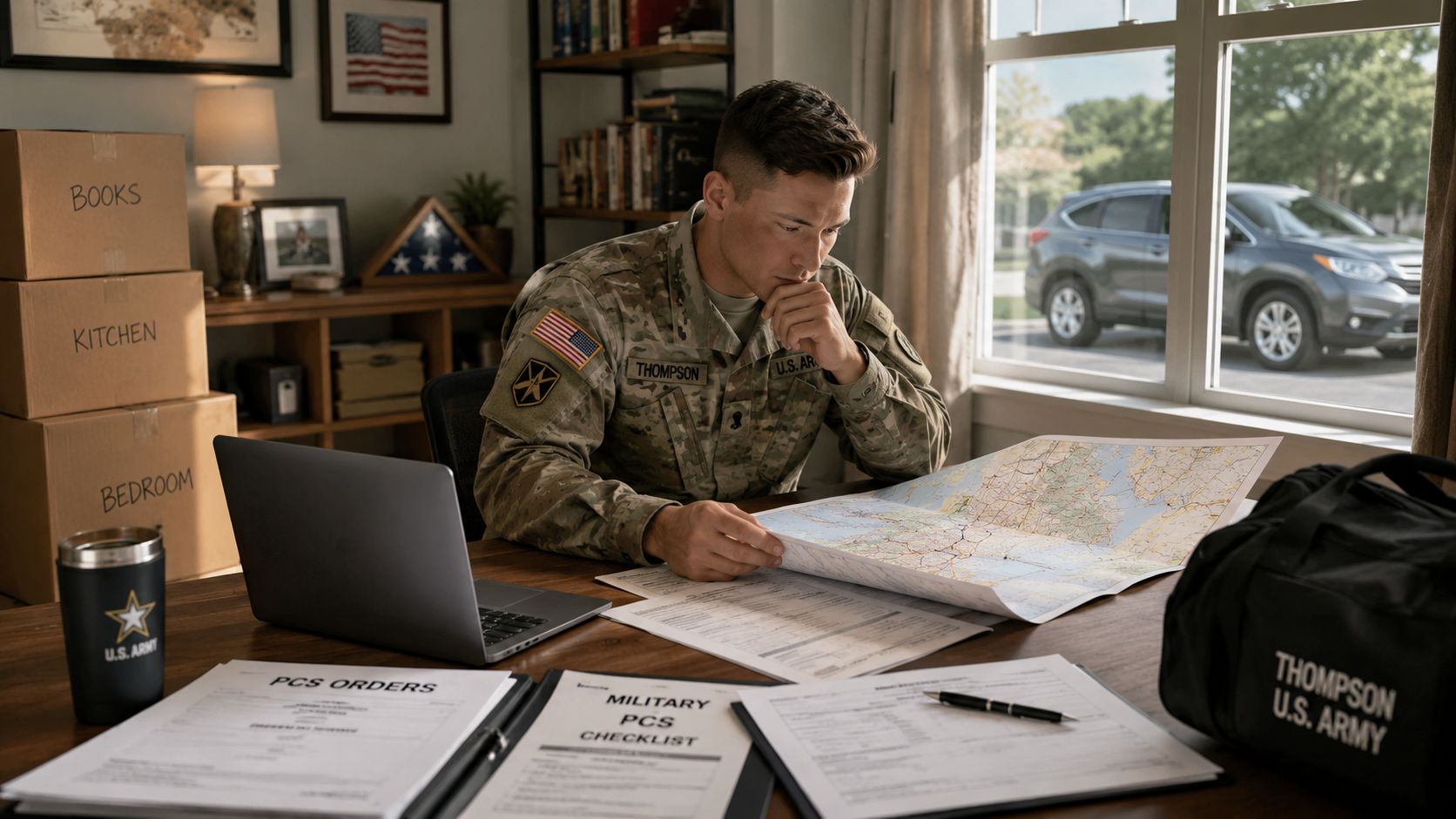
For most families, the vehicle decision comes down to one question. What's the least stressful option that still keeps the move on schedule? If your route is simple and time is flexible, driving may work. If you're juggling school pickup, housing, pets, flights, and a report date, professional military vehicle transport usually makes more sense.
Why this feels bigger than just shipping a car
Your vehicle isn't random cargo. It's how you get to base, to childcare, to the commissary, and to work after arrival. If it shows up late, dirty paperwork becomes a family problem fast.
Practical rule: Treat your POV shipment like an essential part of the PCS timeline, not an add-on task.
Families also underestimate how much coordination vehicle shipping removes. A scheduled pickup means fewer long-distance driving risks, less fatigue, and fewer moving parts for the person already carrying the admin load.
What matters most on a first move
On a first PCS shipment, don't chase the cheapest headline price. Chase clarity.
You want answers to practical questions:
- Pickup reality: Can the truck access your neighborhood or base area?
- Delivery plan: Who receives the car if you're still in temporary lodging?
- Document handling: Who checks titles, registration, ID, and orders before anything moves?
- Route fit: Is this a standard mainland route or a port move involving Puerto Rico, Alaska, or Hawaii?
If you lock those down early, the rest of the process gets much easier.
Understanding Your Military Transport Options
Not every shipment needs the same service. Daily-driver SUVs, second family sedans, classic cars, modified trucks, and low-clearance vehicles shouldn't all be booked the same way. Pick the service that matches the vehicle and the route, not the one with the flashiest sales pitch.
Open or enclosed
Open transport is the standard option for most civilian POV shipments during a PCS. It's practical, widely available, and usually the right fit for normal family vehicles.
Enclosed transport is the better call when you need extra protection from weather, road debris, or added exposure during transit. If you're moving a collector vehicle, a restored classic, or a high-value car, enclosed is the safer choice.
A simple way to decide:
| Option | Best for | Main tradeoff |
|---|---|---|
| Open transport | Standard sedans, SUVs, trucks, commuter cars | Less shielding from road and weather exposure |
| Enclosed transport | Classic, luxury, specialty, or highly sensitive vehicles | Higher cost and more limited availability |
Don't overcomplicate this. If it's your normal household vehicle, open transport is usually enough. If you'd be upset about every paint chip, book enclosed.
Door-to-door or terminal
The second decision is convenience versus flexibility.
Door-to-door service means the carrier gets as close as legally and safely possible to your pickup and delivery points. That's what most families want because it cuts down on extra driving, extra coordination, and extra handoffs.
Terminal-to-terminal shipping can work if you're comfortable dropping off and retrieving the vehicle at designated locations. It may fit tighter budgets, but it adds another layer to your move. That matters when your schedule is already packed.
If your PCS week is stacked with flights, lodging check-ins, school records, and final household pickup, don't volunteer for extra errands. Door-to-door is worth it.
One more point gets overlooked. Securing methods matter even when you're shipping a standard POV. If you're curious how cargo systems lock equipment in place, this primer on shipping container securing mechanisms gives useful context on why transport hardware and restraint systems aren't details. They're the difference between stable cargo and a preventable problem.
Navigating PCS Costs and Reimbursement
This is the part families get wrong most often. They focus on shipping price before they confirm entitlement. That's backwards.
The biggest money question isn't "How much does it cost?" It's "Will the government reimburse this shipment at all?" According to the Sherpa military auto transport guide on PCS vehicle reimbursement, for OCONUS moves, the government generally covers one vehicle shipment, while CONUS reimbursement is much narrower and depends on specific conditions. That same guidance makes the key point clearly: the biggest financial risk isn't the shipping price, but whether the shipment is reimbursable at all under current PCS entitlement criteria.
What the government usually covers
For an OCONUS move, many families can expect government coverage for one POV shipment. That's the plain-English version. It doesn't mean every vehicle you own is covered, and it doesn't mean every route variation gets paid the same way.
For a CONUS move, don't assume reimbursement. Check your orders, ask your transportation office direct questions, and get the answer in writing if possible. If you're shipping a second vehicle, or if your household situation is unusual, the details matter.
Ask these questions before booking:
- Is this shipment an entitlement or an out-of-pocket move?
- If reimbursement applies, what exact documents are required?
- Does the entitlement apply to this specific vehicle or only one POV in the household?
- If spouses are traveling separately, does that change eligibility?
- When does reimbursement happen, and who submits the final packet?
Don't settle for "you should be fine." That's how families end up paying for moves they assumed were covered.
Military vehicle shipping document checklist
Gather your paperwork before the carrier gets involved. Missing one document can delay pickup or create a reimbursement mess later.
| Document | Purpose |
|---|---|
| PCS orders | Confirms the move and supports eligibility review |
| Government-issued ID | Verifies the releasing or receiving party |
| Vehicle registration | Shows the vehicle is properly registered |
| Proof of insurance | Confirms active coverage where required |
| Lienholder authorization if applicable | Prevents issues when a financed vehicle is being shipped |
| Power of attorney if someone else handles pickup or delivery | Allows another person to sign and receive the vehicle |
| Pickup and delivery contact details | Keeps scheduling and handoff clear |
| Vehicle condition photos | Protects you if condition questions come up later |
Budgeting without guessing
If your shipment isn't reimbursable, then clean pricing matters a lot. Ask for a flat-rate quote. Ask what's included. Ask whether port handling, island routing, or special equipment changes the scope.
Money-saving advice: Clear paperwork beats a "military discount" every time. A discounted shipment you can't reimburse is still your bill.
If you're shipping during a hectic rotation period, assign one person in the household to own the paperwork. Not both. Shared responsibility sounds good until nobody knows who saved the signed inspection form.
The Vehicle Shipping Process Step by Step
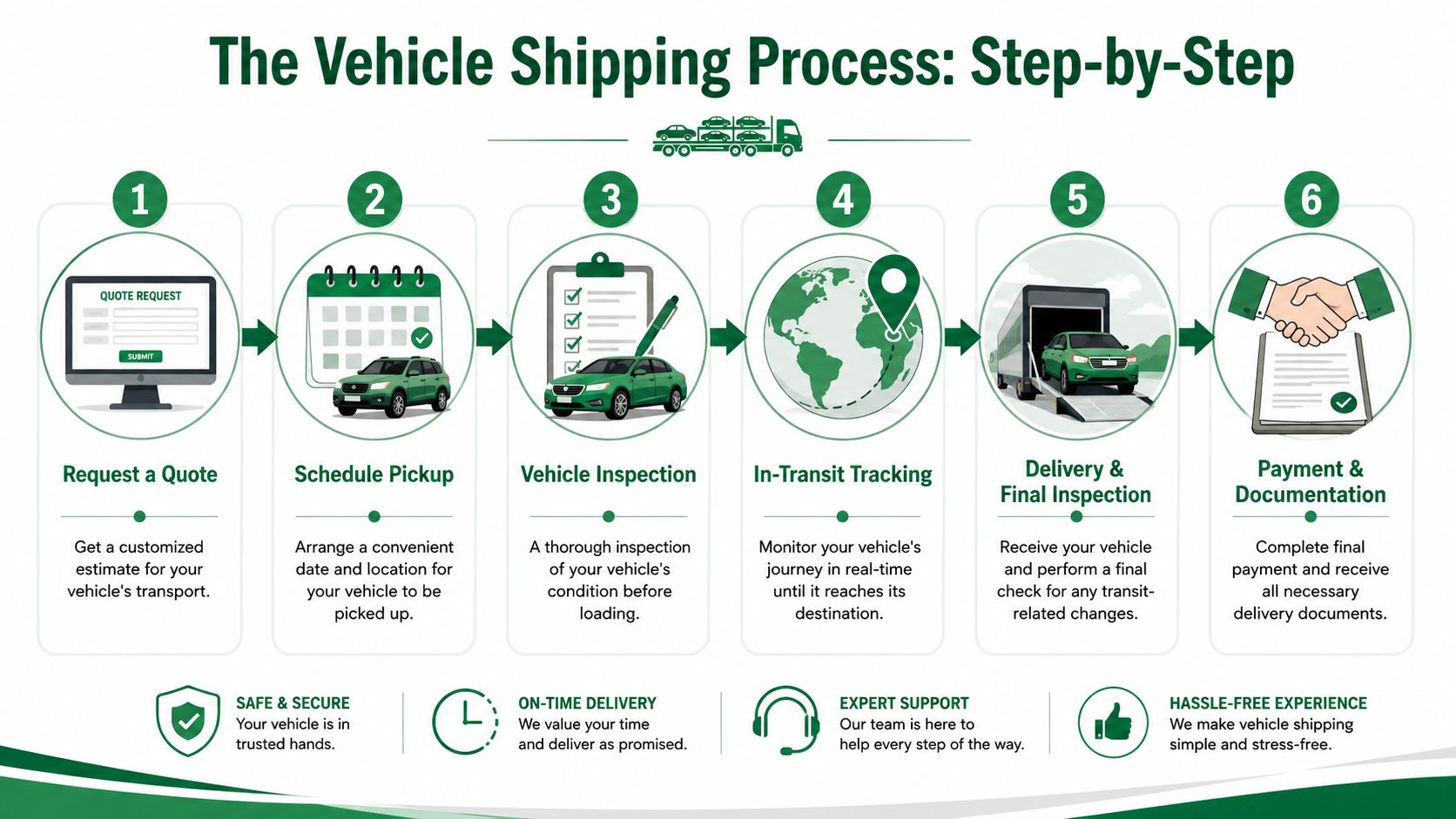
The process feels complicated until you see the order of operations. Once you know the sequence, it becomes manageable.
Before pickup
Start with a quote that matches your specific shipment. That means exact pickup city, delivery city, vehicle type, whether it runs, and whether you're moving on a standard mainland lane or a port route.
Then confirm the service level. Open or enclosed. Door-to-door or terminal. Standard route or island move. If you're not precise here, the rest of the booking gets messy.
After booking, prep the car and your contacts:
- Choose a primary contact: One person should handle calls, texts, and schedule changes.
- Confirm access: Large carriers may not fit inside some neighborhoods, apartment lots, or tight urban streets.
- Set a realistic handoff plan: If you're flying out before delivery, name the person who can legally receive the vehicle.
- Keep documents together: Don't bury registration and ID in packed household goods.
A lot of delays don't come from transport itself. They come from bad handoffs. This is the same reason commercial dispatch teams rely on structured routing. If you want a quick look at how professionals think about coordinated movement, this guide for businesses handling deliveries is useful context.
Pickup transit and delivery
At pickup, the driver inspects the vehicle and records visible condition on the Bill of Lading. Read it before signing. If a scratch, dent, cracked light, or wheel scuff is present, make sure it's marked.
That inspection report matters. Your photos matter too. Take clear pictures from multiple angles before the truck leaves.
Later in the move, a short visual walkthrough can help if this is your first shipment:
In transit, expect updates through your coordinator or dispatch contact. Good communication isn't a luxury here. If weather, traffic, access restrictions, or port timing changes the schedule, you need one person who can explain what changed and what happens next.
At delivery, repeat the inspection before you sign off. Don't rush because you're tired, standing in a hotel lot, or trying to meet family at the same time. Walk around the car. Compare condition with your pickup photos and the Bill of Lading. If something is off, note it immediately in writing.
Special Routes to Alaska Hawaii and Puerto Rico
Mainland shipping is one thing. Alaska, Hawaii, and Puerto Rico are different animals because the route usually combines over-the-road transport with port handling and ocean movement. That adds paperwork, timing windows, and location-specific rules.
Puerto Rico deserves special attention because families often assume it's just a longer domestic shipment. It isn't. It's a coordinated move involving mainland pickup or drop-off, port processing, ocean transit, and final release on the island or mainland side.
Why Puerto Rico moves are different
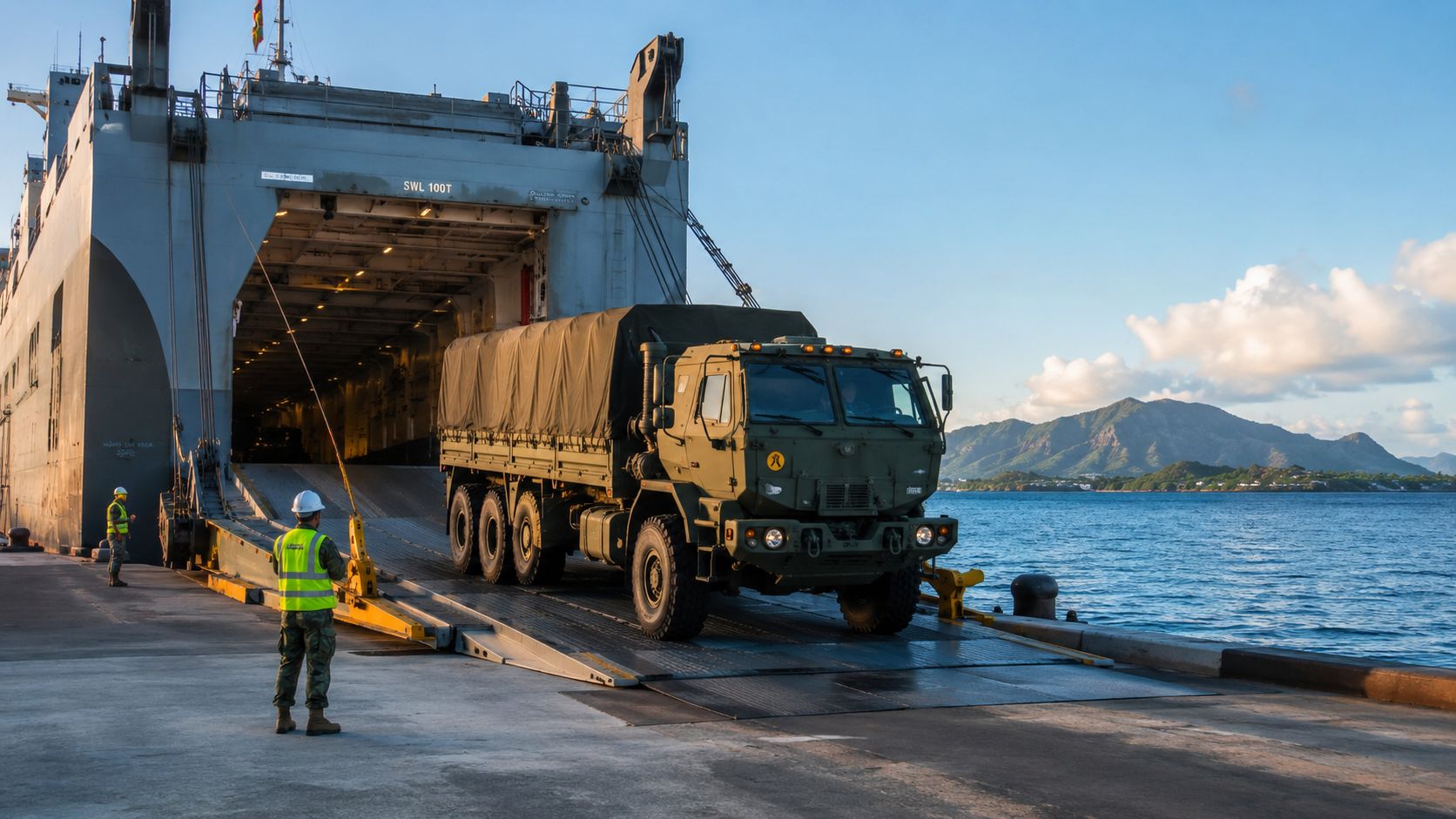
Puerto Rico shipments often run through major mainland port gateways and connect into San Juan, so timing is tied to vessel schedules as much as truck schedules. That means your handoff date, title or registration review, release paperwork, and port cut-off timing all have to line up.
Inexperienced coordination causes trouble. A family may prepare correctly for truck pickup but miss a port document, a release requirement, or a receiving contact on the island. Then the vehicle sits while the owner scrambles from temporary housing.
Research on military logistics to austere or overseas locations points to the same basic reality. Specialized infrastructure matters. Systems such as transportable ramps for loading armored vehicles onto railcars show that route flexibility and loading capabilities, not just distance, are major constraints for non-standard shipments, as discussed in this ERDC rail logistics podcast summary. Civilian POV shipping isn't armored convoy work, but the lesson holds. Infrastructure drives the move.
What to expect at the port
Port moves require discipline. Expect stricter check-in procedures, tighter paperwork standards, and less room for improvisation than a standard residential pickup.
Stay focused on these points:
- Identity and ownership checks: Names on documents need to match the release instructions.
- Vehicle cleanliness and condition: Port and inspection standards can be stricter than people expect.
- Keys and operability: The vehicle usually needs to be movable for loading and unloading.
- Receiving coordination in San Juan or mainland port city: Someone has to be reachable and ready.
If you're shipping to or from Puerto Rico from the mainland, don't treat it like a simple add-on lane. It needs tighter planning from day one.
How to Prepare Your Vehicle for Shipment
Bad prep causes preventable problems. It slows pickup, complicates inspections, and creates safety issues for loading. Good prep takes a little time and saves a lot of aggravation.
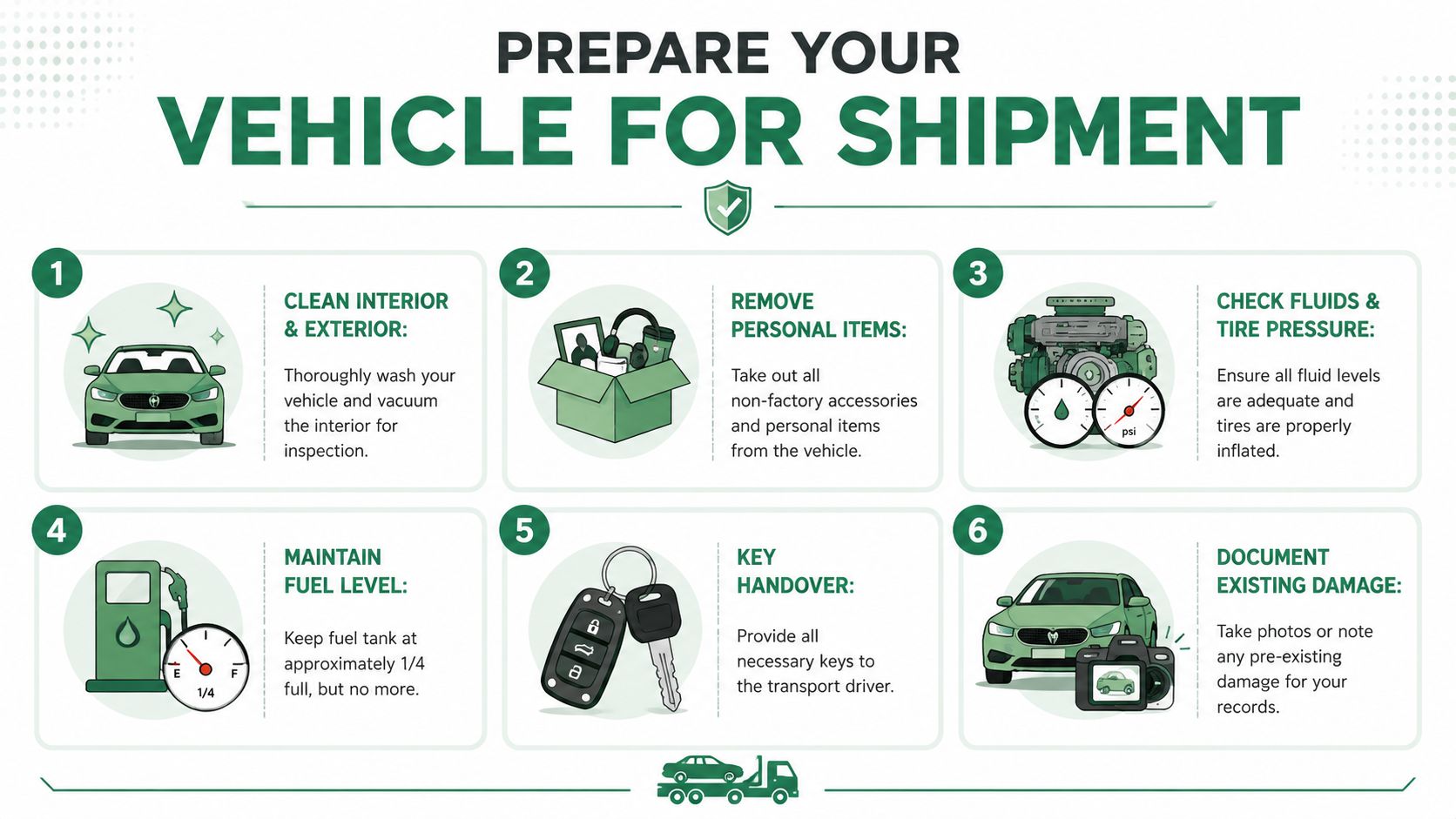
The prep list that actually matters
Start with the basics that affect inspection and handling.
- Wash the exterior: Dirt hides scratches, chips, and dings.
- Clean out the cabin: Remove personal items, paperwork piles, electronics, and loose gear.
- Check for leaks: If the vehicle is dripping fluids, say so before pickup.
- Leave only a modest amount of fuel: Enough for loading and unloading, not a full tank.
- Bring all necessary keys: Don't assume one key is enough if special access is needed.
- Photograph the vehicle: Get clear shots of all sides, wheels, roofline if visible, and existing damage.
If you're shipping from an installation or a dense city neighborhood, also ask where the truck can legally and safely meet you. That question should come before pickup day, not during it.
Why prep affects safety
Load security isn't a technical footnote. It's central to safe military vehicle transport. Guidance on heavy and military-style hauling stresses that inadequate tie-downs or poor weight balance can shift the center of gravity during transit and increase the risk of cargo loss or rollover, as explained in this heavy vehicle transport safety overview.
That matters even for ordinary POV shipping because carriers still need stable loading conditions. A cluttered interior, undisclosed mechanical issue, or loose external accessory makes the job harder.
"Prepare the vehicle so the driver can inspect it quickly, load it safely, and deliver it without surprises."
If the car has aftermarket modifications, low ground clearance, oversized tires, or a non-working battery, disclose that before dispatch. Surprises at pickup waste time and can force a reschedule.
Frequently Asked Questions About Military Shipping
A few questions come up on almost every first PCS move, and they deserve direct answers.
Can I ship an inoperable vehicle
Sometimes, yes. But don't hide the condition. A non-running vehicle may require special equipment for loading and unloading, and not every carrier handles that setup. Say it upfront when you request the quote.
Can I leave personal items in the car
Usually, you should assume no, or at least keep personal property to an absolute minimum if any limited allowance is discussed. Household goods inside the car can create inspection issues, add weight, and complicate claims if something goes missing. Military families often try to use the trunk as overflow storage. That's a mistake.
How early should I book
As early as your orders and timing are firm enough to act. PCS windows get crowded, and special routes such as Puerto Rico, Alaska, and Hawaii need more coordination than a simple mainland lane.
A smart booking rhythm looks like this:
- As soon as dates stabilize: Request a quote and confirm whether reimbursement applies.
- Before household goods chaos starts: Gather ID, registration, orders, and backup contacts.
- A few days before pickup: Finish photos, remove personal items, and verify meeting location.
If your move has any complication at all, second vehicle, island route, spouse traveling separately, temporary lodging on arrival, don't wait for the last week.
If you want a single point of contact who can walk you through the details, National Car Transport is built for exactly this kind of move. They handle door-to-door vehicle shipping across the mainland, Alaska, Hawaii, and Puerto Rico, including San Juan routes, with 25+ years of experience, an A+ BBB rating, transparent flat-rate pricing, and a network of 25,000+ vetted carriers. Their U.S.-based bilingual agents, in English and Spanish, bring deep auto transport logistics experience and help military families sort out the practical details that make one shipment different from the next.