

You've got a vehicle that needs to move across the country, or perhaps from a mainland driveway to San Juan. It may be tied to a military relocation, a seasonal move, a college transfer, a dealership purchase, or a car that won't make the trip under its own power. You search for long distance towing, but a tow truck isn't automatically the right answer.
For many routes, the smarter choice is to drive, use a dolly, or book professional auto transport. The cheapest quote can become the most expensive decision if it excludes loading, fuel, insurance details, port handling, or delivery access. I've dispatched enough long hauls to know that the greatest savings come from choosing the correct service before anyone hooks up the vehicle.
Table of Contents
- Why Long Distance Towing Is a Decision, Not Just a Booking
- Distance, Cost, and Risk Numbers That Change the Plan
- Getting a Quote That Actually Holds Up
- Open vs Enclosed vs Container and Ocean
- Preparing the Vehicle and the Paperwork
- Real Routes and Real Customer Stories
- Tracking, Delivery, and the Questions to Ask Before You Sign Off
Why Long Distance Towing Is a Decision, Not Just a Booking
Begin with a simple assumption: the vehicle needs to go far, so a long-distance tow is necessary. This assumption works for a disabled car headed to a specialist within the region. It becomes questionable when the route crosses several states, includes a valuable vehicle, or ends at a port.
A relocating family moving from Atlanta to Denver, a snowbird splitting time between Tampa and Phoenix, a military household changing duty stations, or a student sending a car to college all face the same basic decision. Should the vehicle be driven, towed behind another vehicle, or shipped on a carrier?
Classic and valuable vehicle owners have another concern. A restored car may run perfectly, yet exposing it to thousands of miles of highway debris and weather can be a poor trade. A non-running vehicle may need tow-away loading, but that doesn't mean a dedicated wrecker should haul it the entire way. Professional transport can often handle the vehicle as freight, with the right equipment and a clearer inspection process.

The three workable choices
- Drive it: Sensible for a reliable, road-ready car when the owner wants control and has time for the trip. The vehicle still accumulates mileage, tire wear, and exposure to traffic and weather.
- Use a dolly or flat tow setup: Useful for certain vehicle and tow-vehicle combinations, but compatibility, braking, weight distribution, and state rules must all line up.
- Ship it: Usually the cleaner option for relocations, seasonal moves, military families, dealerships, and owners who want to avoid adding a long road trip to an already complicated move.
The most expensive mistake is accepting a low teaser quote without asking what it includes. A number that excludes fuel, difficult access, storage, port handling, or the correct equipment can change before pickup, or leave you paying for a second solution after a failed handoff.
The rest of this guide follows the decision in the order a good dispatcher handles it. First, separate a routine tow from a true long haul. Then compare equipment, request a quote that holds up, prepare the car and paperwork, and finish with a delivery inspection that protects your claim rights.
Distance, Cost, and Risk Numbers That Change the Plan
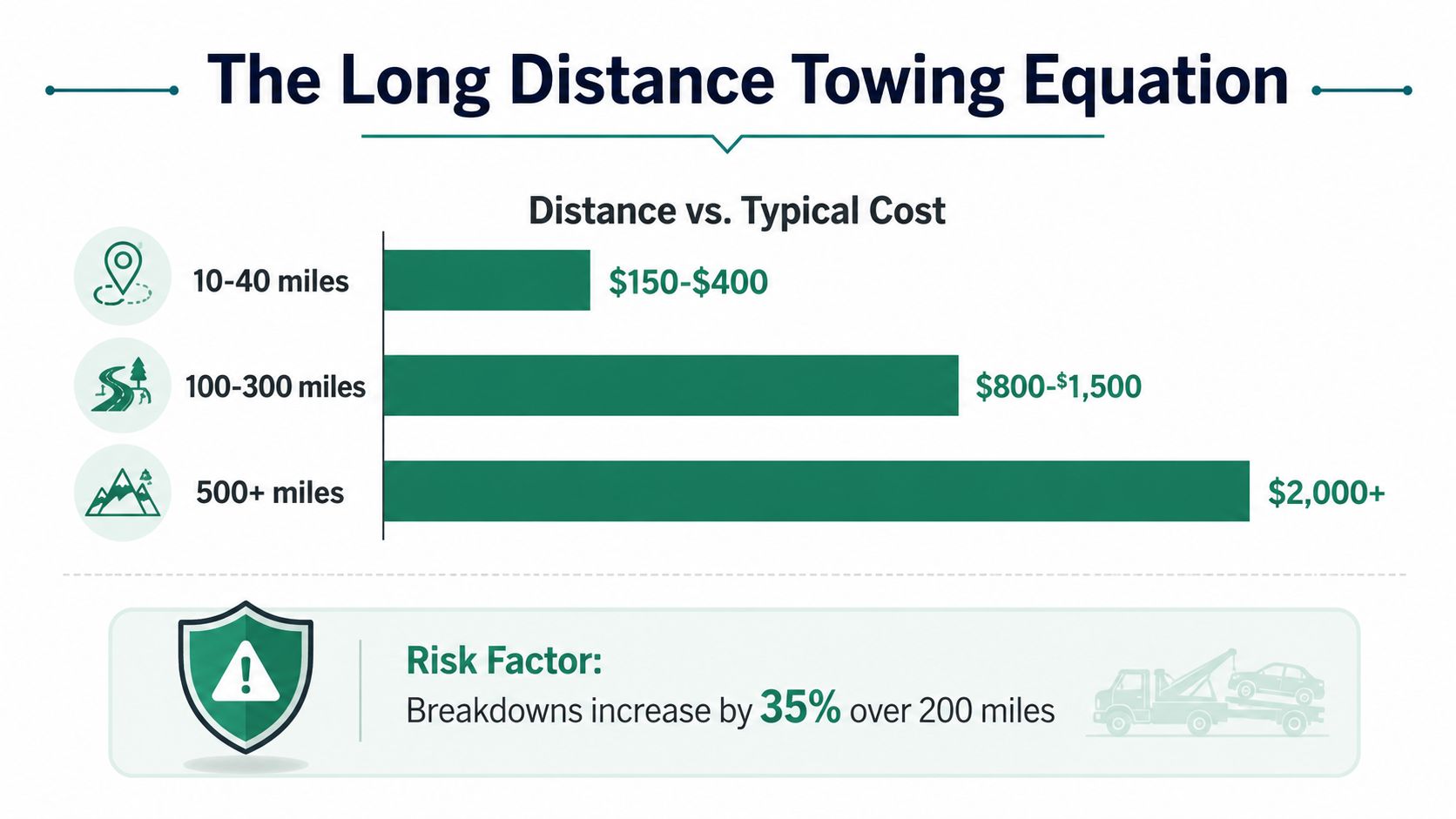
Distance changes the job more than most customers expect. An ordinary U.S. tow averages between 10 and 40 miles, while long-distance or long-haul recovery is tracked separately at an average of 85 miles, according to industry towing market data. That difference affects fuel, driver time, equipment availability, route planning, and the number of things that can go wrong.
The same source reports an average revenue of $129 per towing service call in 2026, compared with $245 for long-distance tows. Those figures aren't a universal customer price, but they show why a long haul carries a premium. A truck traveling farther consumes more fuel, keeps a driver away from local work, and faces more exposure to traffic, weather, road debris, mechanical trouble, and destination-access problems.
What actually moves the quote
Distance is only the first input. The dispatcher also needs the vehicle's size, condition, operability, pickup access, drop-off access, and route timing. A running sedan leaving a wide suburban driveway is a different job from a low sports car in an underground garage or a disabled SUV facing a narrow commercial entrance.
Seasonality matters, too. A route from Ohio into Florida may tighten during snowbird migration, while western routes can change with mountain weather and carrier availability. Customers often compare two vehicles as if the distance alone determines the price. It doesn't.
Long-distance towing also carries serious occupational risk. CDC and NIOSH recorded 6,400 nonfatal injuries and illnesses in the U.S. motor vehicle towing industry from 2011 through 2016, with a rate of 204 per 10,000 full-time employees, compared with 98 per 10,000 across all industries. The same CDC and NIOSH report recorded 191 deaths during that period and an annual fatality rate of nearly 43 per 100,000 workers, compared with 2.8 per 100,000 across private industries.
Dispatcher's rule: If the equipment, load, and driver plan aren't right for the mileage, a cheap tow isn't a bargain. It's an unfinished risk assessment.
For a broader view of pricing factors, compare the car shipping cost guide before deciding whether a tow, dolly, or carrier makes sense. If you're also handling relocation paperwork remotely, a practical guide for saving on faxes can help organize documents without turning every approval into a last-minute scramble.
Getting a Quote That Actually Holds Up
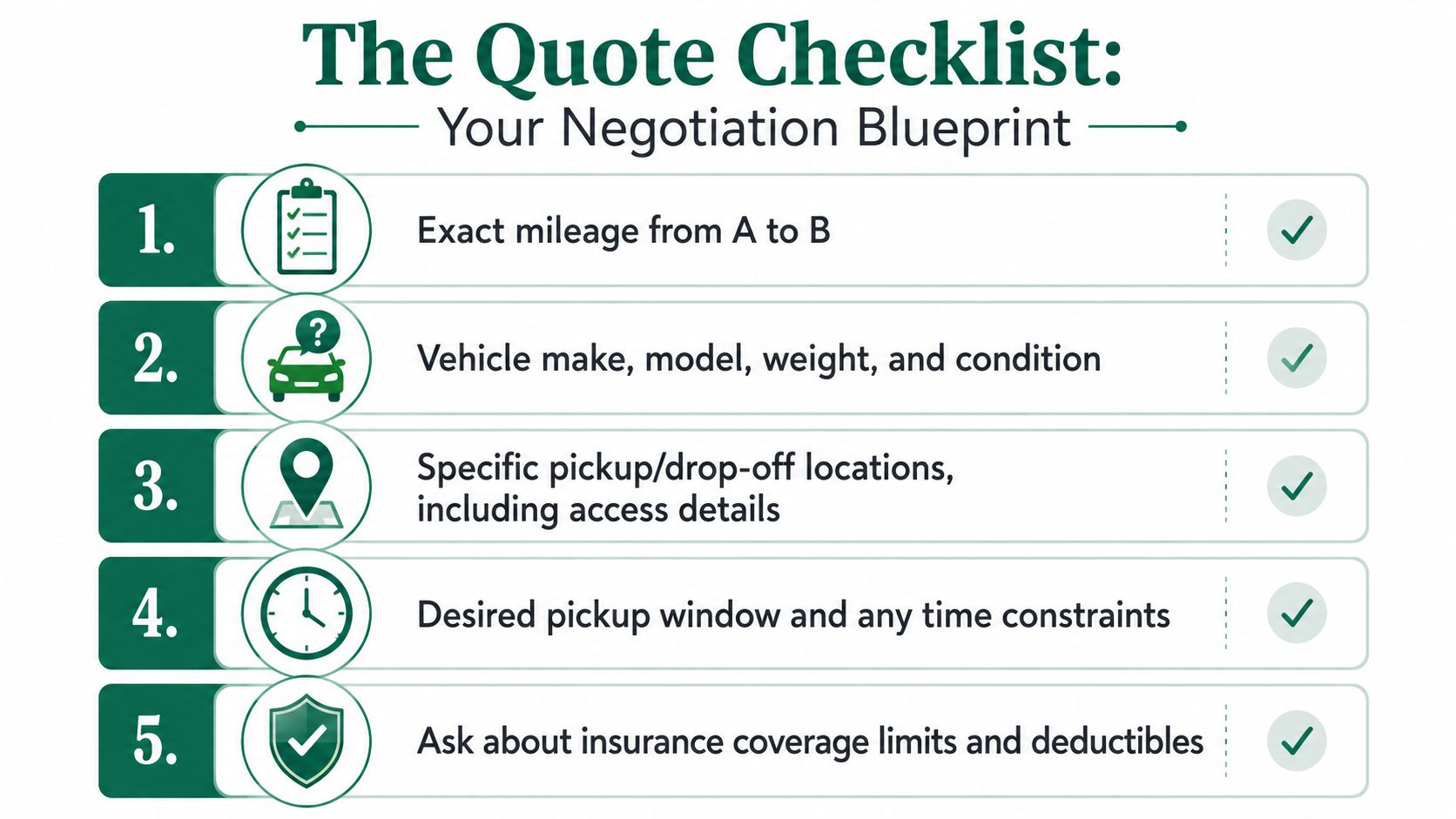
A reliable quote starts with complete information, not a low number entered into a form. Send the dispatcher the origin ZIP code, destination ZIP code, vehicle year, make, model, operating condition, and preferred pickup window. For Puerto Rico, identify whether the shipment is mainland to island or island to mainland and whether the final delivery is port pickup or a local address.
Each detail changes the job. The ZIP codes determine route availability and access. The year, make, and model help identify size, clearance, and loading requirements. An inoperable car may need a winch or tow-away setup. Your pickup window tells the carrier whether the vehicle can be routed efficiently or requires a dedicated arrangement.
Three questions that expose a weak quote
- Is this the complete flat rate? Ask whether fuel, standard loading, carrier dispatch, and delivery are included.
- What happens if the address is inaccessible? Clarify whether a narrow street, gated property, low clearance, or port restriction creates an extra charge.
- What insurance applies to my vehicle? Ask for the carrier's coverage details, cargo limits, and deductible before you authorize pickup.
A quote is not the same thing as a guaranteed rate. An estimate can move when the carrier sees the actual vehicle, location, or timing. A flat-rate quote in writing, with no upfront charge until a carrier is matched, gives the customer a safer starting point. It also makes competing offers easier to compare because you're evaluating the same service rather than three different lists of exclusions.
Online form or live agent
Online booking is convenient when the route and vehicle are straightforward. A live agent is more useful when the vehicle doesn't run, the pickup address has access restrictions, the shipment involves a dealership or auction, or the route includes Puerto Rico.
Not one vehicle transport is alike. National Car Transport offers transparent flat-rate pricing, no upfront charge until a carrier is matched, and support from bilingual English and Spanish agents based in the United States. Those agents have more than 20 years of experience in auto transport logistics, which matters when the customer needs someone to interpret a port handoff, coordinate a second vehicle, or explain why a carrier needs different loading equipment.
Open vs Enclosed vs Container and Ocean
Choosing equipment is where many customers either protect their budget or spend money without a clear reason. Open transport is the standard workhorse for ordinary cars. It moves multiple vehicles on one trailer, leaves the vehicle exposed to normal road weather and grime, and usually offers the best value for a daily driver.
Enclosed transport protects the vehicle from direct exposure and is the right call for classics, exotics, luxury vehicles, auction-grade cars, and freshly restored automobiles. It carries fewer vehicles and costs more, often with hydraulic or specialized loading for low-clearance cars. Customers considering that protection can compare enclosed auto transport before requesting a quote.
For Puerto Rico and Hawaii, the conversation changes. A mainland carrier cannot tow a car across the water. The shipment requires container and ocean service, followed by a port-to-door or port pickup handoff. Customers researching the logistics of container movement can also review these container haulage specialists for useful terminology around port and inland coordination.
| Carrier Type | Typical Price Band | Best For | Main Trade-Off |
|---|---|---|---|
| Open carrier | Lower | Daily drivers, relocations, students, snowbirds, dealer inventory | Exposure to weather and road grime |
| Enclosed carrier | Higher | Classics, luxury vehicles, restored cars, auction purchases | Higher cost and limited capacity |
| Container and ocean | Route-dependent | Puerto Rico and Hawaii shipments | Port schedules, documentation, and handoffs |
Three practical examples
A daily-driver SUV from Dallas to Miami belongs on an open carrier unless its condition or owner's preferences justify extra protection. It's a routine mainland relocation, and paying for enclosure may not add enough value.
A restored Camaro from Los Angeles to New York deserves enclosed transport. The owner is paying to reduce exposure and use equipment suited to a valuable, low-clearance vehicle. That's where cosmetic protection and cargo coverage deserve more attention than the lowest quote.
A family minivan from Jacksonville to San Juan needs container and ocean service, with the vehicle moving through port procedures before island delivery. Puerto Rico is a U.S. territory, so mainland shipments generally don't require customs clearance or import duties, and U.S.-spec vehicles can generally be accepted without modification, according to Crowley's Puerto Rico vehicle shipping guidance. The owner should still budget for Puerto Rico's vehicle excise tax and prepare the required documents.
Preparing the Vehicle and the Paperwork
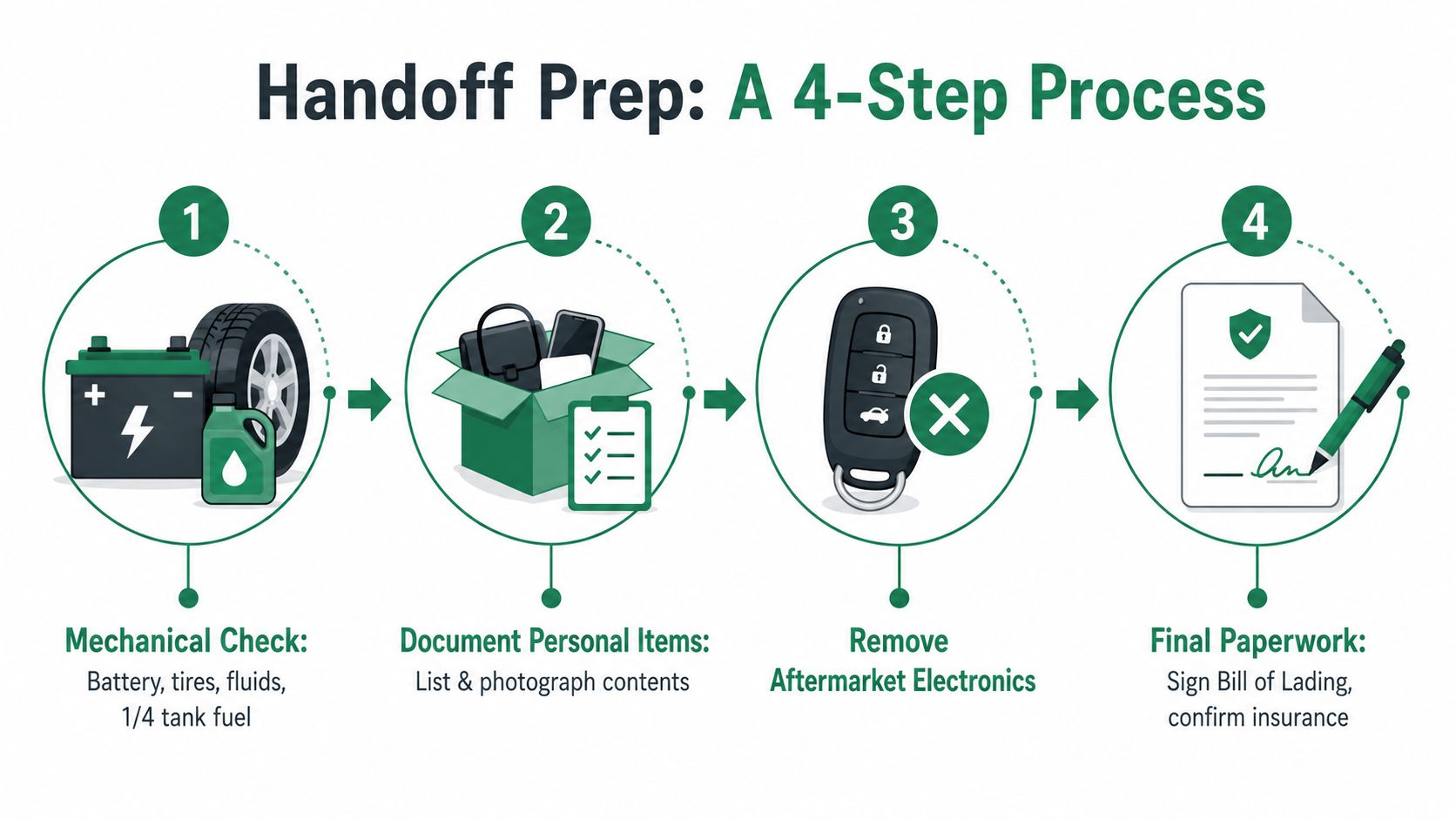
The morning of pickup is too late to discover a dead battery, soft tire, missing title, or personal items that the carrier won't accept. Prepare the vehicle the night before, then treat the pickup inspection as a formal handoff, not a quick signature beside the truck.
Start with the physical condition. Charge the battery, inflate the tires, check for leaks, and leave fuel at about one-quarter of a tank. Remove personal belongings and aftermarket electronics, or list and photograph anything that must remain. An inoperable vehicle needs to be declared before dispatch because the carrier may require a winch, special straps, or a tow-away arrangement.
Documents that prevent delays
Have the registration, ownership title, photo ID, and lien release available when applicable. Puerto Rico shipments can require additional paperwork, including the original registration, ownership title, and, in some cases, a notarized authorization letter prepared by a licensed Puerto Rico lawyer. Port instructions may also call for $10 and $2 tax vouchers and a pressure-wash receipt, as described in Crowley's Puerto Rico documentation guidance.
Before pickup, photograph every side of the vehicle in good light. Include the roof, wheels, glass, bumpers, interior, odometer, and existing scratches or dents. Keep the images with the shipment paperwork.
The carrier's bill of lading is the key inspection record. Walk around the vehicle with the driver, point out every existing flaw, and make sure the report reflects it. If the car arrives with a new issue, the pickup record and delivery inspection give the carrier and insurer a basis for reviewing the claim.
Insurance is not an afterthought
Federal filing rules require for-hire carriers to maintain proof of insurance, with minimum liability levels that can reach $750,000 or more, depending on carrier type and cargo, according to FMCSA insurance requirements. That federal baseline doesn't automatically answer whether a classic, exotic, or heavily modified car has enough protection.
Ask for the carrier's coverage limits and deductible. Then check whether your own auto policy adds protection during transport, because policies differ. For a high-value vehicle, compare the declared value and cargo terms rather than assuming a standard policy covers every loss.
For broader moving preparation, these shipping container move tips can help you organize the paperwork, contents, and handoff around a container shipment.
Real Routes and Real Customer Stories
The best route depends on the person behind the shipment. Four common customers illustrate why the same word, towing, can lead to four different service decisions.
The military family
A family transferring from Fort Bragg to Joint Base Lewis-McChord needs dependable timing more than luxury equipment. They should request a written flat-rate quote, provide the pickup window as soon as orders are confirmed, and make sure someone can release the vehicle if the service member has already departed.
Their key lesson is simple: don't wait until household movers are already loading. A flexible pickup window gives the dispatcher more ways to match the car to a carrier moving through the corridor.
The snowbird couple
A couple splitting time between Phoenix and Tampa usually wants predictable seasonal delivery without turning the move into a second road trip. Open transport is the practical default for a normal daily driver, provided the vehicle is prepared correctly and the delivery address can accept a carrier.
They should focus on the delivery window, not a promised exact hour. Weather, traffic, inspections, and driver hours can move the final appointment, so the receiving person needs a workable schedule.
The relocating nurse
A nurse moving from Chicago to San Juan is a classic container and ocean shipment. The vehicle needs a documented title and ID package, an agreed port handoff, and a clear plan for island delivery after the vessel arrives.
The mistake to avoid is treating the Puerto Rico portion like a mainland driveway-to-driveway tow. Port paperwork, ocean scheduling, tax requirements, and local delivery coordination all belong in the quote conversation.
The classic owner
A numbers-matching Mustang moving from Detroit to a Barrett-Jackson buyer in Scottsdale should travel enclosed, with hydraulic loading and a cargo insurance limit appropriate for its value. The owner should photograph the car extensively, document the condition on the bill of lading, and make sure the receiving auction or buyer has confirmed access.
A customer comparing a cross-country route can also review New York to Los Angeles car shipping to understand how route planning and equipment selection affect a long mainland move. The takeaway from all four examples is the same: the right service is defined by the vehicle, route, deadline, and risk tolerance, not by the phrase used in a search bar.
Tracking, Delivery, and the Questions to Ask Before You Sign Off
A shipment isn't finished when the carrier arrives at the destination. It's finished after you inspect the vehicle, compare the condition with the pickup record, and sign the delivery paperwork accurately.
During transit, expect dispatch check-ins, driver texts, and an estimated delivery window rather than an exact appointment time weeks in advance. Mainland routes may update frequently as the driver progresses. An island shipment can have longer quiet periods because port and ocean scheduling create different handoffs. No update for a day on a short mainland run deserves a call. A quiet period during a vessel movement isn't automatically a problem, but the dispatcher should still explain where the vehicle is in the process.
The delivery inspection
Inspect the vehicle in daylight whenever possible. Walk around all sides, check the roof and underbody where visible, compare the paint and trim with your pickup photographs, and verify the mileage and accessories.
Don't sign a clean bill of lading just to get the driver moving. If you see new damage, write it on the delivery document before the driver leaves, take photographs, and ask how the carrier wants the claim submitted. The bill of lading starts the claim record, and an unmarked document can make a later disagreement harder to resolve.
Four questions customers ask after booking
Is the deposit refundable? Ask before paying. The answer depends on the company's cancellation and carrier-matching terms, so get it in writing rather than relying on a verbal promise.
Can I add a second vehicle? Usually, the dispatcher needs a new vehicle description and may need to revise the route or carrier assignment. Adding it early gives the operation more options than adding it at pickup.
What if the car is inoperable? Report that condition immediately. The carrier may need a winch, special loading equipment, or a different trailer, and concealment can create a failed pickup or extra handling charge.
Is same-day pickup realistic? It can be available, but it depends on location, vehicle condition, equipment, and carrier availability. A scheduled window is easier to coordinate and generally gives the dispatcher more routing flexibility.
The decision rule: Drive a reliable car when the trip itself makes sense. Use a dolly only when the vehicles, brakes, weight, and laws align. Ship when distance, value, timing, or island logistics make a dedicated road trip the wrong tool.
National Car Transport handles open and enclosed mainland auto transport, tow-away service for inoperable vehicles, and container and ocean shipping to and from Puerto Rico. Visit National Car Transport for a flat-rate quote and guidance from U.S.-based bilingual English and Spanish agents who understand the details behind long-distance vehicle logistics.