

You're staring at a car that won't cooperate on the one day you need it most. Maybe it's parked in a driveway with a dead battery, maybe it came off an auction lot with mechanical issues, or maybe an accident left it unable to move safely. That's where inoperable vehicle transport comes in, and in practice, it's a routine move for carriers that know how to load a car that won't start, roll, steer, or brake.
For families relocating, snowbirds heading south, military households on orders, students moving between states, dealerships, and businesses managing fleet or auction purchases, the question isn't whether the car can be shipped. It's what condition the car is in, what equipment that condition requires, and what that means for price and timing. The right answer starts with a precise description of the vehicle, because that determines whether the carrier brings a winch, liftgate, forklift, skates, dollies, or a flatbed setup.
Table of Contents
- What Inoperable Vehicle Transport Really Means
- How Car Condition Determines Loading Equipment
- Carrier and Equipment Options Compared
- Understanding Costs and Insurance Coverage
- Your Preparation and Pickup Checklist
- Special Cases for Inoperable Vehicle Shipping
- How to Choose a Reliable Inoperable Vehicle Carrier
What Inoperable Vehicle Transport Really Means
A customer calls the night before a move and says the sedan won't start. The moving truck is already booked, the garage is full, and the car still has to get from one side of the country to the other. That is a standard pickup scenario for auto transport companies.
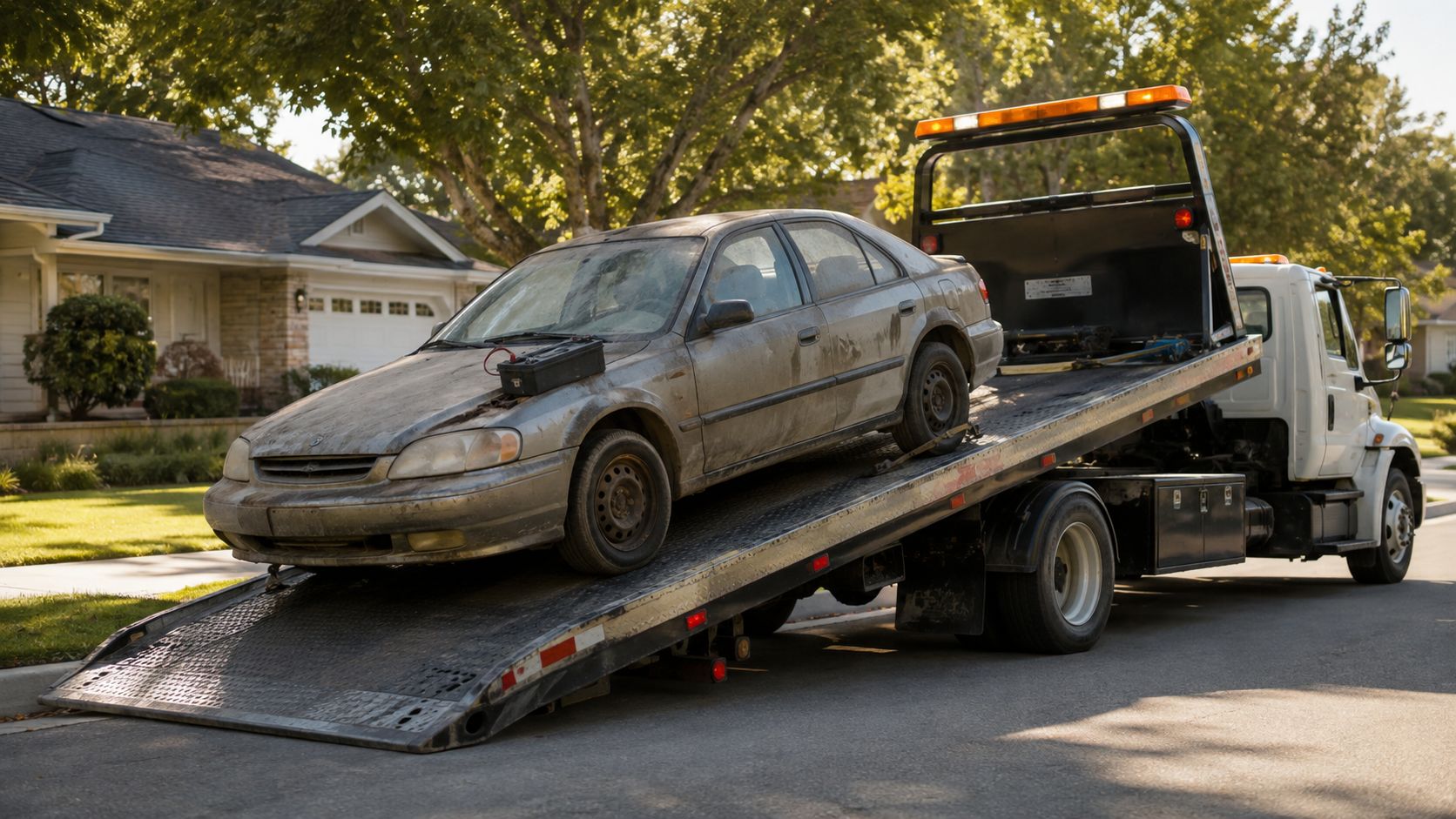
“Inoperable” is a condition, not a single category
In this business, inoperable doesn't always mean the same thing. A car might need a jump start, or it might have locked brakes, seized wheels, missing tires, or no steering input at all. Those are very different pickup jobs, even though customers often describe all of them as “non-running.”
The practical shorthand carriers use is simple. Does it start, roll, steer, and brake? If it can't do one or more of those things under its own power, the dispatcher needs to know before the truck is assigned. Accurate disclosure matters more than a general label.
A car that won't start but still rolls and steers can often be handled with standard loading gear and a powered winch. A fully immobile vehicle takes a different plan, and the carrier has to know that in advance. If the description is vague, the truck may show up with the wrong setup, which creates delays and sometimes a failed pickup.
Practical rule: Tell the broker or carrier exactly what the car can and can't do, not just that it “doesn't run.”
Why this service is common, not exceptional
Modern transport companies handle these moves all the time. Carriers have standardized winch-equipped loading and condition-based dispatching, which is why this has become a normal part of the auto-transport market. For long-distance shipments, a typical coast-to-coast move for a non-runner takes about 7 to 10 days Dispatch Dudes, and loading itself usually adds about 15 to 60 minutes versus a standard running vehicle.
That extra handling time does not make the shipment exotic. It means the carrier has to plan correctly. In the field, the best moves are the ones where the pickup notes already say whether the wheels turn, the steering locks, the brakes release, and the keys are available. For equipment that still needs precise maintenance, even something as basic as hand pump maintenance for UK industry can affect how reliably the job gets done.
How Car Condition Determines Loading Equipment
The first thing I ask about a non-running car isn't the make or model. I ask what works. That's because the loading method changes the moment a vehicle loses one of the four basics: starting, rolling, steering, or braking.
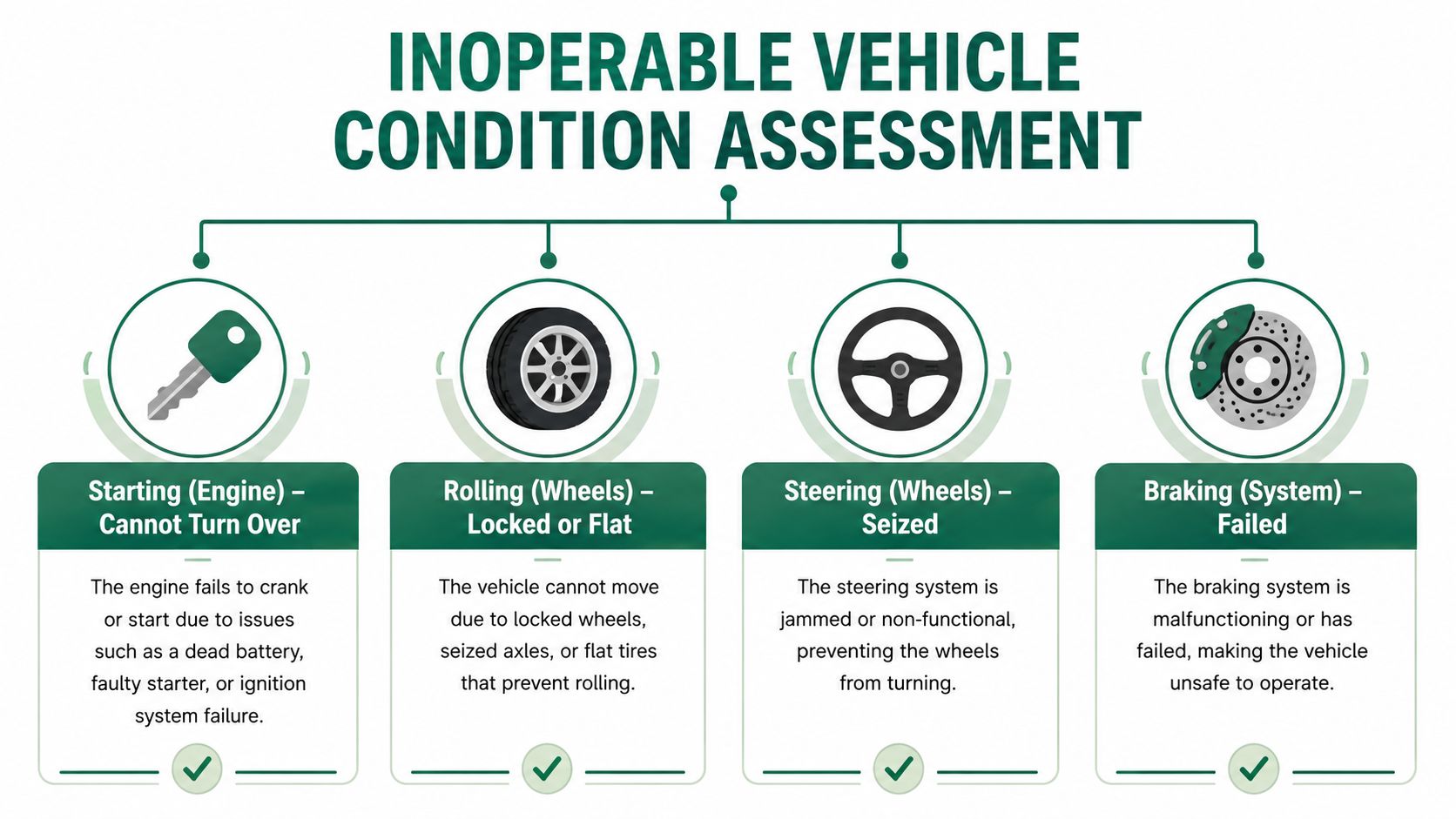
The four functions that matter at pickup
A car that won't start but still rolls and steers is usually the easiest non-runner to move. The carrier can winch it onto the trailer, then secure it with independent tie-downs for transit. A car with a dead battery is in a different category from a car with seized wheels, because one can still be positioned and the other can't.
If the car won't roll, the carrier has to use auxiliary moving equipment. That can mean dollies, skates, a liftgate, or a forklift, depending on the setup and the pickup site. If the car won't steer, loading gets trickier because the driver can't guide the vehicle into alignment on the trailer, so the transporter may need more manpower or a different trailer angle.
A failed braking system matters too. A vehicle that can't hold position safely needs more controlled movement, especially on slopes, narrow driveways, or in storage lots. Those are the jobs where a generic “non-running” note causes problems, because the core issue isn't the engine, it's whether the car can be positioned safely.
What to tell the dispatcher
A useful description sounds like this.
- Starting: Cranks but won't fire, or no power at all.
- Rolling: Tires turn freely, or wheels are locked, flat, or missing.
- Steering: Steering wheel turns, or it's seized and can't be moved.
- Braking: Brakes release, or they're stuck, weak, or not functioning.
That level of detail helps the carrier show up with the right tools the first time. It also cuts down on the surprise that happens when a vehicle that “only won't start” turns out to have locked brakes, no key, or no tires.
For readers who want a mechanical parallel, even industrial equipment depends on the same kind of condition-based assessment. A good reference point is hand pump maintenance for UK industry, because the logic is the same, equipment only works smoothly when the moving parts, access points, and controls are understood before the job begins.
A carrier can solve a no-start problem quickly. Missing steering or locked brakes change the job.
Carrier and Equipment Options Compared
A vehicle that only will not start can often move through the normal dispatch system. A vehicle that cannot roll, steer, or brake changes the whole job. That difference decides whether the carrier can use standard loading gear, needs dollies or skates, or has to send a flatbed or enclosed trailer with more controlled equipment. It also affects which carriers will even accept the move in the first place.
Comparing the main options
| Carrier Type | Best For | Key Equipment | Relative Cost | Protection Level |
|---|---|---|---|---|
| Open carrier | Cars that roll and steer but do not start | Winch, tie-downs, sometimes skates | Lower | Basic |
| Flatbed carrier | Fully immobile vehicles or tight loading situations | Flatbed deck, winch, liftgate, dollies or skates | Higher | Good |
| Enclosed carrier | Classic, luxury, or high-value non-running vehicles | Enclosed trailer, hydraulic lift gate, low-clearance loading gear | Highest | Highest |
Open equipment is the usual fit when the car can still be positioned safely. It handles standard non-runners well, especially when the wheels roll and the steering is usable. If the vehicle sits low, has suspension damage, or needs extra clearance, the carrier may need skates, a different loading angle, or a trailer setup that gives the driver more control during placement. For readers comparing ordinary open transport against other setup choices, National Car Transport's open car transport option shows the kind of equipment and access assumptions that matter before a load is accepted.
Flatbed service is the cleaner answer when the vehicle cannot help itself at all. A car that will not roll, steer, or brake is easier to place on a flat deck than on a standard angle-loaded trailer. The flatbed gives the driver more room to work with winches, dollies, or a liftgate, and that reduces the risk of dragging a locked wheel or stressing damaged suspension. Dispatchers treat that condition as a separate equipment need, not just a routine non-runner.
Enclosed transport is usually reserved for cars that need both controlled handling and more physical protection. It is common for classic, luxury, or high-value vehicles, especially when the car is inoperable and the owner wants to limit exposure during loading and transit. The trade-off is simple, more protection and more loading control usually means fewer carriers are available and the move takes more coordination.
Availability affects timing
Specialized equipment narrows the pool of available carriers. That is why inoperable pickup can take longer to schedule than a standard move when the carrier has to match the truck, trailer, and loading gear to the car's exact condition. A no-start car is one kind of dispatch problem. A car with locked brakes, missing wheels, or seized steering is another. Those differences matter in the yard, at the curb, and on the carrier's route plan.
If you are comparing shipment visibility across more complex moves, vehicle tracking 2026 from Top Motor Keys is a useful reference for the tracking side of logistics. That kind of visibility matters most when the vehicle needs extra handling and the handoff points have to stay coordinated.
Understanding Costs and Insurance Coverage
A no-start car can raise the bill, but a car that cannot roll, steer, or brake changes the job more sharply. The carrier is doing more than moving a vehicle from one point to another. Loading takes specialized equipment, extra handling time, and sometimes additional manpower at both ends. The surcharge reflects the work required to move a vehicle that can't participate in the process.
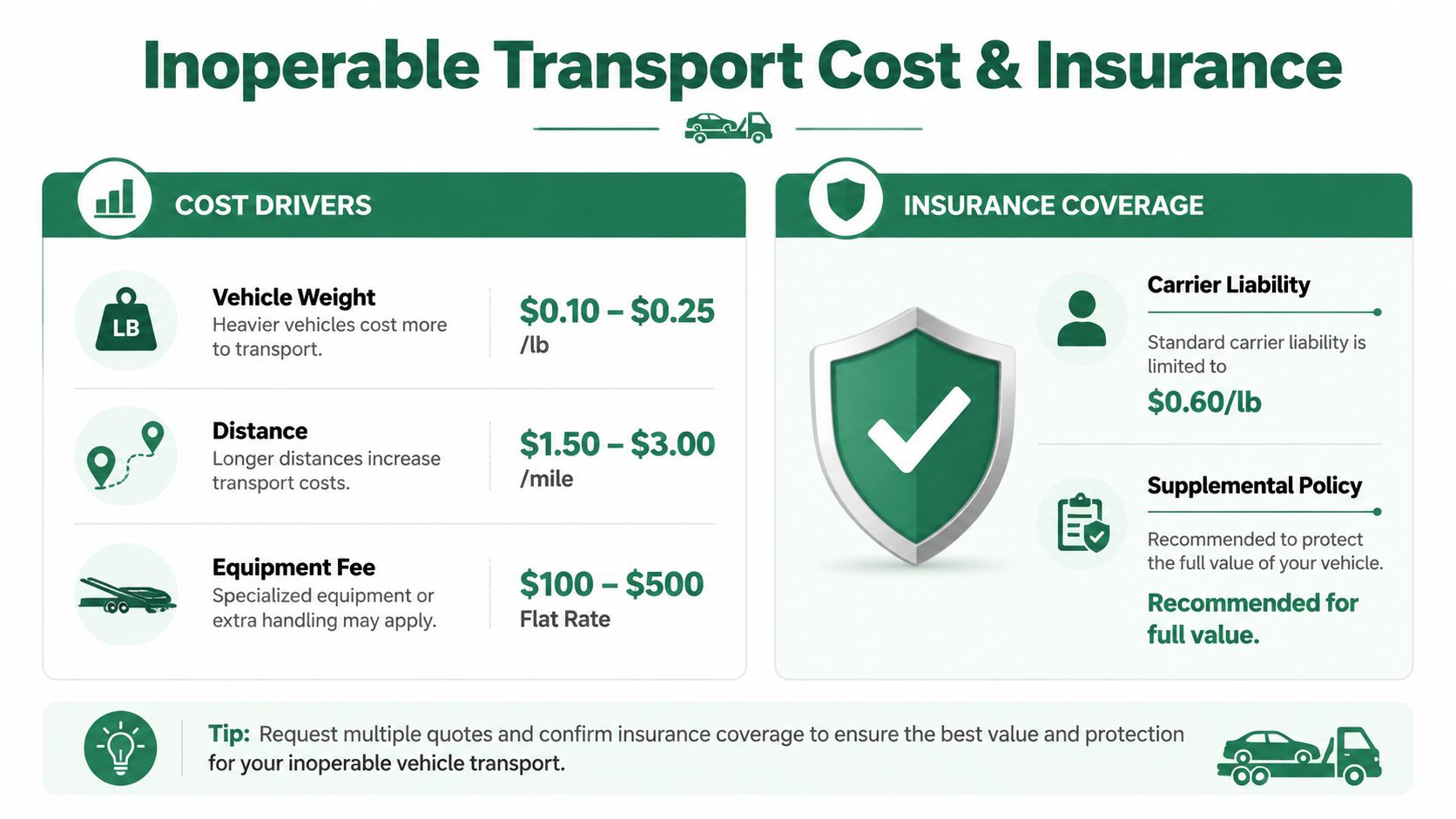
What usually pushes the price higher
Industry guides commonly cite an added cost of about $100 to $300, with some shipments reaching $500 more depending on distance, vehicle condition, and whether a forklift is needed for a car that does not roll Fast Car Ship. Other guidance puts non-runner fees in the $100 to $500 range, with winch or non-runner charges often cited around $150 to $500.
That spread fits the work involved. A no-start sedan at a driveway with open access is a different job from a car with locked brakes in a storage yard. Distance still affects the total, but the bigger pressure comes from the equipment required and from how hard it is to position the vehicle safely.
For an estimate that matches the car's condition, the dispatcher needs the full picture before booking. The National Car Transport car shipping cost page gives a useful way to compare general pricing structure against your shipment details, especially if the vehicle sits on the edge between standard transport and inoperable transport.
Insurance and secure loading
Federal cargo-securement guidance referenced by auto transport guidance requires the winch cable to be used for loading, not as the only restraint during transit, and the vehicle must be secured with independent straps whose combined working strength equals at least 50% of the vehicle's weight AmeriFreight. That part rarely gets attention, but it shapes how a non-running vehicle is handled from the first pull onto the trailer.
A careful carrier also documents the car's condition before loading. Timestamped photos, a signed bill of lading, and a clear record of any existing damage give both sides a reference point. If the vehicle already has mechanical issues, fluid leaks, or compromised parts, those details should be noted before the truck leaves.
For broader freight protection questions, protect freight with cargo insurance is a useful resource for understanding how cargo coverage fits into transport risk. The main point is direct, insurance works best when the carrier is honest about the load and the shipper has proof of condition before pickup.
Practical rule: A fair quote for a non-runner reflects the loading challenge, not just the mileage.
Your Preparation and Pickup Checklist
The smoothest pickups are the ones where the car is already set up for the driver to inspect and load. Most delays come from small, avoidable issues, loose parts, blocked access, missing keys, or the wrong condition notes at booking. A few minutes of prep saves a lot of back-and-forth at the curb or storage lot.
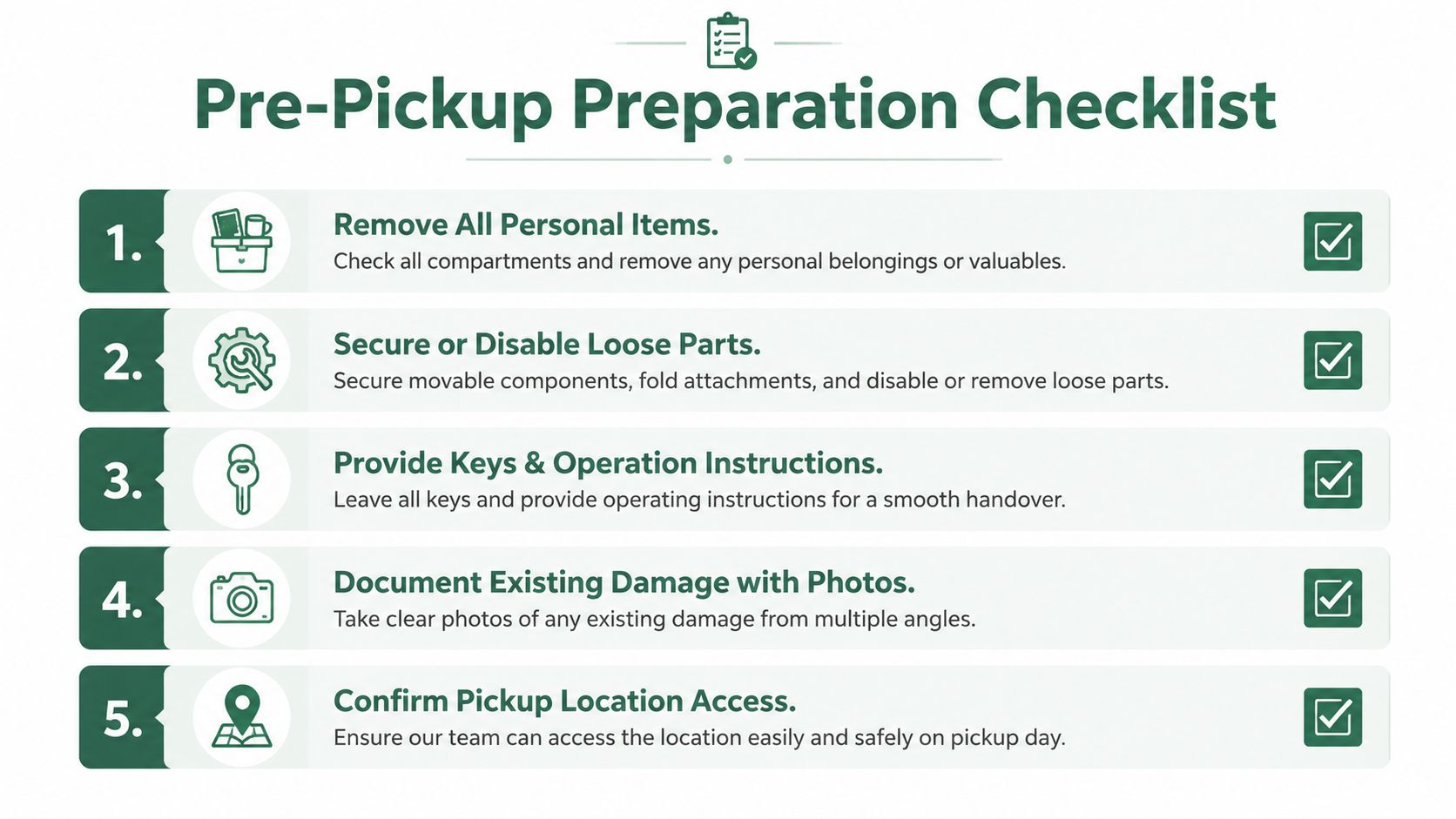
What to do before the truck arrives
- Remove all personal items. Loose items can shift, break, or disappear in transit. Empty the glove box, center console, trunk, and back seat.
- Document the car from every angle. Take timestamped photos of all sides, the interior, the wheels, and any existing damage. If the car leaks fluids or has broken trim, photograph that too.
- Provide keys and clear instructions. Even a non-running vehicle often needs keys so the driver can access the steering or move the shifter. If there's a steering lock, tell the carrier before pickup.
- Check for leaks and loose parts. A visible fluid leak can affect loading or create a mess on another vehicle. Fold in mirrors, secure antennas, and remove anything that can detach.
- Confirm access at the pickup point. The truck needs room to load safely. Tight driveways, low-clearance garages, and soft ground can force a different plan.
This is also the time to make sure the paperwork is ready. Have the title, photo ID, and any lien-release documents available if they're needed for the move. If the car is under financing or storage control, the carrier may need extra coordination before dispatch.
What happens at pickup
The driver inspects the vehicle, compares it with the booking notes, and confirms the existing condition on the bill of lading. Then the car is loaded with the equipment that fits its condition, not the equipment that would be used for a standard running car. If the vehicle can't roll or steer, the driver may use dollies, wheel skates, a winch, or a liftgate to position it safely.
For door-to-door style service, National Car Transport's door-to-door auto transport page is relevant because the pickup location itself can determine how easy the loading process will be. Inoperable vehicles don't just need transport, they need workable access.
Special Cases for Inoperable Vehicle Shipping
A disabled car in suburban Ohio is one thing. A non-running vehicle headed to Puerto Rico, or a military relocation that has to be timed around orders, is a different logistics job entirely. The vehicle condition still drives the equipment choice, but the route and handoff points change the entire move.
Puerto Rico adds port and ocean freight planning
For mainland-to-island shipments, the transport chain usually includes port handling, ocean freight, and delivery coordination on both ends. That means the condition of the vehicle has to be communicated clearly before it gets anywhere near the port, because loading standards and access requirements become more important once the car enters a multi-step transfer process.
San Juan is a major destination point for this kind of shipping, and the coordination often involves mainland pickup plus port processing before the vehicle crosses water. For customers moving between the mainland and the island, bilingual support helps reduce misunderstandings around condition notes, document requests, and delivery timing. National Car Transport works across all 50 states and Puerto Rico, so this is one of the routes where experienced coordination matters more than a cheap quote.
Military, classic, dealership, and auction moves
Military families often need tight scheduling, especially when a move includes a vehicle that can't be driven to the new duty station. The biggest risk there is booking a truck without confirming the exact condition of the car, which can create a mismatch between the assigned equipment and the actual load.
Classic and luxury owners usually care more about protection than bare-bones cost. Enclosed transport with hydraulic lift-gate handling reduces exposure and makes low-clearance loading more controlled. Dealerships and auction buyers face a different problem, they often buy a car sight unseen and need someone to coordinate a pickup that matches the listing description, not the seller's casual summary.
That's where a large vetted network matters. National Car Transport is one example of a provider that operates with 25+ years of experience, an A+ BBB rating, transparent flat-rate pricing, and a network of 25,000+ vetted carriers. It also offers bilingual English and Spanish agents based in the USA with more than 20 years of auto transport logistics experience, which can be especially useful when the shipment crosses regions, ports, or customer groups.
How to Choose a Reliable Inoperable Vehicle Carrier
A reliable carrier for a non-running vehicle is the one that asks the right questions before the truck is assigned. If the company doesn't care whether the car rolls, steers, or brakes, that's a warning sign. Good logistics starts with accurate condition matching, clear communication, and an honest estimate of the loading challenge.
What to verify before booking
Look for FMCSA licensing, BBB accreditation, and a carrier vetting process that checks insurance and equipment compatibility. Ask whether the dispatched truck has a winch, liftgate, dolly system, or flatbed capability that fits your car's condition. If the company gives you a quote without asking about wheels, keys, steering, brakes, or fluid leaks, the quote may be incomplete.
You should also ask how the company handles updates. A strong dispatcher tells you when the vehicle is assigned, when pickup is scheduled, and what the driver expects on arrival. That's especially important for inoperable units because a small mismatch at pickup can turn into a delay.
Why experience matters
A seasoned logistics team knows when to route a car as a standard open move and when to flag it as an inoperable shipment from the start. That judgment saves time, avoids failed pickups, and helps keep the price close to the actual work involved. It also matters for customers who need bilingual communication, port coordination, or a move that crosses state and island routes.
National Car Transport fits that profile as one option in the market, with A+ BBB, 25+ years in the business, 25,000+ vetted carriers, and bilingual agents who can guide customers through non-running shipments without turning the process into a guessing game. For anyone moving a car that won't start, roll, steer, or brake, that kind of operational clarity is the difference between a simple handoff and a messy reschedule.
If you need to move a car that doesn't run, get the condition checked and the route quoted by a team that knows how to match the right truck to the right problem. Visit National Car Transport to request help with inoperable vehicle transport, including mainland routes, Puerto Rico shipping, and door-to-door coordination for personal or commercial moves.