
You're probably looking at a screen full of quotes that don't match, pickup windows that sound vague, and promises that all read the same. One company says your car can move fast. Another says it can move cheap. A third says both, but won't explain how the process works if the driver runs late, the route shifts, or your vehicle is headed somewhere more complex than a straight interstate move.
That's where the stress is primarily felt. Not at pickup. Not at delivery. It starts at the decision point, when you're trying to figure out who knows what they're doing.
In auto transport, industry experience matters because it reduces uncertainty. It helps with the ordinary moves, like sending a sedan from Chicago to Phoenix or a student vehicle from Atlanta to Boston. It matters even more on harder jobs, like seasonal snowbird traffic, dealership volume, military relocations, and vehicle shipping to or from San Juan, Puerto Rico. No two shipments are exactly alike. The difference between a smooth move and a frustrating one usually comes down to how well the company handles details before anything goes wrong.
Table of Contents
- Why Industry Experience Matters More Than Price
- What Industry Experience Really Means in Auto Transport
- How Experience Directly Impacts Your Shipping Process
- How to Evaluate a Car Shipping Company's Experience
- Industry Experience in Action Real World Scenarios
- Frequently Asked Questions About Auto Transport Experience
- Does an experienced shipper always cost more
- Why does a dedicated agent matter
- Does experience matter more for classic or luxury vehicles
- Is domestic shipping really that different from Puerto Rico shipping
- What's one sign a company knows what it's doing
- Who benefits most from strong industry experience
Why Industry Experience Matters More Than Price
A cheap quote feels good for about five minutes. Then the critical questions start. Is the carrier available? Was the route priced fairly? Who updates you if pickup slips? Who notices a paperwork problem before your vehicle arrives at a port?

That pressure exists because the market is crowded. The U.S. auto transport brokerage market exceeds $12 billion annually, with over 4,848 businesses competing for your attention, which makes it harder to tell real operating knowledge from polished sales language, as outlined in these auto transport industry statistics.
The people who feel this most are the ones with a deadline attached to the shipment. Military families on orders. Snowbirds trying to line up departure dates in Florida or Arizona. Students leaving Los Angeles, Dallas, Miami, or New York for a new term. Dealerships moving inventory between major cities. Customers shipping into San Juan from the mainland where inland trucking, port timing, and ocean coordination all have to line up.
A low quote doesn't solve uncertainty
A newcomer can promise the same route as a veteran broker. What they usually can't do is explain the likely pinch points before they happen.
An experienced team knows where timing tends to tighten, which metro pickups need wider windows, and which shipments need extra attention because the handoff matters as much as the transit. That applies whether the vehicle is moving between major cities in the lower 48, headed to a seasonal home, or transferring from the mainland to Puerto Rico.
Practical rule: If a company only talks about price, you still don't know how they'll handle your shipment.
Trust comes from fewer surprises
Industry experience creates peace of mind because it turns chaos into a process. Good companies don't just book loads. They set realistic expectations, explain trade-offs, and keep the customer from getting blindsided by the normal friction of transport.
That's the part people remember. Not whether a quote arrived first, but whether the shipment felt controlled. In this business, trust is built when the company's guidance matches what happens on the road, at pickup, at delivery, and at the port.
What Industry Experience Really Means in Auto Transport
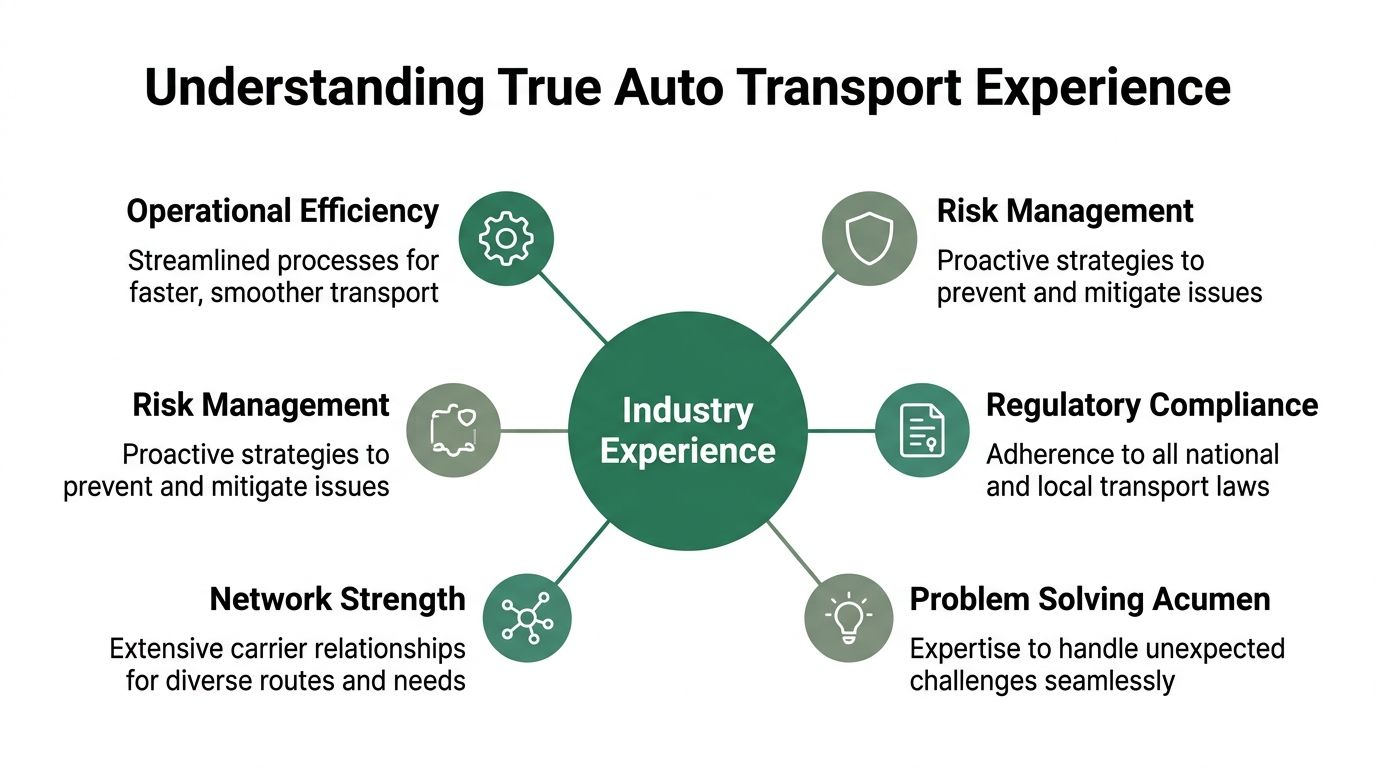
Years in business only matter if they produced better operating habits. Real industry experience means the company has built working systems for dispatch, carrier screening, documentation, timing, escalation, and customer communication. It also means they've dealt with enough route variation to know the difference between a standard move and one that needs extra planning.
Experience shows up in systems, not slogans
A strong operator makes complicated moves feel routine because the process is already built. That includes domestic shipping across the 48 states, service through major cities in every state, and more specialized jobs like enclosed transport, dealership transfers, auction vehicles, and Puerto Rico shipments through San Juan.
Customers should look for signs that the company has substance behind the pitch:
- A real carrier network: Capacity matters when lanes tighten or schedules change. National Car Transport works with a network of 25,000+ vetted, licensed, and bonded carriers, which is the kind of infrastructure that helps a broker respond when a route needs flexibility.
- Regulatory fluency: Experienced teams don't fumble state and federal requirements. They know when titles, registrations, inspections, or release forms will affect timing.
- Insurance process knowledge: Coverage is one thing. Knowing how condition reports, pickup inspections, and claim support work in practice is another.
- Route judgment: A long-distance move from Seattle to Miami is not managed the same way as a vehicle going from Houston or Jacksonville toward San Juan.
This short video is helpful if you want a quick overview of how transport coordination works in practice.
Carrier relationships are part of the product
A lot of customers focus on the quote and overlook the broker-carrier relationship. That's a mistake. In auto transport, consistency often depends on whether the broker has built durable working relationships with reliable carriers, or just chases the cheapest truck on a given day.
A 2026 industry report found that brokers who cultivate strong carrier relationships and prioritize consistency gain customer trust three times faster, according to The Broker's Edge report on innovative strategies for thriving in auto transport. That tracks with what experienced customers already sense. Reliable partnerships create better handoffs, cleaner communication, and fewer unpleasant surprises.
There's a similar lesson when people buy vehicles. If you're comparing how professionals and private buyers approach due diligence, this guide on understanding dealer vs private buyer checks is useful because it shows how process maturity changes risk.
The best transport companies don't just know routes. They know which carriers keep their word.
Industry experience also lives in the people answering the phone. A seasoned bilingual agent based in the U.S., fluent in English and Spanish, can calm a nervous customer fast because they know what questions matter and which ones signal a hidden issue. When the shipment is unusual, that human guidance matters more than any online form.
How Experience Directly Impacts Your Shipping Process
Experience isn't abstract. It shows up in the parts of the shipment you care about most. The quote. The pickup window. The updates. The handling when something changes.
Pricing accuracy starts with route knowledge
Transparent pricing comes from knowing the lane, the seasonality, the vehicle type, and the handoff requirements. Flat-rate pricing works best when the company understands the route well enough to avoid filling the estimate with guesswork.
That's why seasoned providers usually sound more measured than inexperienced ones. They don't promise an unrealistic number just to win the booking. They explain whether the route is straightforward, whether a major city pickup is easier than a rural one, and whether the shipment needs open carrier, enclosed carrier, container service, or port coordination.
For customers, that means fewer hidden surprises and less backtracking after the order is placed.
Communication quality affects delivery confidence
Customers now expect visibility, not just a vague assurance that the vehicle is “in transit.” In 2026, real-time vehicle tracking and accurate delivery windows are fundamental customer expectations, and inaccurate estimates directly reduce customer trust, as explained in this piece on real-time vehicle tracking and what customers expect in 2026.
That expectation changes how experienced companies operate. They build around GPS visibility, realistic pickup and delivery windows, and timely updates when delays happen. They don't hide normal transport variability. They explain it early and keep the customer informed.
A practical difference shows up fast:
- Inexperienced coordination: “The driver should be there sometime soon.”
- Experienced coordination: “Your pickup remains on schedule, the carrier is active on route, and we'll alert you if traffic, weather, or port timing changes the window.”
Clear updates reduce anxiety because they replace guessing with facts.
Insurance is only helpful if someone knows how to use it
Most customers ask if the shipment is insured. Fewer ask how damage documentation is handled, when the inspection happens, what gets noted on the bill of lading, and who guides them if there's a dispute.
That's where industry experience pays off. A seasoned team knows that the protection is not just the policy. It's the process around it. Pickup photos, accurate condition reporting, fast escalation, and clean communication all help keep a small issue from turning into a major conflict.
When that process is weak, the customer ends up doing the detective work. When it's strong, the customer gets guidance from someone who's handled the situation before and knows the right sequence.
How to Evaluate a Car Shipping Company's Experience
Most customers ask the wrong first question. They ask, “What's your price?” A better opening is, “How do you run this shipment when it doesn't go perfectly?”
That question tells you more about experience than any sales script. It also helps you avoid the trust gap that causes customers to walk away when the promise doesn't match reality. Forbes reports that 68% of customers disengage when a company's promises don't match the cost reality, and that proactive communication around dispatch status and delays reduces customer anxiety, as discussed in this Forbes analysis of the trust gap reshaping U.S. auto transport.
Questions that tell you more than the quote
Use the first call to test how the company thinks. You're not looking for polished wording. You're looking for operational clarity.
| Area of Inquiry | Question to Ask |
|---|---|
| Carrier vetting | How do you screen carriers before assigning my vehicle? |
| Route familiarity | How often do you handle my route or similar routes? |
| Communication | Who updates me during dispatch, pickup, transit, and delivery? |
| Delays | What happens if the pickup window changes or the truck is delayed? |
| Insurance | How is vehicle condition documented at pickup and delivery? |
| Puerto Rico logistics | If my vehicle is going to or from San Juan, who handles port coordination and paperwork guidance? |
| Pricing | Is the quoted amount flat-rate, and what situations can change it? |
| Claims support | If there's a problem, who helps me through the claim process? |
Listen closely to the answers. Experienced teams usually give specific, plain-language responses. Weak operators rely on broad reassurance.
What to verify before you book
A trustworthy company should make verification easy, not awkward. Before booking, check these points:
- Business credibility: Confirm the company's BBB standing and read how complaints, if any, were handled.
- Licensing status: Verify active MC and DOT authority.
- Process ownership: Ask whether you'll have one point of contact or be handed from person to person.
- Special route experience: If you're shipping to Puerto Rico, ask who explains inland delivery, port cutoffs, required documents, and customs steps.
- Agent quality: Pay attention to whether the agent sounds rushed or whether they guide you.
The human side matters more than many people expect. A knowledgeable U.S.-based bilingual agent can make the process feel simple because they know how to translate logistics into clear next steps. That matters for English-speaking and Spanish-speaking customers alike, especially when families are relocating, students are coordinating school calendars, or dealerships need timing they can trust.
If the agent can't explain the process clearly before booking, the shipment probably won't feel clearer after booking.
Industry Experience in Action Real World Scenarios
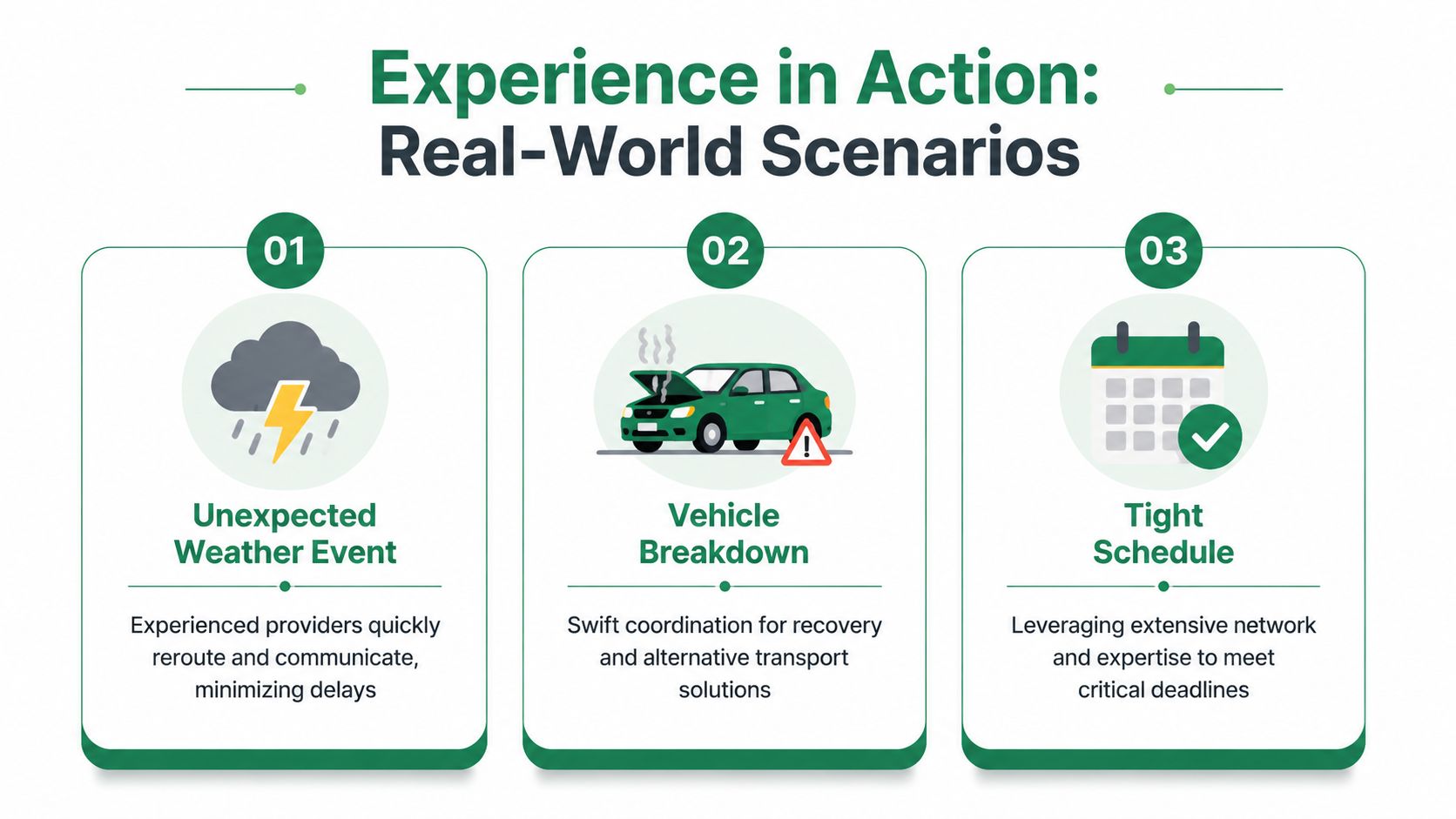
The value of experience is easiest to see when the shipment has pressure attached to it. That pressure might be timing, paperwork, route complexity, or the customer's simple need to know someone competent is in charge.
Military, snowbird, and dealership moves
A military family doesn't need a flashy quote. They need someone who understands that dates can move, paperwork has to be correct, and missed communication causes real stress. Experienced coordinators know how to work around compressed relocation windows and keep the vehicle move from becoming the hardest part of the transition.
Snowbirds have a different concern. Their schedule is often fixed by property access, travel plans, and seasonal demand. Shipping between places like New York and Florida, Chicago and Arizona, or New Jersey and Texas sounds simple until everyone wants the same timing. A practiced broker plans for those seasonal surges and sets expectations before the rush creates problems.
Dealerships and businesses care about consistency. They need clean dispatch, repeatable communication, and carriers who can handle volume without confusion. That's less about marketing and more about operational discipline.
Puerto Rico moves require tighter coordination
Puerto Rico shipping is where industry experience becomes obvious. The job usually includes mainland transport to a port, port handling, ocean scheduling, release documentation, and arrival coordination in San Juan. If any step is unclear, the customer feels it fast.
The numbers alone show why the process needs attention. Shipping a car to Puerto Rico generally costs between $1,200 and $3,300, depending on vehicle size, route, and shipping method, based on this guide to car shipping costs to Puerto Rico. The same source notes that the ocean transit alone takes 5 to 9 days after mainland delivery to the port, and that the shipment requires specific documentation such as proof of ownership, registration, and payment of Excise Tax.
For some customers, fixed port pricing is also useful context. For example, shipping a standard vehicle from Jacksonville, Florida to San Juan, Puerto Rico costs $1,202, and taller vehicles up to 100 inches cost $1,302, with listed fuel, security, port, terminal, and handling surcharges included, according to TOTE Maritime's Puerto Rico personal vehicle pricing.
That's why strong guidance matters so much on island routes. Customers need someone who can explain the order of operations clearly:
- Mainland pickup or drop-off planning: The vehicle has to reach the correct port on time.
- Document review: Ownership, registration, identification, and tax-related requirements must be checked early.
- Port and ocean coordination: The ocean leg runs on a different schedule than domestic trucking.
- Arrival support: The customer needs clear instructions for release, customs, and final handoff in Puerto Rico.
A bilingual agent with deep logistics experience is especially valuable here. English and Spanish support based in the U.S. helps customers and families move through the process with less confusion. When the route involves San Juan, that kind of guidance isn't a nice extra. It's part of what makes the shipment manageable.
Frequently Asked Questions About Auto Transport Experience
Does an experienced shipper always cost more
Not necessarily. Sometimes the quote is higher because the company is pricing the route accurately and building the shipment around actual carrier conditions. That can save money later by avoiding rebooking, poor timing, or vague pricing that changes once dispatch gets difficult.
Why does a dedicated agent matter
A dedicated agent gives the customer continuity. You're not re-explaining the route, the vehicle, or the deadline every time you call. That matters most when the move has complexity, such as a tight relocation date, an enclosed shipment, or a Puerto Rico route with port and document requirements.
Does experience matter more for classic or luxury vehicles
Yes. Higher-value vehicles often need enclosed transport, tighter inspection discipline, and better communication around handling. Experience matters because the margin for error is smaller and the customer usually wants clearer condition reporting from pickup through delivery.
Is domestic shipping really that different from Puerto Rico shipping
Yes. A mainland move usually stays within one transport system. Puerto Rico shipping adds port coordination, ocean transit, release procedures, and more documentation. The customer doesn't need to become an expert in that process, but the transport company does.
What's one sign a company knows what it's doing
Clarity. Experienced operators explain trade-offs in plain English, answer direct questions without dodging, and tell you what can affect timing before you commit.
Who benefits most from strong industry experience
Anyone shipping a vehicle, but especially families relocating, snowbirds, students, military households, dealerships, and businesses moving units on a schedule. These customers don't just need movement. They need confidence.
If you want that kind of guidance, National Car Transport is a reliable option for shipping across the U.S., including major cities in all 48 states, Alaska, Hawaii, and San Juan, Puerto Rico. With 25+ years of experience, an A+ BBB rating, transparent flat-rate pricing, and a network of 25,000+ vetted carriers, the company focuses on making complicated vehicle moves simpler. Their U.S.-based bilingual agents in English and Spanish have over 20 years of auto transport logistics experience, and that hands-on support matters because no two vehicle shipments are alike. If you want a safe, stress-free move with clear communication and practical guidance, they're built for exactly that.