

You're moving from Chicago to Phoenix, starting a new job on Monday, and the family SUV is already assigned to the road trip. Then you remember the second vehicle, a classic Mustang, still needs to arrive, too. Driving both cars means adding a long solo trip, hotel stops, fuel, wear, and a deadline that leaves little room for trouble. Shipping one vehicle is the sensible answer, but only if you understand what you're buying.
Cross-country car shipping is a logistics purchase, not a simple towing service. Distance, season, vehicle type, route density, transport method, and carrier availability all affect the quote and delivery window. A 2026 industry summary places many 0 to 500-mile shipments at $600 to $900, 500 to 1,000-mile shipments at $800 to $1,200, and 1,000 to 2,500-plus-mile shipments at $1,100 to $1,600. Cross-country moves commonly land around $1,300 to $1,500, while coast-to-coast delivery often takes 7 to 10 days after pickup (2026 interstate car-shipping data).
The frustration usually comes from information gaps. Two companies can quote the same Chicago to Phoenix lane differently because one is pricing an open trailer during a busy corridor, while another is offering enclosed service or relying on a different carrier network. Once you understand carrier type, inspection, insurance, timing, and routing, the process stops feeling like a black box. A practical starting point is this car shipping cost guide, but the final number still depends on the actual vehicle, dates, and addresses.
Table of Contents
- Why Shipping a Car Across the Country Feels Harder Than It Should
- Open, Enclosed, or Container, Picking the Right Carrier Type
- Getting a Real Quote and Choosing a Carrier You Can Trust
- Preparing Your Vehicle the Right Way Before Pickup
- Insurance, Inspection, and Paperwork That Protects You
- Shipping to or From Puerto Rico Through Jacksonville and San Juan
- Your Cross-Country Car Shipping Checklist
Why Shipping a Car Across the Country Feels Harder Than It Should
A Chicago family moving to Phoenix wants one clear outcome: the Mustang picked up without surprise charges, delivered near the new home, and documented properly at both ends. The booking becomes complicated when the dispatcher asks whether it runs, whether the pickup street fits a hauler, whether it needs enclosed protection, and how flexible the family can be with dates.
Those details set the shipment's price and availability. Distance, season, and carrier type shape the quote, while route demand determines how quickly a qualified carrier can accept it. Open transport handles most interstate moves. Enclosed service is reserved for vehicles that need greater protection, such as classics, exotics, and cars with fresh paint. A 2026 industry summary estimates open carriers handle about 85% to 90% of shipments, with enclosed transport accounting for approximately 10% to 15% (industry pricing and transport-method summary).
Why identical routes receive different quotes
A route is more than two ZIP codes. Snowbird traffic can tighten capacity between the Northeast and Florida. College moves can pressure routes serving university towns. Fuel costs, driver availability, truck direction, and payment speed also affect the price a dispatcher can secure.
Market conditions can shift quickly. Shipments longer than 1,000 miles increased 42% in 2025, while single-vehicle pricing rose 10% year over year during the second half of 2025. The same 2025 auto-transport market report says nearly 60% of loads were paid within five days or less. That combination points to stronger long-haul demand and a tighter booking environment.
EVs add another dispatch question. Confirm the vehicle's operating condition, charging level, weight, and any manufacturer instructions before pickup. Puerto Rico shipments follow a separate port route, so Jacksonville and San Juan handling, container space, and sailing schedules can affect both timing and cost.
Dispatcher's rule: A low quote is useless if no qualified carrier accepts it. Price the actual shipment, not an imaginary one.
Use a car shipping cost guide to establish a baseline, then request written quotes using the exact vehicle, addresses, dates, operating condition, and service type. Compare equal terms, verify insurance and authority, and keep a detailed inspection record. That framework serves relocations, snowbirds, military families, students, dealerships, and businesses moving vehicles between major U.S. markets.
Open, Enclosed, or Container, Picking the Right Carrier Type
Most customers should choose open transport. It's the standard multi-vehicle hauler, it's widely available, and it usually offers the most practical balance of price and scheduling for daily drivers, sedans, pickups, and SUVs. Your vehicle will be exposed to weather and ordinary road grime, but that exposure rarely justifies premium protection for a normal commuter car.
Enclosed transport places the vehicle inside a hard-sided trailer. It's the right choice for a classic Mustang, exotic, luxury vehicle, fresh paint, or a car with unusually low ground clearance. Enclosed space costs more and has fewer available slots, especially when winter demand fills snowbird lanes. I'd spend for enclosed protection when the vehicle's value, finish, or rarity makes ordinary road exposure unacceptable. I wouldn't recommend it because the car is new.
Container service is a specialty option. It's uncommon for ordinary mainland moves and makes more sense for Puerto Rico, Hawaii, or high-value vehicles requiring a more controlled ocean or enclosed environment. The container decision also depends on port handling, vehicle dimensions, and whether the car can be loaded and secured without special equipment.
| Carrier Type | Protection Level | Cost vs. Open Baseline | Best For | Pickup Window |
|---|---|---|---|---|
| Open carrier | Standard protection from normal transport conditions | Usually the lowest option | Daily drivers, sedans, SUVs, pickups, dealership inventory | Broadest availability |
| Enclosed carrier | Stronger protection from weather and road debris | Commonly higher than open service | Classics, exotics, luxury vehicles, fresh paint, low-clearance cars | More limited, especially on busy seasonal lanes |
| Container transport | Controlled enclosed handling, often linked to port or ocean service | Specialty pricing based on route and handling | Puerto Rico, Hawaii, and select high-value vehicles | Governed by port and vessel schedules |
Match protection to the actual risk
Vehicle height and weight affect how a dispatcher assigns a trailer deck. A lifted truck, oversized SUV, non-running car, or low-clearance sports car may not fit every available position. Give the transport company accurate dimensions and condition information. Hiding a modification is a reliable way to create a failed pickup.
If enclosed is appropriate, review enclosed auto transport options before booking. The important question isn't whether enclosed sounds safer. It's whether the additional protection solves a real risk on your route.
Getting a Real Quote and Choosing a Carrier You Can Trust
A trustworthy quote tells you what the shipment includes before you authorize dispatch. A teaser quote gives you a number designed to win the phone call, then changes when the company has to find a carrier. I've seen customers lose days because they booked the lowest headline price without confirming whether it covered the requested transport method, address, or timing.
What a transparent quote should show
Ask for a written quote that identifies the vehicle, pickup and delivery locations, carrier type, service level, estimated transit window, insurance terms, and any fuel surcharge. It should also clarify whether service is door-to-door or terminal-based and whether the amount is guaranteed or merely an initial estimate. If the company can't explain what makes the price change, don't treat the number as firm.
A flat-rate structure can be useful when it clearly states what's included and when payment is due. National Car Transport, for example, describes transparent flat-rate pricing and a nationwide network of 25,000-plus vetted carriers in its company information. That doesn't eliminate the need to read the dispatch order, but it gives the customer a defined service model to evaluate.
Vet the operating authority, not just the sales pitch
Check the company's FMCSA registration, USDOT number, MC authority, insurance record, physical address, and customer complaint history. Compare reviews on the Better Business Bureau and Transport Reviews, and find out whether the company owns trucks or brokers the load to an independent carrier. A broker can be legitimate, but you should know who will operate the truck.
Walk away from these warning signs:
- Large wire-transfer demands: Be cautious when a company asks for a substantial upfront payment through an irreversible method.
- No verifiable address: A business that won't identify where it operates is difficult to hold accountable.
- Pressure before paperwork: Don't book until the service terms are written.
- Unrealistic certainty: A quote that ignores seasonality, route demand, or vehicle condition isn't a serious operating plan.
Before signing, confirm the pickup window, the dispatcher's name, and a direct phone number. At pickup, review the condition report with the driver and keep your copy of the signed Bill of Lading.
Preparing Your Vehicle the Right Way Before Pickup
Preparation is where customers prevent avoidable delays. The driver needs a safe, movable vehicle with a clear condition record. Don't treat the handoff as a quick key exchange.
The 48-hour preparation routine
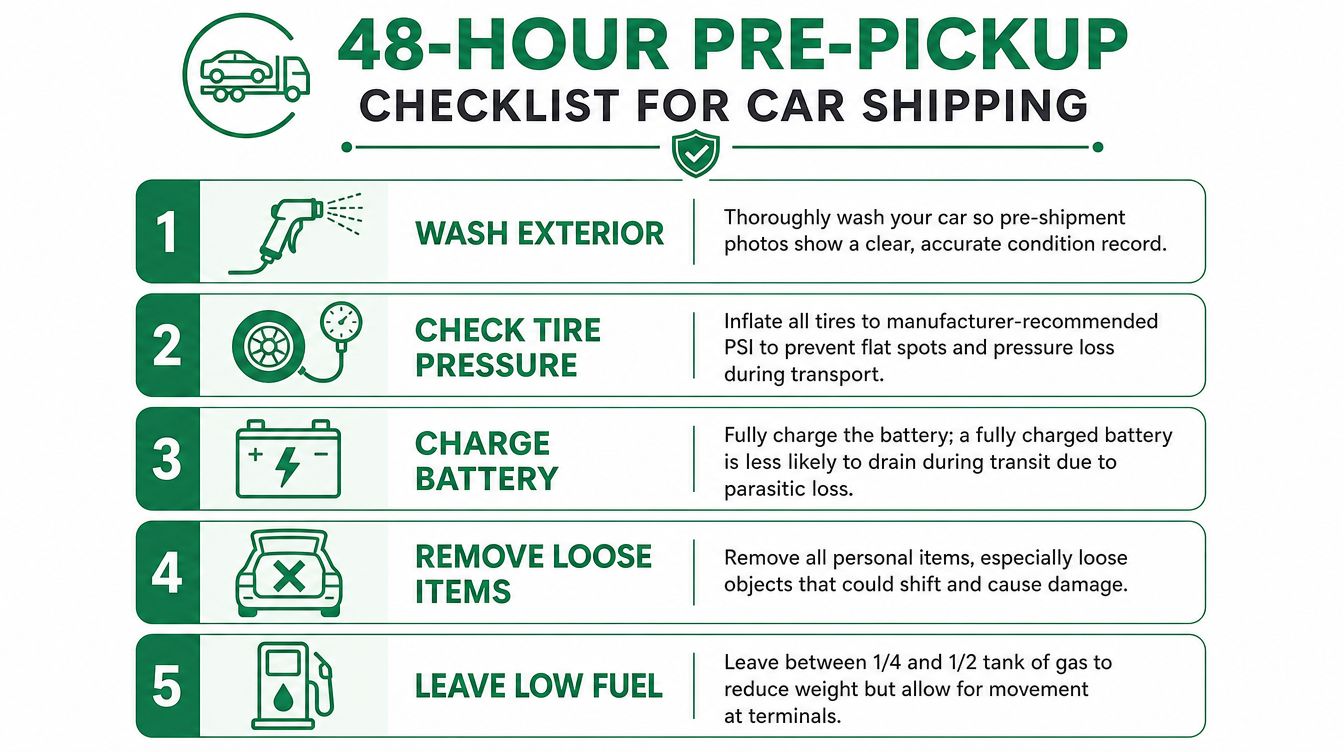
Start with a wash. Dirt hides scratches, dents, paint chips, and trim damage, while a clean exterior gives the pickup photos real evidentiary value. Photograph all four corners, each side, the roof, wheels, glass, bumpers, and any existing damage. Include the VIN and odometer where practical, and save the images with the date.
Check tire pressure against the manufacturer's recommendation. A tire that's low can complicate loading, increase the chance of a flat spot, or require extra attention at delivery. Check the battery, too. A weak battery can prevent the driver from moving the vehicle at a terminal or delivery location.
EVs need a direct conversation with the dispatcher. Industry commentary says EV shipping has become mainstream, but heavier EVs affect load planning and carrier operations (2025 auto-transport trends). Tell the company the exact model, battery status, ground clearance, and whether the vehicle can roll, steer, and brake. Battery weight, low clearance, and a disabled vehicle can affect carrier eligibility and scheduling.
Use this handoff list:
- Fuel level: Leave about a quarter tank, enough for movement without adding unnecessary weight.
- Fluids: Check levels and correct obvious leaks. Don't overfill.
- Alarms and toll devices: Disable the alarm and remove or deactivate toll transponders. A triggered alarm wastes driver time and can delay loading.
- Loose items: Remove personal belongings, accessories, and unsecured objects from the cabin and trunk. Personal items generally fall outside the carrier's vehicle liability.
- Keys and documents: Provide the required keys and keep title or registration information available for the Bill of Lading process. For a financed or recently purchased vehicle, confirm whether additional ownership or lien documents are needed.
A non-running vehicle is not a routine pickup. Tell the dispatcher before booking so the carrier can bring the correct winch, skates, or loading equipment. The same applies to roof racks, oversized tires, lift kits, and other modifications.
Why your quote can move before pickup
The market changes by lane. In the 2026 industry summary, shipments from May through September can cost 20% to 30% more during peak demand, and coast-to-coast delivery commonly takes 7 to 10 days after pickup (seasonal pricing and delivery data). Long-haul moves generally fall within a broad 1 to 10-day post-pickup range, depending on route and carrier availability (interstate shipping benchmarks).
Snowbird traffic between the Northeast and Florida is especially competitive from October through April. College routes can tighten around August and September. Reverse-direction moves may cost more when a truck has difficulty finding a profitable backhaul. Driver shortages, diesel changes, and carrier payment timing can make a quote shift from week to week.
Flexibility helps, but don't promise savings you can't verify. A flexible pickup range gives the dispatcher more carriers to consider. In peak months, plan well ahead rather than waiting for the perfect price, and in quieter periods, give the carrier room to work with your dates.
Insurance, Inspection, and Paperwork That Protects You
Insurance cannot replace a clear record of the vehicle's condition. Federal guidance identifies a $750,000 minimum financial-responsibility limit for certain for-hire property carriers with a GVWR of 10,001 pounds or more (FMCSA financial responsibility guidance). That requirement sets a baseline. It does not guarantee coverage for every scratch, personal item, deductible, exclusion, or difference in vehicle value.
The Bill of Lading is your main inspection record. It identifies the vehicle, mileage, pickup condition, delivery condition, and signatures. Walk around the car with the driver at pickup. Photograph dents, scratches, chips, wheel and glass damage, and interior issues. Check that the written notes match the photographs before the vehicle leaves.
Treat the inspection as a handoff, not paperwork
At delivery, inspect the vehicle before signing a clean receipt. Compare it with the pickup record and photographs, preferably in daylight. If new damage appears, record it on the delivery Bill of Lading before signing, then notify the carrier and broker immediately. A verbal promise to “take care of it later” gives you little protection.
Federal commercial inspection guidance covers safe operating condition, including brakes, tires and wheels, lighting, leaks, visibility, and safety equipment (FMCSA inspection standards). For your shipment, disclose any condition that prevents the vehicle from safely rolling, steering, or braking. A documented pre-transport condition gives both sides a reliable reference if the vehicle arrives with a problem.
Keep the booking agreement, Bill of Lading, insurance certificate, carrier MC and DOT information, photographs, and correspondence in one folder. Ownership and registration paperwork can create a separate deadline when a vehicle crosses state lines. Customers moving a vehicle into California should review this resource on out of state car registration California before arrival.
At delivery: If damage is present, annotate it before you sign. A clean signature can make a later dispute much harder to resolve.
Classic, exotic, or unusually high-value vehicles may need supplemental coverage beyond the carrier's standard policy. Request the certificate of insurance and review exclusions before dispatch. Confirm how to submit a claim, which photographs are required, and who handles communication.
Why one human advisor matters
A dedicated bilingual English and Spanish agent based in the United States can verify carrier insurance and authority, adjust dispatch windows when lane demand tightens, coordinate a late driver, and explain the Bill of Lading at delivery. That support matters when seasonal traffic, equipment needs, or an EV's handling requirements complicate an otherwise routine booking.
The same point of contact helps Spanish-speaking households, military families coordinating a PCS move, snowbirds managing two residences, students, dealerships, and business fleets. National Car Transport says it supports English and Spanish customers through dedicated advisors and coordinates shipments from pickup inspection through delivery. The practical benefit is continuity. You work with one person who knows the shipment instead of repeating the details to a new call-center representative.
Shipping to or From Puerto Rico Through Jacksonville and San Juan
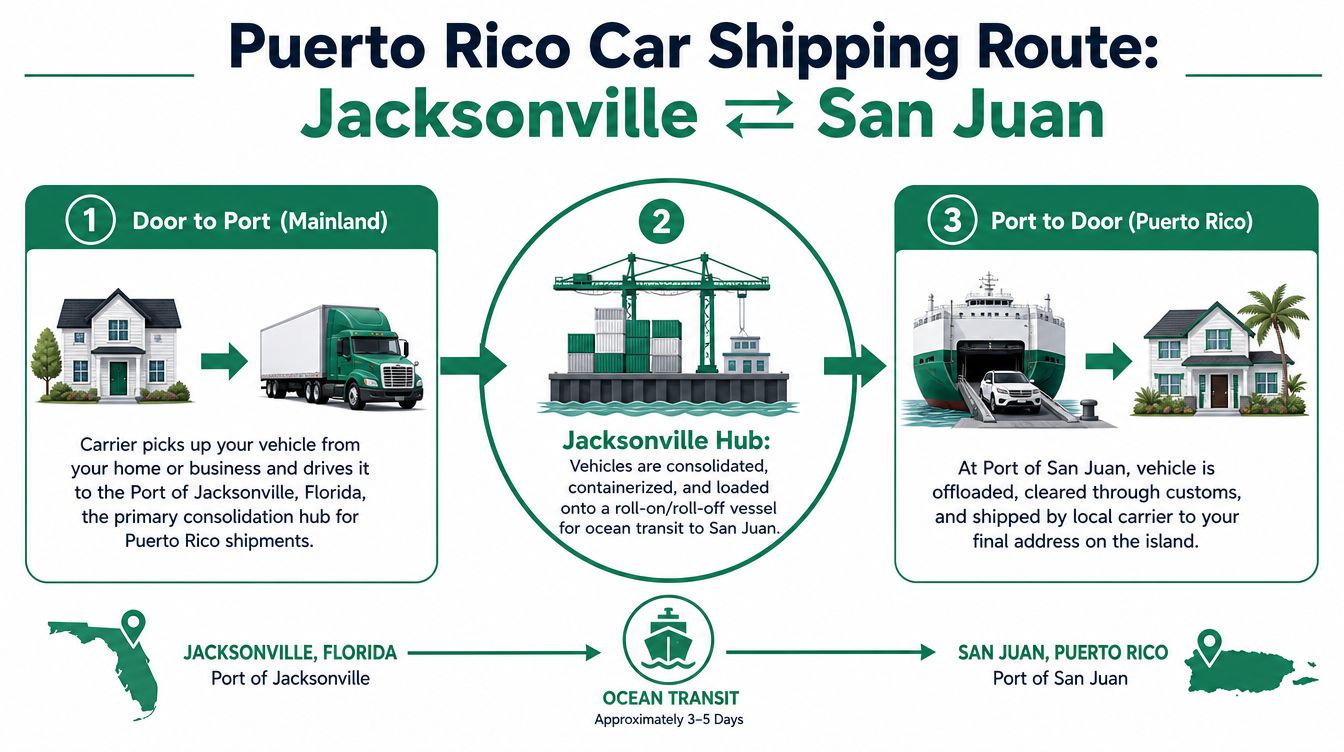
Puerto Rico shipments follow a different operating model from a mainland-to-mainland move. The common route uses the Port of Jacksonville, Florida, as the mainland hub and the Port of San Juan as the island-side gateway. Vehicles move by truck to Jacksonville, travel by ocean vessel to San Juan, then continue by local carrier to the final address.
Door-to-port service means a carrier picks up the vehicle from a residence or business anywhere in the mainland United States and delivers it to the departure port. Port-to-port service means the customer brings the vehicle to the mainland port, commonly Jacksonville or Pennsauken, New Jersey, for ocean transport to San Juan (Puerto Rico service definitions).
The port schedule controls the timing
Truck transit is only one part of the schedule. Vessel availability, port receiving deadlines, documentation review, loading, ocean transit, customs clearance, and local delivery all matter. A late mainland pickup can miss the planned sailing and create a longer wait than a normal highway delay.
For the mainland side, gather the original title or lien-release information, a valid photo ID matching the registered owner, and a bill of sale for a recent purchase. On the Puerto Rico side, confirm the registration and IVU excise tax requirements before the vehicle moves through final release procedures. The exact paperwork can depend on ownership, financing, vehicle status, and the service arrangement.
Non-running vehicles require advance planning because the port and carrier need equipment to load them. Oversized tires or unusual dimensions can trigger additional handling requirements. Confirm that the consignee listed for dock release is the same person who'll collect the vehicle in San Juan, or arrange written authorization before sailing.
For a clear starting point, review the Jacksonville to Puerto Rico car shipping route. The route isn't difficult when the title, consignee, vehicle condition, and port timing are settled before pickup.
Your Cross-Country Car Shipping Checklist
You can make the booking decision today if you have accurate vehicle and route information. Use the same origin, destination, vehicle condition, transport type, and pickup window when comparing companies. Otherwise, you're comparing different shipments rather than different prices.
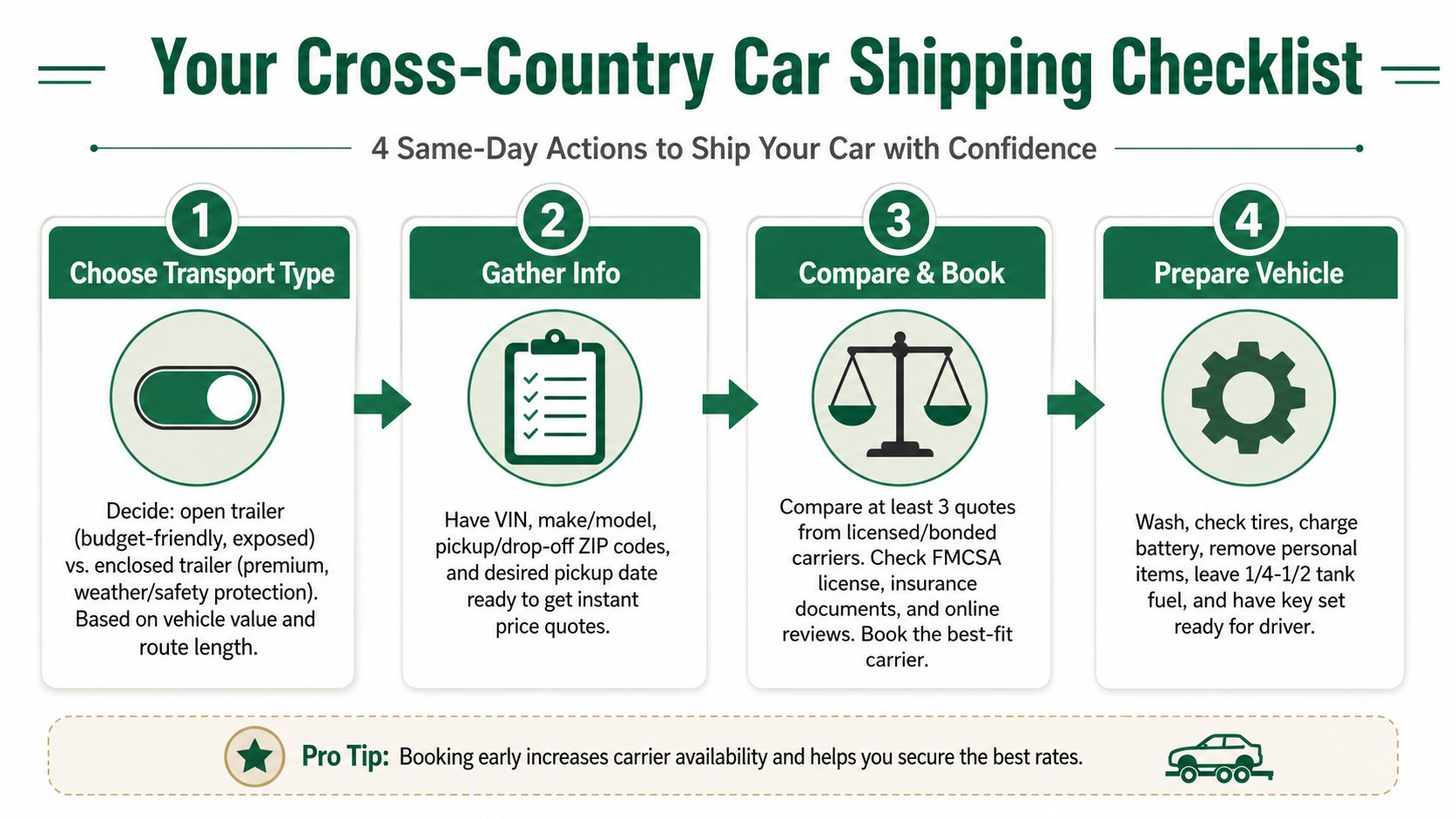
- Choose the carrier: Use open transport for most daily drivers. Select enclosed service for classics, exotics, fresh paint, and vehicles that need stronger protection. Consider container service for Puerto Rico, Hawaii, or specialty moves.
- Request comparable quotes: Provide the VIN, make, model, running status, pickup and delivery ZIP codes, and desired dates. Ask for written terms, the pickup window, insurance details, and the amount that won't exceed the agreed quote.
- Verify the operator: Check the MC and DOT numbers, insurance certificate, FMCSA authority, business address, and customer reviews. Confirm whether the company owns the truck or brokers the shipment.
- Prepare and inspect: Wash the vehicle, photograph all four corners and the roof, remove personal items, disable alarms, check tires and battery, and leave a low fuel level. Have the key set and ownership documents ready.
- Review the pickup record: Confirm the VIN, odometer, existing damage, and photographs with the driver. Keep your signed Bill of Lading.
- Stay reachable: Keep your phone available during the pickup and delivery window. A driver's route can change because of weather, traffic, loading, or another customer's delay.
- Inspect before signing: Compare the vehicle with the pickup record at delivery. If damage appears, document it on the Bill of Lading before signing. Save every shipment document and photo for at least 60 days after delivery.
The simple rule: Never sign a clean delivery record when damage is visible.
Cross-country transport works when the customer treats it like coordinated logistics. Choose the right trailer, price the lane correctly, prepare the vehicle thoroughly, and keep a human advisor involved from dispatch through delivery.
National Car Transport provides door-to-door auto transport across the United States and Puerto Rico, with open, enclosed, container, and ocean-shipping options coordinated through dedicated advisors. Visit National Car Transport to request a route-specific quote and speak with a bilingual English and Spanish agent based in the USA who has more than 20 years of auto-transport logistics experience.