

You're probably staring at a calendar, a moving date, and a car that can't stay where it is. Maybe you're heading to Florida for the season, shipping a duty-station vehicle, sending a student car across the country, or moving a purchase you won on an auction site. The good news is that shipping a car is a routine logistics job, not a gamble, if you treat the quote, the paperwork, and the delivery inspection as one chain instead of three separate problems.
Table of Contents
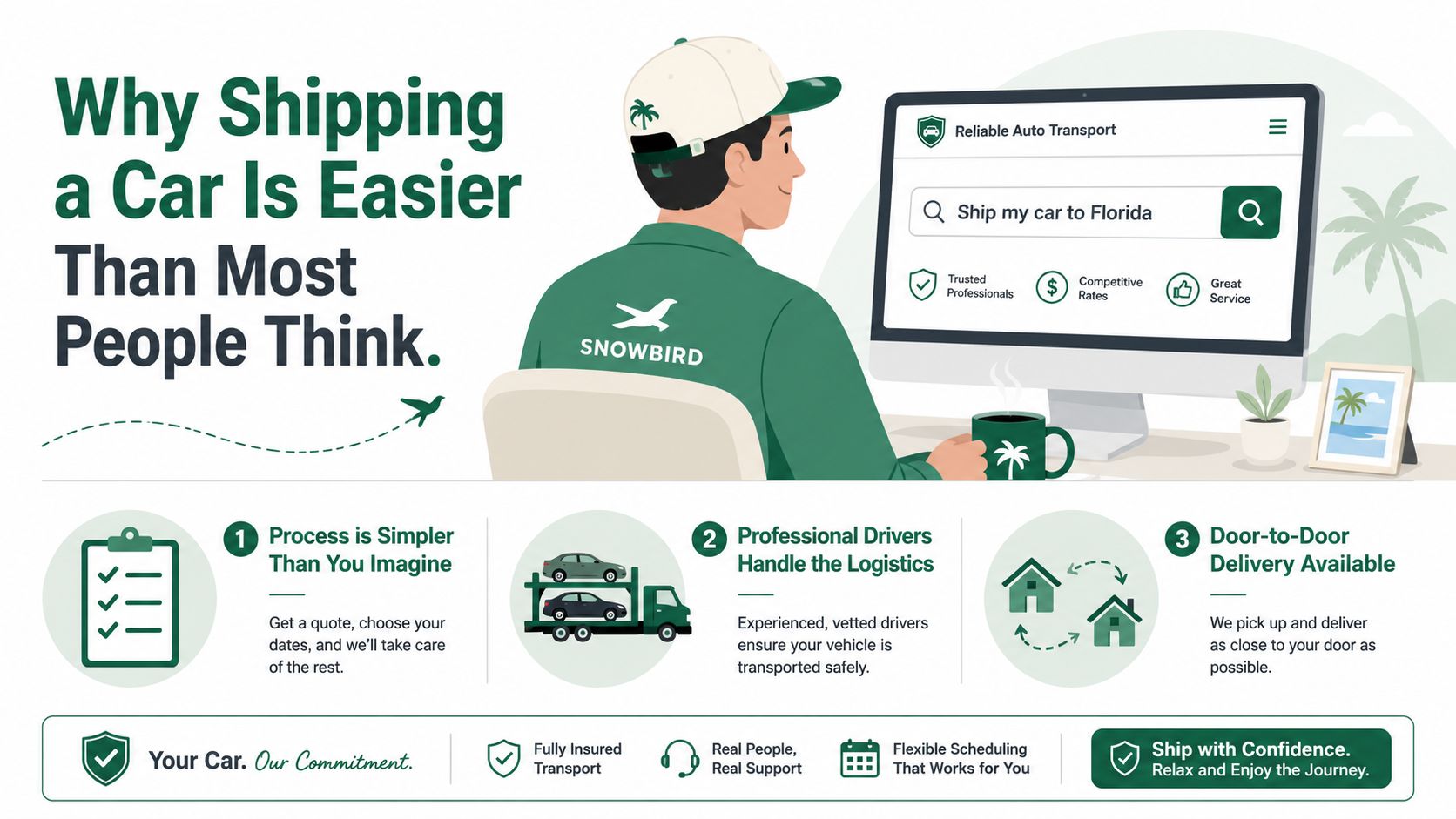
- Why Shipping a Car Is Simpler Than You Expect
- Open vs Enclosed vs Container and Ocean Transport
- Getting a Real Quote and Reading the Fine Print
- Documents, ID, and Preparing Your Vehicle for Pickup
- Pickup Inspection, Transit, and Delivery Day
- Special Cases That Need Extra Planning
- Common Scams, Fee Surprises, and Mistakes to Avoid
Why Shipping a Car Is Simpler Than You Expect
A snowbird leaving New Jersey for San Juan, a military family moving out of Fort Bragg, a college student headed to Phoenix, or a dealer that just bought a unit at auction all ask the same question first, how do I get this car there without wasting money or getting burned. The answer is simpler than many expect because car shipping already runs on broker-and-carrier networks, standardized dispatch, and route-based pricing. Independent industry summaries place the global car shipping market at $38.6 billion in 2022 and project $54.7 billion by 2030, with the U.S. vehicle shipping market valued at $9.9 billion in 2023 and around $10.5 billion in 2025 WorldMetrics.
That scale matters. You are not inventing a custom move from scratch, you are plugging into a system where carriers, dispatchers, port handlers, and advisors already know the sequence.
Open carrier transport does most of the work in this industry, handling about 85–90% of interstate shipments in the U.S. That is not because people settle for less. It is because open transport is the lowest-cost, most available option, and for a normal daily driver it usually makes the most sense.
Practical rule: if you have a standard sedan and a normal schedule, start with open transport and only move up to enclosed if the vehicle's value or condition justifies the extra cost.
The difference between a smooth shipment and a headache is one human who follows the move from quote to delivery. That matters more than a slick website or a fast callback. National Car Transport handles that kind of coordination with bilingual English and Spanish agents based in the U.S., so one advisor can track the vehicle, the paperwork, and the timing instead of handing you off between departments. For direct pickup and drop-off planning, their door-to-door auto transport page lays out the process plainly.
Puerto Rico trips need a different lens. Port rules, pickup timing, and ocean handoffs affect the quote all the way to delivery, and the port side is where a lot of surprise charges show up if nobody explains them up front. A partner like DreamBid transport pricing is useful here because it forces the conversation onto the full chain, not just the first number a broker throws at you.
Open vs Enclosed vs Container and Ocean Transport
A bad transport choice shows up later, usually after the quote looks fine and the vehicle is already in motion. The route, the car's condition, and the handoff points matter more than a generic “cheap versus premium” label.
Open carrier is the workhorse
Open carrier transport is the default for most mainland moves, and that is exactly how it should be for a normal daily driver. It is the lowest-cost option, carrier supply is broad, and dispatch is usually easier because more trucks run this equipment every day. National Car Transport's open car transport page reflects that same practical setup, a plain option for standard vehicles where you pay for transport, not extra shelter.
For an everyday sedan, open transport is the smart starting point. If the car is running, has normal ground clearance, and does not need special protection, this is the method that usually keeps the quote reasonable without creating avoidable delays. It is also the lane most carriers want to book first, which helps when you need the car moved without waiting around for a niche trailer to open up.
Enclosed carrier is for protection, not vanity
Enclosed transport makes sense when the car's value, finish, or condition gives you a real reason to pay more. It usually costs more than open transport on the same route because the trailer carries fewer units and enclosed equipment is not as common. That higher price buys protection from weather and road debris, which is the right trade for classic cars, exotics, show cars, and high-end luxury units.
If the car has low ground clearance, custom paint, or collector value, do not try to save a little and hope for the best. Pay for enclosed transport and avoid the kind of scratch, chip, or exposure complaint that turns a simple move into a claim. You are buying fewer headaches, not bragging rights.
Container and ocean freight are for island routes
Puerto Rico changes the whole chain. The car usually has to be trucked to a port, checked in for ocean freight, then received again on the other side before final delivery can happen. That means the quote is really covering separate legs, port handling, vessel space, and the local rules that govern pickup and release.
For readers comparing island shipping or other ocean moves, DreamBid transport pricing is a useful reference for how ocean freight is framed in practice. A customer shipping a family SUV from Florida to Puerto Rico needs to think about port drop-off timing and release paperwork. A dealer moving multiple units from the mainland to an island market has a different problem, which is coordinating the port handoff so every vehicle clears without sitting and racking up avoidable costs. A military family or student relocating a single car needs the same lesson, the vessel leg is only one part of the bill.
Most island shipments use the language of door-to-port or port-to-door, because the road leg and vessel leg are separate jobs.
If the route is urgent on the mainland, some providers can arrange faster pickup, but that is a scheduling detail, not a different transport method. The method still comes down to open, enclosed, or ocean. For Puerto Rico, San Juan is the key destination hub, so the question is how the vehicle gets from your address to the port, then onto the vessel, then through the local release process without extra fees piling up after the quote.
Getting a Real Quote and Reading the Fine Print
Quotes are where people get fooled. The number on the screen looks clean, the promise sounds simple, and then the final bill grows teeth.
Get three comparable quotes or you're guessing
You need at least 3 comparable quotes before you book Car Shipping Hub. Keep the details identical across all three, origin ZIP, destination ZIP, year, make, model, whether the car runs, whether you want open or enclosed, and your pickup window. If one quote comes in far below the others, treat it like a trap until proven otherwise.
A low number can hide a broker markup, a fuel surcharge, a non-running fee, or an expedited pickup premium that only shows up after you've committed. Mainstream guidance keeps warning people to ask whether every fee is included and to insist on a signed contract, which tells you exactly where the pain lives, the quote is only useful if it reflects the full landed cost PODS.
Know what a flat rate should do
A solid flat-rate quote should tell you what the transport costs, what the deposit covers, and when the balance is due. The clean pattern is simple, you pay a small deposit to lock a dispatch slot, then you pay the remaining balance after a vetted carrier is assigned. That protects you from being forced into full prepayment before anyone has moved your car.
Rule of thumb: if a transporter wants the whole amount before a carrier is matched, stop and ask why.
In the world, broker-and-carrier pricing works because one party sources the load and another party hauls it. That's normal. What's not normal is vague wording around “all-in” pricing that still leaves room for surprise additions at the last minute.
Ask about the add-ons before you book
The questions that matter are boring, but they save money:
- Is the quote fully inclusive? Ask whether fuel, tolls, and dispatch costs are already covered.
- Is the car operable? Non-running vehicles often trigger extra handling.
- Is pickup flexible? Tight windows can bring a premium.
- Is the deposit refundable? You need that answer before you send money.
- What happens if the carrier changes? Some brokers resell the load, and that changes the margin structure.
If the answer is slippery, keep shopping. Good dispatchers answer these questions without sounding offended, because the contract should make sense on the first read.
Documents, ID, and Preparing Your Vehicle for Pickup
People obsess over the route and then fumble the pickup. The driver shows up, the car is ready, and the paperwork slows everything down.
Bring the right documents and nothing extra
For standard U.S. domestic shipments, the physical title is usually not required, which makes mainland relocations, snowbird moves, and many dealer transfers easier to handle. The key pickup document is a government-issued photo ID, and the main receipt-and-contract form is the Bill of Lading, or BOL. The title can still come into play for international shipping, some unregistered vehicles, and certain auction releases Preowned Auto Logistics.
If you are dealing with a cross-border move and want a clear comparison point, the UK car import step-by-step guide shows how quickly vehicle paperwork gets more specific once a shipment leaves the ordinary mainland playbook.
Prep the car like a professional would
GEICO says to clean the vehicle, remove personal items, and document the pre-shipment condition with photos, while the carrier and customer should inspect the car at pickup, sign the BOL, and repeat the inspection at delivery before the paperwork is finalized GEICO. That is the baseline. If you skip it, you hand the driver and the claims process a mess.
Use this short checklist:
- Remove personal items: Don't leave boxes, clothes, or loose valuables in the car.
- Take timestamped photos: Get every side, the wheels, the windshield, and any existing scratches.
- Leave about a quarter tank of fuel: Enough for loading and unloading, not enough to add useless weight.
- Disable the alarm: A car that starts screaming in transit is a problem nobody wants.
- Secure or remove toll tags and loose accessories: Don't let a transponder or dangling add-on turn into a damage dispute later.
Puerto Rico port rules are stricter
Port moves to San Juan bring their own rules. Matson requires the vehicle to be washed, all personal belongings removed, and the fuel reduced to between 1/8 and 1/4 of a tank, never over 1/4 Matson. Matson also requires removal of roof cargo carriers, attached tents, bike racks, additional batteries, ignition interlock devices, fire extinguishers, and any auxiliary propane tanks before drop-off at the port Matson.
That level of detail keeps a port clerk from rejecting the vehicle or sending you back for a second trip. For island shipping, follow the port rules, not the generic mainland checklist.
Pickup Inspection, Transit, and Delivery Day
The shipment has a rhythm. If you know the rhythm, you won't panic when the driver calls, the status changes, or the paperwork comes back with notes.
Pickup is a joint inspection, not a handoff
At pickup, the driver walks the vehicle with you and records the existing condition on the Bill of Lading. Both parties sign it, and that signed copy becomes your proof of how the car looked before the trip. The timestamped photos matter, because they back up the written record if anyone argues later.
The inspection should be slow enough to catch the obvious stuff, mirrors, bumpers, wheels, glass, and any pre-existing scratches. If the truck is loading a valuable or low-clearance car, the driver may take extra care with the ramps or equipment, and that's exactly what you want.
Transit is mostly quiet if the booking was done right
During transit, dispatch monitors the load and gives updates by phone or text. The driver usually calls ahead before delivery to confirm the window, because the last mile still depends on traffic, weather, and route timing. That doesn't mean the shipment is going sideways. It means the driver is coordinating the drop-off so you're not waiting outside for no reason.
For most domestic open or enclosed shipments, the timeline is about 1 to 10 days WorldMetrics. Mainland-to-Puerto Rico shipments usually take 6 to 16 days, depending on origin WorldMetrics. Alaska and back-haul Hawaii routes run a bit longer because the logistics are more limited and the route is less forgiving.
The cleanest shipments feel boring. The driver calls, the car moves, the updates stay simple, and nothing dramatic happens.
Delivery closes the loop
On delivery day, repeat the same inspection against the original BOL. Don't sign off until you've checked for anything new, even if the car looks fine at first glance. If the balance is due on arrival, that's when you finish payment, after the inspection, not before it.
That final signature is the end of the shipping chain. Treat it that way.
Special Cases That Need Extra Planning
The hardest moves are not always the longest ones. They're the ones where the car itself creates extra work.
Non-running and modified vehicles need the right equipment
A non-running car usually needs a winch and extra labor, which means the carrier has to know that upfront. If you say the vehicle runs when it doesn't, the loading crew loses time and the shipment gets more expensive in the moment. Modified cars bring their own issues too, especially low-profile kits, oversized wheels, or other changes that affect clearance.
Classic and exotic cars deserve enclosed handling, not because someone wants to sell you an upgrade, but because the vehicle's condition justifies the protection. National Car Transport's classic car shipping page is a relevant example of how specialty moves are organized around the car's needs, not just the distance.
Small details can cause big delays
Low batteries complicate loading, and a dead battery can make an otherwise simple pickup much harder. Toll tags should come out or be disabled before transit so you don't pay for someone else's road time. Alarm systems can drain power on longer moves, especially if the car is sitting before or after port handling.
Dealers, online buyers, and auction customers hit these problems a lot because they're moving cars that haven't been seen in person first. That's why a good bilingual advisor matters. They can match the trailer type, explain the equipment needed, and flag what has to be disclosed before the driver arrives.
Use a human when the vehicle is unusual
If the car is inoperable, modified, collectible, or being shipped through a port, don't try to squeeze it into a generic quote form and hope for the best. A real dispatcher can confirm the route, the trailer type, and the special handling without making you translate logistics jargon into common sense. That saves calls, delays, and ugly surprises.
Common Scams, Fee Surprises, and Mistakes to Avoid
The bad experiences in car shipping usually start before pickup. They start with a cheap quote, a rushed deposit, or a contract nobody read closely.
Watch the red flags before you send money
If the quote is dramatically below market, something is wrong. If someone demands full payment before a carrier is assigned, that's another warning sign. If the website has no physical address or DOT/MC number, or the broker pressures you to “lock in” a rate that expires in hours, walk away.
The same goes for brokers who refuse to name the carrier until after a large deposit is paid. You need enough information to know who is responsible for moving the vehicle. If that information keeps getting delayed, the problem isn't your questions. The problem is the seller.
The most common post-booking surprises
The four charges that catch people off guard are easy to understand once you know them:
- Fuel surcharge: Added after dispatch when the contract wasn't written clearly.
- Expedited pickup premium: Charged when a “standard” pickup window suddenly becomes a rush job.
- Non-running fee: Applied when the car was declared operable, but the driver arrives and finds out it isn't.
- Storage fee: Happens when a port or terminal holds the vehicle past the free period.
Those charges are not mysterious. They're the result of vague booking or incomplete disclosure. The fix is simple, tell the truth about the car, the route, and the timing before the load is accepted.
Use a booking checklist that keeps you in control
Print this and keep it with the keys:
- Confirm open vs enclosed.
- Confirm door-to-door or door-to-port for island routes.
- Get three comparable flat-rate quotes.
- Book with a small deposit only after the carrier is matched.
- Prepare the vehicle using the BOL checklist.
- Inspect and sign at pickup.
- Track transit and stay reachable.
- Repeat the inspection at delivery.
- Release final payment only after you've checked the car.
Ask any transporter about FMCSA licensing, cargo insurance limits, dispatch hours, bilingual support, and whether the same advisor will follow the shipment from quote to delivery. That's not overkill. That's how you separate a real operation from a noisy middleman.
One more thing, every vehicle move is different. The right answer for a student sedan in Texas isn't the same as a classic car leaving New Jersey or a Puerto Rico port shipment headed for San Juan. A real human advisor still beats a chatbot when you want the process simple, the price clear, and the paperwork correct.
If you want a straightforward shipment without the back-and-forth, National Car Transport handles door-to-door auto transport across the mainland, Puerto Rico, Alaska, and Hawaii with bilingual U.S.-based advisors and flat-rate pricing. Visit National Car Transport to compare options, get the right transport method for your vehicle, and move the car without guessing at the details.