
You've booked the new home, arranged time off, and started sorting household goods. Then you remember the car. It still has to reach the destination, the pickup window may not match your closing date, and a Puerto Rico move adds ports, ocean transit, and government paperwork to an already crowded schedule.
Vehicle relocation is its own logistics project. A household mover can load boxes while an auto carrier must match your vehicle with the right equipment, verify access for a truck and trailer, complete a condition inspection, and coordinate a delivery that may cross several states or an ocean route. Knowing how to relocate your vehicle means planning that chain separately instead of treating the car as an afterthought.
National mobility has fallen to its lowest level since modern recordkeeping began. About 11% of U.S. residents changed homes in 2024, compared with roughly one in five Americans moving in the 1960s, according to reporting on the recent U.S. relocation trend. Yet active corridors remain concentrated, particularly toward Texas, Florida, North Carolina, and Tennessee. Whether you're a snowbird, military family, student, dealership, or household moving between major cities such as Los Angeles, Phoenix, Dallas, Atlanta, Chicago, New York, Miami, Seattle, Denver, or San Juan, the vehicle often determines whether the move feels organized or chaotic.
Table of Contents
- Planning Your Vehicle Relocation Timeline
- Choosing Between Open and Enclosed Transport
- Preparing Your Vehicle for Shipping
- Shipping Vehicles to and From Puerto Rico
- Understanding Costs and Transparent Pricing
- Coordinating Pickup and Final Delivery
- Why Work with Experienced Agents
Planning Your Vehicle Relocation Timeline
A family leaving Chicago for Miami may have a closing date on Friday, flights booked for Saturday, and a vehicle that needs to arrive after they do. If the car gets picked up too early, they lose transportation before departure. If they wait until the last minute, the preferred carrier may already be committed to another route. Auto transport solves that conflict only when the vehicle schedule is treated as a separate workstream.
Start with the dates that cannot move
Write down four anchors before requesting a quote:
- The earliest pickup date: The first day the vehicle can leave without interfering with work, school, closing, or departure.
- The latest acceptable pickup date: The point at which waiting would create a transportation problem.
- The target delivery window: The period when someone can receive and inspect the vehicle.
- The fallback plan: A practical arrangement if delivery occurs before the household is fully settled.
Carriers generally work with pickup and delivery windows rather than guaranteed same-day appointments. Traffic, weather, driver hours, route changes, and loading conditions can affect the sequence. A narrow window may require special handling, while reasonable flexibility gives a dispatcher more opportunities to match the vehicle with a carrier already traveling your corridor.
Practical rule: Book around the date you need the car, not simply the date you leave the house.
Match the transport plan to your travel plan
Some customers drive the car and fly to the destination. Others fly ahead and ship the vehicle so it's waiting near the new home. Neither option is automatically cheaper or easier. Driving adds fuel, lodging, meals, mileage, fatigue, and time away from work. Shipping adds coordination, but it can separate vehicle movement from personal travel and reduce pressure during a long relocation.
Local moves still dominate overall relocation activity. More than half of moves occur within the same county, and roughly 78% stay within state lines, while long-distance moves represent just over 20% of the market, according to moving-market data summarized by iPropertyManagement. That's why routes between nearby cities, such as Dallas and Houston, Orlando and Tampa, or Los Angeles and San Diego, may have different carrier availability from a less frequent rural-to-rural route.
Contact a transport company as soon as your dates are reasonably firm. A deposit may secure the booking, but carrier matching remains dependent on route, vehicle type, timing, and available equipment. Same-day pickup can sometimes be arranged, but it shouldn't be your base plan.
Choosing Between Open and Enclosed Transport
Open and enclosed transport serve different priorities. Open transport places vehicles on a standard multi-car carrier and is the normal choice for daily drivers, family SUVs, pickup trucks, and most dealership inventory. Enclosed transport surrounds the vehicle with protective equipment and is better suited to classics, exotics, restored vehicles, and high-value cars that need greater protection from weather and road debris.
| Feature | Open Transport | Enclosed Transport |
|---|---|---|
| Availability | Widely available on major U.S. routes | More limited, based on equipment and scheduling |
| Typical vehicle use | Daily drivers, SUVs, trucks, dealership vehicles | Classic, exotic, restored, luxury, and sensitive vehicles |
| Protection | Exposed to normal outdoor transport conditions | Better protection from dust, rain, snow, and road debris |
| Capacity | Usually carries more vehicles | Usually carries fewer vehicles |
| Price position | The more budget-conscious option | Premium pricing for added protection |
| Loading needs | Standard loading arrangements | May support specialized or low-clearance loading |
Enclosed service typically costs 40% to 60% more than open shipping, according to the service guidance provided for this comparison. That premium can make sense when a vehicle's condition, rarity, or replacement cost matters more than the lowest transport price. It may not be justified for a well-maintained commuter car traveling a regular interstate route.
Open carriers are not careless or unsuitable. They're the workhorse of the U.S. auto transport market, including routes between major cities such as New York, Boston, Atlanta, Dallas, Houston, Phoenix, Las Vegas, Denver, Portland, and Seattle. A reputable carrier should use proper loading procedures and maintain active liability and cargo insurance under applicable FMCSA-related transport expectations.
For a clearer explanation of the standard service, review open car transport options before choosing equipment. Ask whether the quote reflects open or enclosed service, whether the vehicle has unusual clearance or modifications, and whether the delivery location can accommodate the carrier.
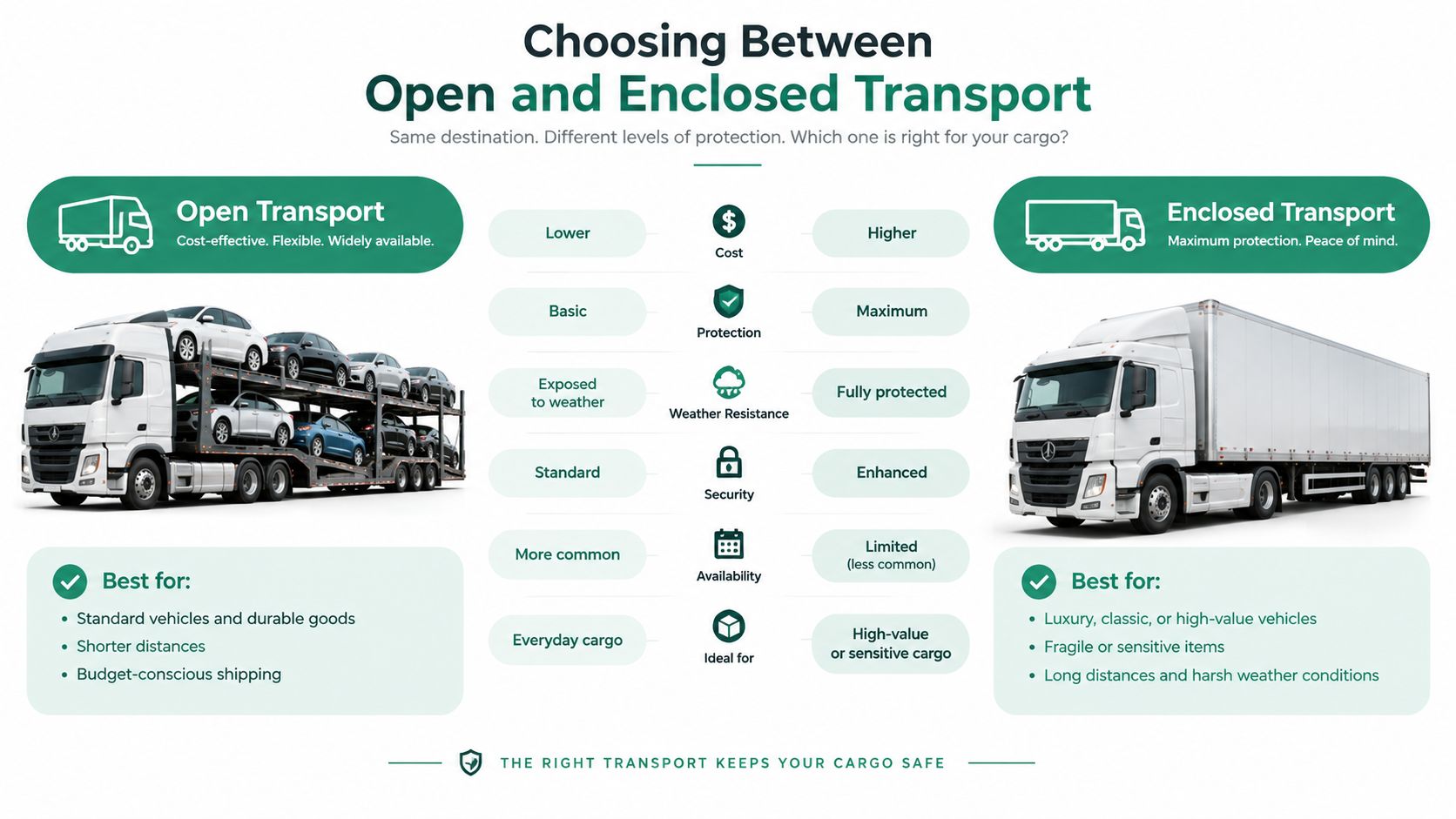
The right choice depends on the vehicle, not the sales pitch. An everyday sedan usually needs reliable handling and accurate coordination. A restored classic may justify enclosed equipment because a small amount of exposure or loading risk carries a much larger consequence.
Here's a visual overview of the two transport methods:
Preparing Your Vehicle for Shipping
Preparation starts after booking, not when the driver is already outside. The carrier needs a safe, accessible vehicle, accurate paperwork, and a clear record of its condition. Small oversights can create delays at pickup or disputes at delivery.
Complete the vehicle checklist
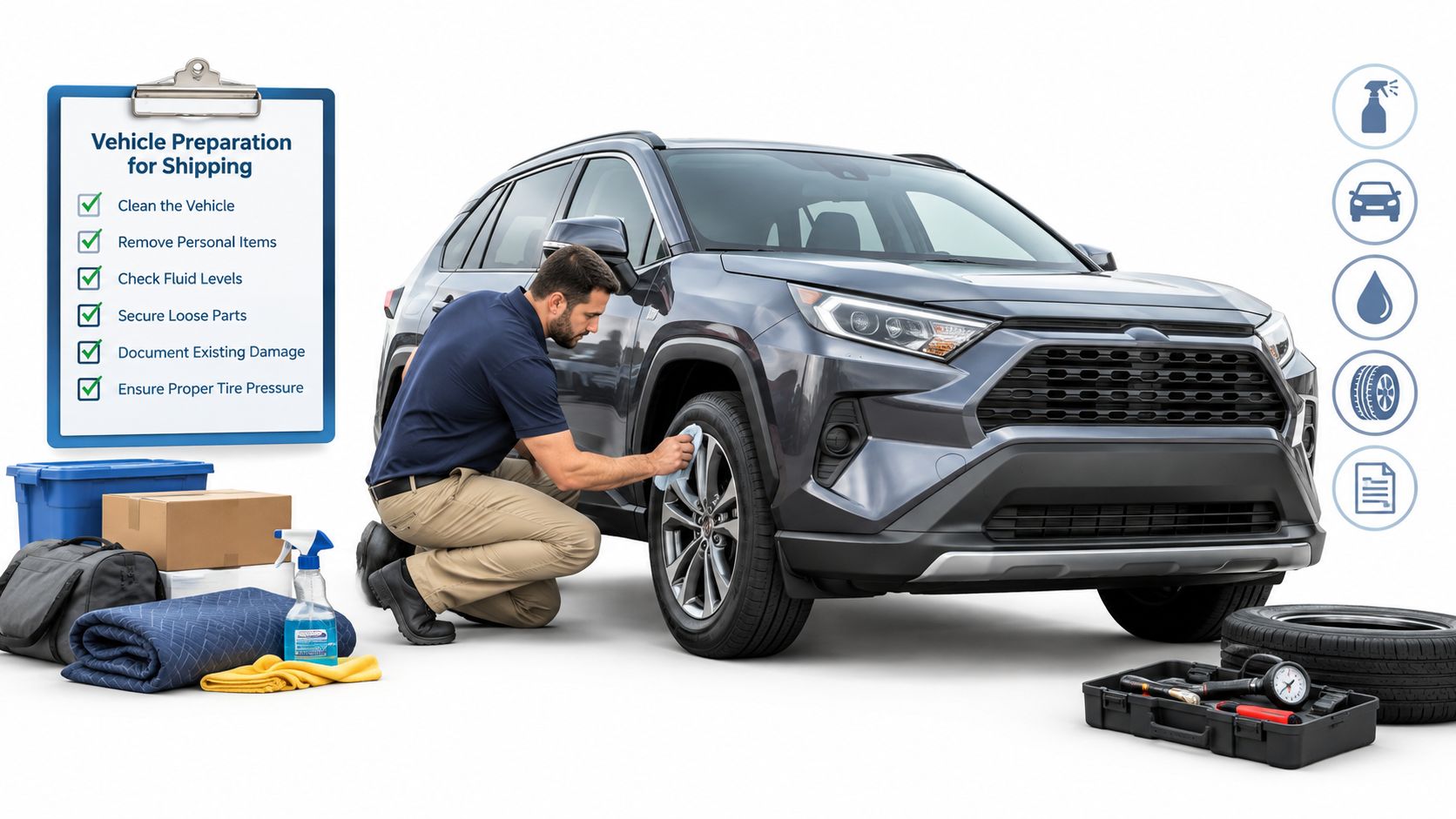
Remove personal property from the passenger compartment, trunk, glove box, and door pockets unless your written transport agreement specifically allows a limited amount. Personal belongings can shift, add weight, obstruct inspection, or fall under different insurance rules. Remove toll transponders, detachable GPS units, parking permits, and other electronics that could be damaged or charged during transit.
Leave the fuel level low enough for safe transport, commonly around one-quarter of a tank when the carrier's instructions require it. A carrier needs enough fuel to load, unload, and reposition the vehicle, but a full tank adds unnecessary weight and increases risk. Disable alarms, secure loose exterior parts, fold back mirrors when possible, and tell the dispatcher about roof racks, spoilers, oversized tires, lowered suspension, or mechanical issues.
Document the condition before loading
Wash the vehicle if weather and local conditions allow. Dirt can hide scratches, dents, paint transfer, and chips. Walk around the car with the driver and record existing damage on the bill of lading, then take clear, timestamped photos of every side, the roof, wheels, glass, interior, odometer, and any existing marks.
Keep the keys, registration information, title details, and transport contact information accessible. For standard domestic shipping, the carrier will normally need the vehicle to be operable or will need advance notice and suitable equipment for an inoperable vehicle. A clear condition report protects both parties because it separates pre-existing damage from issues that may occur during transit.
Choose access over convenience
Door-to-door service usually means delivery as close as legally and physically practical to the requested address. A large carrier may not fit on a narrow residential street, beneath low branches, across a steep driveway, or in a crowded urban block. In that case, arrange a nearby wide road, shopping-center lot, or other safe meeting point before pickup.
Terminal service can work when home access is difficult or no one can meet the driver, but it introduces additional coordination and may require you to arrange transportation to or from the terminal. Confirm who will release the vehicle, where the inspection occurs, and what identification the representative must show. The simplest booking is the one that matches the actual property, not merely the address entered on a form.
Shipping Vehicles to and From Puerto Rico
Puerto Rico vehicle shipping isn't a longer version of mainland-to-mainland transport. It combines domestic trucking, port handling, ocean freight, customs-related documentation, and local delivery. A vehicle from anywhere on the mainland may first travel overland to a U.S. port, then sail to San Juan, where it goes through the required release process before pickup or delivery on the island.
Understand the route before requesting service
The practical sequence usually looks like this:
- Mainland pickup: A driver collects the vehicle at the origin or a suitable nearby location.
- Port movement: The vehicle travels overland to the designated U.S. port.
- Ocean shipment: The vehicle moves by vessel to San Juan.
- Hacienda and release steps: The shipment is processed through Puerto Rico Treasury, also known as Hacienda, along with applicable import or tax documentation.
- Island delivery or pickup: The vehicle is released for local delivery or collected at the port, depending on the service selected.
That sequence explains why Puerto Rico timing differs from a route between mainland cities. A truck appointment, port cutoff, vessel schedule, inspection, and local delivery appointment all have to align. A delay at one stage can affect the next stage, so customers should plan around a delivery window rather than promise a precise arrival hour.
Prepare the documentation early
Sources covering Puerto Rico car shipping requirements identify documentation that may be needed before release or registration, including:
- A clear original title
- Current vehicle registration
- Government-issued photo identification
- The bill of lading
- Proof of tax clearance or import-related paperwork
- Written authorization from a lender when the vehicle has a lien
A financed vehicle deserves special attention. The lienholder may need to authorize shipment to Puerto Rico, and the owner should confirm that authorization before the vehicle reaches the port. Missing paperwork can create storage, release, or scheduling problems that a transport company can't solve at the last minute.
The route also suits different customers for different reasons. Snowbirds may ship a vehicle seasonally instead of driving long distances. Military families and students may need a dependable handoff between duty station, campus, and home. Dealerships and businesses need document control across multiple vehicles. The common mistake is treating an island shipment like a standard domestic booking.
Puerto Rico routes generally require more coordination than mainland routes, so ask who handles port communication, which party manages local delivery, and whether the quote covers the complete movement. For a route-specific overview, review Puerto Rico car shipping service. Bilingual English and Spanish agents based in the United States can help customers understand each step, especially when paperwork or port instructions need clarification.
Understanding Costs and Transparent Pricing
A vehicle shipping quote reflects a set of operational decisions, not just mileage. Distance matters, but so do vehicle size, operability, pickup access, transport type, route frequency, seasonal demand, and whether the shipment requires port or ocean handling. A compact sedan traveling between major cities may price differently from a large SUV leaving a rural address, even when the distances appear similar.
Read the quote line by line
The most useful quote identifies the vehicle, origin, destination, service type, equipment, timing assumptions, and included fees. Ask whether the price is open or enclosed, door-to-door or terminal-based, and whether the address is accessible to the expected carrier. For Puerto Rico, confirm that the estimate reflects the mainland leg, port process, ocean movement, and the selected San Juan delivery arrangement.
| Factor | Impact on Price | Notes |
|---|---|---|
| Distance and route | Longer or less frequent routes can cost more | Major corridors may have more carrier activity |
| Vehicle size and weight | Larger vehicles use more trailer space | Trucks, oversized SUVs, and modified vehicles need accurate details |
| Open or enclosed service | Enclosed service carries a premium | Choose protection based on vehicle value and condition |
| Pickup access | Difficult access can require a nearby meeting point | Narrow streets and restricted areas affect coordination |
| Season and demand | Busy periods can tighten availability | Flexible dates may improve matching options |
| Island routing | Port and ocean handling add separate logistics | Puerto Rico requires documentation and release planning |
A transparent flat-rate model is easier to budget than a low initial number followed by unexplained adjustments. Before paying, ask what triggers a change, whether there are charges for a non-running vehicle, and whether the quote includes the service level you actually need. “Door-to-door” should still be understood as service as close as safely possible, not a promise that a multi-car truck can enter every driveway.
Customers often focus on the transport price while overlooking the cost of poor timing. A delayed pickup may affect a rental car, hotel stay, work schedule, or vehicle access at the destination. The cheapest quote isn't economical if it forces a second booking or leaves the car unavailable when needed.
Use car shipping cost information to compare the factors behind an estimate rather than searching for a universal price. National Car Transport offers transparent flat-rate pricing with no upfront charge until a vehicle is matched with a carrier, but customers should still verify the written terms, service type, and route assumptions before booking.
Coordinating Pickup and Final Delivery
Pickup succeeds when the driver, customer, and property follow one workable plan. Keep the vehicle accessible, remove the agreed personal items, and allow time for the inspection. The driver records its condition on the bill of lading. Read that report carefully before signing.

What happens at pickup
Check the condition report and describe existing damage precisely. “Scratch on left rear bumper” provides a usable record, while “minor damage” leaves room for disagreement. Keep your signed copy. Hand over the correct keys and disclose starting, braking, steering, or clearance problems before the vehicle is loaded.
Confirm how dispatch will send updates, whether by phone, text message, or notifications. Tell the coordinator promptly if the delivery address could change after closing. A driver may be able to meet you at a safe nearby location, but a new address can affect routing, access, and arrival timing.
Puerto Rico shipments require another coordination check. Confirm whether the service is port-to-door, door-to-port, or a combination. Once the vehicle reaches San Juan and completes its release steps, local delivery may be arranged separately from mainland pickup. Establish who will contact you, who may accept the vehicle, and which identification documents are required.
Inspect before completing delivery
Compare the vehicle with the pickup report in good light before accepting delivery. Examine the bumpers, wheels, roof, glass, mirrors, doors, visible underbody areas, and interior. Check that the mileage and fuel level match the agreed handling, then take fresh photographs.
Use this checklist:
- Review the bill of lading: Compare pickup and delivery notes before signing.
- Inspect all sides: Look for new scratches, dents, chips, or broken parts.
- Check operation: Start an operable vehicle and test its basic functions.
- Record exceptions: Write each new concern on the delivery document before signing.
- Keep records: Save photos, paperwork, messages, and contact details.
- Finish local requirements: Update registration, insurance, tax records, or lender information as applicable.
Household timing can disrupt vehicle delivery. Practical tips for moving homes smoothly help coordinate keys, access, utilities, and receiving responsibilities around the car's arrival. Assign a named receiver, even if the rest of the household remains in transit.
Why Work with Experienced Agents
Not one vehicle transport is alike. A daily driver moving between two major mainland cities, a classic car headed to a show, a military vehicle moving with a duty station change, and a shipment bound for San Juan each require different questions before booking.
National Car Transport has 25+ years of experience, an A+ BBB rating, transparent flat-rate pricing, and a network of 25,000+ vetted carriers. Its U.S.-based bilingual English and Spanish agents have more than 20 years of auto transport logistics experience, helping customers coordinate schedules, inspections, port requirements, and delivery updates. That human guidance matters when a quick online form doesn't capture an inoperable vehicle, lien, narrow street, island route, or changing move date.
Businesses comparing logistics partners can also review how organizations partner with SwiftJet when evaluating broader transportation coordination. For a consumer or fleet customer, the practical next step is simple: provide accurate vehicle and route details, ask what the quote includes, and choose an advisor who will remain available through delivery.
National Car Transport provides door-to-door open and enclosed vehicle shipping across the 48 contiguous states, with container and ocean options for Puerto Rico and other island routes. If you're relocating a car from a mainland city to San Juan, moving between states, or coordinating vehicles for a family, dealership, or business, request guidance and a transparent quote through National Car Transport.