

You need a vehicle moved quickly, perhaps because a military reporting date changed, a dealership sale is waiting, or your car has to reach a Puerto Rico sailing on time. Standard auto transport may still work, but it usually depends on a carrier's existing route and available space. Hot shot car hauling is built for the situations where timing, direct routing, and precise coordination matter more than the lowest possible price.
The trade-off is straightforward. You'll usually pay a premium for a smaller, more dedicated move, and availability still depends on where a suitable carrier is located. The right choice comes from matching the service to the shipment, not from assuming expedited transport is always better.
Table of Contents
- What Exactly Is Hot Shot Car Hauling
- Hot Shot Versus Standard Car Transport
- When Hot Shot Hauling Makes Perfect Sense
- Shipping to Puerto Rico with Hot Shot Service
- Understanding the Cost and Availability
- How to Book and Coordinate an Expedited Move
What Exactly Is Hot Shot Car Hauling
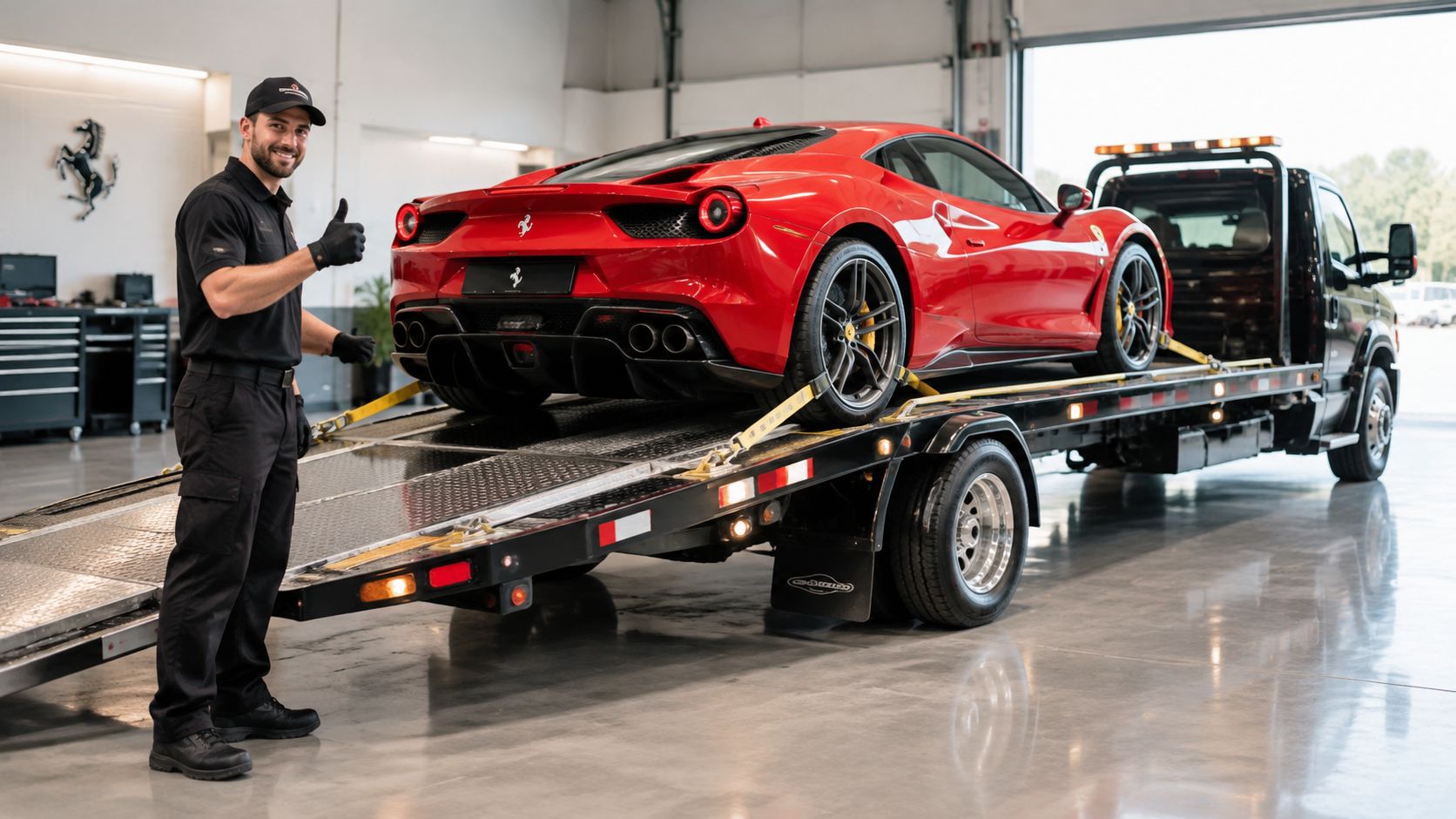
A dealership may need one vehicle collected from a crowded auction yard, or a buyer may need a car moved from a rural property that a large carrier cannot reach easily. Hot shot car hauling uses a smaller truck-and-trailer combination to handle these focused moves with fewer stops and more control over pickup and delivery planning.
The equipment is usually a medium-duty pickup truck, often a one-ton dually, pulling a flatbed or gooseneck trailer. Car-specific trailers can carry a small number of vehicles, commonly one to three depending on the equipment and loaded combination. That setup can work well at narrow residential streets, dealership lots, auction locations, and rural addresses where a full-size multi-car carrier may have limited access.
Why the equipment matters
A pickup and trailer must be configured for the shipment, not selected by appearance alone. The operator needs to check the truck's ratings, trailer capacity, cargo weight, tie-down equipment, and route requirements. New operators often spend about $50,000 to $100,000 to launch, while general freight carrier liability coverage is commonly set at a $750,000 minimum, according to industry guidance on car-hauling equipment and startup requirements.
Those operating requirements explain why a professional hot shot move involves more than an available pickup. The carrier needs suitable equipment, commercial insurance, maintenance procedures, securement gear, and documentation. Before booking, ask who will perform the move, whether the carrier is properly insured, and how the vehicle's condition will be recorded at pickup and delivery.
Practical rule: The smaller the load, the more important the carrier's preparation becomes. A direct trip still requires careful loading, inspection, and securement.
Hot shot service fits a vehicle that must leave on short notice, a pickup address outside a standard carrier's route, or a delivery tied to a firm appointment. It can also suit a valuable classic or luxury vehicle, an online purchase, or a dealership transfer that cannot wait for a larger multi-vehicle route to fill. For a routine move with flexible timing, standard transport may offer better value.
The service also depends on coordination. Customers can review understanding hotshot logistics roles for context on dispatching, driving duties, and shipment management. For a same-day or highly time-sensitive move, the information requested through same-day auto transport services helps clarify the pickup address, vehicle condition, delivery deadline, and availability needed before confirmation.
Hot shot hauling is a specialized option within the wider vehicle-transport market. It is most useful when a smaller shipment, difficult access point, or firm deadline justifies paying for focused capacity. It is less practical when the vehicle can wait for an established route, when several cars need to move together, or when minimizing cost matters more than reducing the booking wait.
Hot Shot Versus Standard Car Transport
A dealership needs a vehicle at another location before a customer appointment, or a buyer has a firm pickup deadline after an online purchase. In these cases, hot shot car hauling can provide focused capacity and a narrower schedule. For a routine move with flexible timing, standard transport usually offers better value.
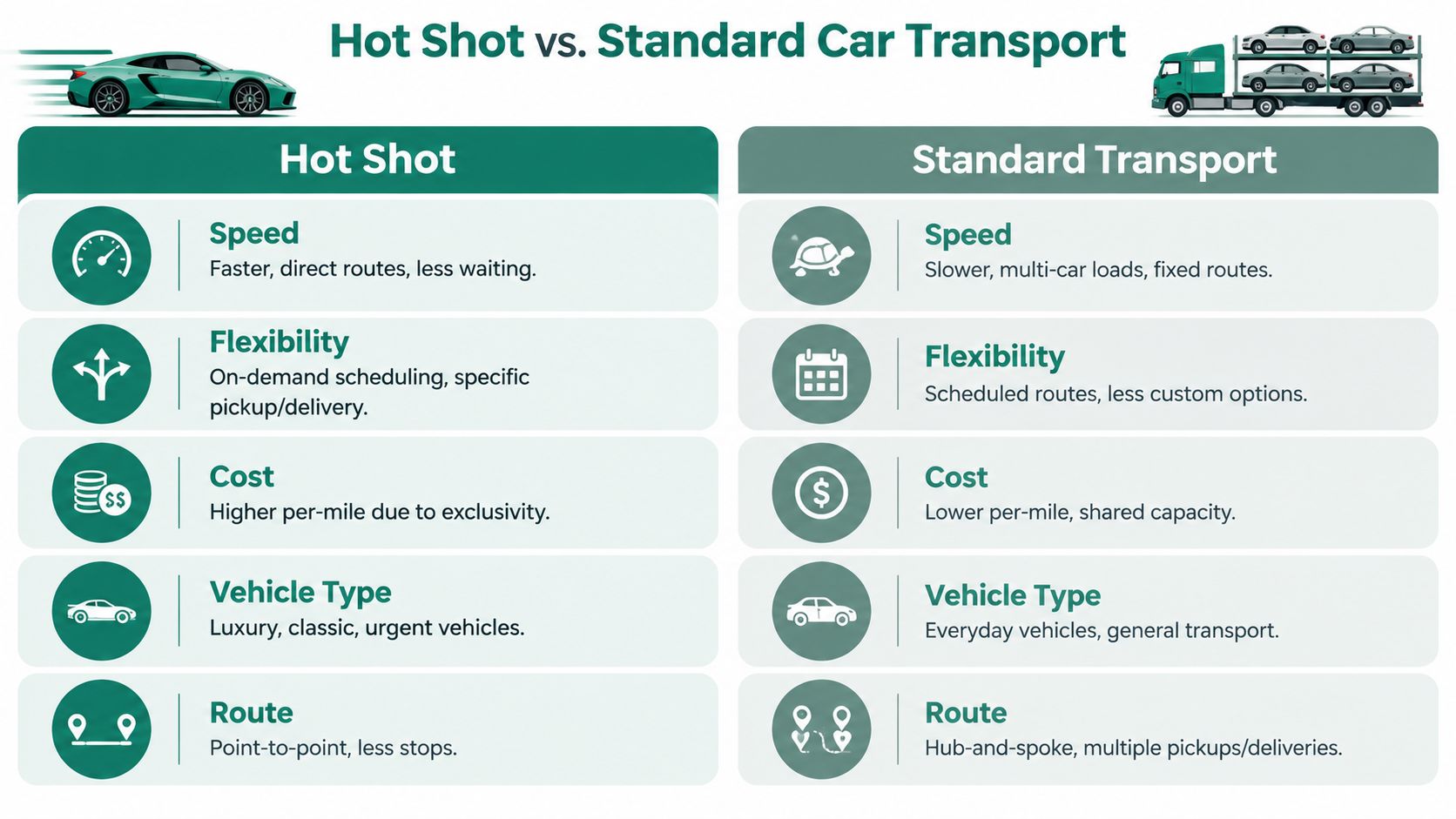
Hot shot and standard auto transport serve different scheduling needs. Standard open or enclosed transport spreads fuel and labor costs across several vehicles. Hot shot service commits resources to a smaller shipment, which may reduce the wait for pickup but generally increases the cost per vehicle or mile.
Hot Shot vs. Standard Transport at a Glance
| Feature | Hot Shot Car Hauling | Standard Auto Transport |
|---|---|---|
| Speed | Faster when a direct pickup and delivery are available | Slower when the vehicle waits for a planned route |
| Cost | Higher per mile because fewer vehicles share the trip | Lower per mile through shared capacity |
| Capacity | Smaller loads, often one to three vehicles depending on equipment | Larger multi-vehicle loads |
| Flexibility | More adaptable pickup and delivery planning | More dependent on established lanes and schedules |
| Vehicle accessibility | Better suited to tight lots, rural addresses, and specific appointments | Requires suitable access for a larger carrier |
The speed benefit comes from less waiting and fewer stops, not a guaranteed transit time. A driver may collect the vehicle soon after booking and proceed without waiting for a large carrier to fill. Weather, traffic, port schedules, driver-hour limits, and pickup conditions can still change the plan.
Hot shot service is often easier to coordinate for tight lots, rural properties, auction locations, or addresses that cannot accommodate a large multi-vehicle carrier. Equipment still determines what is possible, so confirm access, loading space, vehicle condition, and any special handling requirements before accepting a quote.
Choosing by shipment profile
Hot shot is usually the stronger option when:
- The deadline is firm: A military reporting date, auction release, dealership delivery, or planned departure leaves little room for route uncertainty.
- The pickup is difficult: A smaller trailer may reach a location that is impractical for a large carrier.
- The vehicle needs focused handling: A classic, luxury vehicle, or urgent replacement car may justify a more direct arrangement.
- The route is regional: The premium often makes more sense over a shorter move than across a long distance.
Standard transport is generally more practical when the vehicle is ordinary, the route is well served, and the customer can accept a broader pickup window. It is also a better fit when several vehicles need to move together. Enclosed standard transport may suit a high-value vehicle when protection from weather and road exposure matters more than the fastest available pickup.
The cheapest quote is not always the lowest-cost decision. A missed delivery appointment can create storage, rental-car, lost-sale, or travel problems. Confirm the financial consequence of delay before paying for expedited capacity.
The right comparison is dedicated flexibility versus shared efficiency. Hot shot hauling is the stronger choice when a complex route, difficult access point, or firm appointment makes waiting costly. Standard transport wins when the vehicle can wait for an established lane and minimizing cost matters more than reducing the booking window.
When Hot Shot Hauling Makes Perfect Sense
A military family receives orders with a short reporting window. Household goods are scheduled separately, but one family vehicle remains at the old duty station. Waiting for a regular carrier could leave the family without transportation after arrival. Hot shot hauling can be the practical choice because it provides more control over the pickup schedule, not just another way to move a vehicle.
A student can face the same constraint before a semester begins. The vehicle is at home, the student is near campus, and public transportation may not cover work, clinical, or campus obligations. For a regional move with a fixed date, a focused pickup may cost less overall than extending a rental or arranging an uncertain handoff.
Urgent purchases and dealership transfers
An online buyer may purchase a vehicle from a seller several states away. The sale is complete, the seller needs the driveway cleared, and the buyer wants the vehicle ready for registration or work. A hot shot carrier can fit when a narrower pickup plan matters more than joining a broader multi-car route.
Dealerships and auctions often work against deadlines that individual customers never see. A dealer may need a vehicle transferred between locations for a customer delivery, inventory replacement, or sales commitment. A smaller carrier may coordinate directly with the receiving lot and limit intermediate stops, though the route and equipment still determine what the carrier can promise.
Snowbirds can also need late schedule changes. Someone leaving a northern home for a seasonal residence in Florida, Arizona, or another warm-weather destination may find that the vehicle schedule no longer matches the flight or road itinerary. Hot shot service may align the move with the departure date, provided both addresses are accessible and the requested window is realistic.
When the premium isn't justified
Hot shot hauling does not suit every urgent-sounding request. If the vehicle can wait, the route has regular carrier coverage, and the customer has flexibility, standard open transport usually offers better economics. On a long-distance move, the expedited premium may be substantial while driver-hour limits, traffic, weather, and delivery access still affect the actual timeline.
The wider market also explains why standard transport remains the default for many shipments. Open-air carriers represent a large share of vehicle transport, and the established car-hauling network includes thousands of companies. Hot shot is a specialized option within that network, not a replacement for it.
A clear consequence should support the premium. Use hot shot when a missed date could disrupt a military move, student schedule, vehicle purchase, dealer handoff, or planned departure. Choose standard transport when the vehicle can wait and a lower price matters more than tighter scheduling.
Shipping to Puerto Rico with Hot Shot Service
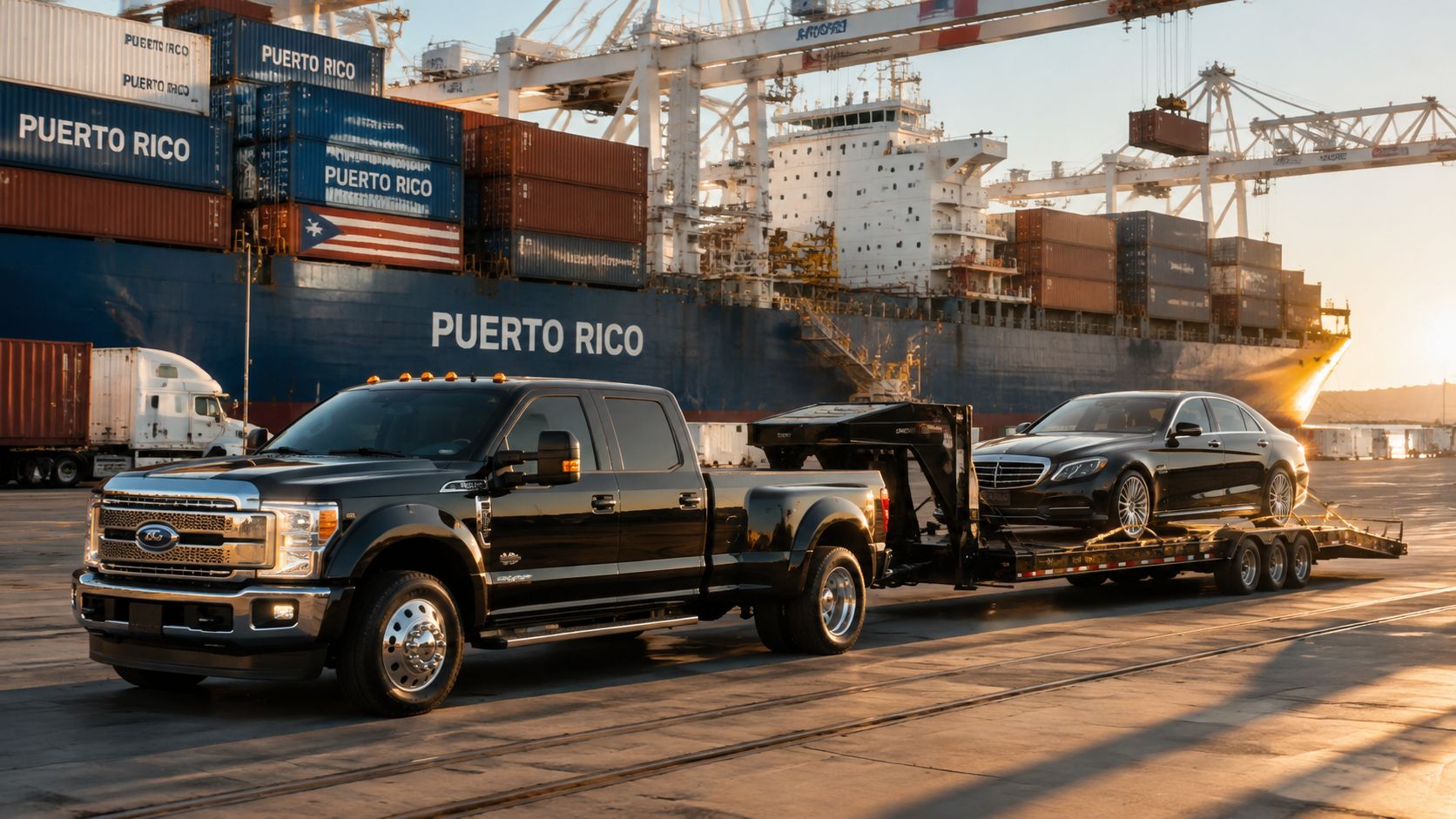
Mainland-to-Puerto Rico transport is a multimodal move. The truck handles the mainland pickup and port delivery, while ocean shipping carries the vehicle to the island. Hot shot service is most useful on the first leg when a vehicle must reach the port in time for a planned sailing.
A vehicle in Los Angeles, Chicago, Atlanta, or another mainland city may need expedited ground transport to a Florida port, such as Jacksonville, before the ocean segment begins. The coordinator must align pickup timing, driving distance, port receiving requirements, export documents, and the vessel schedule. A missed port cutoff can create delays that a faster truck alone can't solve.
How the route is coordinated
The process typically follows a connected sequence:
- Mainland pickup: The driver inspects the vehicle, records its condition, confirms the keys and documents, and loads it using appropriate equipment.
- Port delivery: The carrier takes the vehicle to the designated Florida port or terminal, following the receiving instructions supplied by the ocean service.
- Ocean transport: The vehicle is prepared for the sailing and transported to Puerto Rico.
- San Juan processing: The shipment enters the island's port process, where release, documentation, taxes, and delivery arrangements must be handled.
- Island delivery or pickup: The vehicle moves from the port to the final address or an agreed receiving location.
Customers should separate transport charges from government charges. Puerto Rico law imposes an excise tax on vehicles introduced from abroad, and that tax is separate from ocean or mainland-to-island shipping costs under the applicable Puerto Rico law. The importer needs to budget for that fee rather than treating the shipping quote as the complete landed cost.
A vehicle's value can affect the final expense because independent Puerto Rico shipping guidance identifies an excise-tax structure ranging from 6.6% to 17.5%, with thresholds at $5,000, $15,000, $20,000, and $30,000 as outlined in this Puerto Rico import and registration guide. Customers should verify the applicable amount with the relevant Puerto Rico authorities or a qualified local professional before shipping.
The mainland leg deserves as much attention as the ocean leg. A carrier arriving late at the port can disrupt the planned sailing, while a carrier arriving too early may create storage or receiving complications. A coordinator should confirm the port, cutoff, vehicle condition, title or registration documents, lien information where applicable, and the receiving party before dispatch.
For a detailed route overview, review Puerto Rico car shipping and ask whether the quoted service includes only mainland transport, ocean freight coordination, island delivery, or a combination of those services.
This video provides additional visual context for the vehicle-shipping process and port handoffs.
Hot shot service is especially valuable when a mainland vehicle needs a dependable path to the port. It doesn't eliminate customs, tax, terminal, or sailing requirements. It makes the ground segment more responsive, which can reduce the risk created by a tight connection.
Understanding the Cost and Availability
Hot shot hauling usually costs more per mile than standard open transport because fewer vehicles share the trip's fuel, labor, and operating expenses. Rates should be treated as a planning range, not a guaranteed quote. The final price depends on the route, vehicle size, pickup access, delivery access, urgency, carrier location, equipment, and whether the move must meet a port schedule.
A compact vehicle on a direct regional route may cost less than a large SUV traveling from a rural address to a Florida terminal. Mainland-to-Puerto Rico moves require separate review of ocean service and government charges. Use car shipping cost information to organize the details that affect a transport estimate.
Why availability still varies
Hot shot carriers can respond quickly, but they may not be near the pickup point. A driver could be finishing another load, returning empty from a distant lane, or unable to accept the requested date because of hours, maintenance, or equipment limits. A broker with a broad carrier network can check more options, but a responsible provider should verify the actual lane before promising availability.
Urgency also affects the practical choice. If the pickup window is flexible and the route has regular carrier coverage, standard transport may offer better value. Hot shot service becomes easier to justify when a missed port connection, dealership appointment, or time-sensitive delivery creates a larger cost than the premium.
Ask exactly what the quote includes. Confirm whether it covers door-to-door ground transport, port delivery, terminal charges, ocean coordination, island delivery, insurance, storage, and access fees. For operators and logistics professionals, OilGasFactoring.com's hot shot factoring guide explains why smaller dedicated hauling businesses monitor cash flow and trip economics closely.
Compare the schedule, pickup conditions, equipment, insurance, and cancellation terms alongside the price. A low quote with vague service limits may create more expense at the port or destination. A clear quote lets customers judge whether expedited service solves a real timing problem or whether standard transport is the more practical option.
How to Book and Coordinate an Expedited Move
A successful expedited shipment starts with accurate information. Before requesting a quote, gather the pickup and delivery addresses, vehicle year, make, model, running condition, desired dates, and any access limitations. For Puerto Rico shipments, identify the mainland pickup, intended port, island destination, and the person responsible for receiving the vehicle.
Five steps that prevent avoidable delays
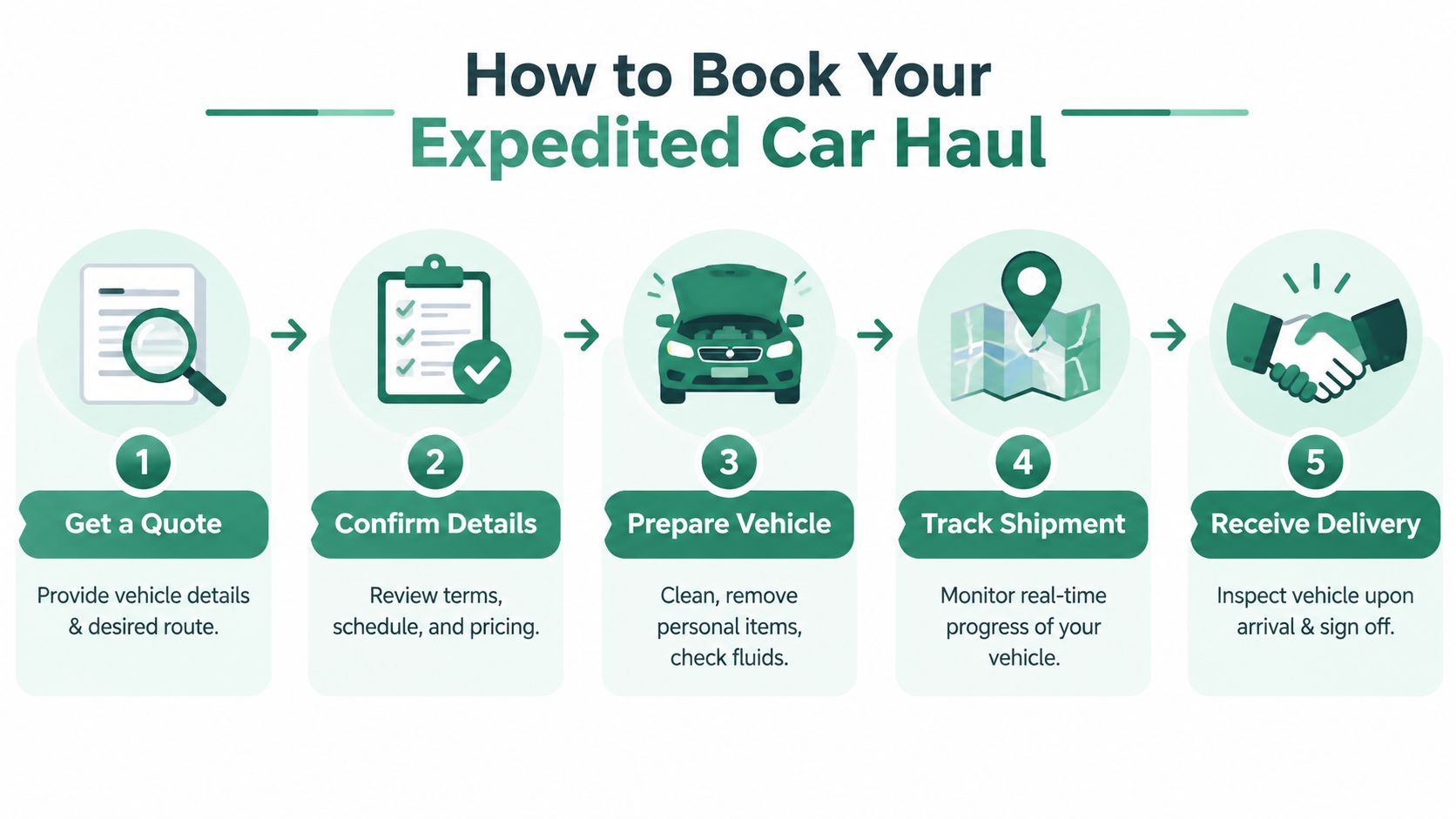
1. Request a route-specific quote. Explain why the shipment is time-sensitive. “As soon as possible” is less useful than a required pickup window, port cutoff, dealership appointment, military reporting date, or travel date. Mention whether the vehicle rolls, steers, brakes, and starts, because inoperable vehicles need different loading arrangements.
2. Confirm the service details. Review the price, dates, pickup method, delivery expectations, insurance information, cancellation terms, and payment schedule. For an island shipment, ask which charges relate to mainland trucking, ocean transport, port handling, taxes, and final delivery.
3. Prepare the vehicle. Remove personal belongings, document existing damage, leave the fuel level appropriate for the carrier's instructions, and make sure the driver receives the required keys and paperwork. Photograph the vehicle before pickup, including the exterior and any existing marks.
4. Track the handoff. Ask how updates will be provided and who to contact if the pickup location changes. Route planning tools, including these top truck GPS applications, are useful for professional drivers, but customers should still rely on the assigned coordinator for confirmed status rather than treating a map estimate as a delivery guarantee.
5. Inspect before accepting delivery. Compare the vehicle with the pickup condition report and photographs. Note any discrepancy on the delivery document before signing, and keep copies of the paperwork.
Securement and carrier oversight
Cargo securement is a safety requirement, not an optional add-on. Federal guidance indicates that the aggregate working load limit of tiedowns must equal at least 50% of the cargo weight. A 4,000 lb vehicle therefore needs tiedown capacity totaling at least 2,000 lb, with the securement arrangement also accounting for braking, cornering, vibration, and road shock as explained in this cargo-securement guidance.
A reputable coordinator should verify the carrier, confirm insurance, match the equipment to the vehicle, and manage communication from pickup through delivery. Customers shouldn't have to solve each dispatch issue themselves, especially when a mainland truck connection must align with a Puerto Rico sailing.
National Car Transport has 25+ years of experience, an A+ BBB rating, transparent flat-rate pricing, and a network of 25,000+ vetted carriers. Its U.S.-based bilingual English and Spanish agents have more than 20 years of auto-transport logistics experience, and they help individuals, snowbirds, military families, students, dealerships, and businesses coordinate moves that rarely follow the same pattern. One vehicle transport isn't like another, so having an experienced agent guide the details can make the process simpler and quicker while preserving value.
For a time-sensitive move across the 48 contiguous states or between the mainland and Puerto Rico, request a route-specific quote from National Car Transport. Their experienced bilingual agents can coordinate hot shot ground transport, standard or enclosed service, port connections, and delivery details while helping you choose the option that fits your deadline and budget.