
You're probably dealing with one of two situations right now. You're moving across the country and need your daily driver in the new city without burning days on the road. Or you've got a vehicle you care about, a classic Mustang, a late-model Porsche, a custom truck, a family SUV headed to San Juan, and you don't want to make an expensive mistake on shipping.
That's where the question starts. Open carrier or enclosed transport?
Both are legitimate services. Both move vehicles safely every day between major cities across the lower 48 states, from Los Angeles to Miami, Dallas to Chicago, Seattle to Phoenix, Boston to Atlanta, and also on more complex island routes involving San Juan, Puerto Rico. The right choice depends on the car, the route, your budget, and how much risk you're willing to accept.
Not everyone requires the most expensive option. Some absolutely do. The problem is that a lot of advice online treats every shipment the same. It isn't. A Honda CR-V going from Orlando to Charlotte is one decision. A restored classic headed from New York to Puerto Rico is another.
Table of Contents
- Choosing Your Car Shipping Method
- What Is Open Carrier Auto Transport
- What Is Enclosed Vehicle Transport
- Key Differences in Cost Protection and Speed
- Shipping a Car To or From Puerto Rico
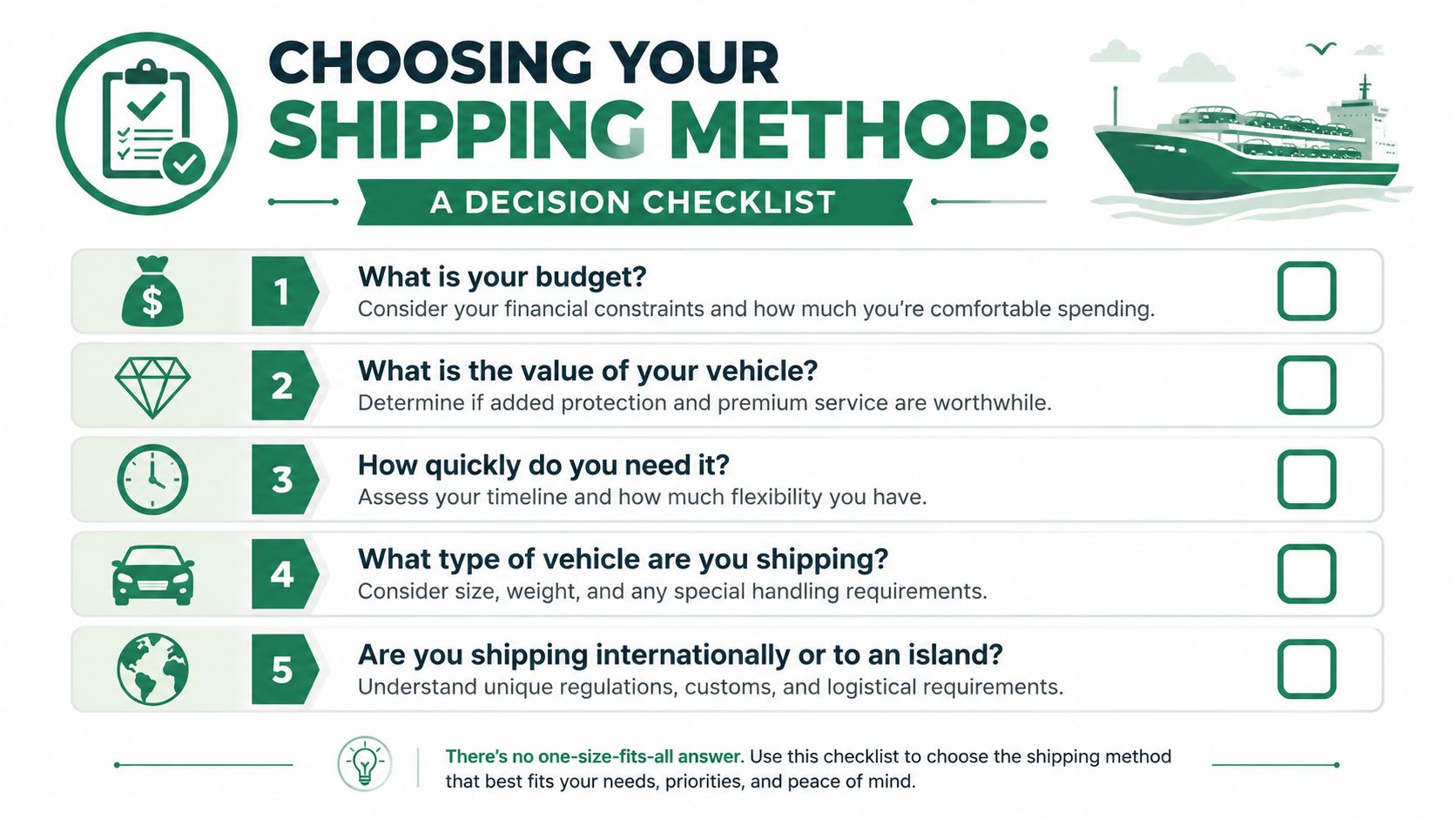
- Making Your Decision A Checklist
- Your Car Shipping Questions Answered
Choosing Your Car Shipping Method
A military family getting reassigned from Virginia to Texas usually wants one thing. Get the vehicle there on time, at a fair price, without drama. A snowbird splitting time between the Northeast and Florida often wants the same thing. For those customers, open transport usually makes sense.
A collector shipping a low-mileage classic from California to Illinois sees the job differently. That customer isn't just buying transportation. They're buying protection, careful loading, and less exposure during the trip.
Here's the blunt truth. There isn't a “best” shipping method. There's only the right method for your vehicle.
| Factor | Open Transport | Enclosed Transport |
|---|---|---|
| Best for | Daily drivers, SUVs, used vehicles, dealership inventory | Luxury, exotic, collector, classic, custom vehicles |
| Exposure | Exposed to weather and road debris | Protected from weather and road debris |
| Cost | Lower | Higher |
| Availability | Broad across domestic routes | More limited and specialized |
| Puerto Rico fit | Common for inland moves to port | Often chosen for higher-value vehicles before ocean leg |
Practical rule: Match the shipping method to the vehicle's value and replaceability, not to fear.
That matters whether you're shipping between major mainland cities or coordinating a move involving San Juan. A vehicle going to Puerto Rico adds another layer. You're not just choosing open vs enclosed for the overland portion. You're also dealing with port scheduling, documentation, staging, and release procedures.
That's why expert human guidance still matters. Not one vehicle transport is alike. People moving a student's sedan from Ohio to Arizona need a different plan than a dealership moving units from Florida to Puerto Rico, or a family sending a car from New Jersey to San Juan. The process gets easier when an experienced bilingual agent in the U.S. walks you through it clearly, in English or Spanish, and keeps the job simple and quick.
What Is Open Carrier Auto Transport
Open carrier auto transport is the workhorse of the car shipping industry. It is the standard trailer you see on highways carrying multiple vehicles on exposed upper and lower decks. For everyday cars, it is usually the right buy.
The reason is simple. Open carriers move more vehicles per trip, so the cost per vehicle stays lower and the route network stays wider. If you are shipping a daily driver between common mainland lanes, open transport should be your default option unless the vehicle has unusual value or cosmetic sensitivity.
How open transport works
Your vehicle is loaded onto an uncovered multi-car trailer, strapped down, inspected, and moved along a scheduled route with other shipments. That setup makes open transport easier to book in more markets across the continental U.S. It also gives brokers and carriers more flexibility when building efficient routes.
A practical point matters here. Open transport is not just cheaper because the trailer is uncovered. It is cheaper because the equipment is more common, the routes are denser, and carriers can fill more spots on each run.
That matters even more if Puerto Rico is part of the move. In many cases, open transport is used for the mainland leg to the port because it is the most economical way to get a standard vehicle into Jacksonville or another shipping gateway before the ocean portion begins.
Why open transport fits so many shipments
Open shipping makes sense if the vehicle is replaceable, the budget matters, and you do not need premium cosmetic protection.
- Lower cost: Carriers spread fuel, labor, and trailer costs across more vehicles.
- Wider availability: Open trailers are easier to find on common interstate and regional routes.
- Faster booking on standard lanes: More available equipment usually means more pickup options.
- Right fit for normal vehicles: Sedans, SUVs, trucks, and older used cars usually do not justify the extra enclosed premium.
Common examples include relocations, student moves, snowbird routes, dealership transfers, and auction purchases where keeping transport costs under control matters more than shielding the car from every outside element.
The tradeoff
Open transport leaves the vehicle exposed to weather, road film, and the usual grime of highway travel. That is normal. It does not mean the service is poor. It means you are paying for efficient movement, not extra shielding.
A key detail is the transfer point problem. The more a vehicle is handed off, staged, reloaded, or routed through intermediate lots, the more opportunity there is for delay or handling issues. A well-run open shipment with fewer touches is often a better choice than a badly coordinated plan that sounds premium on paper.
Direct handling matters almost as much as trailer type.
For a standard vehicle, open carrier transport is usually the smartest financial decision. For Puerto Rico moves, it is often the practical first leg as well, especially if you have an experienced human agent coordinating the port schedule, paperwork, and release steps so the lower line-haul price does not turn into avoidable delays later.
What Is Enclosed Vehicle Transport
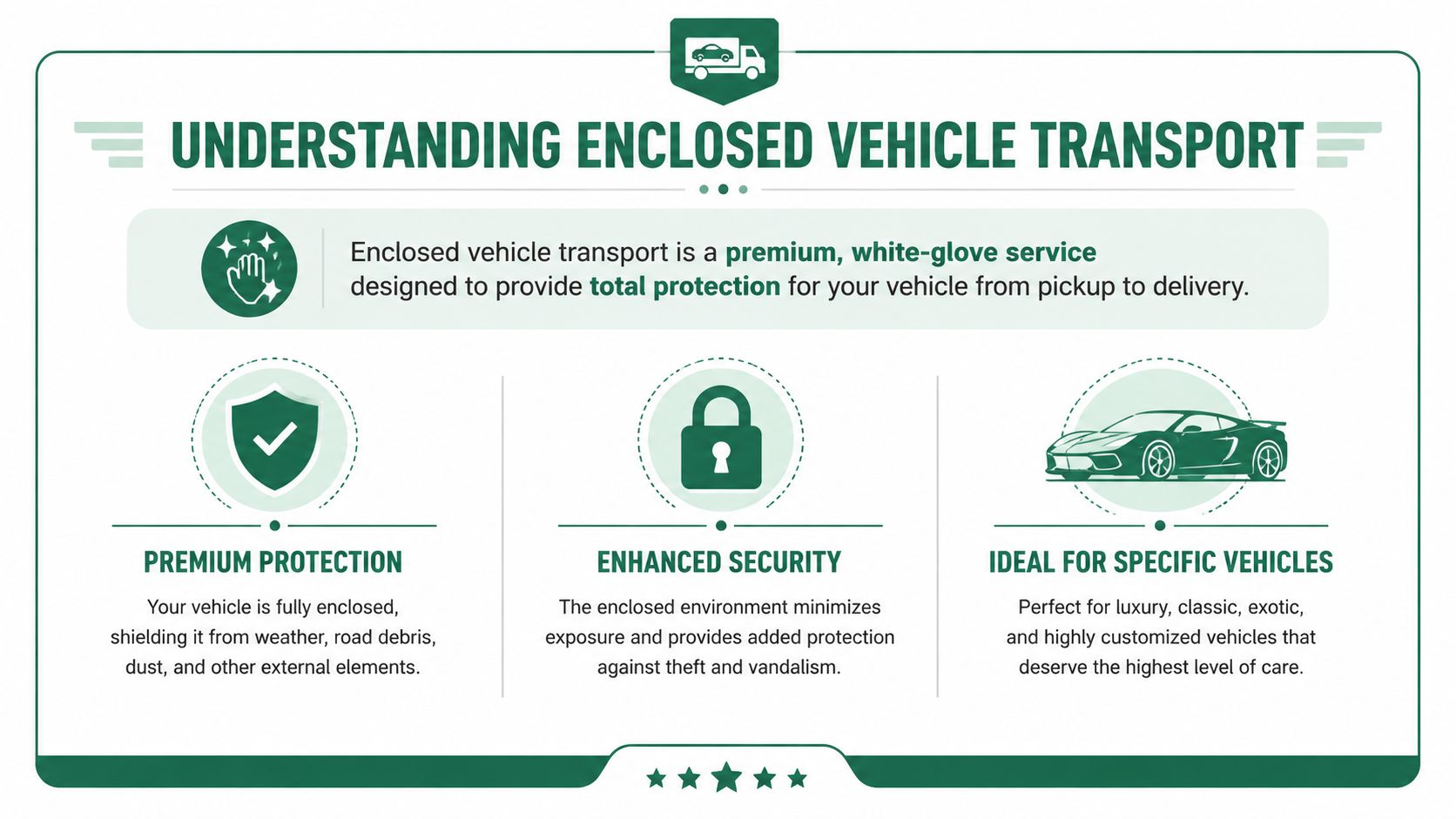
Enclosed vehicle transport is for cars you do not want exposed to weather, road spray, or stray debris for hundreds or thousands of miles. The vehicle rides inside a covered trailer, with more controlled loading and a tighter handling environment than standard open shipping.
What enclosed transport protects against
The value is straightforward. Your car is shielded from rain, wind, sun exposure, road grime, and the kind of highway debris that can leave chips, residue, or cosmetic wear. As noted by RunBuggy's comparison of open and enclosed shipping, enclosed service is commonly chosen for luxury, classic, exotic, collector, and high-value auction vehicles because it reduces that outside exposure.
That matters most when the finish matters most.
Fresh paint, rare trim, custom bodywork, specialty wheels, and collector-grade condition all justify enclosed shipping. If repairing minor cosmetic damage would be expensive, slow, or frustrating, pay for the protection up front.
Who should choose enclosed shipping
Enclosed transport makes sense for a narrow group of vehicles, and for that group, it is usually the right call:
- Luxury, exotic, and high-end performance cars: Cosmetic repairs are costly, and owners usually expect cleaner handling.
- Classic and collector vehicles: Original finishes and hard-to-source parts deserve more protection.
- Customized cars: Lowered suspensions, aftermarket splitters, show builds, and specialty paint need extra care.
- Sentimental vehicles: Market value is not the only value that counts.
- Low-clearance vehicles: Cars sitting very close to the ground benefit from more careful loading methods and less exposure on the road.
Why enclosed shipping is different
You are paying for more than a roof and walls. Enclosed carriers usually haul fewer vehicles, book more selectively, and use equipment better suited to specialty units. Some use liftgates or gentler loading setups that help with low-clearance cars and fragile finishes.
This matters even more on Puerto Rico shipments.
For a car headed to or from Puerto Rico, enclosed service can protect the vehicle during the mainland leg, but trailer type is only part of the job. Port timing, paperwork, release procedures, and handoff coordination matter just as much. A poorly managed premium shipment can still turn into delays, storage fees, or unnecessary handling. That is why expert human guidance has real value here. The right advisor helps you choose enclosed service when it protects something worth protecting, and avoids selling you a premium that does not improve the outcome.
Expert advice: If a small chip, grime, or cosmetic exposure will bother you, enclosed transport is the safer buy.
Enclosed shipping is not the default choice. It is the right choice for the right vehicle, especially when the shipment involves higher value, stricter handling, or a more complex route such as Puerto Rico.
Key Differences in Cost Protection and Speed
A customer shipping a three-year-old SUV from Texas to Florida should not pay enclosed rates. A customer shipping a restored 1969 Camaro to a Puerto Rico port should seriously consider it. That is the decision. Match the service to the vehicle, the route, and the consequence of something going wrong.
Cost and value
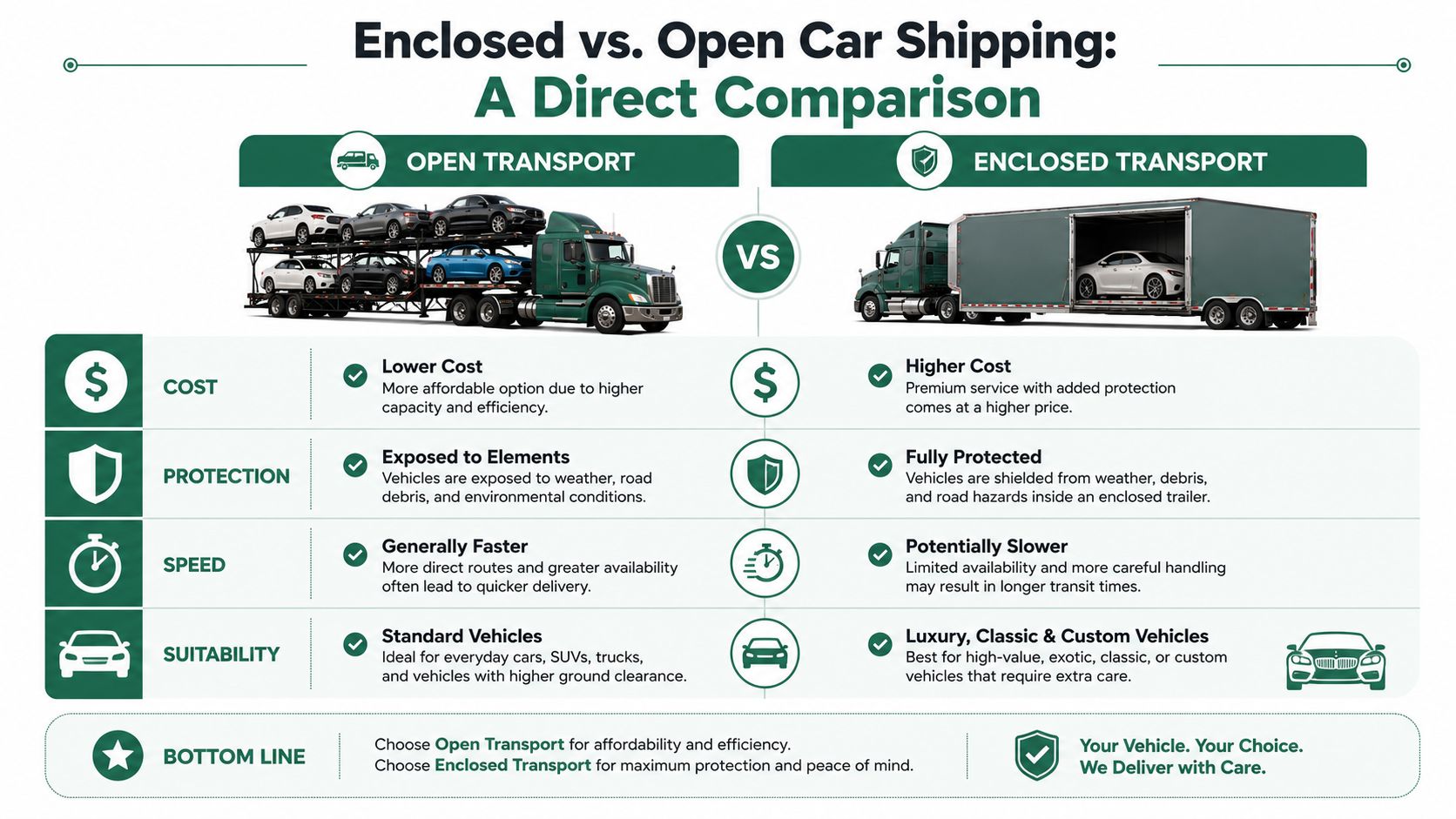
Enclosed shipping usually costs more. As noted earlier, FreightWaves reports enclosed transport commonly runs about 30% to 60% higher than open service on similar lanes.
The reason is simple. Enclosed carriers haul fewer vehicles, use more specialized equipment, and operate with tighter scheduling. You are buying extra protection and more selective handling, not magic.
For a daily driver, that premium is usually wasted money. For a collector car, exotic, rare classic, or custom build, it is often money well spent because the cost of repainting, repairing trim, or dealing with avoidable cosmetic damage can easily outweigh the higher transport bill.
Protection and risk
Enclosed transport gives better physical protection on the road. That part is straightforward.
What many customers miss is that risk also comes from handling, not just exposure. Passport Transport's discussion of protection and transfer risk explains that open shipments can pass through multiple hubs, which increases loading and unloading exposure. The same source also notes that some higher-end open carriers offer direct-drive service to reduce those transfer points.
That distinction matters. A well-run open shipment with fewer handoffs can be a better choice than a poorly coordinated move sold under a premium label. This is especially true for Puerto Rico moves, where the inland carrier, port schedule, paperwork, and release process all affect the outcome. Trailer type is only one part of the job.
Ask direct questions. Will your car stay on one truck for the mainland leg? Will it go through a terminal? Who is handling the port handoff? If a broker cannot answer those clearly, keep shopping.
Price matters. Handling quality matters more when the route includes a port.
Availability and timing
Open transport is easier to book on standard mainland routes because there are more carriers and more frequent departures. If your priority is speed, flexibility, or a lower price on a common lane, open usually wins.
Enclosed shipping gives you fewer scheduling options. Carriers are scarcer, and the right trailer may take longer to line up. That said, enclosed moves are often managed more carefully once dispatched, which can matter for high-value vehicles and time-sensitive handoffs.
For Puerto Rico shipments, timing gets more complicated. You are not only waiting on a truck. You are also working around port cutoff dates, vessel schedules, document review, and release procedures in San Juan. A strong advisor helps you choose the right mainland leg and line it up with the ocean booking so you do not lose days to avoidable mistakes.
Use this shorthand:
| Priority | Better fit |
|---|---|
| Lowest price | Open |
| Better road protection | Enclosed |
| More carrier availability | Open |
| Standard commuter car | Open |
| Collector, exotic, or custom vehicle | Enclosed |
| Puerto Rico move with a high-value vehicle | Usually enclosed for the mainland leg |
My recommendation is simple. Open transport is the right financial choice for the average vehicle. Enclosed transport is the right practical choice when the vehicle is expensive to repair, difficult to replace, or headed into a more complex move such as Puerto Rico, where expert human coordination can save you far more than the upgrade costs.
Shipping a Car To or From Puerto Rico
Shipping a vehicle to Puerto Rico changes the conversation. This isn't just a trucking job. It's a combined inland and ocean logistics move, and that's where many customers underestimate the complexity.
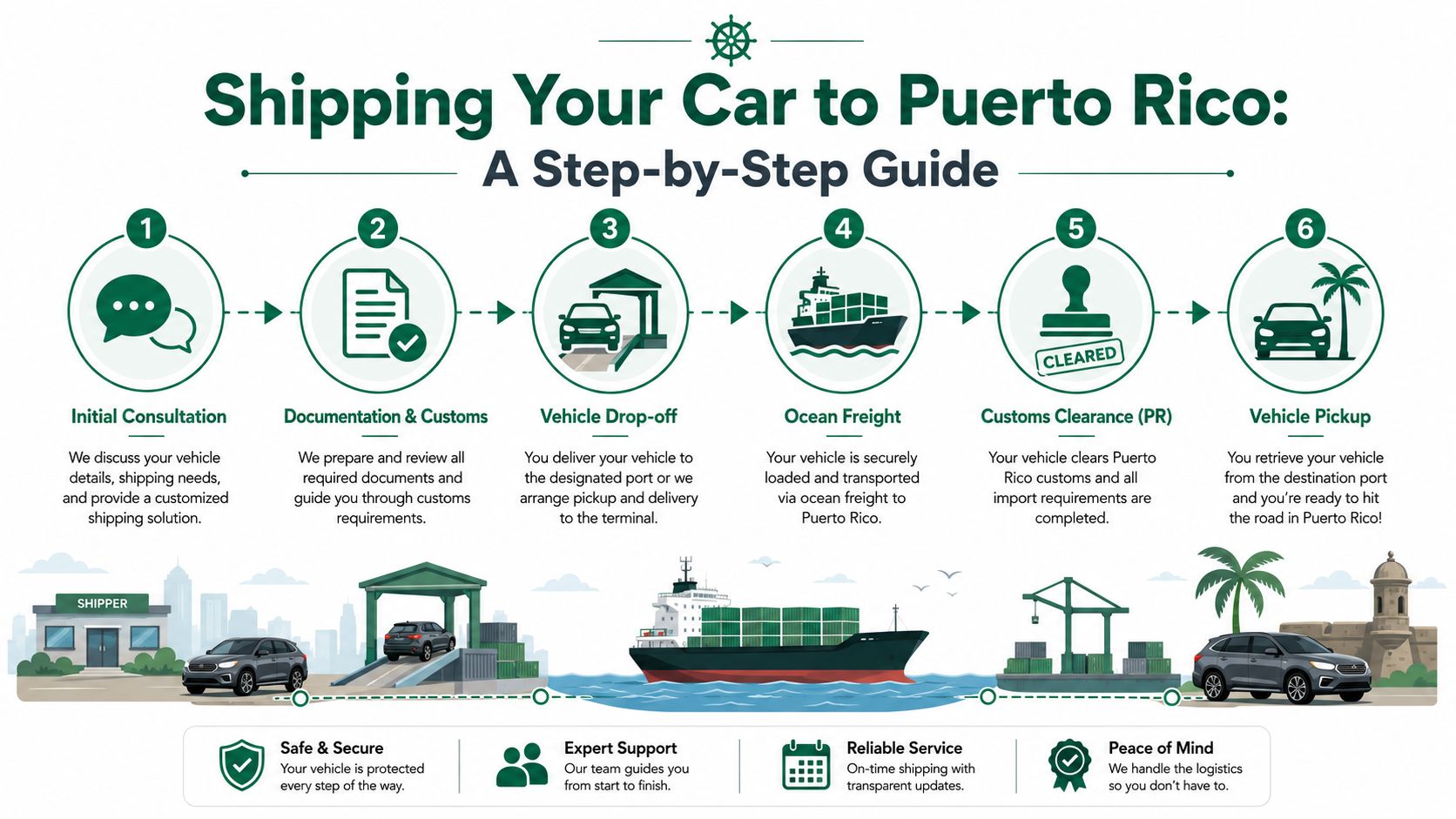
Whether the car starts in Miami, Orlando, New York, Charlotte, Houston, or Los Angeles, the process usually involves overland movement to a mainland port, staging, documentation, ocean transit, and release in San Juan. If you're moving back to the island, handling a military transfer, buying a car on the mainland, or sending inventory for a dealership, details matter.
How the Puerto Rico process actually works
The mainland leg can be open or enclosed, depending on the vehicle. After that, the shipment moves into port logistics.
AmeriGo Auto Transport's overview of Puerto Rico vehicle shipping states that shipping a car from the U.S. mainland to Puerto Rico typically costs $1,295 to $1,895 for standard cars and SUVs, with a total transit time of 7 to 14 days. That total includes inland pickup, staging at a port such as Jacksonville, and the 5 to 7 day ocean transit to San Juan.
That timeline is realistic. It also explains why people get frustrated when they assume island shipping works like a normal domestic route. It doesn't.
Here's the usual flow:
- Vehicle pickup or drop-off on the mainland
- Transport to the port staging area
- Document review and port acceptance
- Ocean freight to San Juan
- Customs or agriculture-related release steps
- Final pickup in Puerto Rico
What usually drives the final price
The quoted shipping rate is only part of the decision. Timing around sailings matters. Port cutoff timing matters. Local fees and taxes can matter a lot.
Yorka Auto Transport's Puerto Rico pricing discussion notes that quotes under $1,200 often don't reflect real Jacksonville sailing costs, and that many customers see total costs in the $1,100 to $1,600 range with 1 to 2 weeks of sea transit timing, depending on staging and cutoff schedules. The same source also notes that Puerto Rico import taxes can add substantially to the total in some situations.
That's why customers need straight answers up front. A cheap-looking quote can turn into a frustrating port experience if it ignores scheduling reality or local requirements.
Puerto Rico shipping is where experienced coordination pays for itself. The paperwork and timing mistakes are what cost people money.
This is also where bilingual support matters. If you're coordinating with family on the island, managing military paperwork, or working with a business in Puerto Rico, being able to speak with an experienced English/Spanish agent based in the U.S. makes the process much easier. That guidance is especially valuable because not one shipment is alike. A student sending a sedan to San Juan has different needs than a family relocating with two vehicles or a dealer managing regular island inventory.
Making Your Decision A Checklist
Users don't need more theory. They need a yes-or-no decision they can trust.
Start with vehicle value. This industry rule-of-thumb breakdown puts the key threshold at $70,000 or more. Below that level, open transport usually gives the best return on money spent. Above that level, enclosed transport often acts like physical insurance for an asset that would be costly or painful to repair.
The same source notes that standard open carriers commonly carry $100,000 to $250,000 in coverage, while enclosed carriers often carry $1 million to $3 million in coverage. That doesn't mean enclosed is mandatory for every expensive vehicle. It means the protection model is built for higher-value cargo.
Choose open transport if these sound like you
- You're shipping a normal vehicle: A sedan, SUV, crossover, or pickup that you drive every day.
- You care most about value: You'd rather save the premium and put that money elsewhere.
- The route is straightforward: Major domestic lanes usually make open shipping easy to coordinate.
- You're sending a vehicle to a student, family member, or seasonal residence: Reliability matters more than premium shielding.
There's another point people get wrong. Some EV owners overpay for enclosed because they assume every electric vehicle is low-clearance. That's not always true. Move.org's open vs enclosed analysis says 78% of EVs shipped in 2024 were on open carriers without damage, and notes that modern EVs are often shipped safely on open transport when clearance isn't unusually low.
Choose enclosed transport if these sound like you
You should spend the extra money when the car is hard to replace, expensive to correct cosmetically, or personally important enough that exposure will bother you the whole trip.
Ask yourself these questions:
- Is the vehicle a luxury, exotic, classic, or collector model?
- Does it have a delicate paint job, custom bodywork, or premium finish?
- Would a chip, grime, or handling issue feel unacceptable?
- Are you moving a car to Puerto Rico that deserves extra protection before the port leg?
If the answer is yes to more than one of those, enclosed is usually the better decision.
Buy the level of protection that matches the level of regret you'd feel if something minor happened.
Your Car Shipping Questions Answered
Can I put personal items in the car
Ask first. Some carriers allow a small amount of personal property in the trunk. Others do not. Puerto Rico shipments are stricter because port handling, inspections, and cargo rules leave less room for exceptions.
If you are shipping to or from Puerto Rico, assume the answer is no unless your transport coordinator gives you clear written approval.
Is the vehicle insured during transport
Yes, but do not stop at “yes.” Ask for the carrier's cargo coverage limits, confirm whether the policy matches your vehicle's value, and find out what the inspection process looks like at pickup and delivery.
Enclosed shipments often carry higher coverage because they are commonly assigned to luxury, exotic, and collector vehicles. Open carriers usually carry standard commercial cargo insurance that fits everyday vehicles. The right question is whether the protection fits your car, your route, and your risk tolerance.
How far ahead should I book
Book early if the dates matter.
Open transport on major mainland routes can sometimes move on shorter notice, but enclosed transport, unusual vehicles, and Puerto Rico shipments need more lead time. Port schedules, document review, and vessel coordination can narrow your options fast. Waiting usually costs you flexibility first, and money second.
What matters most besides open vs enclosed
The handoff points.
A cheap quote can look fine until your car changes hands multiple times or sits waiting for the next leg. Ask whether the shipment stays under one dispatcher from pickup to delivery, who handles the port side if Puerto Rico is involved, and who you call if the schedule shifts. That human support matters more on island shipments than customers expect.
Why do people still use a human advisor instead of just clicking online
Because real shipments are messy. A military relocation, a dealer sending inventory to Puerto Rico, a family moving a daily driver across the mainland, and an owner protecting a classic car all need different planning.
A good advisor does more than send a quote. They catch clearance issues, explain insurance limits, coordinate port paperwork, and tell you when enclosed transport is worth the premium and when it is not.
If you want clear guidance instead of generic quotes, talk with National Car Transport. They've handled auto transport for 25+ years, maintain an A+ BBB rating, offer transparent flat-rate pricing, and work with a network of 25,000+ vetted carriers across the U.S., Puerto Rico, Alaska, and Hawaii. Their U.S.-based bilingual agents speak English and Spanish, have over 20 years of experience specifically in auto transport logistics, and help customers choose the right option for each shipment because not one vehicle transport is alike.