

You're probably looking at a low-splitter Ferrari, McLaren, or numbers-matching classic and asking the only question that matters, do I need enclosed shipping, or am I paying extra for peace of mind I don't need? For the right car, enclosed exotic car transport is required. For the wrong one, it's expensive overkill. The smart move is to treat this like a logistics decision, not a status purchase, and judge the premium against the actual risk, the equipment, the route, and the vehicle's value.
Table of Contents
- Who Actually Needs Enclosed Exotic Car Transport
- What an Enclosed Carrier Actually Is
- Single-Car, Multi-Car, and Container Options Compared
- Pricing, Distance Bands, and When Enclosed Pays for Itself
- Insurance, Liability, and the Questions That Protect You
- Preparing Your Car and Working the Pickup to Delivery Timeline
- Specialty Routes Including Alaska, Hawaii, and Puerto Rico
- Choosing a Carrier and Where National Car Transport Fits
Who Actually Needs Enclosed Exotic Car Transport
If you're moving a low-clearance supercar, a concours-ready classic, or a six-figure weekend car, you're not shopping for “transport,” you're shopping for controlled risk. The question isn't whether enclosed is nicer. The question is whether a stone chip, a ramp scrape, weather exposure, or a handling mistake would cost more than the premium you'd pay to prevent it.
The situations that push you straight to enclosed
Enclosed service is the right call when the car sits low enough that loading geometry matters, when the paint is irreplaceable, or when the vehicle is headed to an auction, a show, or a long relocation. A cross-country move for a Ferrari or McLaren is a different job than a standard sedan run, and a numbers-matching classic leaves you less room for error than an everyday luxury car.
Practical rule: If the car is worth more than the inconvenience of waiting for the right trailer, don't compromise on the trailer.
Enclosed also makes sense when the route or the season adds exposure. Snowbirds, military families, dealers, and collectors all run into the same problem, the more handoffs and the more weather changes, the more you want a hard-sided trailer with careful loading. If you're storing the car before or after transport, options for storing vehicles can help you think through the timing around pickup and delivery.
When enclosed is overkill
A well-kept daily driver, a mid-range used SUV, or a car with ordinary ground clearance usually doesn't need the premium. Open transport is still the right answer for plenty of moves, especially if the goal is simple, safe, and cost-conscious relocation. The mistake is paying for enclosed because it sounds premium, not because the car needs premium handling.
| When Enclosed Transport Is Worth the Premium | Recommended Method | Why |
|---|---|---|
| Low-clearance exotic or supercar | Enclosed | Loading angle and protection matter more than speed |
| Concours or auction vehicle | Enclosed | Paint, trim, and presentation have outsized value |
| Ordinary sedan or crossover | Open | The risk profile usually doesn't justify the premium |
| Short-term storage before a show | Enclosed or storage coordination | Timing and condition control matter |
If you're comparing classic-car options, classic car shipping guidance is worth reviewing before you book anything.
What an Enclosed Carrier Actually Is
A true enclosed carrier is built for low-clearance cars, not just for keeping road grime off the paint. The test is whether the trailer can load a supercar without stressing the splitter, keep the car level during the move, and hold it in place without hard contact. A trailer can look premium and still be the wrong tool if the ramp is too steep or the securement method is crude.
The specifications that matter
One documented enclosed Jerr-Dan setup uses a 7.5° load angle, an 8,000 lb winch, and E-track over-the-wheel tie-downs, with the carrier rated at 6 tons and built on a 22 ft x 102 in steel body (source). Those details matter because exotic transport is about controlled geometry, not brute force. If a broker cannot explain the load angle, the securement method, or how the car stays level while loading, keep moving.
The hardware has to match the job. Hydraulic lift gates, air-ride suspension, and soft-strap or tire-only securement are standard on serious enclosed exotic equipment because they reduce contact points and help low-clearance vehicles avoid scraping during loading and transit (source). If the setup relies on chains or metal touching the car, it is the wrong carrier for a high-end exotic.
What to ask before you hand over the keys
Ask whether the trailer uses a liftgate, how the driver handles very low front splitters, and whether the carrier is set up for tire-only securement. Ask what kind of trailer space the car will share, because the typical enclosed exotic setup is built for only 2 to 7 vehicles, not the dense loading pattern of a standard open rack (source).
The pricing side matters too. Enclosed capacity tightens when demand spikes, and that scarcity shows up fast in seasonal price swings, so the premium only makes sense when the car's value, finish, or ground clearance can justify it. For a damaged or high-value vehicle tied to a claim, exotic car total loss claims also make proper carrier selection part of protecting the file.
A serious exotic carrier answers in specifics. A weak one hides behind the word “enclosed” and expects you not to ask about equipment.
Single-Car, Multi-Car, and Container Options Compared
Enclosed service isn't one product. It's a tiered set of choices, and the right one depends on value, clearance, timing, and route. If you choose the wrong tier, you either overpay or you accept more handling than your vehicle deserves.
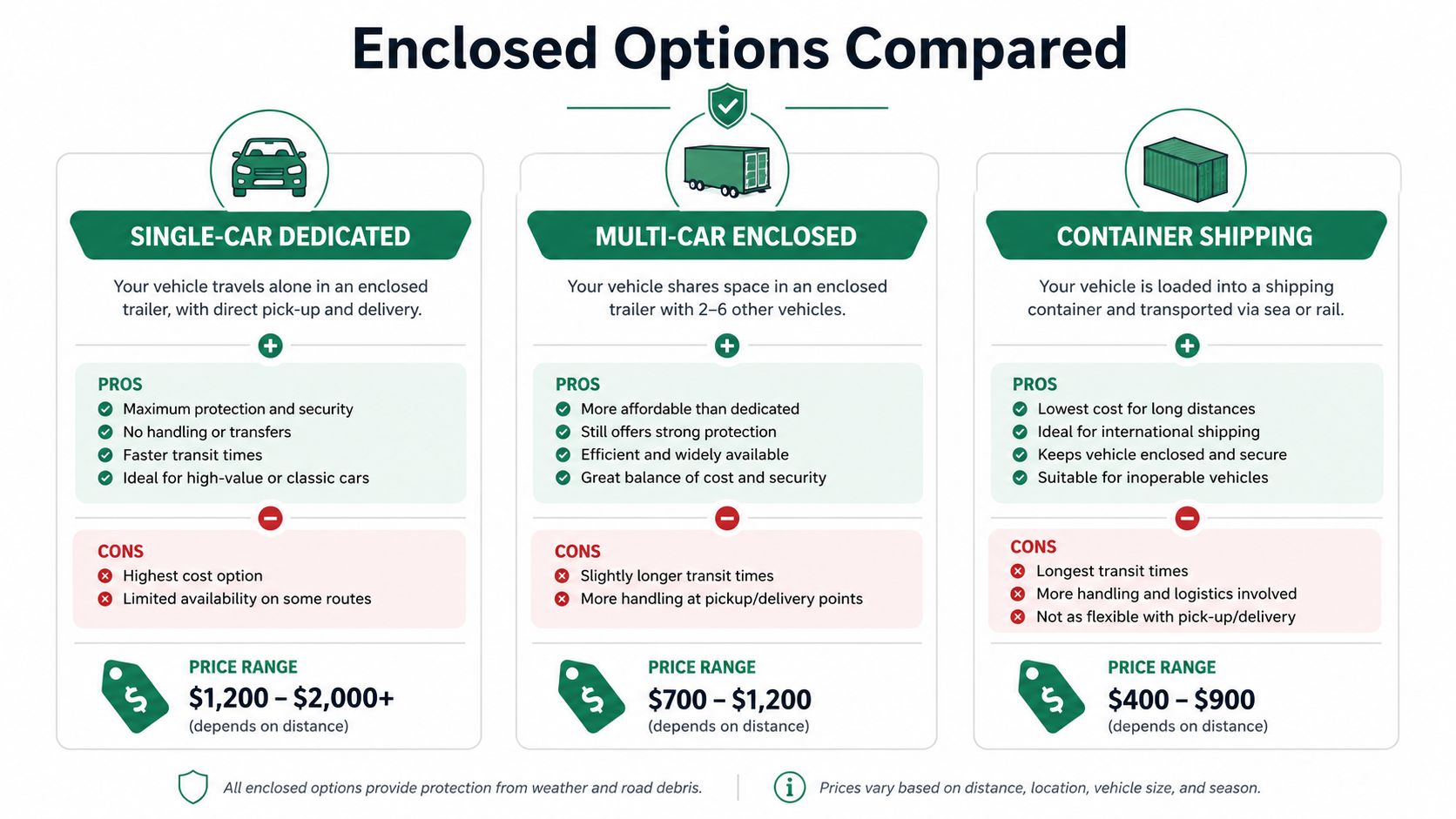
Single-car dedicated enclosed
A single-car dedicated trailer is the cleanest solution for ultra-high-value exotics, rare classics, and cars that shouldn't share trailer space with anything else. It gives the dispatcher the most control over loading, schedule, and handling, which is why it's the premium option. The tradeoff is simple, it costs the most and is harder to book.
Multi-car enclosed
A multi-car enclosed trailer is the standard solution for many exotic moves. It usually carries fewer vehicles than open transport, but enough to keep the route practical and the pricing more manageable. You still get hydraulic lift gates, air-ride, and careful securement, which is what most buyers need.
Buyer's rule: If the car is valuable but not irreplaceable, multi-car enclosed is usually the sweet spot.
Container shipping
Container shipping is the right answer for ocean legs, island routes, and international moves. It's also the cleanest way to isolate a vehicle during a sea segment, which is why it shows up in discussions of Puerto Rico, Hawaii, and other non-contiguous moves. For pure U.S. mainland moves, it usually isn't necessary unless the route or handoff structure demands it.
How to match the tier to the car
Use single-car dedicated when the car's value, rarity, or clearance makes any shared load feel wrong. Use multi-car enclosed when you want strong protection without paying for a private trailer. Use container shipping when the route itself crosses water. Don't pay for the highest tier just because the car is expensive. Pay for it when the route, the geometry, or the handoff risk says you should.
Pricing, Distance Bands, and When Enclosed Pays for Itself
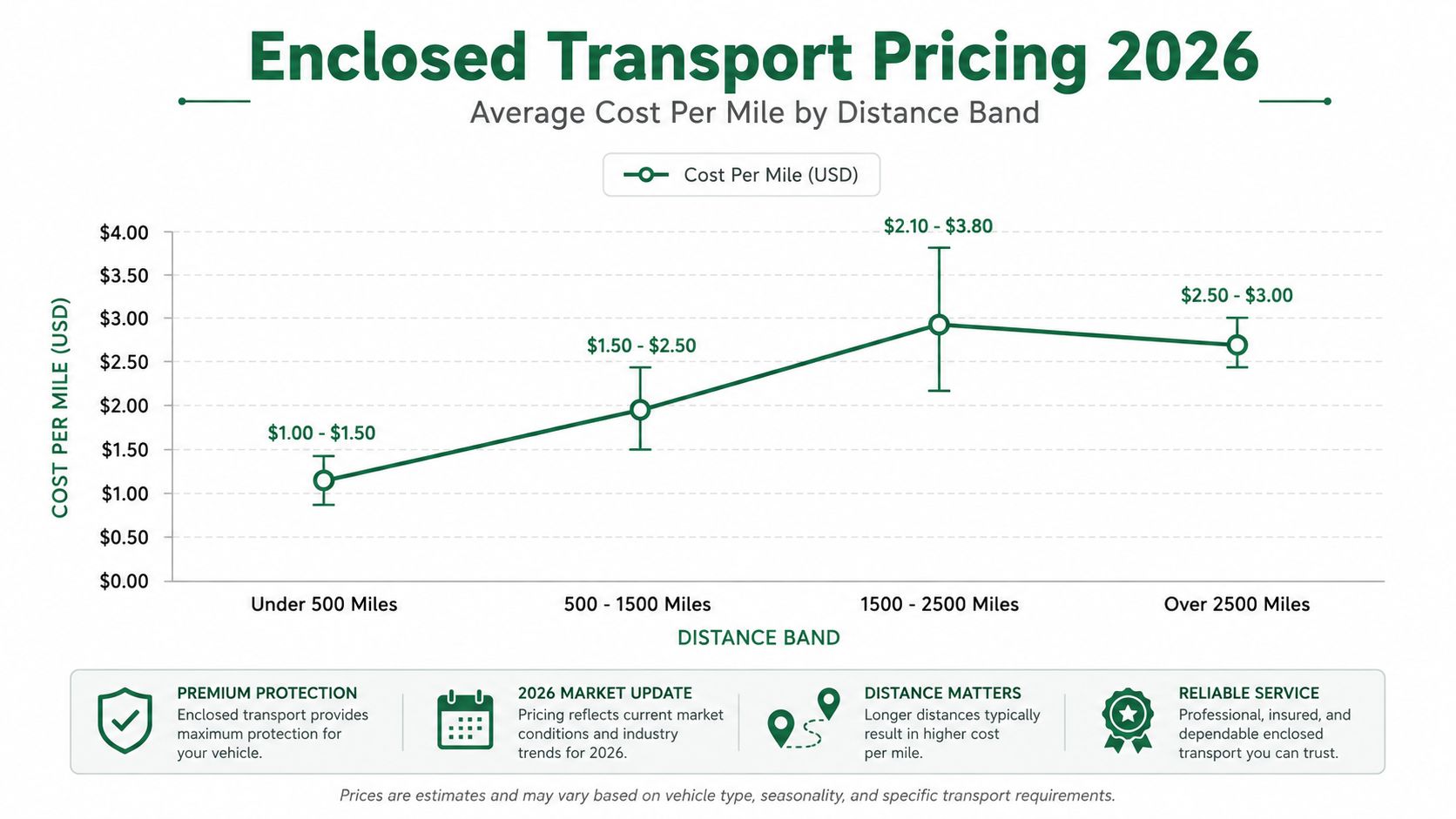
Enclosed exotic transport costs more because the trailer carries fewer cars, uses specialized loading gear, and requires slower, cleaner handling at pickup and delivery. That premium is built into the quote. The usual range for enclosed mileage is about $1.00 to $2.50 per mile, and high-value exotics on mid-distance routes are estimated at $2.10 to $3.80 per mile (source). In plain terms, enclosed usually runs 30%–60% above open-carrier shipping, so treat it as a real upgrade, not a cosmetic one.
A clean break-even test is better than a vague “more protection” pitch. If the route is short, the car is common, and the risk to finish or originality is low, enclosed can be overkill. If the car is rare, freshly painted, low-clearance, or headed through a bottleneck market, the premium starts paying for itself fast.
Distance is the biggest pricing driver
Short routes and long routes do not price the same way. A 2026 guide estimates $700 to $1,400 for under 500 miles, $1,400 to $2,800 for 500 to 1,500 miles, $2,500 to $4,500 for 1,500 to 2,500 miles, and $3,500 to $6,000+ for trips over 2,500 miles (source). A coast-to-coast move such as Los Angeles to Miami is shown at roughly $5,060 to $9,160 over about 2,740 miles (source). That is the reality of a premium trailer, not a bait quote.
The harsh part is short-haul pricing. Under 500 miles, fixed loading, inspection time, and specialized securement can push the per-mile rate much higher than on a long route, so the trip looks expensive even when the mileage is modest (source). If the move is only a few hundred miles, you still pay for the same careful setup, and that is why nearby enclosed jobs often feel overpriced.
Capacity is tighter in 2026, especially for enclosed equipment with liftgates and soft tie-down setups. Seasonal spikes make it worse. Peak snowbird windows, auction weeks, and holiday timing can tighten supply and push quotes higher even when the route itself is ordinary. That is also why routes into Hawaii are a different planning problem, and shipping a car to Hawaii needs a separate cost read from a normal mainland move.
Where the premium starts making sense
The premium starts to make sense when the downside of a bad handoff is bigger than the carrier spread. An independent analysis of 234 high-value shipments reported damage probabilities of 3.8% for open transport versus 0.6% for enclosed transport (source). That is not an industry study, but the logic is straightforward. If a repair could affect originality, paint quality, or resale sentiment, paying more for enclosed is usually the rational move.
A useful break-even point shows up around $60,000 in vehicle value when you factor in deductible exposure and diminished-value risk. That is especially true for collectible cars, low-mileage exotics, and anything with fragile bodywork or a fresh finish. The higher the replacement friction, the easier it is to justify the premium.
If you are checking the car's worth before you book, the cost of full VIN reports gives you useful context before you choose a transport method.
What to remember on price
Low quotes usually mean one of three things, the broker has ignored route demand, the trailer type is wrong for the car, or the pickup window is too loose to guarantee real enclosed capacity. High quotes usually mean the shipper asked for protection that ordinary enclosed service already provides, then added private-trailer expectations on top. The right call is simple, pay for enclosed when the car, the route, or the season makes exposure expensive, and skip it when you are just buying peace of mind you do not need.
Insurance, Liability, and the Questions That Protect You
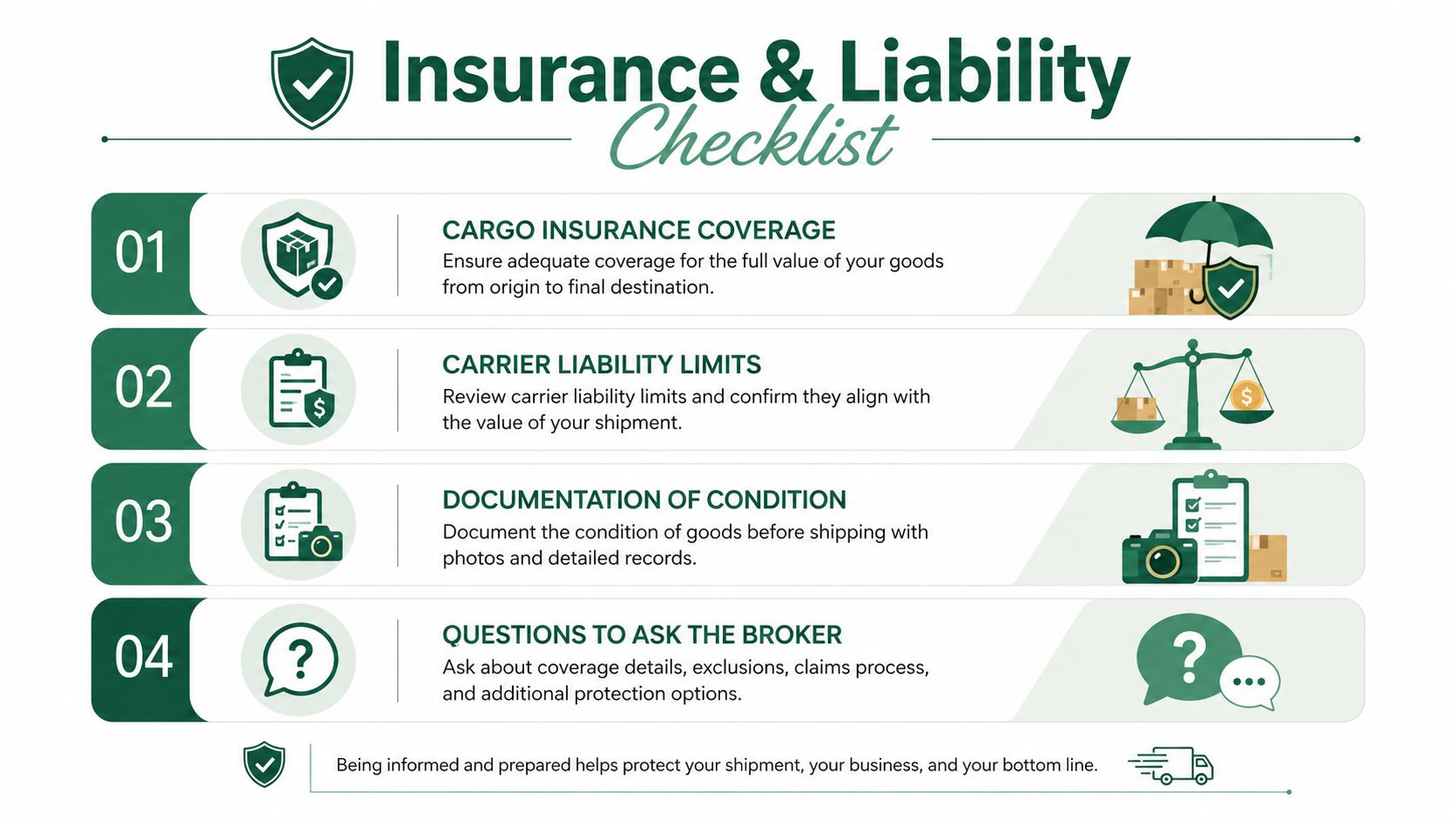
Enclosed shipping cuts exposure, but it does not erase liability. You still need the bill of lading, you still need a condition report, and you still need a clear answer on what the cargo policy covers. Too many damage disputes start the same way, the car arrives with a problem and the owner signs a clean delivery receipt without checking the vehicle carefully.
What coverage and paperwork do
Cargo insurance should respond to transport-related damage, but the policy details matter more than the word “insured” on a website. The bill of lading controls the condition record at pickup and delivery, so the driver and the owner both have to document scratches, chips, and panel issues. If you want a clean claims process, insist on photos, notes, and a copy before anyone leaves.
This matters even more with rare or collectible cars, where diminished value can follow a repair. For background on how serious claims can get after a loss event, exotic car total loss claims shows why documentation matters long before anything goes wrong.
Questions you should ask before booking
- How much cargo coverage do you carry per load? Ask for the number in writing, not a vague promise.
- Is the coverage primary or excess? If it only applies after another policy, you need to know that before pickup.
- What's the deductible? A low premium with a painful deductible changes the math fast.
- Do you require a written condition report? You want one if the car matters.
- Who handles diminished-value claims? That answer tells you how the broker thinks about rare cars.
Don't sign away your right to a claim at delivery. If something looks off, document it before the truck pulls away.
Red flags are easy to spot. No written contract, pressure for a large upfront deposit, or vague answers on cargo limits are all reasons to walk. A serious carrier talks plainly about insurance, documents the handoff, and expects you to inspect the car like it matters, because it does.
Preparing Your Car and Working the Pickup to Delivery Timeline
Preparation is boring until it saves you money. A clean handoff starts before the truck arrives, and the delivery inspection matters more than the pickup one because that's where you protect your claims rights. If you rush either end, you create the kind of ambiguity that turns a simple transport into a dispute.
Prep the car before the driver shows up
Start with the battery, fuel level, loose accessories, toll tags, and alarms. Keep the fuel under a quarter tank, remove loose parts and toll transponders, and document existing blemishes with timestamped photos. If the alarm is sensitive, disable it before pickup so the driver isn't troubleshooting your car at the curb.
The biggest mistake owners make is leaving the car “almost ready” and assuming the driver will work around it. Drivers can't fix your prep mistake in the trailer.
Pickup, transit, and delivery
At pickup, walk the car with the driver and read the bill of lading line by line. During transit, stay reachable for status updates. At delivery, do another full walk-around in daylight if possible, because scratches and transport scuffs are easier to miss in bad light or on a rushed curbside handoff.
If you're booking a door-to-door move, door-to-door auto transport is the right framework to review before you schedule the pickup point.
Timing is tighter than most buyers expect
Enclosed capacity is limited, so same-day pickup is rare and 3 to 7 days to dispatch is normal. Cross-country enclosed transit usually runs 7 to 14 days depending on route and conditions. That's not a delay problem, it's the reality of a premium trailer that carries fewer vehicles and needs specialized handling.
Delivery rule: If you find damage at drop-off, note it on the paperwork before the driver leaves. Then photograph it immediately.
Don't let convenience erase your advantage. The best claims start with a clean document trail, a calm handoff, and photos that prove the car's condition before and after transport.
Specialty Routes Including Alaska, Hawaii, and Puerto Rico
Island routes change the job. The car doesn't just move on a truck, it moves from a trailer to a port, then across water, then onto another transport leg at the destination. Every handoff adds a point where condition can change, so the planning has to be tighter than a mainland shipment.
Puerto Rico isn't a standard mainland move
For Puerto Rico, the practical corridor often runs through Jacksonville to the Port of San Juan, with the vehicle then handed off at the receiving end. That creates a port-to-port structure that many buyers underestimate, especially if they're shipping a collectible, a luxury SUV, or an exotic that shouldn't be exposed unnecessarily. Puerto Rico also involves title and photo ID requirements, plus excise tax, or arbitrios, on arriving vehicles, so paperwork matters as much as logistics.
If you're comparing ocean options, Hawaii car shipping is a useful reference point for how island legs differ from mainland transport.
Alaska and Hawaii need route planning, not guesswork
Alaska and Hawaii both force you to think in segments. The trailer leg matters, the port handoff matters, and the ocean leg changes how you think about enclosure and container use. For high-value exotics, container shipping is often the practical answer when the vehicle is crossing water, because it gives you a more controlled sea-leg environment than an open handoff.
What to budget for and what to carry
Have your title, ID, and vehicle details ready before booking, especially if the car is going to Puerto Rico. If the move includes ocean transit, ask exactly where the truck stops and where the container or vessel transfer begins. That's where delays and handling risks usually show up, not on the glossy part of the quote.
Island shipping is a chain of handoffs. Each handoff needs a name, a location, and a condition check.
Choosing a Carrier and Where National Car Transport Fits
The carrier you choose should answer straightforward questions without spinning. You want transparent flat-rate pricing, a clear insurance explanation, a real dispatch process, and a company that can handle the kind of route you're moving. For mainstream and exotic shipments alike, National Car Transport fits that model with 25+ years of experience, an A+ BBB rating, transparent flat-rate pricing, and a network of 25,000+ vetted carriers.
What to look for in any broker
The basics aren't negotiable. You want a broker that can explain the trailer type, confirm the route, and give you a real pickup window without hiding behind jargon. You also want bilingual support if your family, dealership, or business needs it, because shipping gets easier when the agent can explain every step clearly in either English or Spanish.
A strong operation also keeps the process human. Real advisors matter on exotic moves because a low-clearance car, a Puerto Rico handoff, or a tight dispatch window can't be handled well by a one-size-fits-all script.
The decision checklist that actually works
- Match the car to the trailer. Low-clearance and high-value vehicles belong in enclosed service.
- Match the route to the method. Island legs often need container or port-based handling.
- Match the paperwork to the risk. Photos, bill of lading notes, and insurance questions come first.
- Match the schedule to reality. Enclosed capacity is limited, so don't plan around instant pickup.
Good transport decisions aren't about finding the cheapest quote. They're about choosing the cheapest quote that still protects the car you actually own.
For buyers who want a single point of contact, National Car Transport also supports all 50 states, Puerto Rico, Alaska, and Hawaii, with bilingual agents based in the U.S. who have 20+ years of auto transport logistics experience. That matters when the move is personal, commercial, or both.
If you're moving an exotic, a classic, or a vehicle headed to Puerto Rico, talk to National Car Transport about the route, the trailer type, and the timeline before you book anything. Visit National Car Transport to compare enclosed and open options, confirm the right equipment for your car, and get a straightforward plan from a real advisor.