
You're probably doing what most careful vehicle owners do. You've opened five browser tabs, compared star ratings, read a few glowing testimonials, then hit a wall when one bad review says the carrier missed pickup, another says the quote changed, and a third says the car arrived dirty but otherwise fine. That's normal. It's also why casual review browsing is a bad way to choose enclosed shipping.
If you're moving a luxury car, a classic, an exotic, a collector vehicle, or sending a car between the mainland U.S. and San Juan, Puerto Rico, you don't need more opinions. You need a filter. Good enclosed car transport reviews aren't the ones with the most praise. They're the ones that tell you exactly how the company performs when the route is tight, the schedule matters, and the vehicle can't be treated like an ordinary daily driver.
Here's the short version. Enclosed transport is a premium service, and the review standard should be higher. The global enclosed car transportation service market was valued at USD 724.2 million in 2023 and is projected to grow at a 7% CAGR from 2024 to 2032, reaching about USD 1.2 billion by 2032, driven largely by demand for luxury and classic cars, according to GM Insights market analysis of enclosed car transportation services. More buyers are entering this segment. That means more review noise, more recycled marketing language, and more confusion for people trying to book the right shipper.
Before you read another review, use this quick comparison.
| Review signal | What it usually means | What you should do |
|---|---|---|
| High star rating with no shipment details | Nice, but not enough to trust | Look for route, timing, vehicle type, and issue resolution |
| Complaints about changing prices | Weak quoting process or missing details | Ask for a written binding or flat-rate quote and fee exclusions |
| Reviews mention specific drivers, inspections, or delivery windows | Higher chance the review is real and useful | Prioritize these reviews |
| Puerto Rico reviews mention ports, documents, or San Juan handoff | The company likely understands island logistics | Give these reviews extra weight |
| Damage complaints with vague company response | Weak claims handling or poor communication | Ask who handles inspection disputes and insurance steps |
Table of Contents
- Why Enclosed Car Transport Reviews Require a Closer Look
- Decoding the Stars What Matters in Enclosed Transport Reviews
- Beyond the Rating Spotting Patterns in Customer Feedback
- The Puerto Rico Connection Unique Challenges in Island Transport Reviews
- Questions to Ask Your Transport Carrier Before You Book
- How National Car Transport Measures Up
- Frequently Asked Questions About Enclosed Car Transport
Why Enclosed Car Transport Reviews Require a Closer Look
Enclosed shipping gets reviewed differently because the shipment itself is different. People don't usually book enclosed service for a tired commuter sedan with cosmetic wear they don't care about. They book it when condition matters, when timing matters, and when one bad handoff can turn into a serious headache.
That changes how you should read reviews. A five-star review that says “great service, highly recommend” tells you almost nothing. A three-star review that explains pickup was late, the driver communicated well, the inspection was thorough, and delivery was clean can be far more valuable. You're not buying reassurance. You're buying process.
Stakes are higher with premium vehicles
Enclosed transport is the benchmark choice for protection in premium vehicle logistics because covered trailers shield vehicles from weather, road debris, and theft exposure, and industry reviews commonly recommend it for luxury, classic, exotic, and collector cars, as explained in Super Dispatch's review of enclosed car shipping pros and cons. If you're shipping a restored muscle car, a late-model Porsche, a rare import, or a dealership unit headed to a buyer, “good enough” isn't good enough.
Practical rule: If the vehicle would upset you over a small chip, swirl, scrape, or sloppy inspection note, you should read reviews like a risk manager, not like a casual shopper.
Generic reviews hide the real issues
Most review pages flatten everything into one score. That's the problem. Enclosed transport involves fewer carriers, tighter equipment availability, and more specialized expectations. The useful question isn't whether people “liked” the company. It's whether the company handled pickup windows, inspections, communication, and delivery without drama.
For Puerto Rico moves, the stakes rise again. A mainland route from Miami to Atlanta is one thing. A shipment involving port handling, documentation, release timing, and handoff coordination into or out of San Juan is another. Reviews that mention those steps are worth far more than general praise.
Here's the standard I use: if a review doesn't tell you what happened before pickup, during transit, and at delivery, it's not strong enough to guide a booking decision.
Decoding the Stars What Matters in Enclosed Transport Reviews
A 4.8 rating can still hide sloppy dispatch, weak carrier vetting, or a company that performs well on ordinary mainland runs and falls apart on a Puerto Rico handoff. Star ratings help you sort the field. They do not tell you whether a carrier can protect a valuable vehicle and manage the details that matter.
Judge enclosed transport reviews on five points that impact the shipment.
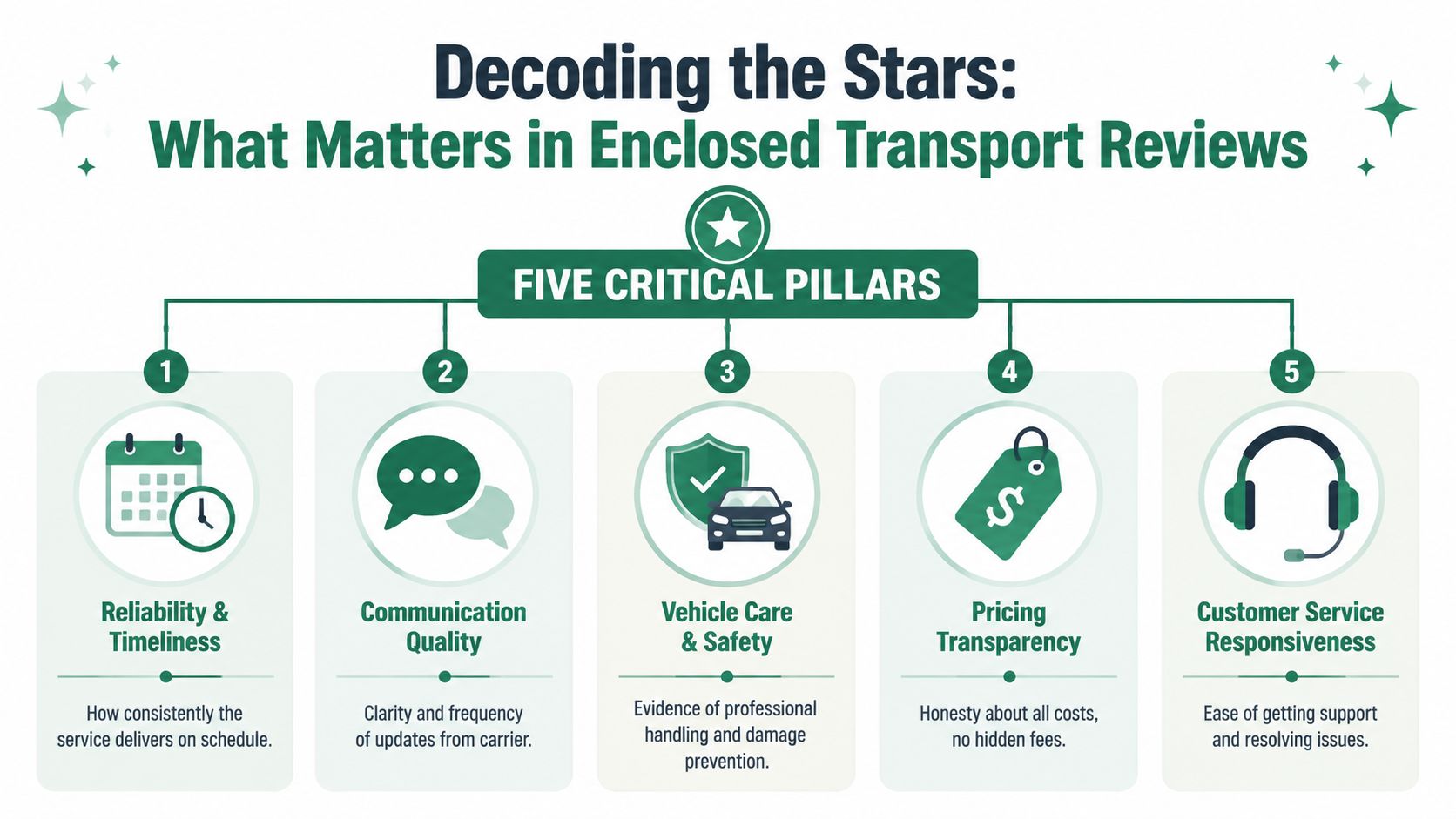
Damage and insurance language
Start here. A useful review explains how the vehicle was inspected, what was photographed, what paperwork was signed, and what happened if a concern came up later.
Weak reviews say the car "arrived fine." That tells you almost nothing. Strong reviews mention existing chips or scratches, loading method, trailer condition, delivery inspection, and whether the bill of lading matched the car's actual condition. For enclosed moves, that level of detail separates a real shipping experience from generic praise.
If a complaint appears, read the response closely. You want evidence that the company answered fast, explained the claim process clearly, and stayed involved until the issue was resolved.
Pricing transparency
Enclosed shipping costs more. The review question is whether the quote stayed honest from booking to delivery.
FreightWaves notes that enclosed transport often carries a meaningful premium over open shipping, especially on specialized equipment and routes, in its breakdown of open versus enclosed car shipping costs. Reviews should confirm that the company explained that premium instead of using a low quote to win the order and raising the price later.
Read for these signals:
- Written quotes with clear terms show discipline.
- No surprise storage, terminal, port, or access fees is a strong sign.
- Accurate route pricing matters more than a cheap first number.
- Specific comments about long-distance, luxury, classic, or Puerto Rico shipments carry more weight than generic comments about "great price."
If you want a better way to judge whether a review profile is consistent, these Google review star rating insights help you look past the headline score and see how much variation may be hiding underneath.
Carrier quality and vetting
Many transport companies sell the job and assign the actual load to a carrier. That is standard practice. The review question is whether they chose well and managed the move after dispatch.
Useful reviews identify the driver, describe the trailer, mention secure loading habits, and note whether the driver appeared familiar with enclosed equipment. I trust reviews more when they include small operational details. Those details are harder to fake, and they tell you the customer paid attention.
For Puerto Rico bookings, this matters even more. The carrier on the mainland leg and the team handling port release are part of the same customer experience, even if different companies touch the vehicle.
Communication and tracking
A quiet company creates panic fast. Owners of high-value cars want updates before pickup, during transit, and at delivery scheduling. They should get them without chasing dispatch all day.
Reviews worth trusting usually answer these questions:
| Communication clue in review | What it tells you |
|---|---|
| Customer got updates before pickup | Dispatch process is organized |
| Driver called ahead for both pickup and delivery | Handoff discipline is solid |
| Reviewer mentions one point of contact | Accountability is clear |
| Problems were explained quickly | The company doesn't disappear when plans shift |
For Puerto Rico transport, look for reviews that mention document checks, port timing, release instructions, and who handled status updates once the car reached the island or left it. If the review skips those details, it may not help you judge an island shipment at all.
Specialty vehicle handling
A company can do decent work on a standard sedan and still mishandle a low-clearance exotic, a restored classic, or a vehicle moving through port processing. Read reviews that match your exact shipment.
That means matching the vehicle type, trailer type, route complexity, and handoff points. A useful review for a Porsche going from Florida to San Juan is not the same as a useful review for a crossover going from Dallas to Phoenix. If your route includes Puerto Rico, give extra weight to reviews that mention booking documents, port coordination, delivery release, and condition checks at each transfer point.
Ignore broad claims that a company "handles everything." Trust reviews that show what vehicle moved, what route it took, what equipment was used, and how each handoff was handled.
Beyond the Rating Spotting Patterns in Customer Feedback
Reading reviews one at a time is an ineffective method. Read them in clusters and look for patterns. You're trying to figure out whether complaints are random or recurring, and whether praise sounds specific or manufactured.

One of the biggest blind spots in enclosed car transport reviews is the gap between marketing claims and real outcomes. Reviews can reveal whether the extra protection translated into a smoother experience on delays, inspection disputes, or handling issues, which is a nuance highlighted in Montway's discussion of enclosed auto transport.
What useful reviews sound like
Here's a review style that helps:
“Driver called the night before pickup, arrived in a hard-sided enclosed trailer, documented existing paint chips, and delivered two days later within the promised window.”
That review gives you timing, equipment, inspection behavior, and delivery performance.
Now compare it to this:
“Amazing service!!! Best company ever. Will use again.”
That might be genuine. It's still weak evidence.
And this kind of negative review is useful too:
“Pickup moved by a day, but dispatch told me early. Delivery was still smooth, and the driver spent time on inspection.”
That's not perfect service. It is honest service. Delays happen in transport. Silence is the primary problem.
Where the reliability gap shows up
Fake or low-value reviews often share the same flaws:
- No route details such as city pairs, port references, or timing.
- No vehicle details beyond “my car.”
- No process language about inspection, dispatch, loading, or delivery.
- Overheated praise or outrage with no specifics.
- Repeated wording across multiple reviews.
Strong review patterns usually point to a company that does the same basic things well over and over. Weak patterns usually show up in the same failure points over and over too.
Use this checklist when scanning feedback:
- Check for repeated mentions of missed windows. One complaint can be bad luck. A theme is a systems problem.
- Watch for billing friction. If several people say the final price changed, believe them.
- Notice how reviewers describe support. Fast, clear callbacks matter more than polished sales language.
- Look for problem resolution, not perfection. A company that handles issues cleanly is safer than one that only appears flawless online.
This short video helps frame what a careful shipping process should feel like in real life.
A final tip. Sort reviews by the lowest ratings first, then read the company responses. If the response blames the customer, ignores the issue, or sounds generic, that's a red flag. If the response addresses the route, timing, and resolution, that's much more credible.
The Puerto Rico Connection Unique Challenges in Island Transport Reviews
Puerto Rico shipments separate experienced coordinators from generalist sellers fast. Mainland enclosed transport is already specialized. Add ocean movement, port scheduling, release procedures, and document checks, and you're dealing with a different kind of job.
That's why generic enclosed car transport reviews don't help much for this route. If you're shipping to or from San Juan, you need reviews that mention the island process directly.
Reviews that actually matter on island routes
The best Puerto Rico-related reviews usually mention details like title or ownership paperwork, port handoff, condition reporting before ocean departure, and whether the customer had one knowledgeable contact guiding the move from start to finish. If a reviewer says the company “kept me updated from mainland pickup through San Juan release,” that matters. If they mention bilingual support that helped them handle documents clearly, that matters too.
These reviews are useful for several kinds of customers:
- Military families dealing with schedule pressure and paperwork.
- Students relocating for school and needing simple guidance.
- Snowbirds moving between seasonal homes and wanting predictable timing.
- Dealerships and businesses that care about clean handoffs and repeatable process.
- Private owners shipping luxury or collector vehicles between the mainland and Puerto Rico.
Reviews for Puerto Rico moves should mention documents, port steps, or San Juan coordination. If they don't, they're usually too generic to trust for an island shipment.
What mainland reviews won't tell you
A company can perform well on domestic runs and still struggle with Puerto Rico logistics. Reviews from Dallas to Los Angeles or Chicago to Miami won't tell you whether the company knows port cutoffs, ocean coordination, release timing, or how to keep customers informed when the vehicle changes custody during the island leg.
For Puerto Rico, ask whether the reviewer describes the whole chain. Pickup on the mainland. inland transport to port. port processing. ocean movement. arrival and release in San Juan. final handoff. The more of those steps the review covers, the more valuable it is.
This is also where bilingual support matters in a practical way, not as a marketing line. Customers often need clear explanations in English or Spanish, especially when they're dealing with ownership documents, timing changes, and port communication. A good agent keeps that from turning into a mess.
Questions to Ask Your Transport Carrier Before You Book
Reviews should shape your questions. If several reviews mention unclear pricing, ask hard questions about pricing. If they mention good inspections, ask how inspections are handled. Don't call just to get a quote. Call to test whether the company knows its own process.
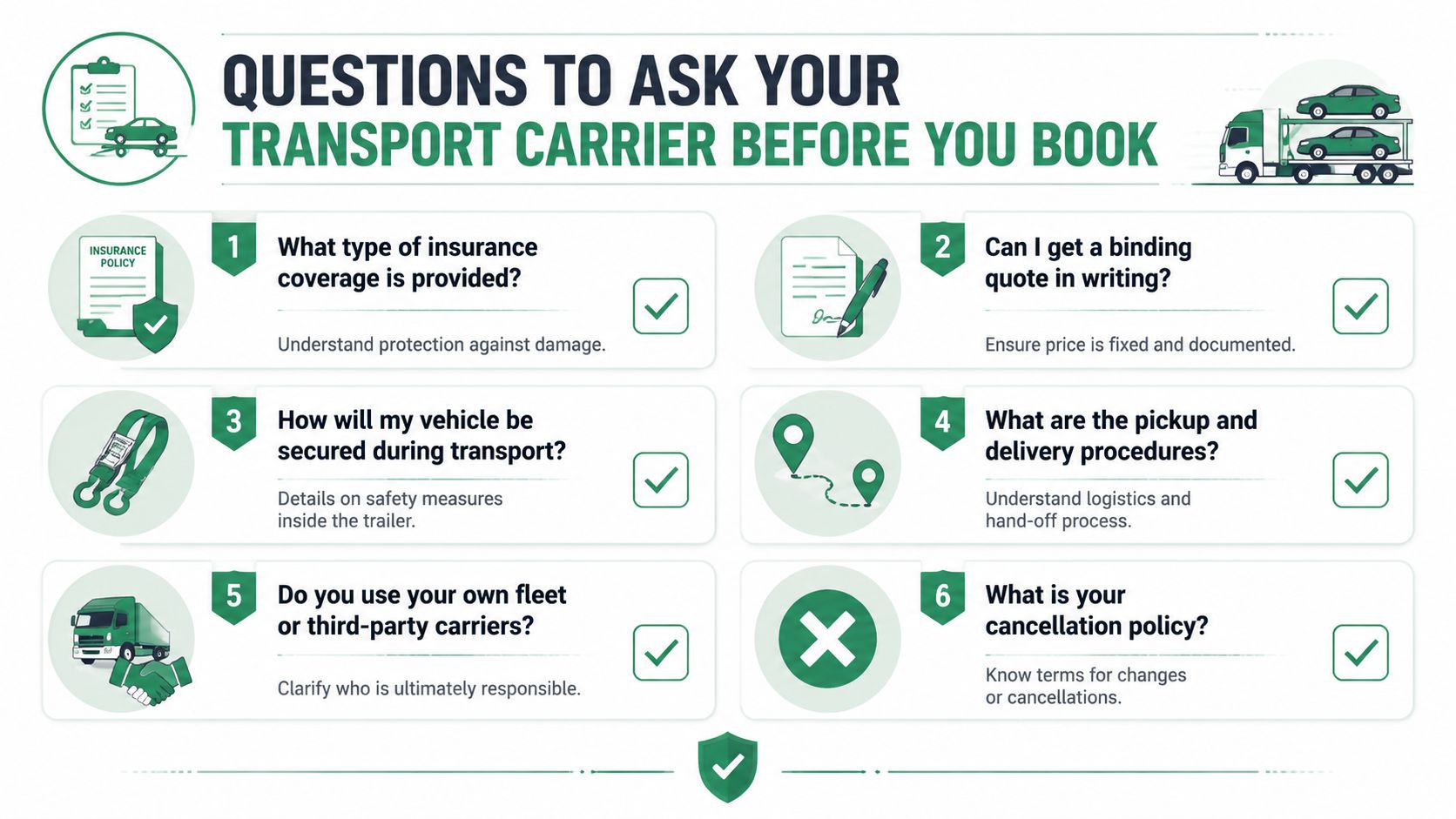
Use reviews to build your interview script
A serious carrier or broker should answer direct questions without getting slippery. If they dodge, rush you, or keep repeating generic reassurances, move on.
For insurance background, it helps to understand how cargo coverage is generally discussed in trucking. This overview of Florida All Risk transport insurance gives useful context for the kinds of policy issues customers should ask about before handing over a vehicle.
Questions that expose weak operators fast
Ask these before you book:
- What exactly is included in the enclosed quote? Ask them to identify anything not included, especially storage, port-related charges, or special access situations.
- Is the price binding in writing, or can it change after dispatch? If it can change, ask under what conditions.
- What type of enclosed trailer will be used? Hard-sided and soft-sided equipment both exist. Ask what's planned for your route.
- How is the vehicle secured inside the trailer? You want a clear answer, not vague talk about “industry standard methods.”
- Who handles the shipment after booking? Ask whether they use their own trucks, a carrier network, or both.
- How does the inspection work at pickup and delivery? They should explain the bill of lading and condition documentation clearly.
- What happens if pickup is delayed? Listen for a real communication process.
- Who updates me during the move? One accountable contact is much better than getting bounced around.
- What experience do you have with Puerto Rico shipments? If you're moving to or from San Juan, this question is not optional.
- What documents do you need for Puerto Rico transport? The right company should answer this comfortably.
- What is your cancellation policy? If plans change, you need to know the consequences before you commit.
If the person answering sounds annoyed by these questions, that's useful information. Good operators hear these questions all the time and answer them cleanly.
How National Car Transport Measures Up
A company earns a spot on your shortlist by answering review-based questions clearly and consistently. That is the standard I use here. I am not looking for polished sales copy. I am looking for signs that the operation is organized, accountable, and capable of handling enclosed moves without handing the hard parts back to the customer.
Where it fits against the review criteria
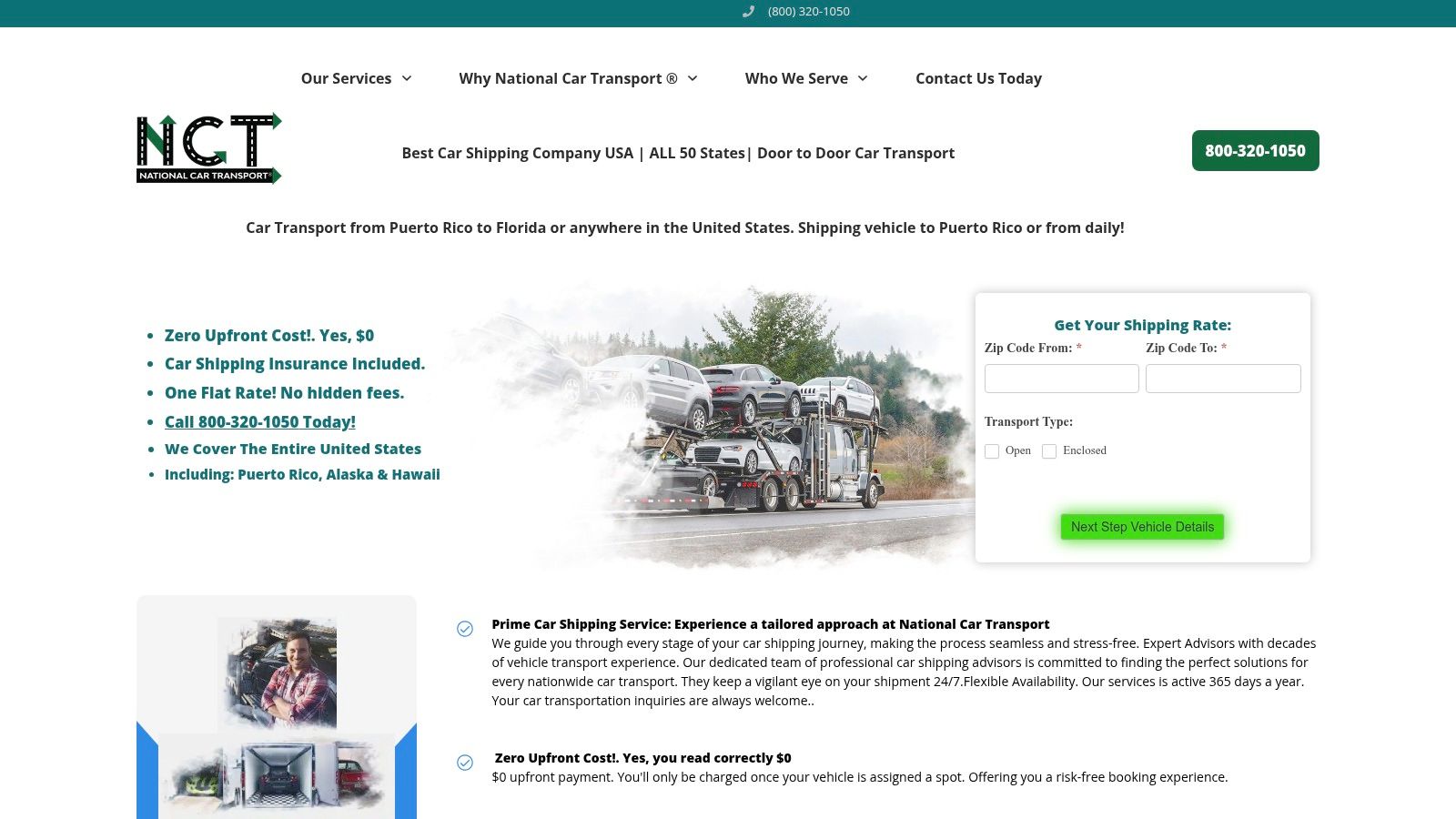
National Car Transport checks several boxes that matter in enclosed shipping reviews. The company states that it offers flat-rate pricing, no upfront payment before a carrier is assigned, nationwide service that includes Alaska, Hawaii, and Puerto Rico, bilingual English and Spanish support, and access to a large carrier network. Those details matter because they are specific. Specific claims are easier to verify against customer feedback, your written quote, and the way the company answers questions before booking.
The Puerto Rico angle matters more here than it does with a standard mainland move. A lot of review profiles look strong until you ask who manages the port side, how communication works during the handoff, or what paperwork is required for island transport. That is where generic five-star ratings stop being useful. If a company regularly handles Puerto Rico shipments, you should hear clear, practiced answers instead of vague reassurance.
National Car Transport looks stronger if its direct answers match the review patterns you want to see.
Here is how to test that. Ask the company to walk you through a recent enclosed shipment on a route similar to yours, especially if Puerto Rico is involved. Ask who remains responsible after dispatch, how condition reports are handled at each transfer point, and what would trigger a price change or delay. Then compare those answers with the language used in customer reviews. If the reviews mention consistent updates, clean delivery documentation, and competent handling on longer or more complex routes, that is a good sign. If the reviews stay generic and the phone answers stay vague, move on.
That is the right way to judge any transporter. Use the reviews to verify the process, not to replace it.
Frequently Asked Questions About Enclosed Car Transport
Is enclosed transport always slower than open transport
Enclosed transport usually takes longer to schedule because there are fewer trailers and fewer available seats on each run. Timing depends on the lane, season, and how flexible you are on pickup and delivery dates.
For Puerto Rico moves, ask a better question. Ask where the delay risk sits. It could be truck dispatch, port processing, vessel scheduling, or final delivery after arrival. A company that cannot explain that chain clearly is not ready for your shipment.
What is the difference between a broker and a carrier
A carrier owns or operates the truck that moves your vehicle. A broker arranges the shipment through a carrier network and manages the match.
The model matters less than accountability. You need one company to answer the phone, confirm who has your car, track handoffs, and fix problems without blaming another party. If reviews keep mentioning confusion about who was in charge, cross that company off your list.
Can I ship personal items in my car
Some transporters allow a small amount of personal property. Others do not. Puerto Rico shipments often face tighter rules because port handling and ocean freight add another layer of inspection and liability.
Get the answer in writing before pickup. Ask about weight limits, prohibited items, and whether anything left in the car is excluded from coverage.
What review score should I consider strong
A high score helps, but it should never close the sale on its own. Treat strong ratings as a filter, then verify what sits underneath them.
Read the lower-rated reviews first. Look for patterns tied to enclosed service, not generic complaints. Did the company miss pickup windows, change the price after dispatch, skip inspection details, or go quiet during a port transfer? Those details matter more than the average star count.
Are enclosed car transport reviews enough to choose a shipper
No. Reviews are a screening tool.
Use them to build a short list, then pressure-test the process. Ask who handles dispatch, who documents condition at pickup and delivery, how claims are handled, and, for Puerto Rico, who manages the port side and vessel coordination. The right company will answer fast and with specifics. Generic answers usually lead to generic service.
If you are considering National Car Transport, judge them the same way. Ask for a clear explanation of how they handle mainland routes versus Puerto Rico shipments, who stays responsible during handoffs, and how updates are delivered while your vehicle is in transit.