

You're probably here because the car has to move, but your life can't stop so you can drive it there yourself. Maybe you're relocating for work, sending a student off to school, helping a military family with a timed move, buying a car from out of state, or trying to get a vehicle to or from Puerto Rico without turning it into a paperwork project.
That's when people start asking the practical question: what's the right way to deliver a car without wasting time, risking damage, or getting trapped by vague quotes and surprise fees?
The short answer is that professional auto transport works well when the shipment is matched to the vehicle, route, and destination. Mainland moves across the lower 48 are one thing. Puerto Rico, Alaska, and Hawaii are different because they involve more handoffs, more documents, and tighter coordination. The process gets easier when an experienced agent handles the details, especially if you need help in English or Spanish and want clear answers from someone based in the U.S. who deals with vehicle logistics every day.
Table of Contents
- Why Professional Auto Transport Is the Smart Choice
- Booking Your Shipment and Choosing the Right Service
- Preparing Your Vehicle and Documents for Transport
- The Pickup and Delivery Process Explained
- Understanding Auto Transport Costs and Insurance
- Shipping Cars to Puerto Rico Alaska and Hawaii
- FAQs for Special Situations and First Time Shippers
Why Professional Auto Transport Is the Smart Choice
Driving your own car across several states sounds simple until the true costs show up. Hotel stops, fuel, weather exposure, road debris, schedule changes, and the wear you put on the vehicle all add up. If the route includes an island destination like Puerto Rico, driving isn't even the issue. Coordinating land transport, port handling, and ocean freight is.
Professional shipping exists because the need is real and constant. The global Auto Transportation Market reached USD 331.2 billion in 2026, and North America holds about 40% of that share, according to Business Research Insights on the auto transportation market. That scale matters. It tells you this isn't a side service or an informal arrangement. It's an established logistics sector built around moving finished vehicles every day.
Why people choose shipping instead of driving
Some customers need speed. Others need predictability. Many just need to avoid turning a move into a multi-day road trip.
- Relocating households: One less vehicle on the road means less stress during a move.
- Snowbirds: Seasonal travel gets easier when the car meets you there.
- Students: Parents can avoid a long-distance delivery run before the semester starts.
- Dealerships and online buyers: Transport closes the distance between seller and buyer.
- Businesses with fleet needs: Shipping helps keep staff focused on operations instead of vehicle transfers.
Practical rule: If the trip is long enough to disrupt work, family scheduling, or a planned move, shipping usually makes more sense than personally driving the vehicle.
A good shipping setup also gives you something most DIY moves don't. Accountability. There's a dispatch process, a carrier assignment, an inspection record, and a delivery plan. That matters even more on routes involving ports and vessels.
An experienced logistics agent also catches problems before pickup day. That includes low-clearance vehicles, inoperable units, neighborhoods with poor truck access, and port document issues. Those aren't edge cases. They're the details that separate a smooth delivery from a frustrating one.
Booking Your Shipment and Choosing the Right Service
Booking a shipment is usually straightforward when the information is complete. Problems start when people choose a service based only on price and skip the mechanical realities of the vehicle and route.
What You Need to Book
To get a real quote and book correctly, have these details ready:
- Pickup and delivery locations: Exact cities matter. For Puerto Rico moves, the mainland origin and destination port plan both matter.
- Vehicle details: Year, make, model, and whether the car has modifications or low ground clearance.
- Condition: Running and steering vehicles are simpler to load. If it doesn't run, say so upfront.
- Timing: Flexible dates usually help with matching.
- Service preference: Open, enclosed, or ocean/container where applicable.
Customers often ask if enclosed shipping is only for luxury cars. It isn't. Sometimes it's the right choice because of how the car loads, not just what it's worth.
Open vs Enclosed vs Container Transport at a Glance
A technical detail many people miss is this: 40% of vehicle damage during transport occurs at loading ramps, and low-clearance cars often need enclosed service because its low-angle ramps or hydraulic lifts help prevent undercarriage damage, as explained in MVS Canada's breakdown of car shipping angles.
| Transport Type | Best For | Cost Level | Protection Level |
|---|---|---|---|
| Open | Standard daily drivers, most sedans, SUVs, and many trucks | Lower | Standard road exposure |
| Enclosed | Classics, exotics, luxury vehicles, very low-clearance cars | Higher | Higher protection from road and weather exposure |
| Container Transport | Routes involving ocean freight and certain non-contiguous destinations | Varies by route and port handling | Strong protection during ocean movement |
Open transport is the most common choice for everyday vehicles because it's practical and widely available. Enclosed transport makes sense when the car sits low, has custom paint, delicate trim, or a collector value that justifies extra handling care. Container or ocean-based transport enters the picture for Puerto Rico, Hawaii, and some Alaska moves.
A low sports car scraping on a ramp isn't a cosmetic issue. It's a service-selection mistake.
A strong agent is beneficial. A bilingual logistics team can ask the right questions before dispatch, especially when the shipment includes Puerto Rico paperwork or family coordination across states. National Car Transport is one example of a U.S.-based company that handles these route types with flat-rate pricing, bilingual agents, and a network of 25,000+ vetted carriers, which is useful when a shipment needs specific equipment rather than the first truck available.
Preparing Your Vehicle and Documents for Transport
A smooth shipment starts before the driver arrives. Most pickup delays come from preventable issues: loose items in the cabin, missing keys, unexpected vehicle modifications, or documents that weren't gathered in time.
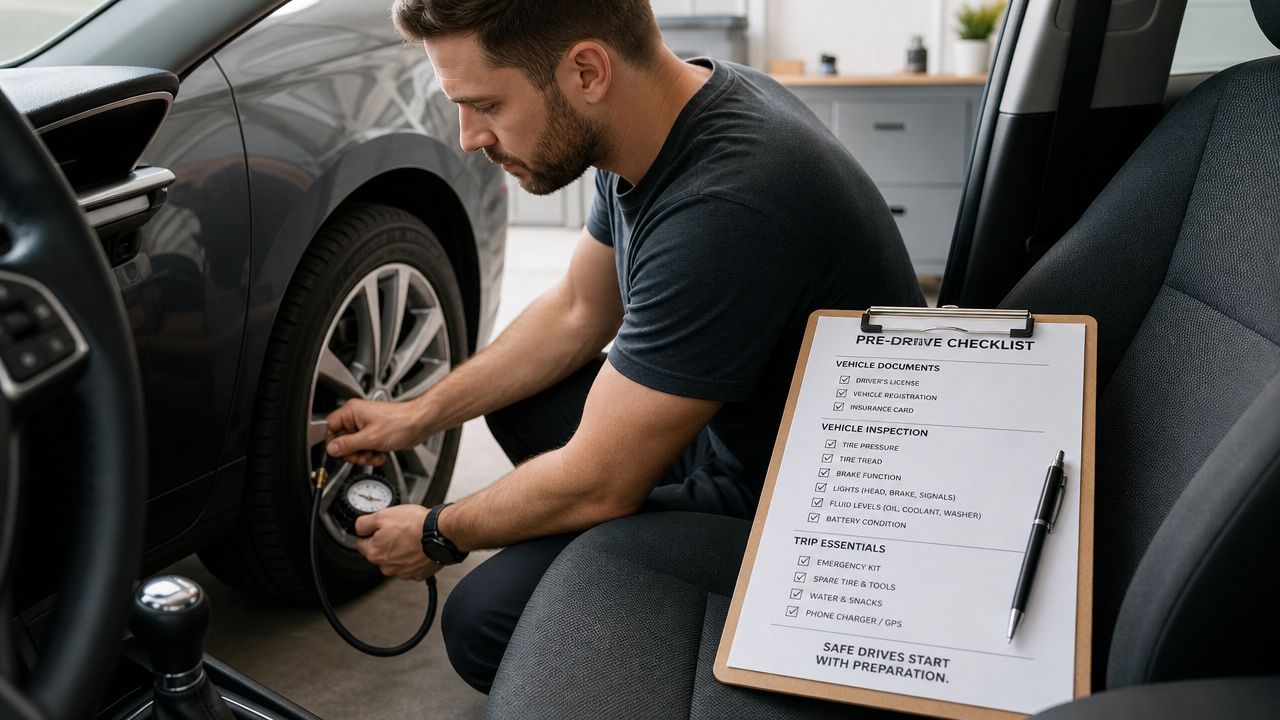
Vehicle Prep That Prevents Delays
Clean the car first. That isn't about appearance. It helps you and the driver see existing scratches, scuffs, chips, or dents clearly during inspection.
Then handle the simple but important details:
- Remove personal items: Carriers focus on transporting the vehicle, not household goods. Loose belongings can shift during transit.
- Secure accessories: Toll tags, phone mounts, detachable spoilers, and custom add-ons should be removed or secured.
- Leave only a modest fuel level: You don't need a full tank for transport. Less fuel means less unnecessary weight.
- Check battery and tires: The car should be able to load and unload without basic mechanical surprises if it's being shipped as operable.
- Turn off alarms when possible: An alarm going off on a carrier creates avoidable hassle.
If the vehicle has an unusually low front end, aftermarket body kit, oversized tires, or a nonstandard ride height, mention it before booking. The dispatch notes should reflect that. The truck that works for a family sedan may not work for a modified coupe.
Documents to Have Ready
Most domestic moves are simple on paperwork, but simple doesn't mean optional. Have these available:
- Vehicle registration: Helps confirm the vehicle being moved.
- Proof of ownership or title access: This becomes more important for port and island shipments.
- Lienholder authorization if needed: Some financed vehicles require added confirmation.
- A working key set: The carrier needs to load and unload the car.
- Contact details for pickup and delivery: If someone else is releasing or receiving the car, make that clear in advance.
Here's a quick visual overview of standard prep steps before handoff:
One more point matters for Puerto Rico and other island routes. Port shipments usually involve extra identity, ownership, and release requirements beyond a normal domestic move. If your paperwork is incomplete, the vehicle can sit while the issue gets resolved. That's why experienced coordination matters. The actual transport may be routine, but the document flow has to be clean.
The Pickup and Delivery Process Explained
Pickup day is where the shipment becomes real for most customers. The truck arrives, the driver walks the car, and you sign the form that matters most in the entire process: the Bill of Lading, often called the BOL.
What Happens at Pickup
For standard routes, the booking-to-pickup window averages 24 to 48 hours, and for about 15% of residential deliveries, the carrier meets the customer at a nearby accessible location because an 80-foot carrier can't always reach the exact address, according to FreightRun's explanation of door-to-door freight shipping. That's normal. A shopping center lot, wide side street, or another safe meeting point often solves the access issue quickly.
The driver will inspect the vehicle with you. This is not a formality. Walk slowly, look closely, and note every visible condition item on the BOL. Chips on the hood, curb rash on wheels, a cracked marker light, aftermarket modifications, and existing bumper marks should all be recorded.
Bring your phone and take clear photos from multiple angles. Include close-ups of any existing damage and a few wide shots showing the full vehicle. If there's ever a question at delivery, those images help establish the pre-transport condition.
The BOL is both your receipt and your condition record. If something isn't written down clearly, it gets harder to resolve later.
How Delivery Actually Works
Delivery follows the same logic in reverse. The driver contacts you ahead of arrival, confirms the meeting point, unloads the car, and completes the final inspection. Don't rush this just because the vehicle has arrived and you're eager to move on.
Use this short delivery routine:
- Inspect before signing off: Look at the same areas you reviewed at pickup.
- Compare with your photos: Pay attention to bumper corners, lower valances, roofline, mirrors, and wheel faces.
- Note issues immediately: If there's new damage, write it on the delivery paperwork before final acceptance.
- Test essentials: Confirm the car starts, shifts, and rolls if it was shipped as operable.
A dedicated logistics agent earns their keep here by coordinating timing, confirming contact numbers, and solving location problems before they become missed appointments. That's especially useful if a family member, student, service member, or dealership representative is receiving the car instead of the person who booked it.
Understanding Auto Transport Costs and Insurance
A quote can look straightforward until you compare what one company includes and another leaves out. I tell customers to read past the headline number. The actual cost depends on how the vehicle moves, how flexible the schedule is, and whether the route is a simple mainland haul or a multi-stage shipment with port handling.
Price shifts for practical reasons. A full-size SUV takes more trailer space than a compact sedan. An inoperable vehicle may need a winch or forklift access. Rural pickup points can require extra coordination, while high-volume metro lanes usually price better because carriers can fill trucks faster. Puerto Rico, Hawaii, and some Alaska moves add another layer because trucking is only part of the job. Port timing, terminal procedures, and ocean freight all affect the final total.
Published market ranges are broad for a reason. IBISWorld's profile of the U.S. vehicle shipping services industry notes that rates can run from 53 cents per mile to more than $2.30 per mile, with short shipments around $500 and cross-country moves around $1,700. Consumer rate guides show a similar spread. Forbes Home's review of car shipping costs reports that many shipments fall between roughly $300 and $2,500, depending on distance, vehicle type, timing, and service level.
The first quote is rarely the full story.
A better question is, "What does this price cover?" Ask whether the rate includes fuel, tolls, standard cargo coverage, non-running fees, terminal charges, and any port or document handling. That matters even more on Puerto Rico shipments, where one unclear handoff can create delays and extra charges. A seasoned bilingual agent helps here because they can confirm requirements with the mainland dispatcher, the port contact, and the customer without details getting lost in translation.
Insurance and Claims Without Confusion
Insurance should be discussed before dispatch, not after a problem. If you want a plain-English backgrounder on the basics, this guide to motor truck cargo insurance is a useful reference.
Customers often assume "insured" means every issue will be easy to resolve. In practice, claims depend on records. The carrier's cargo policy matters, but so do the bill of lading, pickup photos, delivery photos, and written notes showing the vehicle's condition at both ends. If damage is not documented clearly at pickup or listed at delivery, the claim process gets slower and more disputed.
That is why clean paperwork protects you better than verbal assurances. SGT Auto Transport's explanation of the bill of lading process reinforces the same point many of us in the field see every week. The inspection record is the backbone of any claim file.
My advice is simple. Ask for the carrier's insurance details before the vehicle ships. Keep your own time-stamped photos. Review the bill of lading line by line. If someone else is releasing or receiving the car, make sure they know how to inspect it and when to note an issue in writing. That level of follow-through saves a lot of frustration later.
Shipping Cars to Puerto Rico Alaska and Hawaii
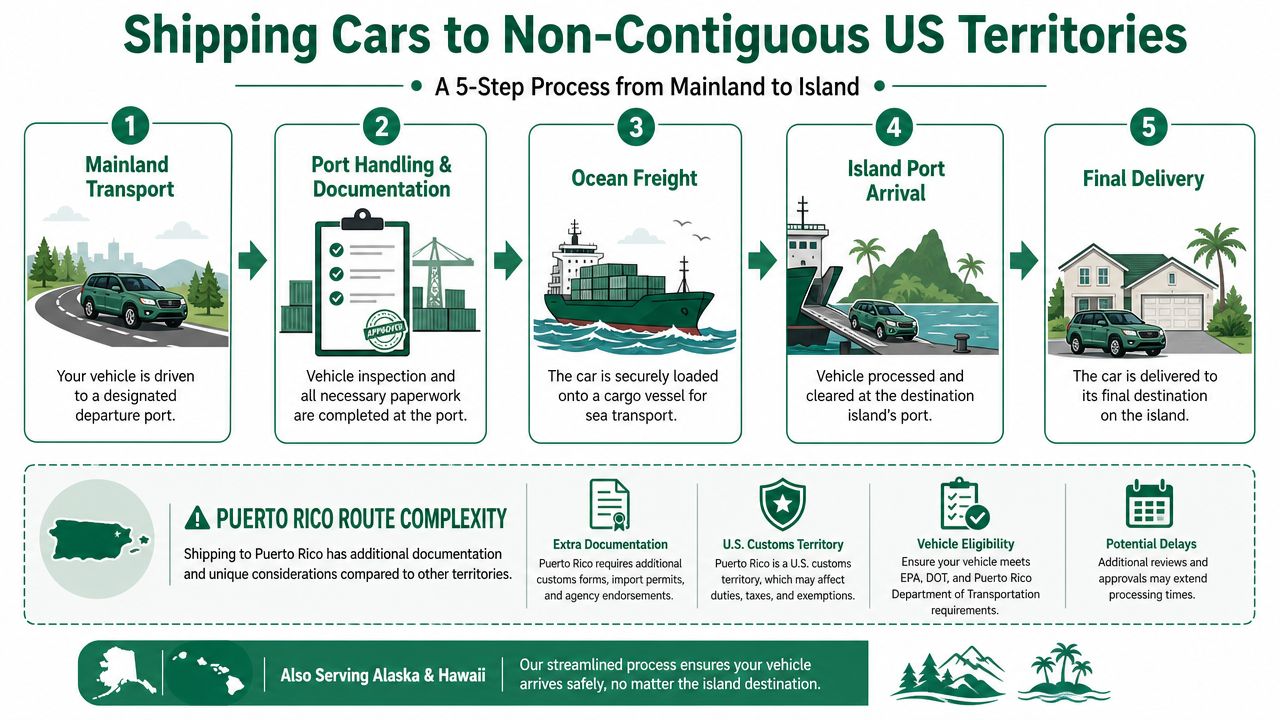
Mainland shipping is usually one truck, one route, and one delivery appointment. Puerto Rico, Alaska, and Hawaii are different. These moves often combine overland transport with port processing and vessel schedules, which means more coordination points and more chances for confusion if the paperwork isn't handled correctly.
Puerto Rico From the Mainland
Puerto Rico is the route that generates the most questions, and for good reason. It isn't just a longer domestic move. It's a staged shipment.
A typical Puerto Rico move includes:
- Mainland pickup or drop-off: The car is transported from its origin to the port.
- Port inspection and release: Documents are reviewed before ocean loading.
- Ocean freight to San Juan: The vehicle travels by vessel.
- Arrival processing in Puerto Rico: Release steps have to be completed before final pickup or local delivery.
- Final handoff: Depending on service, the customer retrieves the vehicle or arranges local delivery.
Ocean shipping rates from Jacksonville to Puerto Rico start at $1,210 for vehicles under certain size limits, with listed fees included, according to TOTE Maritime's Puerto Rico personal vehicle pricing. Total timing from the mainland generally averages 1 to 3 weeks depending on vessel availability, weather, seasonality, and the inland portion of the trip, as noted in Forbes' overview of shipping a car to Puerto Rico.
For route examples, Montway's Puerto Rico shipping overview notes that Orlando to San Juan covers 1,609 miles, takes 8 to 9 days, and costs about $1,649, while Miami to San Juan spans 1,181 miles with a 9 to 11 day window. Those examples are useful because they show the route isn't priced by ocean distance alone. Mainland location and handoff timing matter too.
Puerto Rico shipments succeed when the land leg, port release, and final delivery plan are treated as one coordinated move instead of three separate jobs.
Documentation is where people get tripped up. Proof of ownership, release authorization, identification, and port-specific paperwork have to line up. Customers also ask about Puerto Rico tax and local processing requirements, including Hacienda-related steps. Those details can vary by vehicle and circumstance, so it's smart to confirm them before the car reaches the port rather than after it arrives.
This is also where the human side matters most. A bilingual U.S.-based agent who regularly handles Puerto Rico shipments can explain what's needed, confirm who's receiving the car in San Juan, and keep the customer from bouncing between a mainland dispatcher, a port office, and an island contact with no single point of accountability.
Alaska and Hawaii Considerations
Alaska and Hawaii require the same mindset even though the route details differ. You're dealing with non-contiguous delivery, which often means a mix of truck transport and ocean handling.
For these shipments, pay special attention to:
- Terminal versus door service: Some areas have limited final-mile options.
- Weather and vessel timing: Schedules can shift.
- Vehicle cleanliness requirements: Port acceptance rules can be stricter on some routes.
- Local receiving arrangements: Know who is taking possession and where.
What works best is planning backward from the required arrival date and locking down the release documents early. Island and remote shipments usually don't reward last-minute improvisation.
FAQs for Special Situations and First Time Shippers
How does car shipping work for military PCS moves
Military moves usually come with fixed dates, changing orders, and the possibility that the service member won't be present at both ends. The key is naming an authorized contact for pickup or delivery if needed and making sure the vehicle documents are ready before the carrier window opens. For Puerto Rico, Hawaii, or Alaska assignments, the shipment should be treated as a multi-step logistics move, not a standard state-to-state transfer.
What if the car is classic exotic or very low
That's where equipment matters more than generic advice. A classic convertible, exotic coupe, or heavily lowered vehicle may need enclosed service because the loading angle is the risk point, not just weather exposure. Soft handling practices, careful inspection notes, and a driver who understands specialty vehicles make a real difference.
If the vehicle is hard to replace, hard to repair, or easy to scrape, don't book it like an ordinary commuter car.
Can you ship a car that doesn't run
Yes, but you need to disclose that before dispatch. Inoperable vehicles require special loading planning, and the carrier needs the right equipment to winch and position the unit safely. If you hide the condition until pickup day, the driver may not be able to load it, and the shipment can be delayed.
Is door-to-door always literal
Not always. On some residential streets, low branches, parked cars, HOA restrictions, or tight turns keep a large carrier from reaching the home safely. In those cases, the solution is usually simple: meet nearby at a wide, legal, accessible location.
What makes first-time shippers nervous, and what usually fixes it
Most first-time customers worry about timing, damage, and communication. Those concerns usually settle down once they understand the inspection process, know who their contact person is, and have a clear pickup and delivery plan. Good transport feels organized. That's what you should expect.
If you need to deliver a car across the mainland or coordinate a shipment to or from Puerto Rico, Alaska, or Hawaii, National Car Transport offers door-to-door auto shipping with U.S.-based bilingual agents, transparent flat-rate pricing, and support from scheduling through final delivery. Each shipment is different, and having an experienced agent guide the process is often what makes it feel simple and quick.