
Classic car shipping usually runs from about $600 to $1,200 for open transport on a 1,000 to 1,200 mile move, while enclosed transport for the same distance is often $1,200 to $1,800+. On more specialized or longer enclosed moves, pricing can climb into the $1,100 to $3,000 range depending on distance, vehicle condition, insurance needs, and route complexity.
If you're reading this, you're probably trying to answer a very practical question. What will it cost to move a car you care about, without handing it over to the wrong carrier or paying for protection you don't need. With classics, that tension is real. You're not shipping basic transportation. You're moving paint, chrome, trim, provenance, and often years of restoration work.
That's why a classic car shipping quote should never be read like a commodity freight quote. The number matters, but what sits behind the number matters more. Equipment, loading method, insurance limits, the driver's experience with low-clearance or non-running vehicles, and for Puerto Rico moves, the handoff between mainland and port operations all affect the outcome.
Table of Contents
- Understanding Your Classic Car Shipping Quote
- Deconstructing Your Quote Key Factors Influencing Cost
- Sample Classic Car Shipping Cost Scenarios
- The Puerto Rico Specialist Shipping Your Classic To and From the Island
- Smart Savings Tips for Transporting Your Classic Car
- Your Pre-Transport Preparation Checklist
- How to Get an Accurate Quote from National Car Transport
Understanding Your Classic Car Shipping Quote
A sound quote starts with one simple idea. A classic car isn't priced like a commuter sedan because the handling standards are different from the moment the carrier plans the load.
Industry benchmarks put general vehicle shipping at about $1.02 per mile for a 1,000 mile move through Kelley Blue Book, while Move.org places broader averages at about $2.35 per mile depending on shipment mix and methodology. Those same benchmarks also note that enclosed transport is often about 30% to 60% higher than open shipping, which is why average national numbers often understate the actual classic car shipping cost for collector vehicles (Kelley Blue Book shipping cost benchmarks).
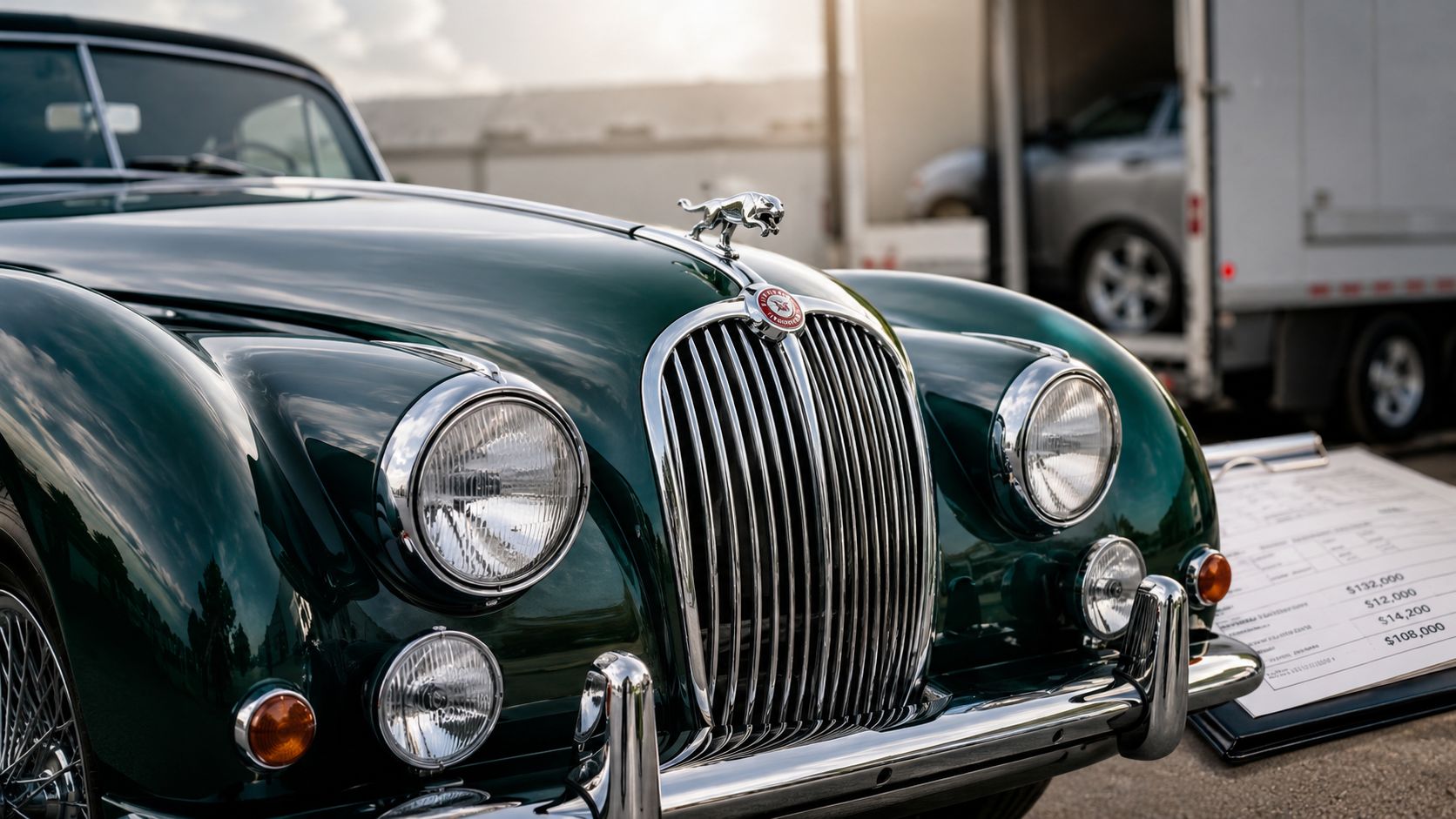
Why average car-shipping numbers can mislead classic owners
A quote for a classic should reflect more than mileage. It should reflect exposure. If the car is rare, freshly restored, or headed to a show, the primary purchase isn't just transport. It's controlled handling and reduced risk.
That's also where many owners get tripped up. They compare a broad market average to a specialty quote and assume the specialty quote is inflated. Often it isn't. It's pricing in the equipment and process the job requires.
Practical rule: If the quote seems cheap for a valuable classic, ask what protection has been removed to get there.
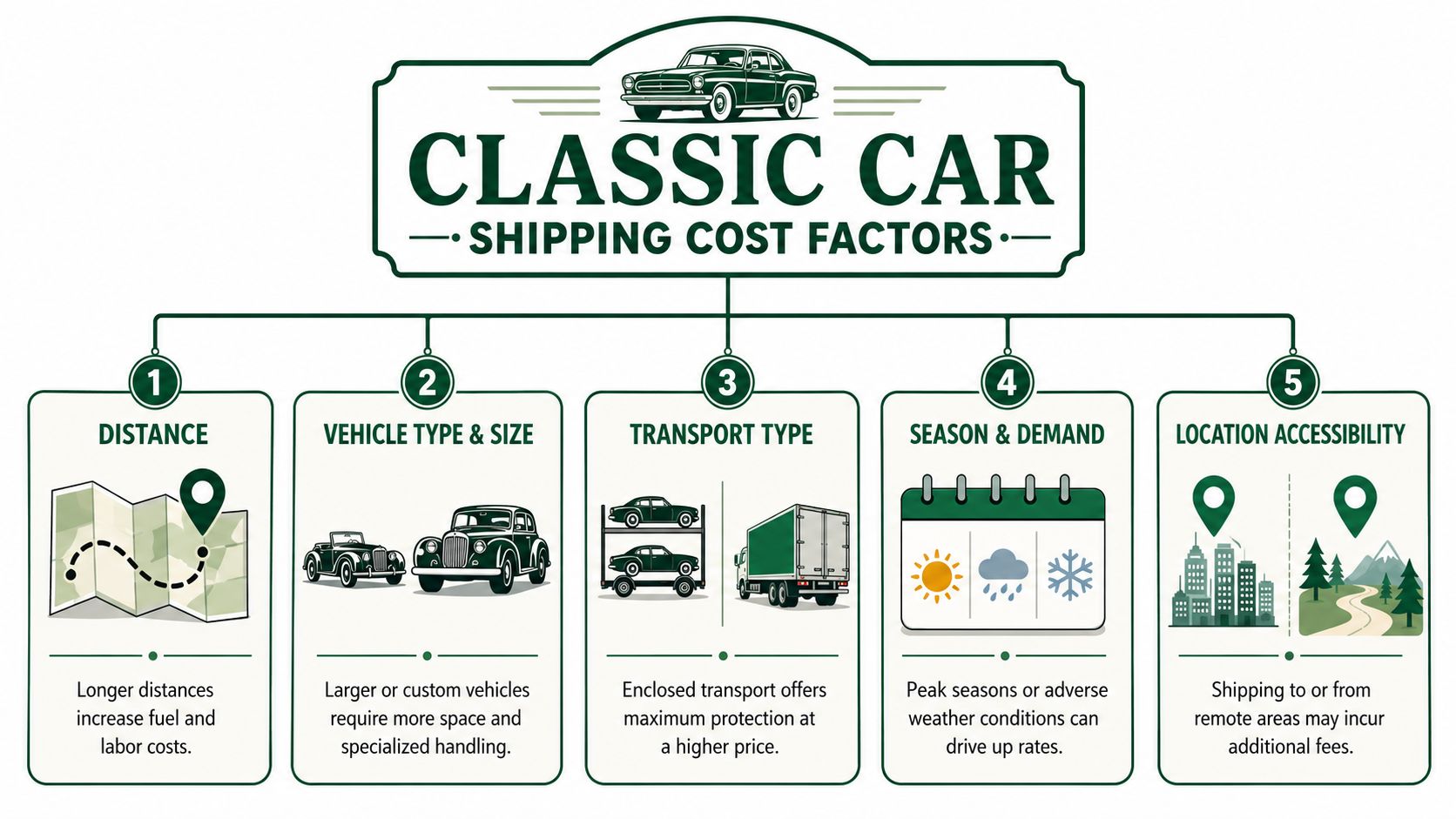
The five variables that actually move the price
The headline number is built from a handful of variables working together:
- Transport type: Open is cheaper. Enclosed costs more because it protects against weather and road debris.
- Distance: The route length matters, but per-mile pricing doesn't stay flat.
- Vehicle condition: Running, non-running, low-clearance, and modified vehicles price differently.
- Route and timing: Busy metro lanes move differently from remote pickups or seasonal surges.
- Insurance and handling expectations: Higher-value classics often need stronger coverage verification and more careful loading procedures.
Owners in major markets from Los Angeles, Dallas, Miami, Chicago, New York, Atlanta, Phoenix, Seattle, and San Juan usually have more scheduling options than rural shippers, but availability still changes by season and lane balance. That's one reason many collectors prefer working with an advisor rather than trying to compare quotes line by line without context.
Deconstructing Your Quote Key Factors Influencing Cost
A quote for a classic car is an operating plan with a price attached. The number changes based on how the car will be handled, what equipment the carrier needs, how difficult the route is, and how much risk the owner wants removed from the move.
Distance and the per-mile curve
Distance affects price, but not in a simple per-mile formula. Short trips usually carry a higher per-mile cost because the fixed work stays the same. Dispatch still has to place the order, the truck still has to position, the driver still has to load carefully, and the paperwork still has to be done. FreightWaves shows that pattern clearly, with shorter routes pricing higher per mile than long-haul moves (FreightWaves per-mile shipping curve).
That catches owners off guard on short regional moves.
A 250-mile shipment can look expensive if you expect the rate to scale down neatly with distance. In practice, carriers price the job based on whether that stop fits the route, how much time the load takes, and what they have to pass up to take it.
Enclosed transport changes the quote fast
For classic cars, the trailer type often makes the biggest difference in the final number. Open transport may be acceptable for a driver-grade vehicle with modest value. A restored, rare, or high-dollar car usually belongs in an enclosed trailer because it reduces exposure to weather, road film, and debris.
Enclosed service also limits how many vehicles a carrier can move at one time. That lower trailer capacity, plus slower and more careful loading, raises the cost. Jack Cooper's pricing overview reflects that spread, with enclosed transport running above open transport on typical routes (Jack Cooper classic transport pricing guide).
The trade-off is straightforward. Open transport buys economy. Enclosed transport buys better protection and tighter handling conditions.
Vehicle condition affects labor and equipment
Condition matters beyond whether the engine starts. A non-running classic may need a winch. A low-clearance car may need lift-gate service or longer ramps. A vehicle with weak brakes, old bias-ply tires, fluid leaks, or delicate underbody components can take longer to load and may narrow the list of carriers willing to accept the job.
I have seen two cars on the same route price very differently because one could roll, steer, and brake cleanly while the other needed special loading steps from the first minute.
That difference becomes even more important on Puerto Rico shipments. Once a classic is moving to or from San Juan, the inland leg, port timing, ocean booking, and terminal handling all depend on accurate condition details. If the car is misdescribed, delays and extra charges usually show up at the port, where corrections are harder and more expensive.
Route, season, and pickup access all affect real cost
Carrier coverage is stronger on dense mainland corridors than on remote routes. A pickup outside a small town, on a steep residential street, or in an area with limited truck access may require a shuttle vehicle or alternate meeting point. That adds time and labor, which affects the quote.
Season changes availability too. Snowbird traffic, summer relocation demand, and storm disruptions all tighten capacity on certain lanes. Puerto Rico adds another layer because the shipment has to line up with both domestic trucking schedules and vessel schedules. Missing a mainland handoff window can push the car to the next sailing cycle and extend storage or coordination costs.
For companies that also manage household relocations, the discipline behind strategies to win more moving jobs applies here as well. Accurate quoting depends on route conditions, service scope, timing, and labor assumptions, not just mileage.
Insurance limits need a close review
Insurance is where owners should slow down and read the fine print. A lower quote may reflect lower cargo limits, exclusions that matter for collector vehicles, or a carrier whose coverage does not line up with the car's actual value.
For high-value classics, owners should verify the carrier's cargo policy, ask for proof of coverage, and confirm whether the limits match the vehicle's agreed, appraised, or collector value. That review matters even more on Puerto Rico moves, where more than one party may touch the shipment between inland pickup, port processing, and ocean transport.
Price matters. Coverage terms matter just as much.
Sample Classic Car Shipping Cost Scenarios
A quote makes more sense when you match it to a real shipment. A local move for a driver-quality muscle car is priced very differently from a coast-to-coast enclosed job for a rare import, and Puerto Rico sits in its own category because the move has more handoffs and tighter scheduling.
Estimated Classic Car Shipping Costs by Scenario
| Scenario | Route | Transport Type | Estimated Cost |
|---|---|---|---|
| Restored muscle car, short-haul | Los Angeles, CA to Phoenix, AZ | Open carrier | Roughly aligned with short-haul open pricing, using the under-500-mile benchmark of $1.25 to $2.00 per mile |
| High-value European classic, cross-country | New York, NY to Los Angeles, CA | Enclosed carrier | Typically falls within long-haul enclosed planning ranges such as $1,200 to $1,800+ for 1,000 to 1,200 miles and broader enclosed benchmarks of $1,100 to $3,000 depending on route and vehicle characteristics |
| Vintage American coupe to Puerto Rico | Chicago, IL to San Juan, PR | Enclosed plus port and ocean coordination | Usually priced case by case because mainland and island logistics combine domestic transport with port handling and ocean service |
How these scenarios play out in practice
Los Angeles to Phoenix is the kind of move that catches owners off guard. The mileage is modest, but short runs often carry a higher per-mile number because the carrier still has to dispatch the truck, load the vehicle, secure it properly, and fit the job into a route that pays. If the car is a solid restored muscle car that gets driven and the owner accepts open transport, this is often the practical way to control cost.
New York to Los Angeles calls for a different standard. A high-value European classic with delicate trim, low ground clearance, or fresh paint usually belongs in enclosed transport. The broad planning range for enclosed classic-car shipping can run from about $1,100 to $3,000, depending on the lane, the carrier, and how specialized the handling needs to be, as outlined in the Sherpa classic car transport guide. The trade-off is straightforward. You pay more for protection, tighter handling procedures, and equipment that better suits collector vehicles.
Chicago to San Juan is where experience starts to matter more than a generic national pricing chart.
A Puerto Rico shipment has to be built in stages. The car needs inland transport to the port, correct paperwork, a booked vessel slot, port processing, arrival release, and final delivery on the island. If any one piece is mistimed, the car can sit and wait. That is why I tell owners not to compare a Puerto Rico quote to a mainland-only quote as if they are the same service. They are not.
For classic cars going to or from Puerto Rico, bilingual coordination also has real value. It helps prevent documentation errors, missed release instructions, and confusion during port handoffs. On these moves, the lowest number on paper is rarely the safest choice.
The Puerto Rico Specialist Shipping Your Classic To and From the Island
Your classic leaves a garage in Florida in good order. A few days later, it is waiting at port because a release detail was missed, the vessel booking shifted, or the receiving contact in San Juan got incomplete instructions. That is how Puerto Rico moves get expensive. The risk is rarely one dramatic failure. It is small coordination errors at each handoff.
Where island shipments get complicated
Mainland transport usually stays simple. One carrier picks up the car, one bill of lading follows it, and delivery happens on the same equipment. Puerto Rico adds multiple custody points. Your vehicle may start in Miami, Orlando, Tampa, Jacksonville, Atlanta, Charlotte, Dallas, Houston, Chicago, Philadelphia, Newark, or Los Angeles, move to a mainland port, transfer to ocean service, clear arrival procedures in San Juan, and then head to its final destination.
Each transfer raises the standard for planning. Collector cars with low clearance, fragile brightwork, aging weather seals, or fresh paint need the right loading method before they ever reach the dock. If the first carrier uses equipment that does not suit the car, the problem starts long before the ocean leg.
Non-running classics prove the point. They often need enclosed equipment with a liftgate or winch instead of a standard trailer setup, and that usually pushes cost higher because loading takes more time, more hardware, and more care, as noted in uShip guidance on non-running classic vehicles.
Puerto Rico shipments reward precision. Fewer loose ends mean fewer delays, fewer storage surprises, and fewer chances for preventable damage.
Why bilingual coordination matters
On Puerto Rico shipments, the paperwork and communication chain matters almost as much as the equipment. Owners may be on the mainland while a family member receives the car on the island. A military customer may be working from orders and deadlines. A collector may be buying remotely from an estate, auction, or dealer. In each case, pickup instructions, port release details, ID requirements, and delivery timing have to stay clear from start to finish.
Bilingual coordination helps prevent avoidable mistakes. English and Spanish communication on both sides of the shipment reduces confusion during booking, port processing, and final handoff in San Juan. That is not a marketing extra. It is practical risk control for a move with more than one carrier, more than one facility, and more than one decision point.
National Car Transport is one option owners use for this kind of shipment because it handles mainland transport and Puerto Rico vehicle moves under one point of coordination, including door-to-door, enclosed, and ocean-service arrangements. For a classic car, that setup usually works better than piecing the job together through separate brokers, truckers, and port contacts.
Smart Savings Tips for Transporting Your Classic Car
Saving money on a classic shipment is possible. Cutting the wrong corner is what gets expensive.
Ways to lower cost without lowering standards
Start with flexibility. If you can give a wider pickup window and a wider delivery window, dispatch has more room to place your car on the right equipment instead of forcing a rushed assignment. Flexible timing often produces a better fit than a last-minute scramble.
A second lever is route convenience. Meeting the carrier in a truck-friendly location near a major corridor can help when your neighborhood has tight turns, low branches, steep grades, or HOA restrictions. That doesn't mean sacrificing service. It means making the truck's job easier.
Use this checklist when you're trying to reduce the classic car shipping cost without exposing the car to avoidable risk:
- Choose open only when the car and mission justify it. A driver-quality vehicle headed to routine storage or a local event may fit open transport. A rare or fresh restoration usually doesn't.
- Keep the car operable if at all possible. A running, steering, braking vehicle is simpler to load and gives you more carrier options.
- Avoid the “cheapest wins” mindset. The lowest quote can hide weaker scheduling, weaker communication, or weaker insurance verification.
- Bundle planning, not assumptions. If you also need household move timing or dealership delivery coordination, get all the logistics aligned before booking.
- Ask about real handling. Ramps, trailer type, clearance concerns, and loading order matter more than sales language.
The best savings usually come from better planning, not from stripping away protection your car actually needs.
Your Pre-Transport Preparation Checklist
The car is loaded. The driver has left. Then you notice the photos on your phone are blurry, the alarm fob is in the kitchen, and a loose trim piece was never mentioned on the paperwork. I have seen small oversights create bigger disputes than actual transit damage. Good prep prevents that.
What to do before the truck arrives
Start with a clean car. Dust, road film, and storage grime hide paint flaws, pitting, chips, and trim issues that need to be visible during inspection. On a classic, that matters more than owners expect because stainless, chrome, old lacquer, and aged weatherstripping can all show condition differently in person than they do in dirty photos.
Next, document the car like you may need to defend its condition later. Take clear photos of all four sides, front, rear, roofline, wheels, glass, interior touchpoints, and any existing imperfections. If the car has a low nose, fragile rocker trim, wood accents, aftermarket spoilers, or a starting procedure that is not obvious, write that down and tell the driver before loading begins.
Puerto Rico shipments need one more layer of discipline. If the move includes port handling and ocean transport, keep your title or registration copies, booking details, and contact information organized in one place. Island shipments involve more handoffs than a straight mainland run, so clean records and clear notes help avoid delays.
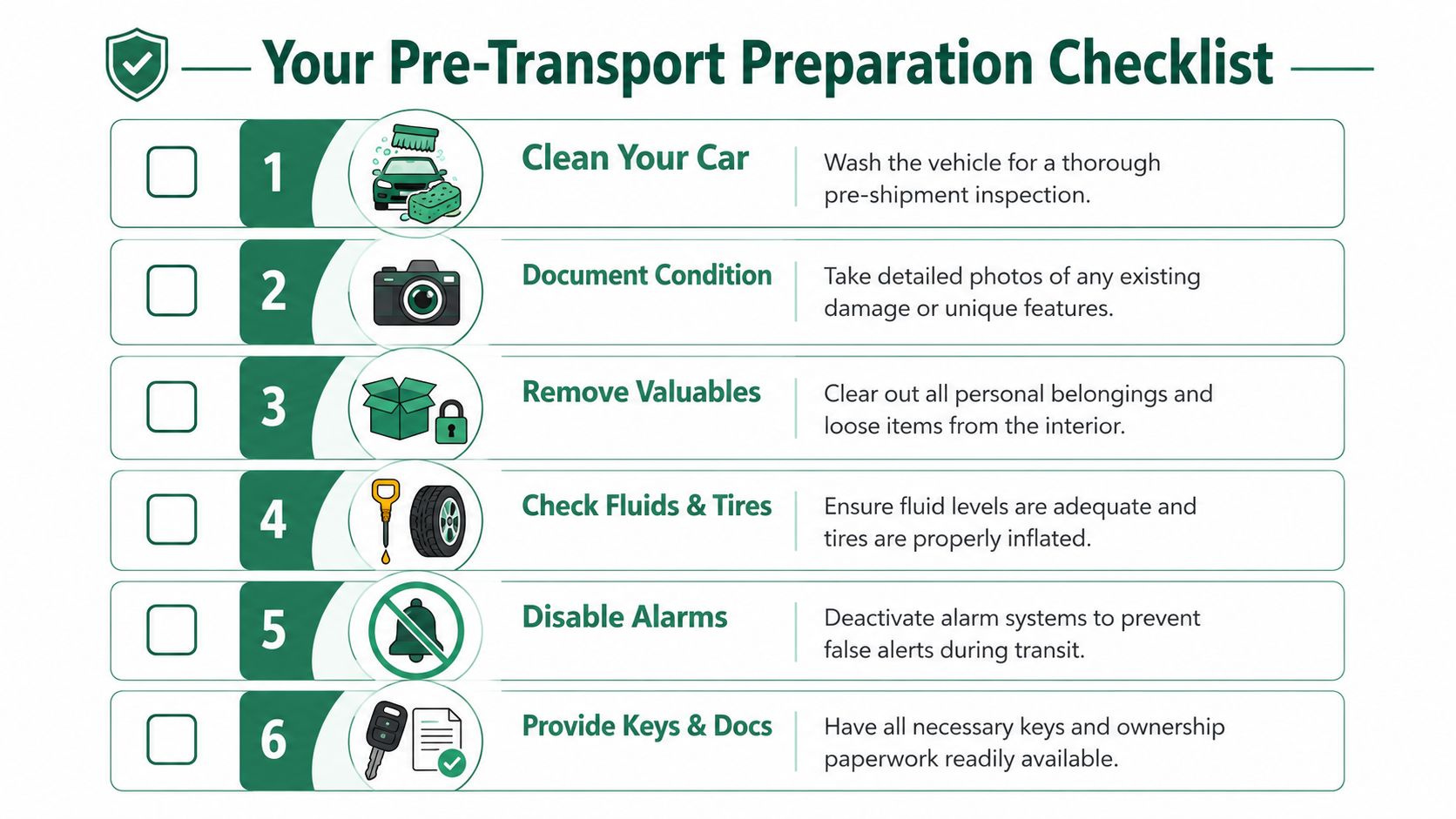
Use this checklist before pickup:
- Wash the exterior. The inspection only works if the car's condition is visible.
- Photograph the vehicle carefully. Save date-stamped images on your phone and back them up.
- Remove loose items. Spare parts, trophies, car covers, tools, and anything that can shift during loading should come out.
- Check the basics. Tires need proper air pressure, the battery should hold enough charge for loading, and fluid leaks should be addressed.
- Turn off alarm systems. Repeated alarm triggers create avoidable problems during transit and at port facilities.
- Set aside keys and documents. If the car uses a rare or irreplaceable key, provide a working transport key if you can.
The paperwork that protects you
Read the bill of lading before the truck leaves. Make sure existing damage, cosmetic flaws, and loading concerns are written down accurately. If the car has clearance issues, delicate trim, or a nonstandard operating procedure, those notes belong on the paperwork, not in a text message after pickup.
Insurance deserves the same attention. Carrier cargo coverage may be adequate for one classic and too thin for another, especially with high-value restorations or rare originals. Owners with collector-grade cars often review specialized coverage for classic cars alongside the carrier's policy so they understand where transport coverage stops and their own policy begins.
For Puerto Rico moves, ask one extra question. Confirm who is responsible at each stage, inland carrier, port agent, vessel booking, and final release. Experienced bilingual agents help prevent simple document or communication errors from turning into storage fees and missed sailing dates.
How to Get an Accurate Quote from National Car Transport
You are ready to move the car, the sailing date matters, and the last thing you need is a quote that changes once someone learns the car is lowered, non-running, or headed to Puerto Rico. Accurate pricing starts with complete information. In classic car transport, small omissions create real cost differences.
The goal is simple. Give the agent enough detail to price the job the way it will move, not the way a generic online calculator assumes it will move.
The details that make a quote accurate
Have these facts ready before you request pricing:
- Vehicle identification: Year, make, model, and whether the car is stock, modified, lowered, oversized, or fitted with fragile trim.
- Pickup and delivery locations: Exact ZIP codes matter. Rural access, gated communities, and port delivery requirements can change the plan.
- Running condition: State whether the car starts, steers, brakes, and rolls. A non-running classic often needs a winch or forklift access at certain points.
- Transport type: Open or enclosed on the mainland. For Puerto Rico, the quote may also need inland trucking, port handling, vessel booking, and final release coordination.
- Timing: Provide your first available date and how much flexibility you have. Tight windows usually limit carrier options.
- Declared value and coverage questions: If the car is a high-value restoration or a rare original, bring that up early. Many owners review specialized coverage for classic cars alongside the carrier's cargo policy so they know where transport coverage ends and their collector policy begins.
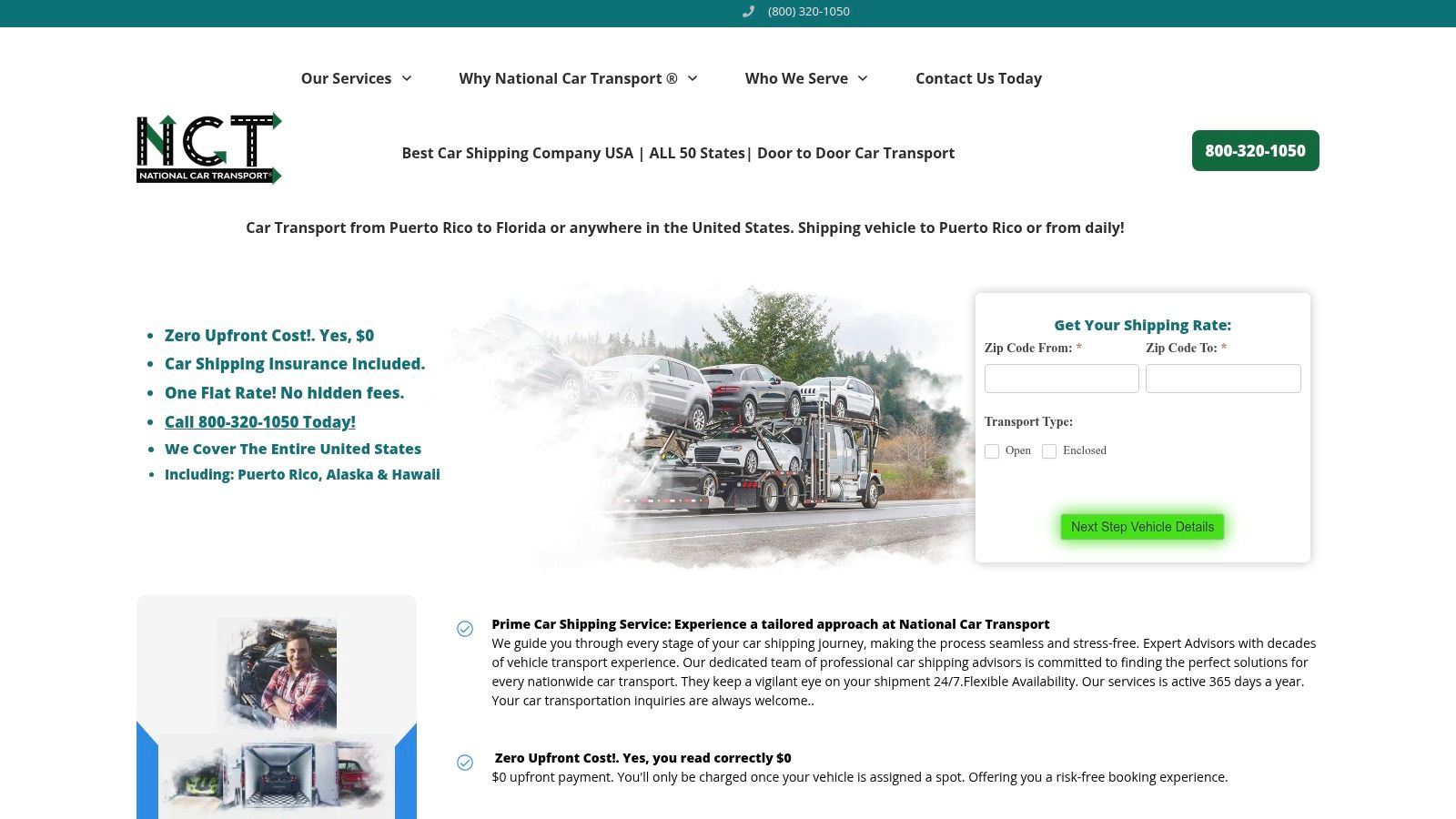
A good quote should also explain how the price is structured. National Car Transport uses flat-rate pricing and does not charge upfront until a carrier is assigned. That matters because classic owners usually want to know the transport plan before money changes hands.
Puerto Rico shipments need one more level of accuracy. The quote has to reflect more than miles. It has to account for port schedules, booking cutoffs, title and release documents, and handoffs between inland carrier, port staff, and ocean transport. That is where experienced bilingual agents earn their keep. They help prevent the kind of document mismatch or communication slip that can lead to storage charges or a missed sailing.
A few examples make the point. A running Chevelle going from Charlotte to Tampa with flexible timing is usually straightforward to price. A non-running Alfa Romeo in a tight garage in Connecticut, headed to San Juan in enclosed transport, requires more questions and a more exact plan.
The more precisely you describe the car, the route, and the timing, the closer the quote will be to the final invoice. That is what you want with a classic. Fewer surprises, cleaner coordination, and a transport plan that fits the car.