
You've just bought a 1967 Mustang, inherited a restored Porsche, or need to move a cherished classic between a mainland home and Puerto Rico. The car may run perfectly, but that doesn't make it ordinary freight. Low ground clearance, fragile trim, aging finishes, limited replacement parts, and a value that depends on originality all change the shipping decision.
A proper classic car delivery service starts with the vehicle, not a generic rate sheet. You need the right trailer, loading equipment, inspection process, coverage, and a real person who can explain each step. The same applies to a family relocation, a snowbird move, a military transfer, a student vehicle, a dealership purchase, or an island shipment.
| Shipping option | Protection level | Suitable vehicle profile | Main risk |
|---|---|---|---|
| Open transport | Basic exposure protection only | Daily-driven restomods, project cars, and lower-value classics | Weather, road debris, and public exposure |
| Enclosed transport | High protection from outside conditions | Original, restored, rare, luxury, and high-value classics | Higher price and less available capacity |
| Container shipping | Strong security for ocean and island routes | Valuable classics moving by sea, including Puerto Rico shipments | Port handling, paperwork, and scheduling complexity |
Table of Contents
- Why Choose a Dedicated Classic Car Delivery Service
- Comparing Open, Enclosed, and Container Shipping Options
- Preparing Your Vehicle and Protecting the Inspection Process
- Understanding Pricing Expectations and Insurance Gaps
- Shipping to and From Puerto Rico and U.S. Cities
- How to Choose the Right Provider for Your Classic Car
Why Choose a Dedicated Classic Car Delivery Service
A standard vehicle hauler may be perfectly capable of moving ordinary sedans. That doesn't mean the same equipment or process is suitable for a low-slung 1967 Mustang with delicate chrome, a vintage Porsche with an expensive front spoiler, or a non-running restoration that can't steer itself onto a trailer.
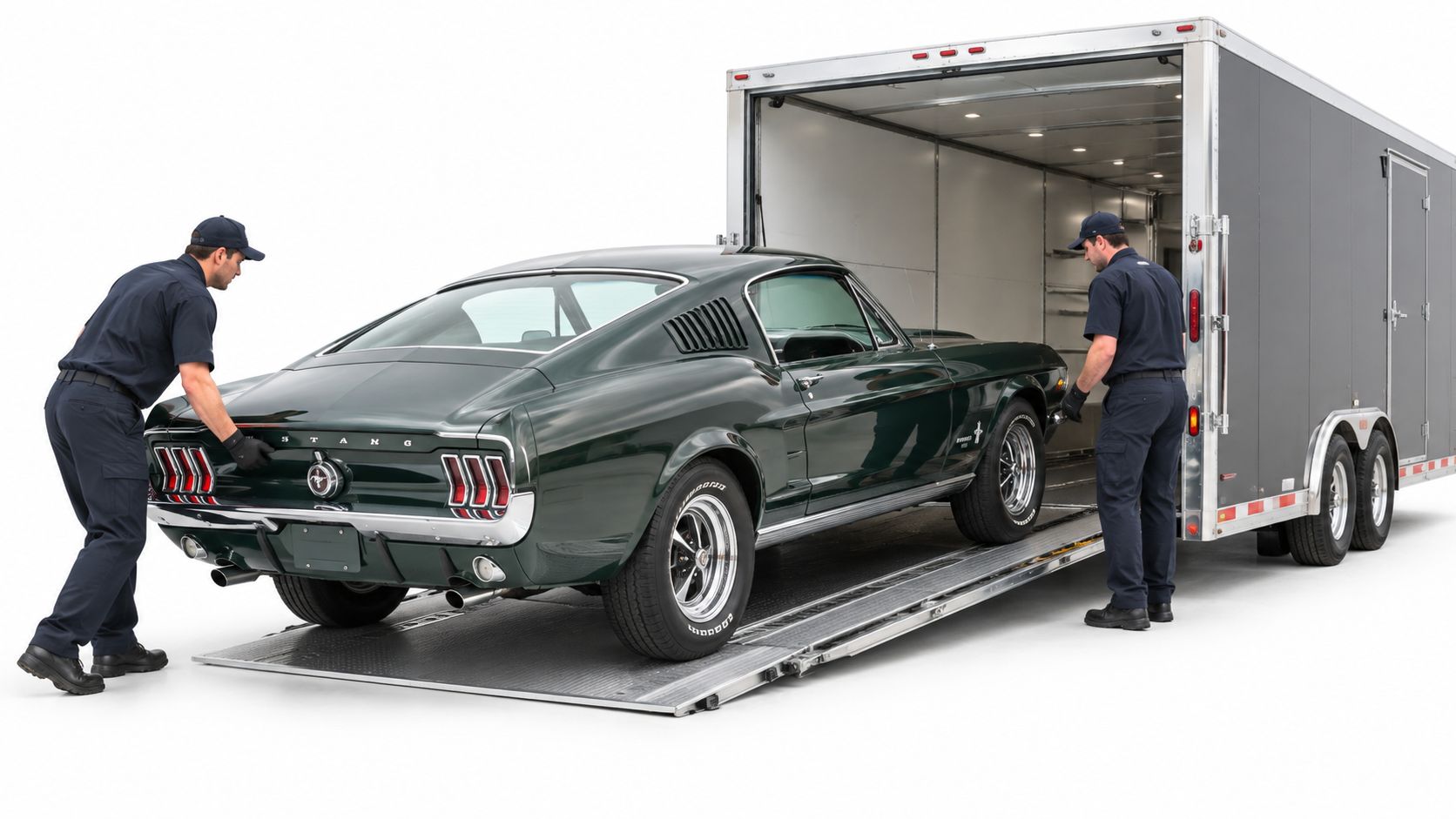
A dedicated provider treats loading as a technical operation. The driver may use a hydraulic liftgate or a lower-clearance ramp, adjust the approach angle, and position the vehicle to avoid scraping the front valance or undercarriage. Those details matter because a small loading mark can become a costly dispute when the car's condition and originality affect its value.
The trailer changes the risk
An open carrier commonly carries several vehicles in full view of road traffic and changing conditions. An enclosed trailer carries fewer vehicles behind a protective shell, which gives the driver more control over exposure, access, and loading order. For a classic, that difference isn't cosmetic. It affects the chances of paint chips, moisture exposure, vandalism, and accidental contact during handling.
Professional coordination also changes the experience for the owner. An experienced agent confirms whether the vehicle runs, whether the brakes hold, how much clearance the car needs, whether a winch is necessary, and where pickup can safely occur. The agent then coordinates the carrier, inspection, delivery window, and updates instead of leaving the owner to solve each problem at the last minute.
Practical rule: If the car has unusual clearance, fragile trim, limited production, or an appraised value that would make a repair financially painful, don't book it through a generic process.
A classic car delivery service should also document the vehicle before the ramp goes up. The pickup report needs more than a quick walk-around. It should record existing scratches, dents, paint imperfections, wheel condition, glass, trim, interior condition, and any mechanical limitation. That record becomes the reference point at delivery.
The classic-car market supports this level of specialization. One industry analysis estimated the global collector-car market at $31.2 billion in 2025, with a projection of $50.8 billion by 2034, while classic cars alone represented $13.2 billion of the 2025 total, according to collector-car market analysis. In the United States, Hagerty estimates about 43 million collector cars, approximately 16% of registered vehicles, with around $1 trillion in total insurable value, as reported in the same analysis.
Those figures explain why enclosed and insured transport has become a distinct logistics niche. You're not paying only for miles. You're paying for equipment, judgment, documentation, and controlled handling.
Comparing Open, Enclosed, and Container Shipping Options
The correct method depends on the car's condition, value, route, and tolerance for exposure. Open transport is a reasonable choice for a regularly driven restomod or a lower-value historic vehicle, but I wouldn't use it by default for an original-condition classic.
| Factor | Open transport | Enclosed transport | Container shipping |
|---|---|---|---|
| Outside exposure | Exposed to weather and road conditions | Shielded from weather and debris | Sealed inside a shipping container |
| Security | Publicly visible during transit | Less visible and harder to access | Strong security for ocean movement |
| Loading needs | Standard ramps may not suit low cars | Specialized ramps or liftgates are often available | Requires careful loading and port coordination |
| Best fit | Budget-sensitive or less delicate vehicles | Valuable, rare, restored, or original vehicles | Puerto Rico, ocean routes, and international shipping |
| Main trade-off | Lower protection | Higher transport cost and limited capacity | More paperwork and port-related logistics |
Open transport
Open shipping is usually easier to find and can make sense when the vehicle is a driver rather than a concours-level asset. It still needs careful inspection and preparation. Rain, dust, road salt, gravel, sun, and public visibility create risks that an enclosed trailer reduces.
I'm especially cautious with old lacquer, exposed chrome, soft-top materials, irreplaceable badges, and cars that have just completed a restoration. A daily-driven restomod with modern paint and practical trim may tolerate open transport better than an untouched vehicle whose value depends on preservation.
Enclosed transport
Enclosed transport is the technically preferred choice for original-condition and high-value classics. It materially reduces exposure to weather, road debris, theft, and vandalism, which lowers the likelihood of cosmetic problems such as paint chips, corrosion, and mold exposure, according to guidance on enclosed transport for classic cars.
The trade-off is capacity and price. You're reserving a more controlled environment with specialized loading and fewer vehicles sharing the space. Review the details of enclosed auto transport before booking, especially if the car has low clearance or doesn't run.
Container shipping deserves separate consideration for ocean routes. The vehicle travels inside a sealed container, which provides strong security and limits public exposure, but the process includes drayage, port appointments, export or destination documentation, and careful securing inside the container.
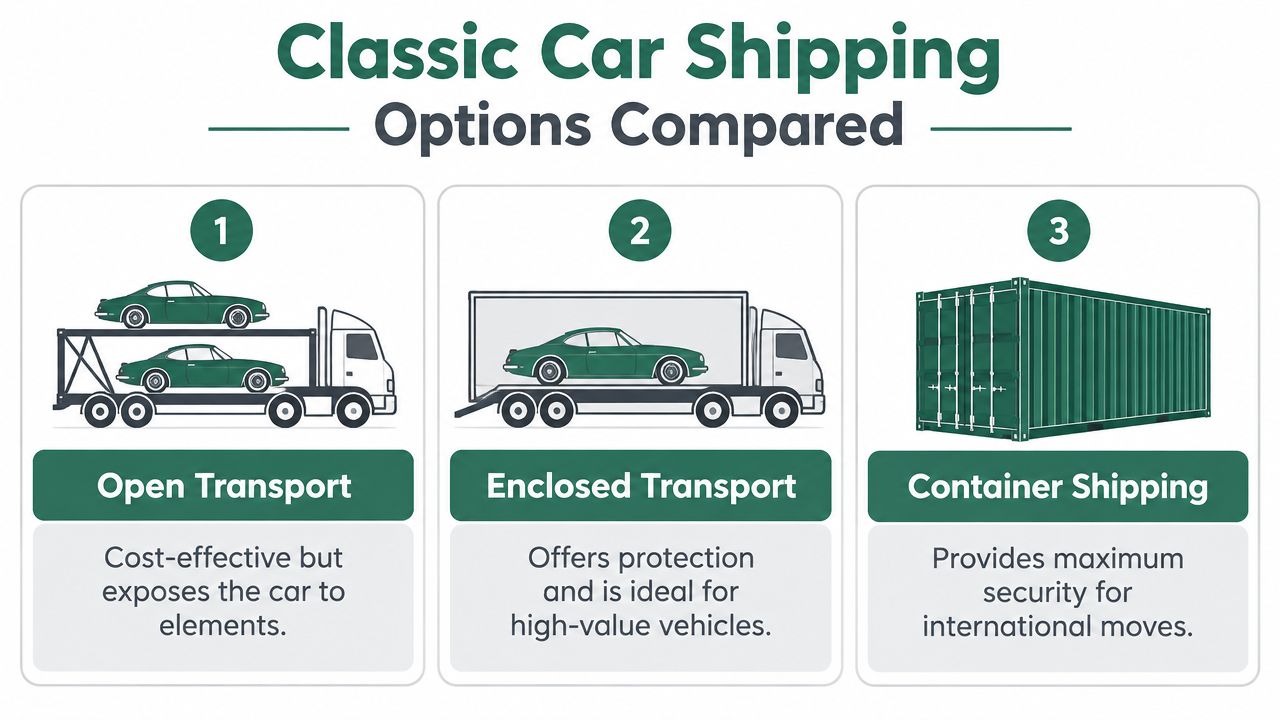
For a visual overview of how the options differ, review this transport demonstration:
Preparing Your Vehicle and Protecting the Inspection Process
Your strongest claim defense is created before pickup. A clean, well-documented car gives both sides a clear record of what existed before loading and what changed during transport.
Prepare the car for handling
Wash the exterior if possible. Dirt hides scratches and makes the inspection less reliable. Photograph every panel from multiple angles, then take close images of existing chips, dents, paint checking, wheel damage, glass marks, trim flaws, and the interior. Include the odometer, engine bay, trunk, undercarriage where practical, and any area you already know is imperfect.
Remove personal property. Carrier cargo coverage generally applies to the vehicle as freight, not to loose items inside it. Tools, documents, electronics, spare parts, luggage, and memorabilia can be excluded, lost, or damaged without creating a valid transport claim.
Before the driver arrives, address the mechanical basics:
- Battery: Make sure it can support loading and unloading, and ask whether the carrier wants it disconnected.
- Fuel: Keep the tank at a low, carrier-compliant level rather than sending a full tank.
- Leaks: Repair active oil, coolant, brake-fluid, or fuel leaks before loading.
- Loose parts: Secure or remove antennas, ornaments, spoilers, mirrors, trim, and other vulnerable pieces.
- Alarm and keys: Explain alarm controls, immobilizers, hidden switches, and provide only the keys required for transport.
Treat the Bill of Lading as evidence
At pickup, walk around the car with the driver. Compare the driver's condition report with your own photographs. If you find a scratch, dent, crack, missing trim piece, or other defect, insist that it appears in the Bill of Lading before signing.
Don't accept vague language such as “existing damage” when the location matters. The report should identify the affected panel or component clearly enough that another person can compare it later. Keep a copy of the signed pickup report, delivery report, photographs, estimate, insurance documents, and written messages.
At delivery, inspect the car before accepting an apparently clean handoff. Look at the roof, hood, trunk, bumpers, wheels, glass, rocker panels, and lower edges. Check beneath protective covers if the carrier used them, and compare the vehicle against the pickup photos before signing.
Your signature shouldn't confirm that you're happy. It should confirm the vehicle's documented condition at delivery.
Some damage appears only after unloading or after a cover is removed. Report it immediately, photograph it in place, notify the carrier and broker in writing, and follow the stated claim procedure. One industry example warns that a claim reported after 48 hours may not be covered, so read the policy and carrier terms before the trip, not after a problem appears, as discussed in collector-car shipping and claims guidance.
Understanding Pricing Expectations and Insurance Gaps
A transport quote reflects more than mileage. Route demand, season, vehicle size, running condition, pickup access, trailer type, and scheduling flexibility all affect the final rate. Enclosed transport usually costs more because the trailer carries fewer vehicles and supports more controlled loading and handling.
For a U.S. classic-car shipment, a reasonable enclosed-transport reference range is $1,500 to $3,000. Treat it as a planning figure, not a promise. A non-running car, narrow residential street, large custom vehicle, remote pickup, or difficult loading requirement can change the quote quickly.
Review the car shipping cost factors, then question the quote line by line. Confirm whether the service is door-to-door or terminal-based, whether an enclosed carrier is assigned, what loading assistance includes, and when payment is due. The lowest price often leaves out handling, access, or scheduling details that appear later as added charges.
The coverage question most owners miss
Carrier liability and cargo coverage serve different purposes. Liability coverage generally addresses third-party injury or property damage. Cargo coverage applies to the vehicle during loading, transport, and unloading, subject to the carrier's limits, exclusions, policy terms, and deductible.
A carrier's policy may fall below the car's appraised or insured value. Request the current Certificate of Insurance before booking and check:
- Coverage limit: Compare it with the vehicle's insured or appraised value.
- Deductible: Confirm who pays it and when.
- Exclusions: Ask about mechanical failure, personal contents, pre-existing damage, specialty parts, and loading incidents.
- Coverage period: Confirm when protection starts and ends.
- Claim process: Get deadlines, required documents, and contact details in writing.
A claim deadline can be short. Report damage immediately, preserve photographs and records, and follow the written carrier procedure. Do not assume your collector-car policy fills every gap in the carrier's cargo protection.
For agreed-value and collector-car coverage questions, the 2026 guide to classic car insurance from Mitchell-Joseph Insurance Agency provides useful background. Discuss supplemental or agreed-value protection with your insurance professional when the carrier's limit does not fully cover the car.
Use a bilingual agent when language or insurance terminology could create confusion. The agent should explain exclusions, collect the right documents, and confirm claim instructions in the owner's preferred language.
The insurance gap matters more than a modest price difference. A cheaper booking is no bargain if the policy cannot protect the classic's actual value.
Shipping to and From Puerto Rico and U.S. Cities
Puerto Rico moves require two coordinated plans: inland trucking and ocean transport. A typical shipment runs from a mainland residence to a port such as Jacksonville, then by vessel to the Port of San Juan. The return route starts at the San Juan port, followed by truck delivery to the final mainland address. For route details and booking considerations, review Puerto Rico car shipping services.
Put every handoff in writing before pickup. Confirm who manages mainland collection, port delivery, ocean booking, San Juan release, customs or terminal coordination, and final-mile transport. One dedicated agent should provide a single timeline and identify the documents required from the carrier, port, and vehicle owner. A bilingual agent is especially useful when port instructions, insurance terms, or claim documents must be understood in English and Spanish.
For shipments from Puerto Rico to the U.S. mainland, U.S. Customs inspections are not required. Foreign-port shipments do require inspection at the San Juan Foreign Trade Zone facility in Guaynabo, Puerto Rico, according to Crowley's Puerto Rico vehicle-shipping requirements.
Documents that prevent avoidable delays
Crowley's Puerto Rico checklist requires the original vehicle registration and ownership title. If a lien exists, the owner also needs an original notarized authorization letter from the bank or lending institution. Each vehicle shipped from Puerto Rico also requires a $10 voucher with Code 5122 and a $2 voucher with Code 842, as detailed in Crowley's Puerto Rico shipping checklist.
Protect the originals and submit copies through the approved process. A scan may not replace an original title or notarized authorization when the port requires physical documents. Keep photographs, receipts, and condition records with the shipment file so a delay or damage claim has a clear paper trail.
Domestic service reaches major cities throughout the 48 contiguous states, including Los Angeles, San Diego, San Francisco, Phoenix, Houston, Dallas, Miami, Orlando, New York, Chicago, Philadelphia, Atlanta, Seattle, Denver, Boston, Las Vegas, Portland, and Nashville. A published directory lists these and other destinations, while a location page identifies dedicated transport pages for 525+ U.S. cities, as shown by this U.S. auto transport service-area directory.
That coverage supports individuals, dealerships, students, military families, businesses, and snowbirds. Puerto Rico still demands port-specific planning. Choose an agent who coordinates local pickup, ocean movement, documentation, and final delivery without leaving the owner to manage disconnected vendors.
How to Choose the Right Provider for Your Classic Car
The safest choice is a provider that can explain the entire move before asking for a deposit. Look for a U.S.-based operation with verifiable licensing, current insurance documentation, an established carrier network, clear terms, and an agent who understands the difference between a running sedan and a fragile collector vehicle.
Ask these questions before signing:
- Who moves the car? Confirm whether the company operates equipment directly, brokers the shipment, or uses both models.
- How is the car loaded? Ask about hydraulic liftgates, low-clearance ramps, winches, wheel straps, and non-running procedures.
- What coverage applies? Request the Certificate of Insurance and compare limits, deductibles, and exclusions with the car's value.
- How is condition recorded? Confirm that the driver completes a detailed Bill of Lading inspection at pickup and delivery.
- Who handles problems? Get a named contact for schedule changes, damage reporting, and Puerto Rico port coordination.
- What does the quote include? Clarify door service, port charges, carrier assignment, cancellation terms, and payment timing.
Experience matters because classic transport has too many variables for a script-only process. A knowledgeable agent should ask about clearance, running condition, storage, access restrictions, fragile parts, and the owner's preferred inspection process before recommending open, enclosed, or container shipping.
National Car Transport is one U.S.-based option with 25+ years of experience, an A+ BBB rating, transparent flat-rate pricing, and a network of 25,000+ vetted carriers, according to the company's publisher information. Its service covers domestic moves, Puerto Rico routes, open and enclosed transport, container and ocean shipping, and bilingual English and Spanish support.
The bilingual agent advantage
A bilingual agent based in the United States can make a practical difference when a shipment involves family members, dealerships, port contacts, or a vehicle owner more comfortable in Spanish. Clear communication reduces misunderstandings about pickup access, condition notes, required originals, payment, and delivery approval.
Not one vehicle transport is alike. A 1950s restoration, a daily-driven restomod, a dealership auction purchase, and a Puerto Rico relocation each need different scheduling and handling decisions. An experienced agent who has spent over 20 years in auto transport logistics can guide the details, simplify the process, and keep the move quick and organized at a sensible value.
Choose the provider that gives you direct answers, written coverage information, a documented inspection process, and a realistic plan for every handoff. That standard protects your investment better than a polished quote alone.
National Car Transport offers open, enclosed, container, and ocean shipping for classic vehicles across the United States and between the mainland and Puerto Rico, with transparent flat-rate pricing and bilingual English and Spanish agents based in the USA. Share your vehicle details, pickup and delivery locations, running condition, and preferred protection level with National Car Transport to receive practical guidance and arrange the move.