

The cheapest way to ship a car is almost always via an open carrier, which can save you 40-50% compared to enclosed transport. For a standard sedan, this typically costs between $700 and $1,150 for a cross-country trip.
If you're reading this, you're probably trying to keep a move, military relocation, seasonal trip, student transfer, dealer purchase, or Puerto Rico shipment from getting more expensive than it needs to be. The hard part isn't finding a quote. The hard part is finding a quote that's bookable, doesn't come back higher later, and doesn't leave your car sitting while carriers pass on the load.
In auto transport, cheap and reliable can go together. But only when you're cutting the right costs. Open transport, flexible timing, realistic pricing, and proper vehicle prep save money. Lowball quotes, missing paperwork, and surprise non-runner issues usually do the opposite.
Table of Contents
- The Foundation of Affordable Car Shipping
- How to Compare Quotes and Get a Fair Price
- Use Timing and Flexibility for Better Pricing
- Prepare Your Vehicle to Avoid Hidden Fees
- Shipping to Puerto Rico on a Budget
- Frequently Asked Questions About Cheap Car Shipping
The Foundation of Affordable Car Shipping
A customer in Miami gets a quote to ship a sedan to San Juan for hundreds less than everyone else. It looks like a win until the handoff date slips, port fees start showing up, and nobody can explain whether the price covered inland trucking, ocean booking, or both. Cheap car shipping goes wrong that way all the time. Actual savings come from choosing the right service level first, then making the route easier for the carrier to run.
Open transport is the low-cost standard for one reason. It lets a carrier spread truck, fuel, labor, and insurance costs across several vehicles on the same trailer. Analysts at FreightWaves' car shipping cost analysis found that open transport usually prices lower than enclosed service and that enclosed shipping often adds a major premium. For a typical daily driver, that premium rarely buys enough extra value to justify the spend.
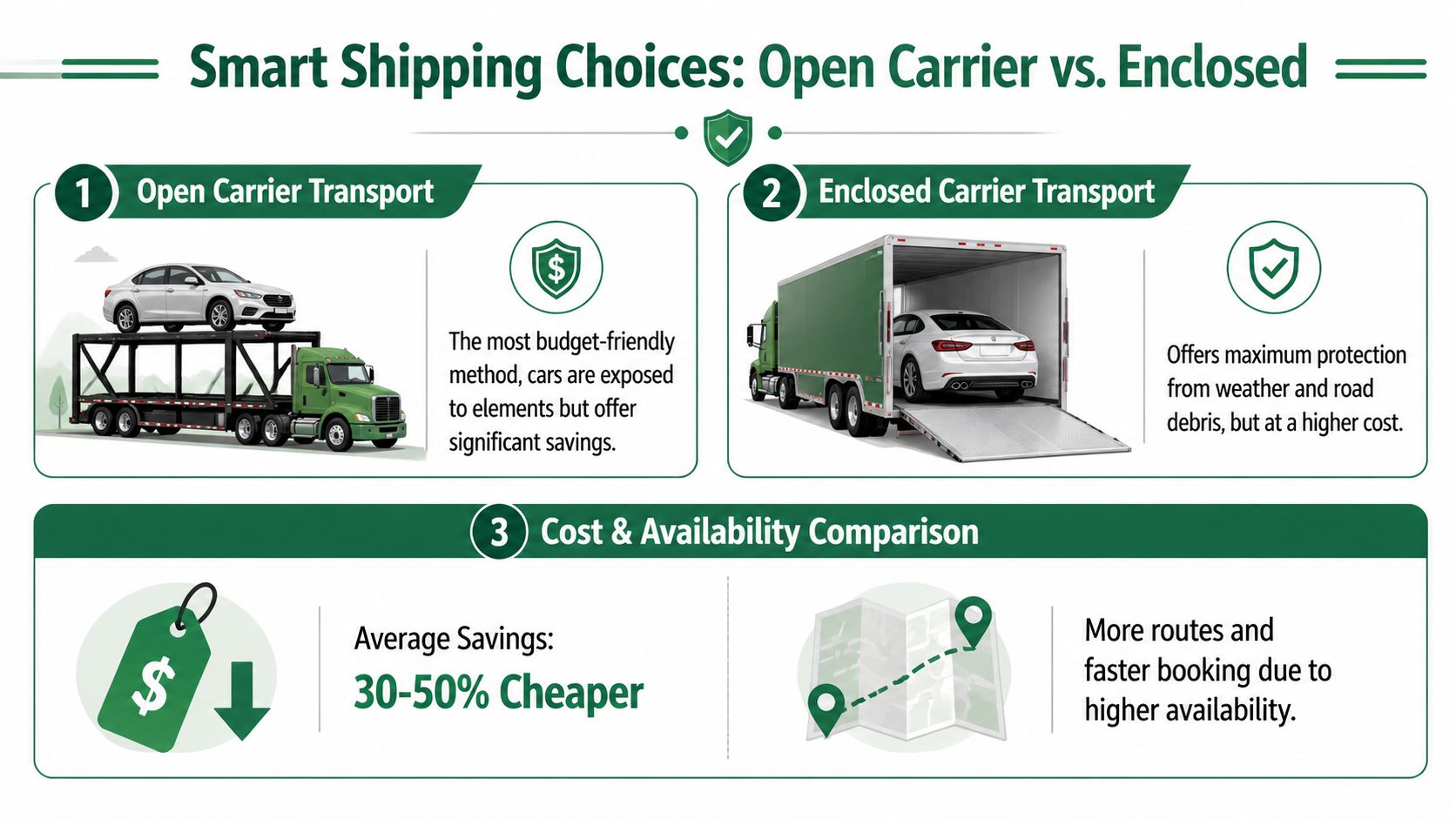
Open transport is the low-cost standard
Open carriers are the multi-car trailers seen on major highways every day. They move the bulk of the market because they make economic sense for ordinary vehicles. If the car is a commuter, family SUV, college vehicle, or second car headed to a seasonal home, open shipping is usually the right starting point.
Enclosed transport still has a place. I recommend it for vehicles with fragile finishes, unusual value, or owner expectations that do not line up with normal highway exposure. A restored classic, exotic, or show car fits that category. A ten-year-old crossover usually does not.
The practical question is simple. Is the car valuable enough, or sensitive enough, to justify paying more for added protection from weather and road grit? If the answer is no, open transport is usually the disciplined choice.
| Option | Best fit | Cost impact |
|---|---|---|
| Open carrier | Daily drivers, relocations, snowbird trips, student moves | Lower-cost standard |
| Enclosed carrier | Classic, exotic, highly sensitive vehicles | Higher-cost premium service |
That trade-off is a core concept for achieving safe and affordable car shipping, especially if you want to cut cost without creating new risk.
Where convenience adds cost
The next cost driver is access.
Door-to-door sounds simple, but it can get expensive when the truck has to leave efficient lanes to reach a tight subdivision, a rural road, or a building with low branches, parked cars, or HOA restrictions. In those cases, the carrier spends more time for the same load. That usually shows up in the price, the schedule, or both.
A meeting point often fixes that. If pickup or delivery can happen at a large parking lot, terminal, dealership, or other easy commercial access point near the carrier's route, the shipment becomes easier to cover. That matters on standard mainland runs, and it matters even more on complex moves like Puerto Rico, where every handoff has to stay coordinated. A quote can look cheap on paper and still fail in practice if it glosses over access limits, port handling, or transfer steps.
Use this rule. Save money by simplifying the job, not by betting on a quote that leaves out the hard parts.
- Best for saving money: Open carrier plus an easy pickup and delivery location.
- Best for convenience: Open door-to-door, if access is straightforward.
- Best for vehicle protection: Enclosed service for vehicles that justify the extra cost.
How to Compare Quotes and Get a Fair Price
A customer gets three quotes for the same car. One is far lower than the other two, so it looks like the obvious choice. A week later, the car still is not assigned, the pickup date slips, and the final bill starts changing once access, timing, or vehicle details come up.
That pattern is common because quote shopping in auto transport is not just about price. It is about whether the number is realistic enough for a carrier to accept and specific enough to hold up once the job is dispatched. That matters on any route. It matters even more on Puerto Rico moves, where port timing, documentation, and handoffs leave less room for a broker to guess.

Why the cheapest quote often becomes the expensive one
Low quotes fail for a few predictable reasons.
The broker may post the job too cheaply, hoping a carrier will grab it anyway. Drivers review the lane, fuel cost, schedule, vehicle condition, and pickup or delivery difficulty. If the pay does not make sense, they pass. The order can sit for days while the customer thinks the shipment is already in motion.
Sometimes the rate gets revised later. Sometimes storage, access issues, port handling, or non-running fees appear after booking because the original quote did not account for the full job. Either way, the customer does not save money. The customer just delays the problem.
A fair quote usually sits near the middle of the range you receive, not at the bottom.
What to compare besides the headline price
Compare each quote line by line. If the assumptions are different, the prices are not really competing offers.
Use this checklist:
- Transport type: Open and enclosed should never be compared as if they are the same service.
- Pickup window: Exact-date requests and broad windows price differently.
- Vehicle condition: Running, modified, oversized, and inoperable vehicles change the cost.
- Pickup and delivery setup: Door-to-door, nearby meeting points, terminal delivery, and port delivery are different jobs.
- Included charges: Confirm whether the quote includes insurance, port fees, storage risk, and surcharges for access problems or service changes.
- Payment terms: Ask what is due at booking, what is due at delivery, and what can change after dispatch.
Customers often get tripped up on Puerto Rico shipments. A quote can look cheap until you learn it only covers inland transport and leaves out part of the port process. If the quote does not clearly state who handles each leg, the low number is not useful.
How to spot a quote that is too good to be true
A weak quote usually gives itself away before you book.
| Red flag | Why it matters |
|---|---|
| The price is much lower than the rest | The load may sit unassigned because carriers can get better-paying freight |
| The rep does not ask about condition, modifications, or access | They may be pricing a generic job, not your actual shipment |
| The terms are vague | Vague quotes are where extra charges tend to appear later |
| You are pushed to book before details are confirmed | Speed is replacing accuracy |
| Puerto Rico pricing is quoted without clear port and handoff details | Missing steps usually turn into delays, add-on fees, or both |
One practical sign of a solid provider is pricing discipline. For example, National Car Transport uses transparent flat-rate pricing, does not charge upfront until a carrier is assigned, and works through a large vetted carrier network. That setup can help on routine mainland routes and on shipments that look simple at first but have complications in execution.
A fair price gets the vehicle moved without last-minute surprises. That is the target. The cheapest number on the screen is only useful if the carrier will take the job and complete it under the terms you were promised.
Use Timing and Flexibility for Better Pricing
A low quote can fall apart fast if the timing makes the job hard to cover.
I see this every week. A customer wants the cheapest rate on the board, but also needs pickup tomorrow, delivery on a narrow deadline, and door access on a tight residential street. Those limits shrink the carrier pool, and the price usually moves in the wrong direction. Real savings come from giving dispatch room to place your car on a truck that is already running a profitable route.
Flexible windows give dispatch more real options
Carriers price by route efficiency. If your car fits into a run they were already planning, the rate is usually better and the odds of a delay are lower. If your shipment has to be forced into the schedule, you often pay more for worse execution.
A wider pickup window helps because it lets the broker match your vehicle with available space instead of chasing one exact truck on one exact day.
That usually leads to a few practical advantages:
- Your car can fill an open spot on an existing load: That is where better pricing often comes from.
- Drivers can keep their route intact: They are more likely to accept a job that does not require extra miles or waiting time.
- You avoid paying for urgency: Expedited requests cost more, and they still do not guarantee a smooth handoff if capacity is tight.
Lead time matters too. A shipment booked a week or two ahead usually has more carrier options than one booked at the last minute. That does not just affect price. It also affects whether the quote you were given was realistic in the first place.
Timing changes by lane, season, and route complexity
Open, high-traffic mainland routes are usually the easiest to price cleanly. Remote pickups, rural deliveries, and island moves are different. Puerto Rico is the clearest example. The inland leg, the port schedule, and the ocean booking all have to line up. If one piece slips, the whole move can sit.
That is why very cheap Puerto Rico quotes deserve extra scrutiny. Sometimes the number looks attractive because the seller is assuming ideal timing at every step. If your vehicle misses a vessel cutoff or arrives at the port without the right coordination, the savings disappear into storage, rescheduling, or handoff fees.
Season also affects how much flexibility helps. Snowbird traffic, college moves, military relocation periods, and year-end demand all tighten capacity on certain lanes. On those weeks, a customer with flexible dates often gets served before the customer chasing the absolute lowest number with rigid requirements.
A few habits consistently help keep pricing honest:
- Book early enough for real dispatching. Good brokers need time to match your load, not just post it and hope.
- Give a pickup range instead of one fixed date. Even a small window can improve your options.
- Be open to a practical meeting point. A nearby shopping center or wide road can be easier than a difficult residential block.
- Ask which day range is priced best. A shift of one or two days can change both cost and carrier interest.
Flexibility does not guarantee the cheapest quote. It gives you a better chance at a quote a carrier will accept and complete without last-minute surprises.
Prepare Your Vehicle to Avoid Hidden Fees
The truck shows up on time, the quote looks fine, and then pickup stalls because the car will not start or the back seat is full of boxes. That is how a cheap shipment turns expensive.
Most extra charges happen before the vehicle ever leaves the pickup point. Drivers price and schedule based on the condition you reported. If the car needs a winch, has almost no ground clearance, or carries personal items that push it over what the carrier will accept, the original rate may no longer fit the job. On Puerto Rico moves, prep mistakes can cost even more because a missed inland handoff can trigger port storage or rebooking fees.
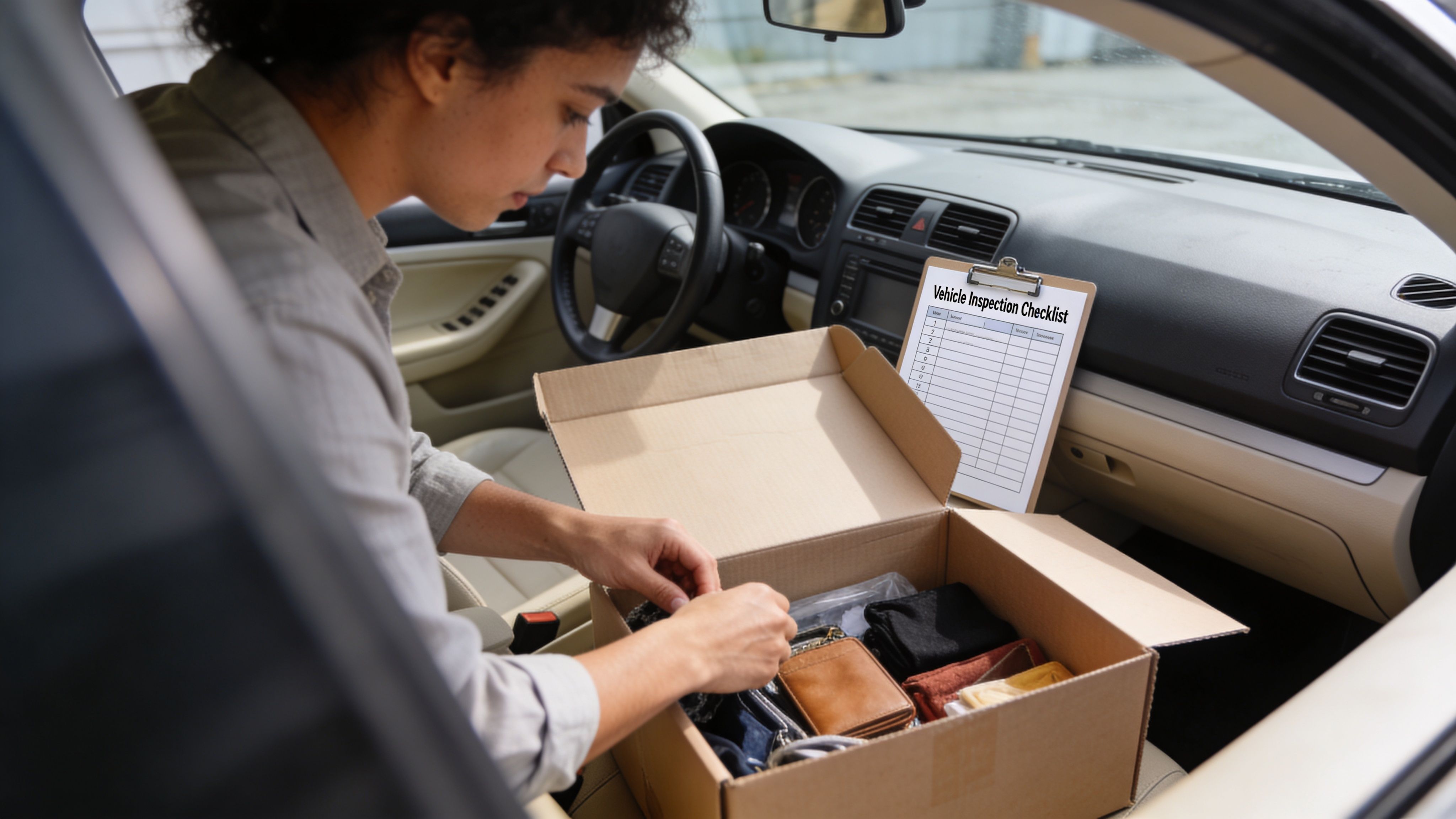
A short checklist that prevents expensive surprises
Keep the vehicle exactly as quoted. That is the goal.
- Remove personal items: Carriers limit or prohibit household goods because of weight, inspection issues, and cargo liability.
- Leave about a quarter tank of gas: Enough for loading and unloading, without adding unnecessary weight.
- Have every key and fob ready: Include wheel-lock keys, alarm remotes, and anything needed to start or move the vehicle.
- Put your paperwork in one place: Registration and any required transport documents should be easy to hand over at pickup.
- Wash the car if possible: Dirt hides scratches and chips. A clean car makes the condition report more accurate.
- Check tire pressure and battery charge: Small issues at pickup often become paid problems when the driver is on site.
Here’s another practical look at handoff and prep before the truck arrives:
Non-running cars need to be disclosed upfront
Customers sometimes hold this back because they want the lower quote first. It usually costs more in the end.
If the vehicle does not start, steer, brake, or roll normally, say so before booking. That changes the trailer choice, the loading plan, the time on site, and sometimes the driver assigned to the order. A dead battery may be cheap to fix before transport. A car that cannot roll freely usually needs special equipment, and that cost should be built into the quote from the start.
The same rule applies to modified vehicles. Lowered cars, oversized tires, roof racks, and loose aftermarket parts all need to be mentioned early. The lowest quote on paper is not the cheapest option if the carrier shows up and cannot safely load the car.
Use this pre-shipment check if the car has any condition issue:
| Vehicle condition | What to do |
|---|---|
| Dead battery but otherwise normal | Repair it before shipping if possible |
| Rolls and steers but won't start | Disclose it as non-running before quoting |
| Doesn't roll freely | Expect specialized equipment to be required |
| Modified or lowered vehicle | Mention it early so the right trailer is assigned |
A reliable low-cost shipment starts with an accurate vehicle description. If a quote only works when the carrier assumes perfect conditions, it was never a real budget rate.
Shipping to Puerto Rico on a Budget
A Puerto Rico quote can look cheap at first and still cost more by the time the car clears the port. I see this happen when the road leg is priced aggressively, but the ocean booking, port handling, paperwork review, and release process are treated like afterthoughts.
Puerto Rico shipping is a coordinated move with multiple custody changes. The car may start with a mainland pickup, move through a port terminal, then continue by vessel before final release on the island. Each handoff creates another place where a bad quote can break down.
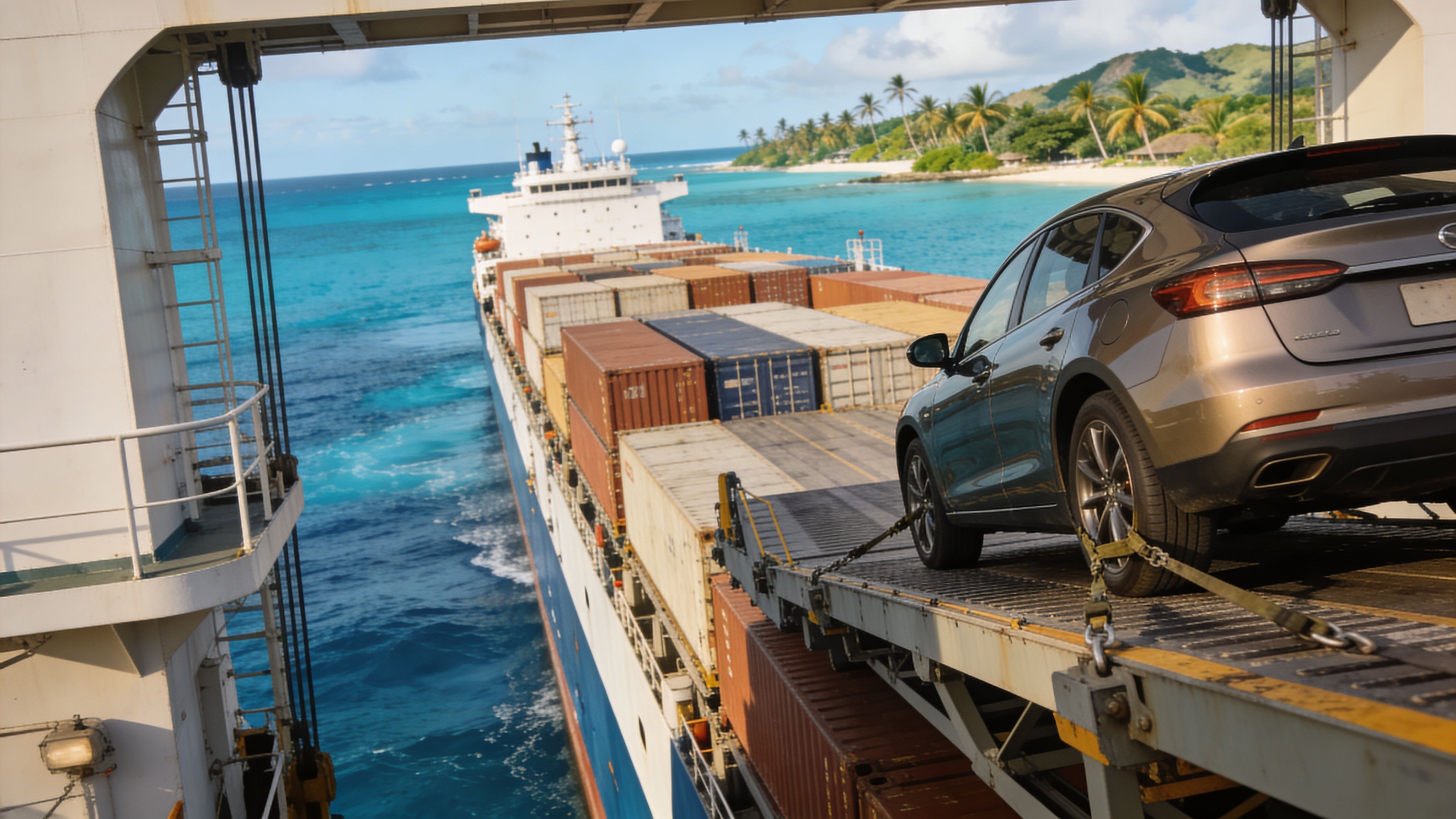
Mainland to Puerto Rico is a two-part move
The lowest workable price usually comes from simplifying the mainland side first. If you can get the vehicle to a major port market yourself, or close to one, you may cut out an extra inland segment that adds cost and scheduling risk.
That matters because the cheapest quote is not always the one that makes the sailing.
A reliable Puerto Rico budget plan usually includes three things:
- A realistic mainland handoff point near an active port market
- Clean ownership documents ready before delivery to port
- Clear instructions on who handles each step, including port check-in, vessel booking, and release on arrival
Customers often stumble on this point. A low number from a broker means very little if the agent cannot explain the sequence from pickup to port to release. If they cannot tell you what documents are needed, how the port appointment works, or what happens if the car misses its vessel slot, the quote is incomplete.
For Puerto Rico, I would rather see a clear mid-range quote than a suspiciously cheap one with vague answers. The cheaper number often turns into storage fees, rebooking charges, or long delays because one piece of the move was never properly arranged.
Budget strategy for non-runners and auction buys
Puerto Rico moves get harder fast when the vehicle is an auction purchase, a salvage unit, or a project car that does not run. The issue is not just the pickup. The vehicle also has to be handled correctly at the port, and any missing detail can delay the entire move.
If the car rolls and steers but does not start, there is usually still a budget-friendly path. The key is matching it with the right carrier and loading setup from the start. If it cannot roll freely, expect the price to rise because the equipment options narrow and port handling gets more complicated.
The expensive mistake is hiding the condition to get a lower quote.
For Puerto Rico shipments, disclose these details before booking:
- Whether the car starts
- Whether it rolls and steers
- Whether it has salvage status or auction paperwork
- Whether the title, registration, or release documents are already available
A good Puerto Rico rate balances price with execution. The road leg, port leg, and paperwork all need to line up. If one part is underpriced or glossed over, the shipment is not cheap. It is just delayed.
Frequently Asked Questions About Cheap Car Shipping
A cheap quote only works if the car gets picked up, moved on schedule, and delivered without surprise charges. These are the questions I hear from customers who want a lower rate but do not want to get trapped by a quote that falls apart once the carrier is assigned.
| Question | Answer |
|---|---|
| Does cheap car shipping include insurance? | Reputable carriers usually carry cargo insurance, but coverage limits and claim procedures vary. Ask what is covered, what is excluded, and how vehicle condition will be documented on the bill of lading at pickup and delivery. |
| Can I ship a car I bought online from a dealer, auction, or private seller? | Yes, and these moves are routine. The shipment stays affordable when the seller is ready on pickup day, the keys are available, and the vehicle can be released without last-minute paperwork issues. |
| How long does cross-country open transport usually take? | Timing depends on the lane, season, weather, and how flexible the pickup and delivery windows are. Major interstate routes usually move faster than remote areas. Quotes that promise unusually fast delivery at a bargain rate often lead to reposting, delays, or added fees later. |
One more point matters. Cheap shipping should mean fewer extras, not weaker execution.
The best low-cost bookings are straightforward. Accurate vehicle details, realistic timing, and a price a real carrier will accept. That matters even more on Puerto Rico shipments, where an unrealistically low quote can break at the port leg, the paperwork stage, or the vessel booking.
If you want help pricing a realistic shipment across the mainland, to or from San Juan, or on a more complicated Puerto Rico move, National Car Transport can explain open versus enclosed transport, port coordination, non-running vehicle requirements, and timing options with U.S.-based bilingual agents focused on auto transport logistics.