

Your pickup is set for Thursday. Then I-5 backs up through the afternoon, the carrier is working around port traffic, and your street in North Park will not safely fit a full-size truck. In San Diego, that is normal car shipping logistics, not a bad operator.
A workable San Diego shipment starts with local constraints, not generic promises. Coastal salt air can matter if a vehicle will sit exposed near the water before loading or after delivery. Military schedules around NAS North Island and other base-related moves leave less room for missed windows. Cross-border moves and port-connected shipments also bring extra documentation and timing pressure that inland routes do not.
Cost and timing still matter, of course. San Diego shipments often fall into a broad middle range, with shorter California or Southwest routes moving faster than cross-country loads. The key question is whether the quote accounts for pickup access, traffic patterns, neighborhood truck restrictions, and the service level your vehicle needs.
That is where weak quotes usually break down.
National Car Transport handles San Diego moves with those local realities in mind. That means giving straight answers about pickup windows, using meeting points when a residential street is a poor fit for a carrier, and helping customers choose between open and enclosed transport based on route, vehicle type, and exposure near the coast. If you are shipping out of San Diego, those details decide whether the job stays on schedule or turns into a week of avoidable delays.
Table of Contents
- Your Guide to Shipping a Car in San Diego
- Choosing Your Service Open vs Enclosed Transport
- Decoding Car Shipping Costs and Rates in San Diego
- San Diego Logistics Pickup Delivery and Transit Times
- Special Shipping Routes To Puerto Rico and Beyond
- How to Book Your San Diego Car Shipment Step by Step
- San Diego Car Shipping FAQs
Your Guide to Shipping a Car in San Diego
A San Diego car shipment usually starts with a real deadline. PCS orders hit. A student needs the car in Tempe before classes start. A family in Coronado is trying to clear one more item off a moving checklist before the truck arrives. In those situations, the right carrier matters less in theory and more in execution. Can the truck reach the pickup point? Is the timing realistic with I-5 traffic, port activity, and neighborhood access limits? Will the company tell you early if curbside pickup is the better plan?
Pricing matters, but a quote by itself does not tell you much. San Diego shipments often fall into a normal market range, but local conditions can push a job up or down quickly. Coastal exposure can affect the open-versus-enclosed decision for certain vehicles. Base access can slow handoffs. Congestion near downtown, the harbor, and major freeway corridors can shift pickup windows by hours, sometimes by a day. National Car Transport builds around those details instead of treating San Diego like any other stop on the map.
What San Diego customers usually need most
Three things drive almost every booking. Clear pricing. A workable pickup plan. A company that knows the local friction points before they become your problem.
That last part gets overlooked.
A low quote can fall apart if the carrier cannot safely load on your street. That happens in dense beach areas, older neighborhoods with narrow access, and buildings with strict loading rules. It also comes up near military installations, where ID requirements, visitor procedures, and limited staging space can affect timing. A good coordinator catches those issues early and sets a meeting point that works for both you and the driver.
San Diego also has one local factor generic guides usually miss. Salt air is hard on vehicles left exposed near the coast. For a daily driver, open transport is often still the practical choice. For a collector car, recent paint work, or a high-end SUV headed out from La Jolla, Del Mar, or other ocean-adjacent areas, enclosed auto transport for added protection can be the smarter call.
Practical rule: The best San Diego shipping plan matches the vehicle, the route, and the pickup conditions you actually have, not the cheapest number in your inbox.
Who this matters to
The details change by customer, but the pattern is familiar:
- Military families: Tight reporting dates, base coordination, and little room for pickup delays.
- Snowbirds and seasonal residents: Reliable scheduling matters more than vague availability.
- Students and families: Cost matters, but updates and realistic timing matter too.
- Dealerships and businesses: Delays affect inventory turns, delivery promises, and staff time.
- Puerto Rico shippers: Inland transport is only one leg. Port cutoff times and paperwork matter just as much.
In San Diego, car shipping works best when it is handled like a logistics job. National Car Transport does that well because the work here is rarely just point A to point B. It is timing around traffic, choosing the right loading spot, and setting expectations that hold up on pickup day.
Choosing Your Service Open vs Enclosed Transport
The first real decision is open or enclosed transport. Everything after that, route, timing, and pickup strategy, builds on it.
What open transport does well
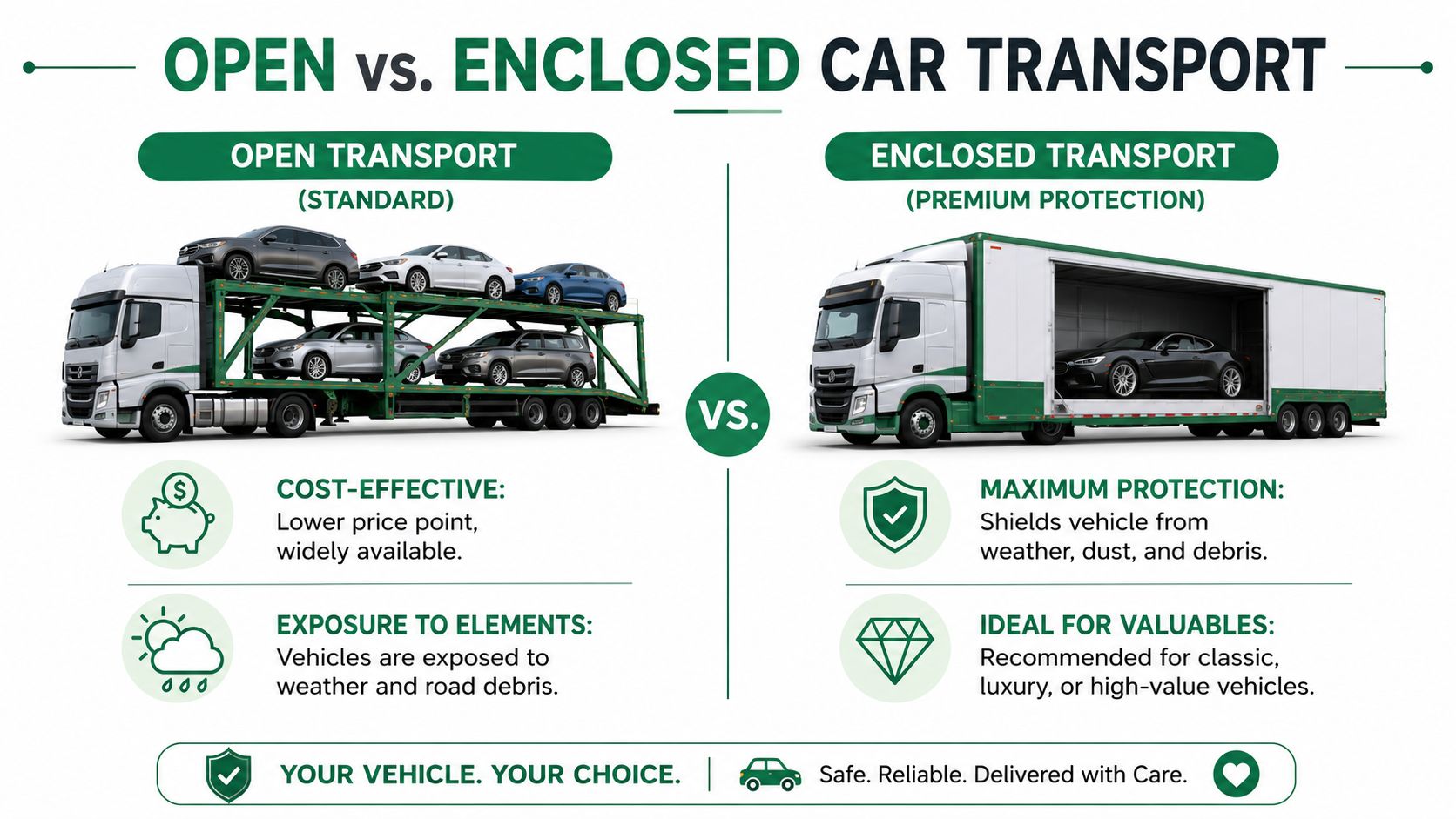
Open carriers are the standard choice for everyday vehicles. They're widely available, efficient, and usually the right fit for sedans, commuter SUVs, and routine interstate moves.
For many San Diego customers, open transport is the practical answer because it balances cost and availability. If you're moving a daily driver from San Diego to Phoenix, Dallas, Atlanta, or Seattle, open service is usually where the conversation starts.
That said, San Diego isn't just another inland market. One local issue gets skipped in most generic shipping guides. Bold Auto Transport notes that many discussions mention an enclosed premium but miss the specific risk of coastal salt air corrosion on open trailers in San Diego's ocean-adjacent environment.
When enclosed makes more sense in San Diego
That salt-air point matters if your vehicle has a sensitive finish, collector value, or detailed undercarriage work. It also matters for owners shipping a car after long-term coastal parking, where residual salt exposure is already part of the vehicle's condition.
Enclosed transport gives the vehicle a protected environment during transit. It's not necessary for every shipment. It is often the better choice for:
- Classic cars: Paint, trim, and age-sensitive finishes benefit from added protection.
- Luxury vehicles: Owners usually care as much about condition control as transit itself.
- Exotics or collectibles: Ground clearance, bodywork, and value justify tighter handling.
- Freshly restored vehicles: A new finish is the wrong place to save money.
If you're weighing premium protection against budget, it helps to review a dedicated enclosed auto transport option and compare it against the vehicle's replacement or refinishing risk.
Open transport works for most cars. Enclosed transport works better when the cost of exposure is higher than the cost of the upgrade.
One more trade-off matters. Enclosed capacity is tighter than open capacity, so schedule flexibility can matter more. If your route is unusual or your timing is narrow, ask early.
Decoding Car Shipping Costs and Rates in San Diego
A San Diego quote can look high until you see what the carrier is pricing around. A pickup near Liberty Station during a heavy I-5 afternoon push is different from a clean handoff in an inland suburb with easy truck access. The same goes for vehicles headed into major East Coast lanes versus smaller markets that take longer to fill.
What changes the quote
Mileage still sets the baseline, but lane demand often decides whether the rate feels fair. uShip's San Diego vehicle transport page notes that long-distance open shipments such as San Diego to New York average $1,100 to $1,800, or roughly $0.41 to $0.67 per mile, reflecting route efficiency on major cross-country lanes. That is why a longer move from San Diego can sometimes price better per mile than a shorter move to a less active route.
Vehicle size also changes the math fast. A full-size SUV, lifted truck, or long-wheelbase van takes more deck space and reduces what else a carrier can load. In practice, that means San Diego drivers comparing a crossover quote to a sedan quote are rarely looking at the same pricing logic.
Pickup conditions matter more here than shoppers expect. Tight streets in Ocean Beach, downtown condo zones, military housing areas, and neighborhoods near the port can force a secondary meeting point. That adds coordination time, and time is part of the rate. I have seen perfectly reasonable quotes change once dispatch confirms the truck cannot safely get to the original address.
Season and urgency also affect the number. Hard-date requests, end-of-month moves, and short-notice military relocations usually cost more because dispatch has fewer ways to build an efficient load around them. National Car Transport handles these San Diego variables upfront, which is usually the difference between a quote that holds and one that gets revised later.
Sample car shipping rates from San Diego
The table below gives you a practical range for common outbound moves. These are planning numbers, not flat-rate promises, because the final price still depends on the vehicle, exact addresses, trailer type, and how much flexibility dispatch has.
| Destination | Estimated Cost | Estimated Transit Time |
|---|---|---|
| Nearby regional route | $600 to $900 | 1 to 3 days |
| Mid-distance route | $800 to $1,200 | 3 to 5 days |
| Cross-country route | $1,100 to $1,800 | 7 to 10 days |
If you want a clearer pricing framework before you request quotes, this car shipping cost guide helps break down how carriers build the number.
Some San Diego customers also compare vehicle shipping costs against broader delivery planning, especially when a relocation includes equipment or household freight. In those cases, Fleetalyse product delivery can be a useful reference point for understanding how transport pricing changes when routing gets more complex.
What a solid quote should answer
A usable quote should answer these points without vague wording:
- Vehicle class: Sedan, SUV, truck, inoperable vehicle, or specialty unit.
- Trailer type: Open or enclosed.
- Route type: High-volume lane or harder-to-cover destination.
- Access conditions: Residential street, apartment complex, military area, business lot, or alternate meetup location.
- Date flexibility: A range usually prices better than a fixed pickup day.
- Fee structure: Whether the total includes fuel, insurance, and any surcharge tied to access or urgency.
The best quotes are not always the cheapest. They are the ones a dispatcher can explain line by line, with San Diego conditions accounted for before the truck is assigned.
San Diego Logistics Pickup Delivery and Transit Times
Transit time isn't just road time. It includes dispatch timing, pickup sequencing, access issues, rest rules for drivers, and delivery order. That's why a route that looks simple on a map can still shift by a day or two.
Why pickup windows move in San Diego
One local issue matters more here than many shoppers realize. AmeriFreight's discussion of car shipping questions notes that San Diego-specific port logistics and I-5 traffic create unpredictable delays, and missed windows are common for military relocations from NAS North Island. That's exactly the kind of detail national comparison pages usually miss.
Dense neighborhoods can also create access problems for large carriers. Banker's Hill, Pacific Beach, and similar areas may require a nearby handoff point instead of a true curbside pickup. Add base access procedures, downtown congestion, and port-adjacent commercial traffic, and the schedule gets tighter fast.
If a dispatcher promises a precise San Diego pickup hour too early in the process, ask how they plan to handle truck access and backup meeting points.
How to make the schedule work better
Timing improves when the shipper gives dispatch room to work. CarCareRoutine reports that booking 7+ days ahead can improve pricing by 15 to 25%, while last-minute bookings can bring 20 to 40% surge pricing during peak demand; the same source notes regional moves under 800 miles average 2 to 4 days, and cross-country routes over 2,000 miles typically take 7 to 10 days.
That doesn't mean every early booking is perfect or every rush order fails. It means the schedule gets easier when your vehicle can fit into a carrier's route cycle instead of forcing a scramble.
A few habits help:
- Book with a date range, not one fixed hour: Dispatchers can build around route flow.
- Offer an alternate meetup spot: This matters in tight residential zones.
- Flag military or dealer deadlines early: Those shipments often need more coordination.
- Ask about handoff conditions: Door-to-door can still mean "closest safe legal access."
For businesses managing recurring releases or handoffs, a broader logistics reference like Fleetalyse product delivery is useful because it frames the same operational issue seen in vehicle transport. Delivery success often depends on route planning, access constraints, and communication before the truck arrives.
Special Shipping Routes To Puerto Rico and Beyond
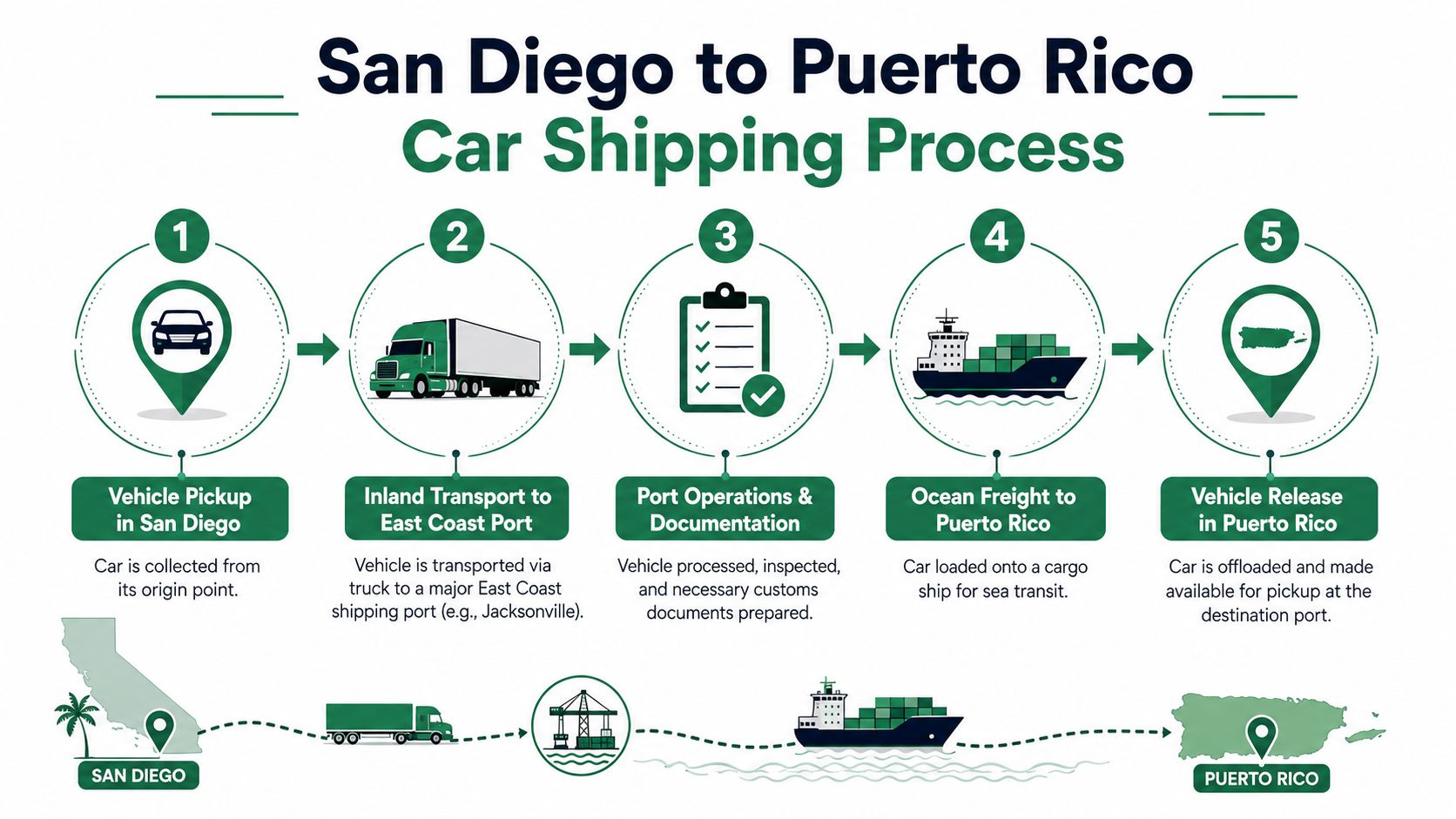
A San Diego to Puerto Rico move usually starts with a normal local pickup and then turns into a port operation. That shift is where confusion starts. The inland truck leg, the vessel booking, and the release process in Puerto Rico all run on different rules, and the quote only covers part of that chain unless the company spells out every line item.
What makes Puerto Rico different
From San Diego, the first practical issue is geography. Vehicles rarely sail straight out of San Diego for Puerto Rico. They usually move by truck to an East Coast port before the ocean leg begins, which adds handoffs, schedule risk, and more chances for delay if the first pickup misses its window. I see this matter most with military relocations, student moves, and family shipments tied to a firm arrival date in San Juan.
The other issue is cost structure. Puerto Rico charges government fees that sit outside the transport quote. The Puerto Rico Department of Treasury explains that importers must handle the island's excise tax through the SURI system, and the Department of Consumer Affairs outlines registration and inspection requirements that apply before the vehicle is fully road-ready on the island. Those are separate from what the carrier charges for pickup, port delivery, and ocean transit.
That distinction matters because a low shipping quote can still lead to a high total move cost once taxes, port charges, registration, and local processing are added.
The shipping methods and paperwork that matter
The Federal Maritime Commission explains that ocean vehicle shipments generally move as either Roll-on/Roll-off or containerized cargo, and each method has trade-offs. RoRo is common for standard vehicles because the process is simpler and pricing is usually lower. A container gives more protection and can make sense for higher-value vehicles, modified cars, or units that need tighter handling control.
For San Diego customers, that decision is not just about price. Coastal exposure matters here. If a vehicle already lives near the beach in La Jolla, Ocean Beach, or Coronado and has existing salt-air wear, it is worth asking whether extra protection during the long inland and ocean route makes sense. Open inland transport plus RoRo can still be the right call for a daily driver, but the trade-off should be deliberate.
Paperwork is where Puerto Rico shipments often slow down. Carriers and port operators typically require the title or lienholder authorization, government-issued ID, booking details, and a vehicle condition report before release. U.S. Customs and Border Protection also states that used self-propelled vehicles shipped out of the mainland must meet export documentation rules, including title presentation timelines before departure. If any name, VIN, or lien information is off, the vehicle can sit.
Fuel level and vehicle contents matter too. Port operators commonly require a low fuel level for safety, and personal items inside the vehicle are usually restricted or prohibited. That catches people who are treating the car like a moving box.
Customers who need route-specific help should review National Car Transport's Puerto Rico car shipping service page before documents are submitted. It helps to have one team coordinate the San Diego pickup, the port leg, and the release side instead of leaving each handoff to a different contact.
Puerto Rico shipments work best when the whole route is managed as one job. That is especially true for bilingual households, military families transferring through San Diego bases, and dealers moving inventory where timing, paperwork accuracy, and port coordination all have to line up.
How to Book Your San Diego Car Shipment Step by Step
A smooth shipment usually starts before the carrier arrives. Most problems show up because the details were fuzzy at booking, not because the truck moved slowly.
Before you book
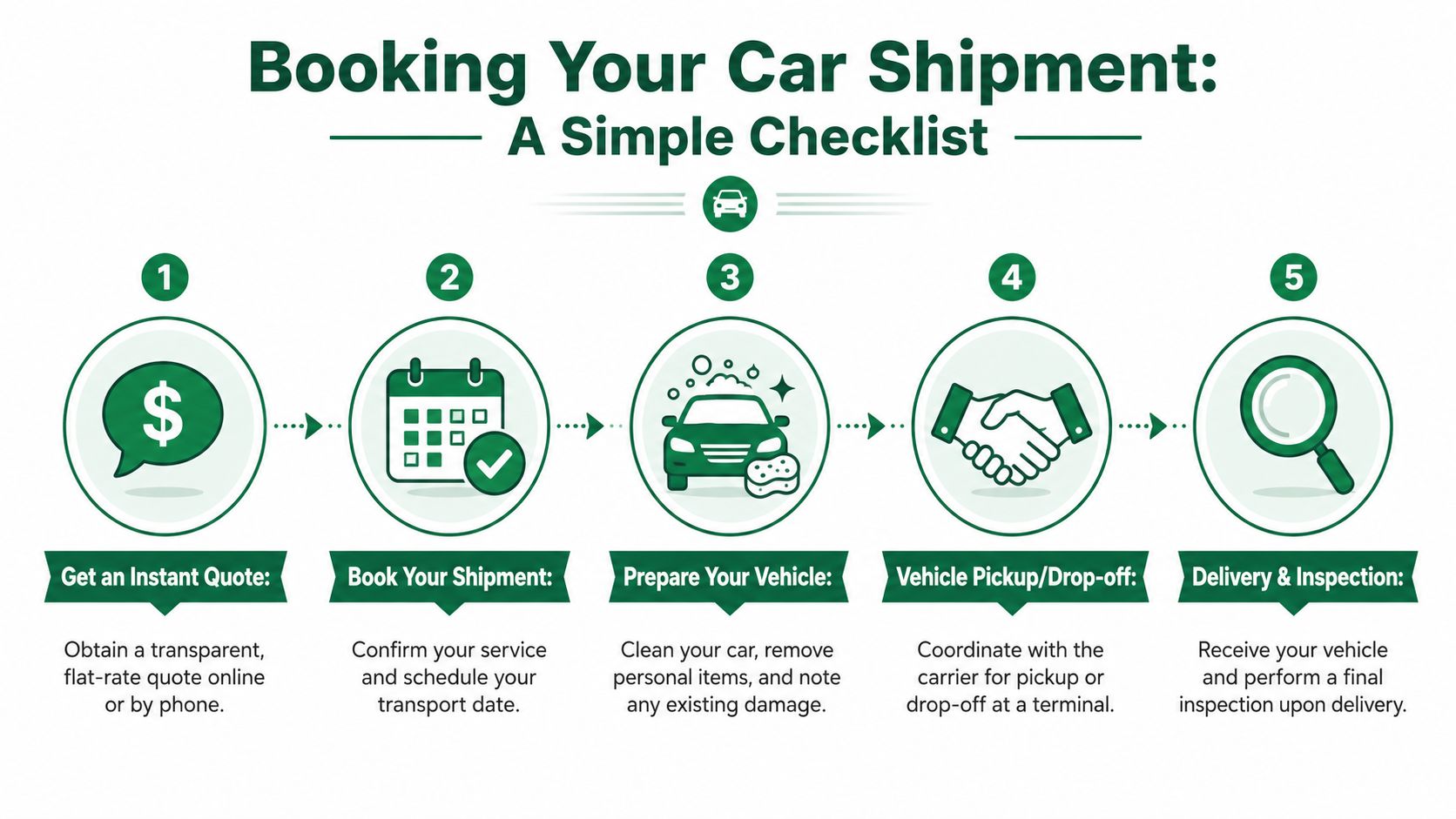
Start with the information that affects dispatch. That means your vehicle type, whether it runs, your pickup and delivery zip codes, your date range, and whether you need open or enclosed transport.
Then verify the basics:
- Carrier network quality matters: Ask whether the company works with licensed and insured carriers.
- Pricing should be clear: Flat-rate pricing is easier to audit than vague estimates that shift later.
- Support should be reachable: Auto transport always involves coordination. You want a real person, not a generic inbox.
- For Puerto Rico or other special routes: Confirm title and port document requirements early.
A lot of customers also want language support. That matters more than people admit. Bilingual English and Spanish assistance can make title questions, release instructions, and scheduling much easier for families shipping to San Juan or coordinating with relatives on the island.
A quick overview can help before you commit:
From pickup inspection to delivery
Once the order is scheduled, prep the vehicle correctly.
- Clean the car: Dirt hides scratches and makes the inspection weaker.
- Remove personal items: This is especially important on port shipments and long-haul moves.
- Leave the keys ready: The driver needs to load and unload the vehicle safely.
- Take photos: A current photo set is useful if there is any condition dispute later.
At pickup, you and the driver inspect the vehicle and sign the Bill of Lading. That's the condition record. At delivery, you inspect again before signing final release.
The Bill of Lading is not paperwork fluff. It's the document that ties the car's recorded condition to the carrier handoff.
If you're comparing providers, trust signals still matter. For many customers, that means looking for long experience, an A+ BBB rating, transparent flat-rate pricing, and a large vetted carrier network rather than a flashy low number that doesn't hold up under scheduling pressure.
San Diego Car Shipping FAQs
A lot of San Diego shipping problems show up in the last 24 hours before pickup. A car is parked inside a Navy housing area with access restrictions. The truck is coming through I-5 traffic near downtown. The customer also has personal items in the trunk that cannot stay in the vehicle. Getting those details sorted early prevents missed pickups and storage delays.
What documents do I need
For a standard mainland shipment, have your photo ID, keys, and current registration ready. If someone else will meet the driver, set that up in advance so the carrier has the right contact and release instructions.
For port shipments, including Puerto Rico moves, expect tighter paperwork requirements. Title or lienholder documents may be needed before the vehicle is accepted at the port, and names on the paperwork need to match. If the car is financed, ask about lender authorization before your pickup date, not the day the truck arrives.
Is my car insured during transport
Yes, the carrier should have active cargo and liability coverage. Ask for the carrier's insurance details before dispatch if you want to verify limits and issuer information.
Coverage is only part of the protection. The inspection at pickup and delivery matters just as much. In San Diego, I tell customers to take fresh photos in good light, especially if the car has existing paint wear from coastal exposure or minor bumper marks from city parking. The Bill of Lading needs to reflect the car's condition clearly.
Can I pack personal items in my car
Usually, keep the vehicle empty. Some carriers allow a small amount of light cargo in the trunk, but many do not, and port shipments are stricter.
That rule causes problems for military moves and student relocations out of San Diego because people often try to use the car as a moving box. Loose items add weight, can shift during loading, and may not be covered if something goes missing. If you need to leave anything in the car, get approval before the driver is assigned.
Can you ship a non-running vehicle
Yes, if the order is set up correctly. A non-running car needs the right trailer and loading equipment, and that changes pricing and carrier availability.
Be specific at quote time. Tell the dispatcher whether the car rolls, steers, and brakes. Those details matter more than the phrase "non-running." A vehicle that can roll freely is much easier to move than one locked in park with dead brakes.
National Car Transport is a practical choice if you want experienced help from a U.S.-based team that handles these details every day. With National Car Transport, customers get long industry experience, an A+ BBB rating, transparent flat-rate pricing, and access to a large network of vetted carriers. The company handles domestic shipping across the lower 48 states, Alaska, Hawaii, and Puerto Rico, including San Diego pickups that involve military schedules, port coordination, coastal exposure concerns, and cross-border timing near the Otay Mesa and San Ysidro corridors. Their bilingual agents in the USA help customers work through title questions, dispatch timing, and route changes without confusion.