
You're probably doing what is often done first. You type a company name into Yelp, scan the stars, read a few recent comments, and try to decide whether you're trusting that company with a vehicle you need in another city, another state, or on a boat bound for San Juan.
That instinct is reasonable. It's also incomplete.
Auto transport isn't like hiring a plumber or choosing a lunch spot. A move from Los Angeles to Dallas, Boston to Miami, Seattle to Phoenix, or Orlando to San Juan involves dispatch timing, route density, carrier availability, insurance, terminal and port coordination, and a contract that matters more than any star graphic on a review page. If you're a snowbird, military family, student, dealership, business, or someone relocating anywhere in the mainland U.S. or Puerto Rico, Yelp can help you build a shortlist. It can't do the final vetting for you.
Table of Contents
- Why Yelp Is a Starting Point Not the Final Word
- Mastering Your Yelp Search for Auto Transport
- Decoding Yelp Reviews Reading Between the Lines
- The Verification Checklist Moving Beyond Yelp
- Getting Accurate Quotes and Avoiding Scams
- Booking Your Shipment with Confidence
Why Yelp Is a Starting Point Not the Final Word
Individuals often start with Yelp, seeking quick proof that a company is real. That's smart. In auto transport, fake “best company” lists and pay-to-rank websites are common enough that Yelp often feels like the cleaner option.
That's not just a hunch. Industry discussion on review manipulation in auto transport states that 100% of articles on transport companies are paid for by the companies themselves and ranked based on payment amounts rather than legitimate performance metrics. The same discussion points out why many shoppers lean on Yelp and Google Reviews first, especially when they're trying to avoid paid placements disguised as editorial rankings.

What Yelp does well
Yelp is useful for initial discovery. It helps you answer practical questions fast:
- Is this company visible in a real market? A business serving routes like Chicago to Atlanta, Houston to Denver, or Newark to Tampa should leave some public footprint.
- Do customers mention communication? In shipping, silence causes more stress than transit time.
- Are reviewers describing an actual transport process? Pickup windows, inspection notes, dispatcher updates, and delivery condition matter more than generic praise.
Yelp is also useful when you're comparing service categories. Searches for open transport, enclosed transport, dealer moves, student moves, military relocation, and Puerto Rico vehicle shipping often reveal whether a company even talks about the service you need.
Where Yelp stops being enough
A polished Yelp page doesn't confirm operating authority, insurance, complaint history, or whether the quote you got is realistic. That matters on ordinary domestic moves across the lower 48 states, and it matters even more on Puerto Rico shipments where the job may include inland pickup, port scheduling, ocean freight coordination, and delivery in or around San Juan.
Practical rule: Use Yelp to build a list, not to make the final decision.
If you want regular insight into how shipping works behind the scenes, the National Car Transport blog on vehicle shipping topics is the kind of resource worth reading before you book. The more you understand route type, service level, and paperwork, the less likely you are to get trapped by a slick review profile.
Mastering Your Yelp Search for Auto Transport
A weak Yelp search gives weak results. If you only type “car shipping” and stop there, you'll mix local towing outfits, generic logistics listings, brokers, carriers, and businesses that don't match your route.
Start with the shipment itself. Search for the exact service you need, then refine by geography.
Search like someone who knows the job
Use terms tied to your actual move:
- “Open auto transport” if you're shipping a standard vehicle between major cities like Phoenix and Dallas.
- “Enclosed auto transport” for classics, exotics, luxury SUVs, or collector cars.
- “Military car shipping” if you need a company that understands deadline changes and documentation pressure.
- “College student car shipping” when timing around dorm move-in matters.
- “Dealership vehicle transport” for inventory moves and repeat shipments.
- “Vehicle transport to Puerto Rico” or “car shipping Puerto Rico San Juan” when the job includes island logistics.
Search by both origin and destination hubs when possible. If you're moving from inland Tennessee to Puerto Rico, don't just search in Nashville. Also search in major port-connected markets that may appear in the routing chain. The same applies if you're shipping from cities like Columbus, Charlotte, Minneapolis, Albuquerque, or Kansas City.
Search where the freight actually flows
Dense auto transport lanes generate more reviews and more visible business activity than rural lanes. That means a customer in Boise or Des Moines may find better Yelp intelligence by checking larger connected markets involved in their route.
Here's a simple way to understand it:
| Route type | Better Yelp search habit | Why it helps |
|---|---|---|
| Mainland city to mainland city | Search both metro areas | You'll see companies active at both ends |
| Smaller town to major city | Search the nearest major metro | More review volume, more real transport firms |
| Mainland to Puerto Rico | Search your city, plus port-oriented markets and San Juan | Puerto Rico moves involve more than a truck pickup |
| Dealer or business shipping | Search by service type plus city | Commercial reviews often use different language |
Know whether you're looking at a broker or a carrier
Both brokers and carriers can appear on Yelp. Customers often don't realize the difference until after booking.
A carrier owns or operates the truck. A broker arranges the shipment and finds a carrier in its network. Neither model is automatically better. What matters is whether the company explains its role clearly, communicates well, and handles paperwork and scheduling without games.
If a Yelp page never makes clear whether the company is arranging transport or physically hauling the vehicle, ask before you request a quote.
For Puerto Rico, that distinction gets even more important. One company may handle the mainland pickup while another leg involves port processing or ocean coordination. A vague listing can create confusion fast, especially for military families, students, and bilingual households trying to track a vehicle between the mainland and San Juan.
Decoding Yelp Reviews Reading Between the Lines
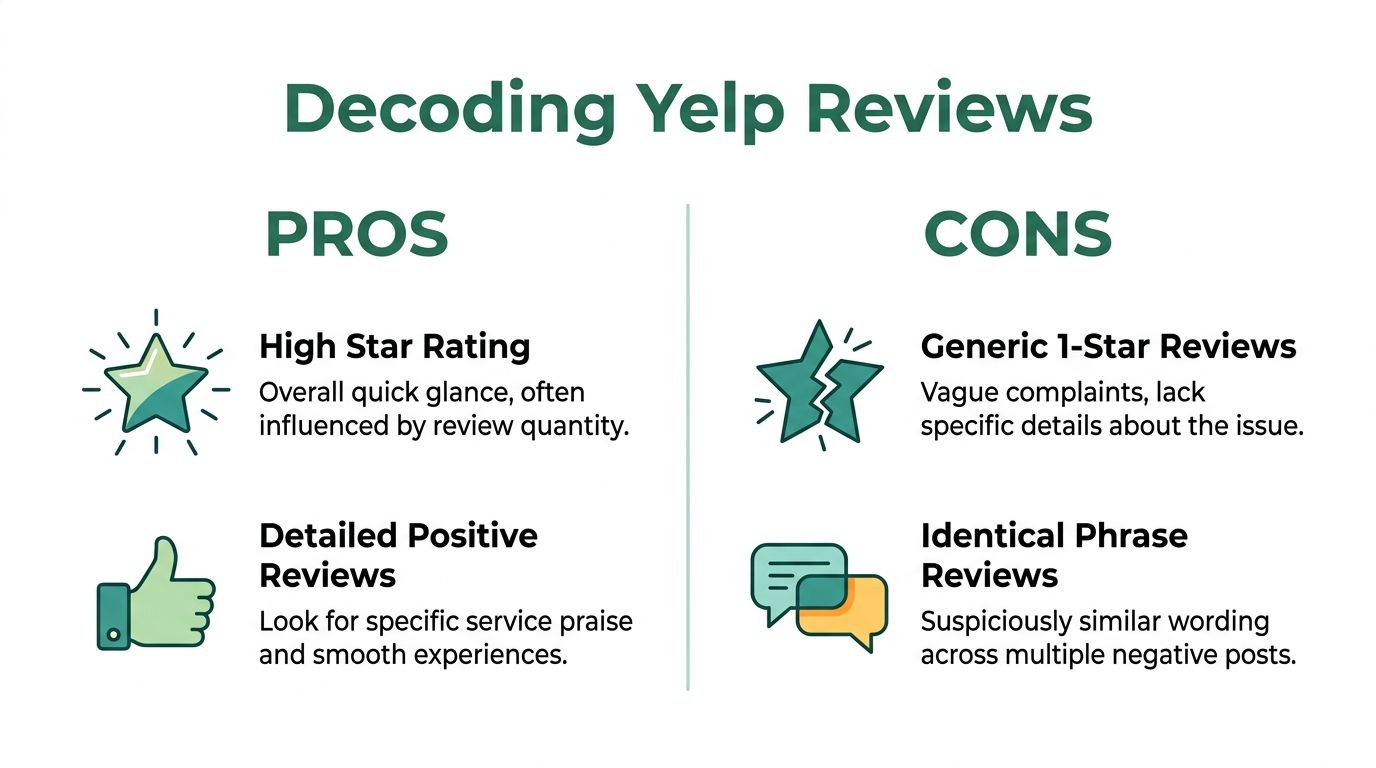
Star ratings are the thumbnail, not the story. In car shipping companies Yelp searches, the useful clues usually sit inside the review text.
A good review tells you what happened. A weak review only tells you how someone felt.
According to a 2026 Yelp listing analysis for Lightning Car Transport in Chicago, the company holds a 5.0-star average based on 9 verified customer reviews, with customers citing “great customer service” and “really reasonable rates”. That same market includes over 10 top-ranked auto transport companies on Yelp, and LISCA Auto Transport holds a 4.7-star rating from 183 reviews, which shows how review depth can differ sharply from one company to another.
What a useful review actually looks like
The best Yelp reviews usually mention details like:
- Pickup communication that names who called, when they called, and whether the window changed
- Vehicle condition reporting such as inspection photos, bill of lading notes, or delivery confirmation
- Route context like cross-country, enclosed trailer, dealer transfer, or Puerto Rico coordination
- Price clarity that says whether the final amount matched the quoted amount
Those details matter more than emotional intensity. “Amazing service” is nice. “Driver called the day before pickup, arrived within the window, inspected the vehicle with me, and delivered without surprise fees” is better.
Red flags inside review patterns
Some Yelp pages look strong until you read them carefully. Watch for these patterns:
- Identical phrasing across multiple reviews. Repeated wording can signal manipulation.
- One-review profiles only. A single glowing review from an otherwise empty account deserves caution.
- Complaint language with no shipment details. Real transport problems usually involve a timeline, a missed call, a delayed pickup, or a billing dispute.
- Reviews that only praise price. Low price without mention of execution can be a trap.
If a company cares about its reputation, it should also have a process to manage online reviews across platforms and respond in a way that clarifies what happened. Professional responses don't erase complaints, but they do show whether the business addresses scheduling, dispatch, and service issues like an operator or dodges them like a lead seller.
A review that explains the process is usually more valuable than ten reviews that only say “great job.”
For Puerto Rico shipments, look for comments that mention port paperwork, timing around vessel schedules, and how updates were handled after the mainland leg. Those are the operational details that separate a real logistics partner from a company that only sounds organized on Yelp.
The Verification Checklist Moving Beyond Yelp
Once you have a shortlist, stop reading reviews and start verifying. This is the point where most costly mistakes happen. People feel reassured by a decent Yelp page and skip the boring checks that effectively protect the vehicle.
That shortcut is risky. A RoadRunner article on Yelp review limitations in car shipping argues that nearly 100% of top Yelp reviewers for car transport have previously reviewed restaurants or hotels, not freight services, and that shoppers rarely cross-reference BBB ratings or federal complaint databases. Whether you agree with every word or not, the core point is solid. consumer reviews alone don't confirm transport credentials.
The non-negotiables
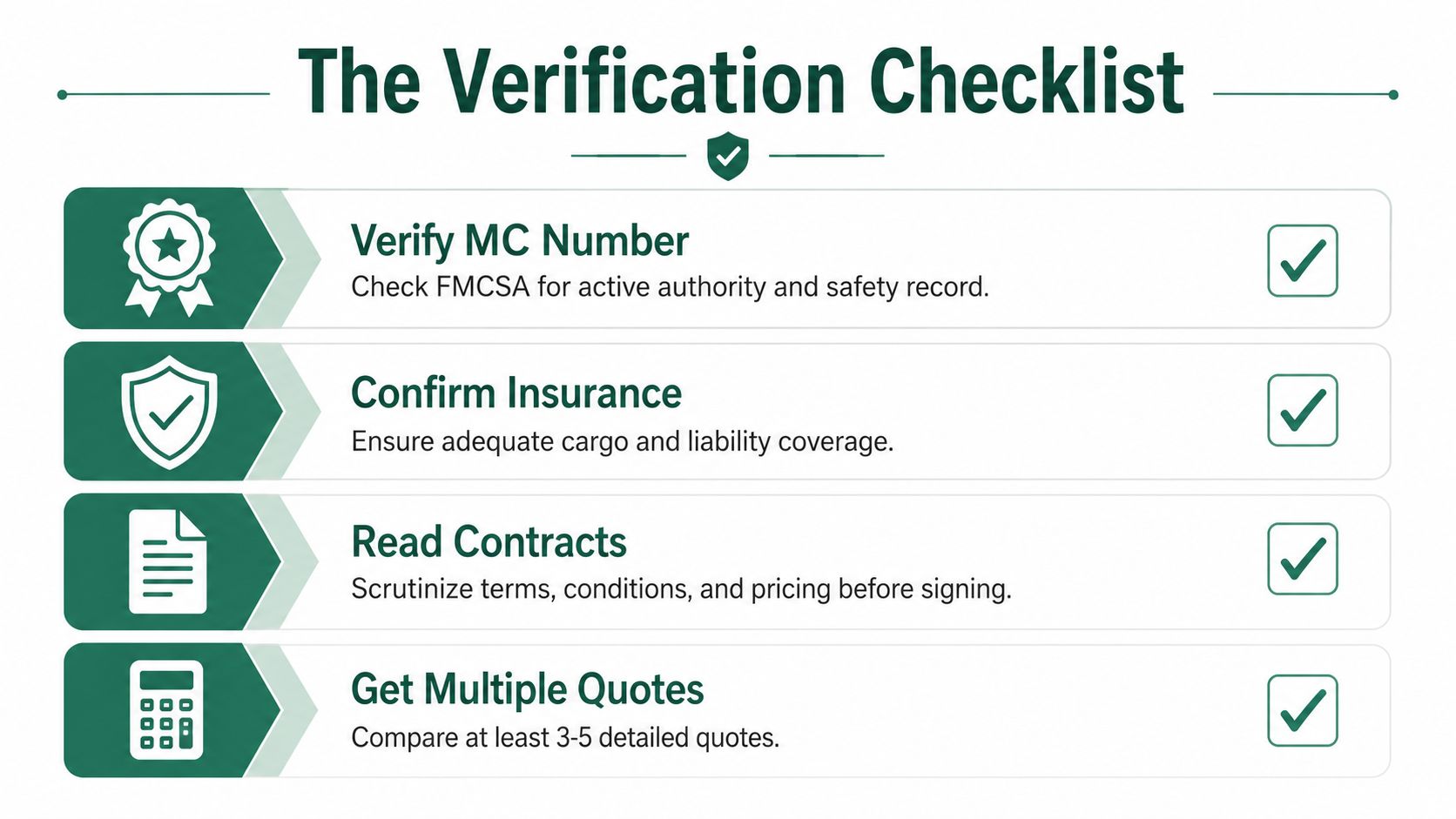
Use this checklist before you book any domestic or Puerto Rico shipment:
Verify the MC number
Ask for the company's Motor Carrier number and check it in the FMCSA database. You're looking for active authority, not vague assurances.Confirm insurance in writing
Ask for proof of cargo insurance and clarify what happens if the vehicle is damaged during loading, transit, port handling, or delivery.Read the contract before giving a deposit
Focus on cancellation terms, pickup windows, storage language, and whether the price is subject to change.Check the BBB profile
A company's Better Business Bureau listing won't tell you everything, but it can expose complaint patterns, unresolved disputes, and how the company responds under pressure.
Questions that expose weak operators
Ask these directly:
- Are you the broker, the carrier, or both?
- Who contacts me for pickup and delivery?
- What happens if the first carrier falls off the order?
- Is port handling included for Puerto Rico, or billed separately?
- Can you explain the inspection process step by step?
A legitimate operator should answer those without getting slippery.
Puerto Rico needs tighter verification
A mainland shipment from Atlanta to Chicago is one thing. A shipment from Tampa, New York, Houston, or Los Angeles to San Juan is more layered. There may be inland pickup, transfer timing, ocean booking, terminal rules, title and ID requirements, and final release procedures.
Check who controls each leg of the move. If the answer is unclear, the shipment is unclear.
That's why bilingual support also matters. Customers shipping to or from Puerto Rico often need clean communication in English or Spanish, especially when documents, release instructions, and scheduling updates are moving fast.
Getting Accurate Quotes and Avoiding Scams
The cheapest quote on your screen is often the most expensive mistake you can make.
Low quotes work because they trigger relief. You're comparing several companies, one comes in far below the rest, and it feels like you found the smart buy. In auto transport, that feeling gets people burned.
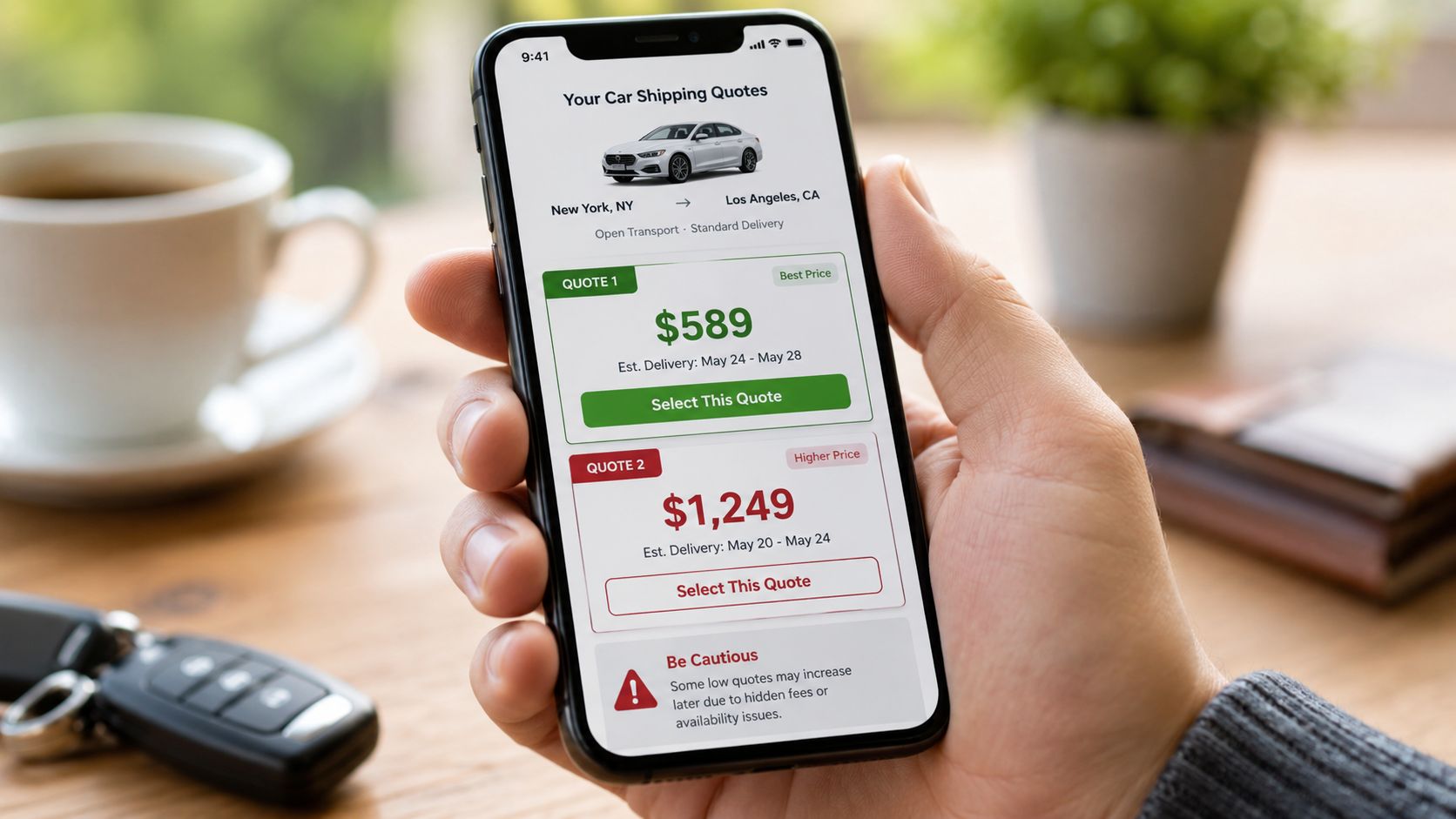
A Montway article about avoiding car shipping scams says bait-and-switch pricing scams surged 35% in the last 12 months and that quotes significantly below $0.35 to $0.45 per mile are 90% likely to be fraudulent or include hidden fees. That's the clearest reason not to treat the lowest number as the winner.
What a real quote should answer
A serious quote should tell you what service you're buying, not just what number to expect.
Look for answers to these points:
Transport type
Open, enclosed, expedited, standard scheduling, port delivery, or island routingPickup and delivery method
Door-to-door if legally accessible, or alternate lot/terminal if truck access is restrictedVehicle condition assumptions
Running or non-running, oversized tires, lifted suspension, low clearanceRoute complexity
Major city lane, rural pickup, seasonal demand, or Puerto Rico ocean coordination
If the quote doesn't explain those, it's not complete enough to trust.
The questions I'd ask before paying anything
Ask the rep to answer these in plain language:
- Is this the final rate or an estimated dispatch rate?
- Are fuel, insurance, and port-related charges included?
- What changes the price after booking?
- When does payment become due?
- If I'm shipping to Puerto Rico, who handles the mainland leg and who handles the port side?
- What documents do I need before pickup?
For many customers, especially bilingual households, students, and military families, a knowledgeable U.S.-based agent makes a huge difference here. Not one vehicle transport is alike. Puerto Rico jobs are especially sensitive because they combine domestic transport with ocean logistics. A seasoned English and Spanish speaking coordinator can make the process simpler and quicker by explaining each charge before the order is placed.
A short visual overview helps clarify what to compare in a quote:
When a quote is low for the wrong reason
Sometimes the number is low because the company plans to raise it later. Sometimes it's low because key services aren't included. Sometimes it's low because the route was priced as if a carrier will magically accept less than the lane usually pays.
Cheap doesn't always mean efficient. In this business, cheap often means incomplete.
If you're comparing service models, door-to-door auto transport options are worth reviewing so you can tell whether a company is pricing true convenience or subtly shifting work back onto you at pickup or delivery.
Booking Your Shipment with Confidence
The safest way to use car shipping companies Yelp results is simple. Use Yelp first, not last.
Search with the actual service in mind. Read reviews for operational detail, not just emotion. Verify the company off-platform. Then challenge every quote until you know what's included, what isn't, and who's handling each stage of the move.
That process works whether you're shipping between major mainland cities like Miami, Chicago, Dallas, Phoenix, Denver, Seattle, Charlotte, Nashville, Las Vegas, and Los Angeles, or arranging a more complex move to or from San Juan, Puerto Rico. It also works whether you're a private owner, snowbird, college student, military family, dealership, auction buyer, or fleet manager.
For higher-value vehicles, the service choice matters as much as the company choice. If you're protecting a collector vehicle, luxury car, exotic, or restored classic, review enclosed auto transport service details before you sign any order.
A strong booking decision usually comes down to four things. Clear authority, clear insurance, clear pricing, and clear communication. If one of those is missing, keep looking.
If you want a quote from a provider that checks the boxes that matter, National Car Transport is a reliable option to consider. The company brings 25+ years of experience, an A+ BBB rating, transparent flat-rate pricing, and a network of 25,000+ vetted carriers across the U.S., Puerto Rico, Alaska, and Hawaii. Its bilingual U.S.-based agents speak English and Spanish, with more than 20 years of experience focused specifically on auto transport logistics, which matters when a shipment needs real guidance instead of generic call center answers. Whether you're moving a daily driver across the mainland or coordinating a vehicle to or from Puerto Rico, having an experienced agent who keeps the process simple, quick, and well explained is often what saves the most stress.