

California to North Carolina auto shipping typically covers more than 2,500 road miles, with a 5–10 day transit window after pickup, plus 1–3 extra dispatch days during peak season. Door-to-door pricing usually falls in the $1,400–$1,950 range, depending on vehicle size, carrier type, and the exact pickup city.
You may be leaving Los Angeles for Charlotte, relocating from San Diego to Raleigh, sending a vehicle to a student, or moving a family car before a military transfer. Driving the vehicle yourself sounds simple until the route stretches across the country, your odometer passes 2,500 miles, and the trip starts consuming several days, fuel, lodging, and time away from work. Shipping is often the practical choice, but only if you plan around the actual timeline instead of trusting one vague delivery estimate.
Table of Contents
- What Shipping a Car Coast-to-Coast Really Looks Like
- How Pricing Works on the California to North Carolina Lane
- Choosing Between Open and Enclosed Transport
- Booking, Dispatch, and the Real Transit Timeline
- Seasonal Demand, Weather, and Route Geography
- Verifying Your Carrier and Preparing the Vehicle
- FAQs and Next Steps for Your Move
What Shipping a Car Coast-to-Coast Really Looks Like
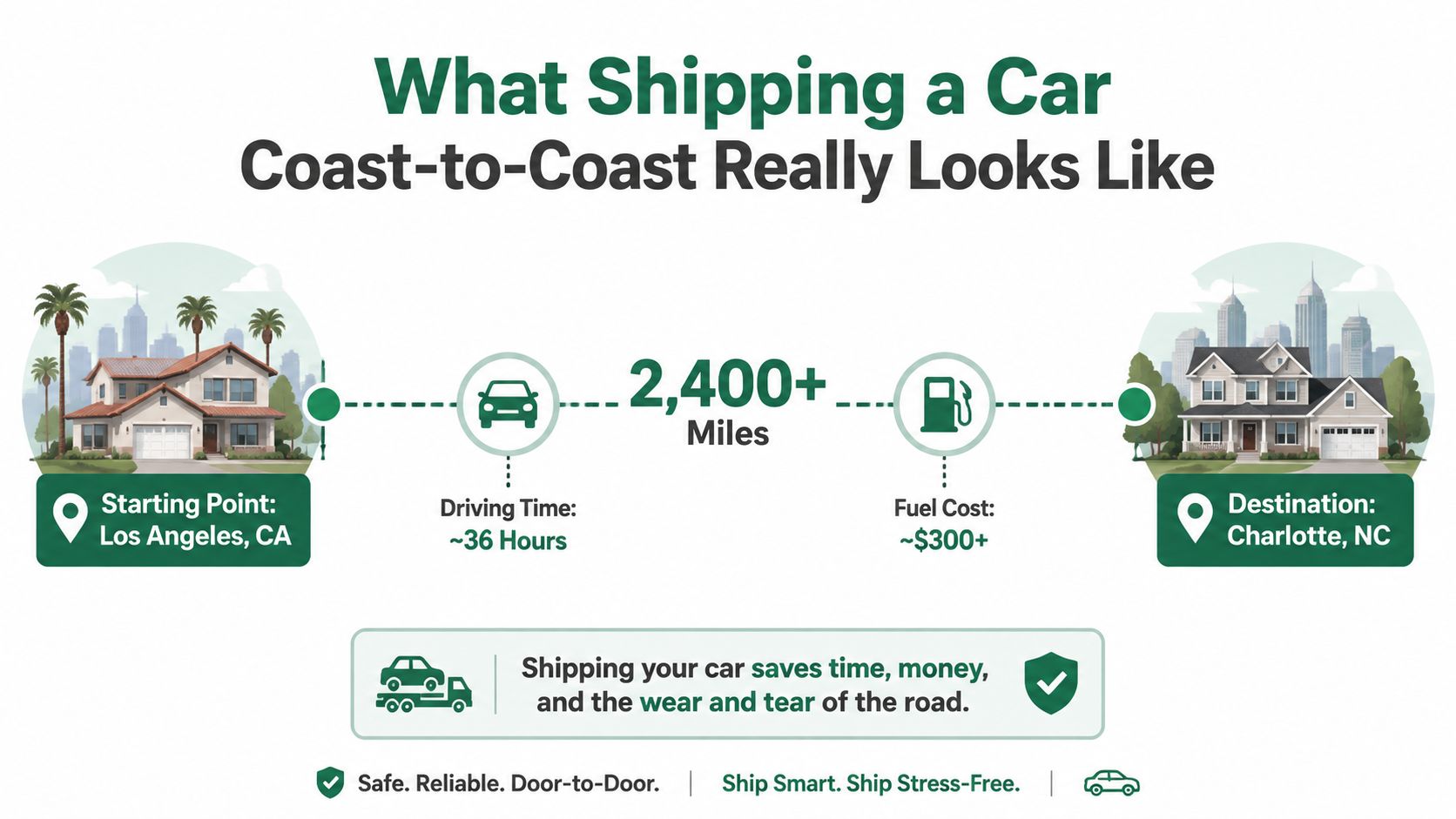
California to North Carolina is a major national auto transport lane, not a regional move. The route covers about 2,579 driving miles, compared with a straight-line distance of about 2,222 miles, according to Travelmath's California to North Carolina distance reference. Carriers plan around actual road miles, fuel use, equipment availability, and freight corridors, so the vehicle's calendar is measured in days, not hours.
A truck may run eastbound on I-40, use I-10 through the Southwest, or combine several freight corridors before reaching North Carolina. Interstate freight networks support this kind of movement at scale. The Bureau of Transportation Statistics data summarized in the California to North Carolina freight-distance reference shows that interstate freight represents 56% of the value and 25% of the weight of goods transported nationwide, while large trucks traveled 304.9 billion miles, equal to 9.4% of total vehicle miles traveled. Your car is moving inside that larger trucking system, not on a private route built only for your shipment.
The four clocks that control your calendar
Quote time is how long it takes to receive and compare a usable price. A quote should identify the pickup city, delivery city, vehicle type, transport method, and whether the price is flat or subject to later changes.
Dispatch time starts after you book. The broker or carrier must match your vehicle with equipment already moving through the origin area. The California to North Carolina route timeline models the lane at about 2,596 miles and a 3–7 day in-transit window, but dispatch and pickup flexibility determine when those transit days begin.
Pickup window is the range the driver needs to reach your location. A flexible window of several days gives dispatchers more options, especially if your address sits away from a major metro.
Linehaul transit is the time after the carrier physically loads the vehicle. It isn't the same as booking time, dispatch time, or the period when you're waiting for pickup. For practical planning, treat the trip as a sequence of separate clocks.
Practical rule: Plan flights, temporary transportation, and move-in appointments around the pickup date and a delivery range, not the booking date.
If you're also moving replacement parts or household equipment, an auto parts shipping FAQ can help you separate vehicle transport from smaller freight needs. Those services follow different packaging, handling, and delivery rules.
How Pricing Works on the California to North Carolina Lane
A California to North Carolina quote should be built from the shipment details, not from a generic national average. The lane is more than 2,500 road miles, and the exact origin and destination affect the route, carrier availability, and loading sequence. Los Angeles to Raleigh won't price exactly like San Diego to Charlotte, even when both shipments cross the same states.
The working door-to-door range is $1,400–$1,950. Use that as a planning range, not a guaranteed tariff. The vehicle's dimensions, weight, operating condition, pickup access, delivery access, transport method, and season all influence the final number.
The variables that move the quote
Vehicle size has a direct effect because carriers have limited deck space and weight capacity. A standard sedan is easier to place than a large SUV, pickup, or dually. Oversize vehicles can reduce the number of other vehicles a trailer carries, which changes the carrier's economics.
Open transport is the normal starting point for most vehicles. It generally provides broader carrier availability on a national lane and usually costs less than enclosed service.
Enclosed transport costs more because the vehicle travels inside a protected trailer with thinner capacity. The enclosed transport cost explanation can help you compare protection and price before requesting a formal quote.
Seasonality affects available capacity. Summer relocations, military moves, student moves, and snowbird traffic can create tighter scheduling. Fuel costs and the specific metro pair also affect the quote, although a reputable provider should explain those variables instead of hiding them in vague surcharges.
| Vehicle Type | Open Transport | Enclosed Transport |
|---|---|---|
| Sedan | $1,400–$1,650 | $1,700–$1,950 |
| Small SUV | $1,500–$1,750 | $1,800–$2,050 |
| Full-size SUV or pickup | $1,650–$1,950 | $1,950–$2,400 |
The table uses the required planning range for this lane, but the upper enclosed figures extend beyond the verified overall range and therefore shouldn't be treated as verified pricing. For a compliant quote, ask the provider to price your exact vehicle and route rather than relying on a broad table.
My recommendation is simple. Get a flat-rate quote that names the vehicle, pickup location, delivery location, and transport type. Ask whether anything can change after booking, and don't compare a low open-transport quote with a higher enclosed quote as if they're the same service.
Choosing Between Open and Enclosed Transport
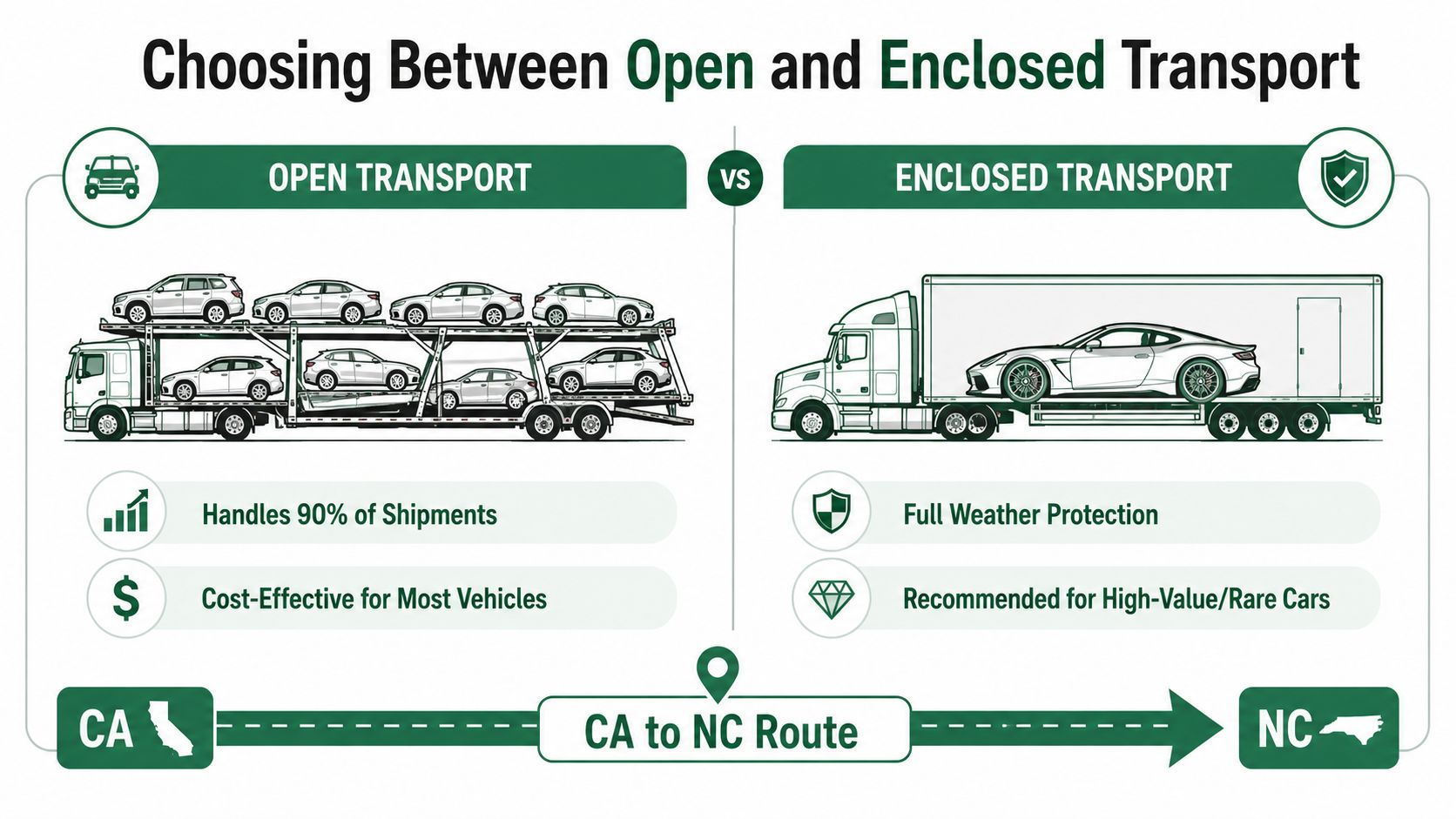
Open transport is the practical default for daily drivers, family SUVs, work trucks, and ordinary dealership vehicles moving from California to North Carolina. The trailer exposes the vehicle to normal road dust and weather, but it gives dispatchers more equipment choices on a heavily traveled interstate lane.
Enclosed transport is the specialist option. It protects the vehicle from road grime, hail, and public exposure, which matters for a restored classic, exotic, low-clearance sports car, or vehicle with a finish you don't want exposed to an uncovered highway journey. The trade-off is thinner capacity and a higher price.
Open transport fits most shipments
Open carriers commonly move 7–10 vehicles on a two-tier trailer, while enclosed carriers commonly move 4–6 vehicles in a hard-sided trailer. Those equipment figures are part of the lane's standard operating model described in the shipment requirements, but they shouldn't be confused with a guarantee for every carrier or load.
Open service usually offers more frequent departure opportunities and better carrier coverage. That can help when your pickup date is firm or when you need the vehicle available soon after relocating to Charlotte, Raleigh, Greensboro, Durham, or another North Carolina destination.
Enclosed transport earns its premium in specific cases
Choose enclosed service when the vehicle's value, condition, or clearance makes exposure unacceptable. A newly restored classic may justify the additional cost. A routine commuter sedan usually doesn't.
The enclosed auto transport service page provides a useful reference for comparing protected equipment with open hauling. Whichever option you choose, check the carrier's authority, insurance, inspection record, and handoff documentation. Enclosed equipment doesn't excuse weak vetting.
Don't choose enclosed transport because the route is long. Choose it because the vehicle needs that level of protection. For most California to North Carolina shipments, open transport provides the sensible balance of availability, scheduling, and cost.
Booking, Dispatch, and the Real Transit Timeline
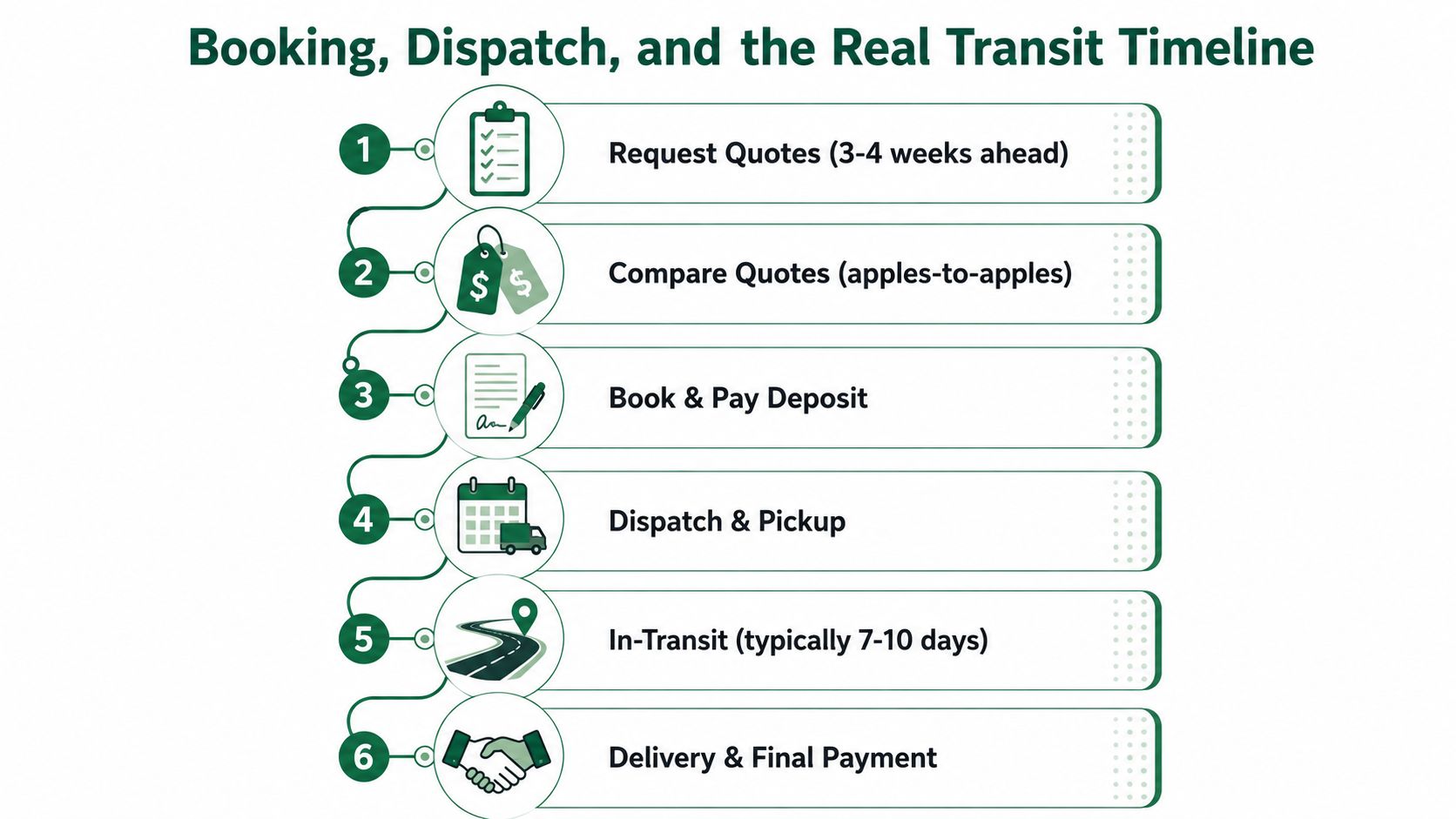
The smoothest shipments begin several weeks before the desired pickup date. Request quotes around 3–4 weeks ahead, especially for summer relocations, military orders, college moves, or a firm closing date. Give every provider the same pickup city, delivery city, vehicle dimensions, operating condition, and carrier type so you're comparing equivalent services.
Once you select a quote, booking places the order into the dispatch process. The dispatcher still has to find a carrier that can reach your origin, has room on the trailer, carries the right insurance, and can meet the route's timing. During busy periods, dispatch can add 1–3 days or more, as described in the California to North Carolina booking timeline.
Pickup is the handoff point
The driver typically needs a 1–5 day pickup window rather than one guaranteed appointment hour. That flexibility allows the truck to finish another load, handle California traffic, and sequence multiple vehicles efficiently.
At pickup, inspect the vehicle with the driver. Record existing scratches, dents, chips, wheel damage, and the odometer condition on the Bill of Lading. Take photographs before the vehicle leaves, and keep your copy of the signed document.
Door-to-door service means the driver aims for the requested addresses, but access matters. Narrow streets, low branches, steep driveways, gated communities, and municipal restrictions can force a nearby meeting point. Confirm the actual handoff location with the dispatcher before pickup day. A door-to-door auto transport service can still use a safe nearby street when the exact address can't accommodate a large carrier.
Transit starts after loading
Once the car is loaded, the linehaul run commonly takes 5–10 days for planning purposes. That period is distinct from booking and dispatch. The driver may make other scheduled deliveries, follow hours-of-service requirements, and adjust for weather or road conditions.
At delivery, compare the vehicle with the pickup inspection. Note any new condition issue on the delivery paperwork before signing, and keep all transport documents. If you need the car for a flight, job start, or move-in appointment, arrange backup transportation rather than assuming an exact delivery hour.
Seasonal Demand, Weather, and Route Geography
The California to North Carolina lane often follows the southern I-40 corridor through Arizona, New Mexico, Texas, Oklahoma, Arkansas, Tennessee, and into the Carolinas. That geography matters because a coast-to-coast shipment isn't one uninterrupted highway run. Mountain grades, desert exposure, storms, traffic, and carrier sequencing can all affect the day the truck reaches your driveway.
A shipment leaving Los Angeles for Raleigh may move smoothly across the Southwest, then lose time near mountain and high-desert sections. The California to North Carolina route guide identifies possible delays near Flagstaff, Arizona, and the New Mexico high desert, particularly during winter weather or peak June–July demand, when delivery can extend to 12–15 days.
Why the season changes the answer
Snowbird traffic can tighten capacity from October through January as seasonal residents move between regions. Military families may create stronger demand during the May–August PCS window, including moves connected with Camp Pendleton and Fort Liberty. College traffic can also increase demand around September, particularly for destinations near Durham, Chapel Hill, and Raleigh.
| Season | Average Price Range, Open Sedan | Typical Transit Days | Main Disruptors |
|---|---|---|---|
| Winter | $1,400–$1,950 | 5–10, with weather-related extensions possible | Arizona high-country snow, Appalachian weather, holiday scheduling |
| Spring | $1,400–$1,950 | 5–10 | Rain, changing capacity, relocation demand |
| Summer | $1,400–$1,950 | 5–10, with longer windows possible during peak demand | June–July demand, thunderstorms, mountain weather |
| Fall | $1,400–$1,950 | 5–10 | Snowbird bookings, harvest traffic, changing weather |
These are planning ranges, not guaranteed seasonal averages. Exact pricing depends on the vehicle and city pair. A flexible pickup and delivery window gives the dispatcher more ways to combine your vehicle with an efficient load, which is usually more useful than demanding a single rigid date.
Verifying Your Carrier and Preparing the Vehicle
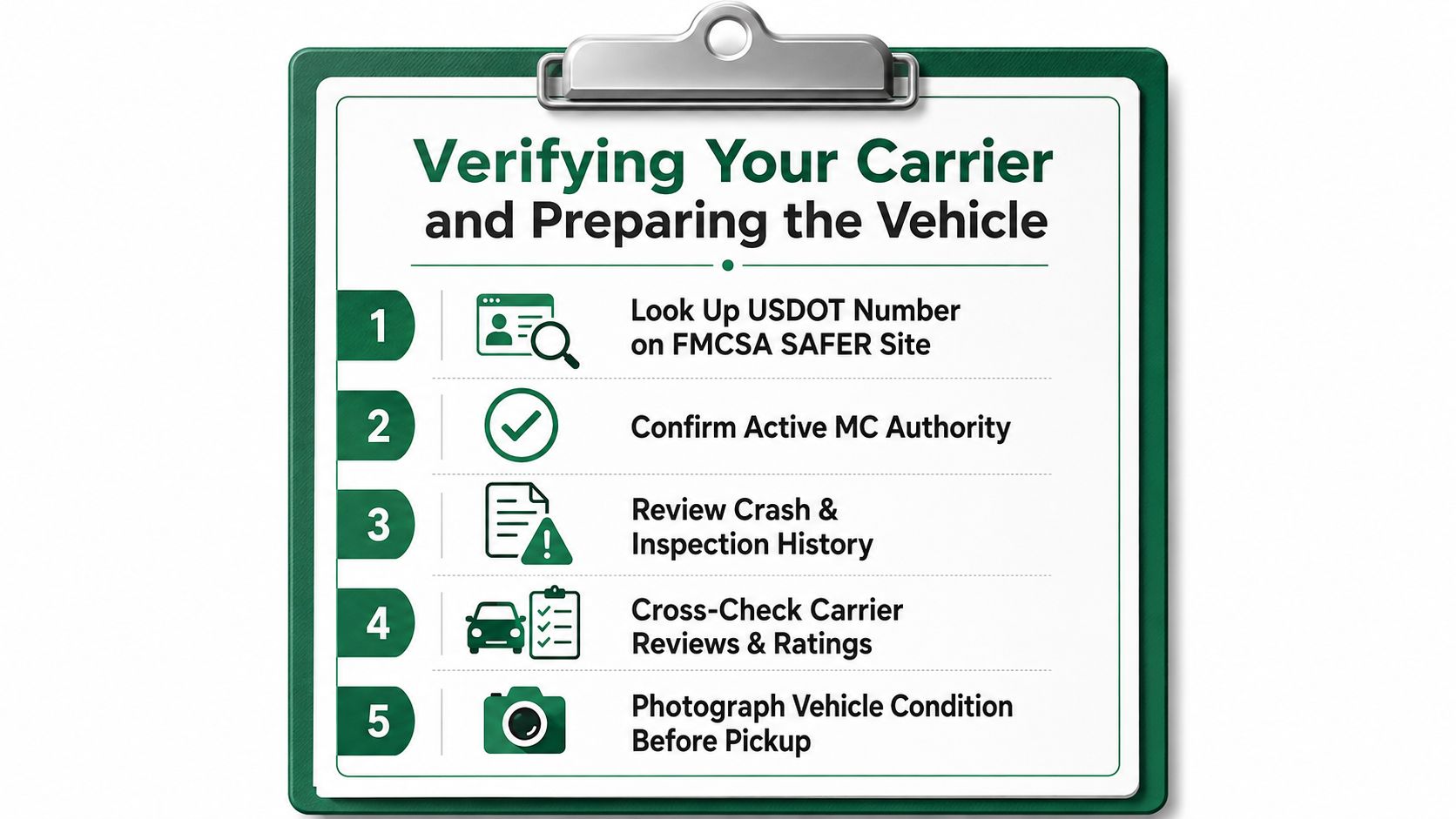
Don't hand over the keys because a website looks polished. Verify the company that will transport the car. Start with the carrier's USDOT and MC records, then confirm that the motor carrier has active interstate authority and current insurance on file.
The FMCSA company safety records page explains that the Safety Measurement System uses inspections, crash reports, and investigations from the last two years to identify higher-risk carriers. Use that information as a quality gate, not as a marketing decoration. The FMCSA Licensing and Insurance system is the federal place to verify operating authority and insurance status, and active status requires valid insurance on file.
What to check before signing
- Match the legal names: The company name on your quote should match the carrier or broker information and the insurance documentation.
- Confirm authority: Look for active MC authority and a valid USDOT record before dispatch.
- Review recent safety history: Check inspection and crash information through FMCSA's public safety tools.
- Identify the actual carrier: A broker may arrange the load, but the assigned carrier will control pickup, transport, and delivery.
- Save the MC number: Keep it with your Bill of Lading and dispatch contact information.
Prepare the car for inspection
Remove loose personal items, aftermarket roof racks if they aren't approved, and anything that could shift during loading. Check tire pressure, disable alarms, remove personal plates when required, and leave the vehicle with about a quarter tank of fuel unless your carrier gives different written instructions.
Photograph all four corners, the roof, wheels, bumpers, glass, interior, and undercarriage before pickup. Make the images clear enough to compare at delivery. Keep valuables and important documents out of the vehicle, and tell the carrier about mechanical problems, modified suspension, non-running status, or unusual clearance before booking.
FAQs and Next Steps for Your Move
How long does dispatch take during peak season?
Dispatch isn't the same as transit. The driver must accept the load, reach the pickup region, and coordinate it with other vehicles. During peak moving periods, allow the additional 1–3 dispatch days identified in the route guidance, then count linehaul time from the actual pickup.
Can personal items stay inside the vehicle?
Ask before loading. Policies vary by carrier, and personal belongings can affect weight, liability, and inspection. If the carrier permits items, get the limits and exclusions in writing, keep them secured, and don't place valuables, documents, or irreplaceable property in the car.
What damage is normal, and what does the carrier cover?
Open transport exposes a vehicle to ordinary road dust and debris. Existing damage should appear on the pickup Bill of Lading, while any suspected new damage must be documented at delivery before you sign. Carrier liability and insurance terms differ from the protection provided by your personal auto policy, so ask for the carrier's coverage details and claims procedure before pickup.
What if the truck can't reach my North Carolina address?
HOA rules, narrow residential streets, steep roads, low branches, and restricted access can affect delivery. Rural properties near Asheville or the Outer Banks may require a nearby accessible meeting point. Terminal or commercial-area arrangements may be available around Raleigh, Charlotte, or Greensboro, but confirm the location and fees with the dispatcher before the truck starts moving.
Your practical action list
- Reserve early: Lock in pickup dates 2–3 weeks ahead for summer moves when possible.
- Confirm access: Ask whether true door-to-door delivery works at both addresses.
- Document condition: Photograph the vehicle and complete the handoff inspection with the driver.
- Verify the carrier: Save the assigned carrier's MC number and check it through FMCSA.
- Plan for the four clocks: Separate quote, dispatch, pickup, and transit dates when arranging flights or temporary transportation.
For Puerto Rico moves, don't treat the shipment like a mainland door delivery. San Juan is an active U.S. customs port listed by U.S. Customs and Border Protection, and government vehicle-shipping instructions identify a Puerto Rico Vehicle Processing Center and RODI Cargo location in Carolina with weekday hours from 8 AM to 5 PM. Mainland-to-island transport may involve container or ocean coordination, customs documentation, and facility-specific processing.
Start with two or three comparable quotes, then book early if your move dates are firm.
National Car Transport arranges door-to-door open and enclosed vehicle transport across the United States and supports mainland-to-Puerto Rico moves through container and ocean shipping options. Visit National Car Transport for a route-specific quote, and speak with a U.S.-based bilingual English/Spanish agent who has more than 20 years of auto transport logistics experience and can simplify the process around your dates.