
Nearly one in ten vehicle transactions now involves a buyer crossing state lines. Experian data reported by Automotive News found that 9.6% of all new and used vehicles sold in the prior year were purchased by consumers from a different state, up from 6.7% in 2020, a change documented in this out-of-state vehicle buying guide. Buying used car out of state has moved well beyond the rare classic-car search. Online listings, remote financing, and broader inventory access have made national shopping practical for families, snowbirds, military households, students, dealerships, and businesses.
The challenge is that finding the car is only the first half of the job. You still need to verify its condition, secure clean ownership documents, satisfy your home state's tax and inspection rules, and move the vehicle legally and safely to its final destination. For a mainland purchase, that may mean shipping between cities such as New York, Los Angeles, Chicago, Houston, Phoenix, Philadelphia, San Antonio, San Diego, Dallas, Jacksonville, Austin, Columbus, Charlotte, Indianapolis, Seattle, Denver, Washington, D.C., Boston, Nashville, Detroit, Portland, Las Vegas, Baltimore, Milwaukee, Albuquerque, Tucson, Fresno, Sacramento, Kansas City, Atlanta, Miami, Omaha, Cleveland, Tulsa, Minneapolis, Wichita, New Orleans, Tampa, Honolulu, Anchorage, and communities throughout the 48 contiguous states, with San Juan, Puerto Rico requiring a distinct maritime process.
Table of Contents
- Researching Vehicles and Verifying History
- Navigating Taxes and Title Transfers
- Managing Inspections and Temporary Transit
- Choosing the Right Auto Transport Method
- Handling Complex Routes to Puerto Rico
- Mitigating Risk with Expert Logistics Support
Researching Vehicles and Verifying History
National shopping gives buyers more choice, but distance removes the casual safeguards of a local test drive. A seller can send photographs and a walkaround video, yet neither replaces independent verification. The right question isn't just whether the advertised price is attractive. It's whether the vehicle remains a good purchase after inspection, transport, taxes, registration, and the risk of undisclosed damage.
Start with the VIN, not the seller's description. Request a clear photograph of the VIN plate and compare it with the title, listing, dashboard image, and vehicle history report. Review title status, accident records, odometer entries, registration history, recall information, service records, and any indication of flood, fire, salvage, or rebuilt branding. A clean-looking vehicle can still carry a title problem that prevents registration in your state.
A privacy-conscious history resource such as this privacy-compliant vehicle history guide can help organize the research process without treating a single report as a substitute for professional inspection. History databases can contain gaps, so use them to identify questions, then ask the seller for supporting documents.
What to verify before sending money
Remote buyers should create a short evidence file before making a deposit:
- VIN consistency: Confirm that the VIN appears identically on the title, dashboard, door-jamb label, insurance documents, and history records.
- Odometer continuity: Compare each recorded mileage entry and ask for a current dashboard photograph or live video call.
- Title condition: Determine whether the title is clear, electronic, branded, assigned correctly, or held by a lienholder.
- Physical condition: Request photographs of every body panel, wheel, glass area, tire, underbody, engine compartment, and interior.
- Seller identity: Make sure the person or business accepting payment has authority to sell the vehicle.
- Independent inspection: Hire a mechanic near the vehicle, not one selected by the seller, to inspect the engine, transmission, suspension, steering, brakes, tires, fluids, and signs of water intrusion.
Pay close attention to mismatched paint, uneven panel gaps, fogged lamps, fresh undercoating, damp carpeting, corrosion beneath seats, and warning lights that disappear during a staged video. These clues don't prove fraud or major damage, but they justify slowing down and demanding documentation.
Dealers and auction buyers should also plan the pickup before completing the transaction. A resource for dealer vehicle transport coordination can be useful when several vehicles need collection from different locations, but the same principle applies to an individual buyer. No carrier can make a questionable title, inaccurate mileage, or undisclosed mechanical fault disappear. Transport should begin only after the purchase file is complete.
Navigating Taxes and Title Transfers
The seller's state and your home state may handle the transaction differently, but the registration state usually controls the final tax and title process. Sales or use tax is generally owed where the vehicle will be registered and used, not just where the seller hands over the keys. Before signing, ask both the seller and your local motor-vehicle agency how tax paid at purchase will be credited and which documents prove payment.
Missouri provides a clear example. The state requires purchasers to apply for title within 30 days and assesses a 4.225% state sales tax on the net purchase price, while crediting tax already paid to another state, as described in this guide to buying a car out of state. Missouri also doesn't assess Missouri sales tax if the vehicle was titled in another state for more than 90 days. Those rules aren't universal, but they show why a buyer should never rely on a seller's assumption about tax.
California offers a different warning. An out-of-state vehicle brought into California within 365 days of purchase can be subject to use tax, and the state may presume taxable use when a vehicle bought outside California is first functionally used outside the state but brought into California within 12 months. Illinois likewise explains that sales or use tax generally follows the state where the vehicle will be registered and used. Treat these examples as reasons to check your own state's rules, not as a substitute for local guidance.
Build the ownership file before pickup
The signed title and bill of sale are the foundation of the transfer. The paperwork should identify the buyer, seller, vehicle, sale price, sale date, odometer reading, and signatures required by the relevant state. If a lender appears on the title, obtain written confirmation of the lien status and establish who will send the original title or lien release.
Keep the following together:
- Original ownership documents, including the properly assigned title and any reassignment form.
- A complete bill of sale, with the agreed purchase terms and odometer disclosure.
- Lien documentation, including lender authorization or a recorded lien release where applicable.
- Tax receipts, temporary permit records, and any dealer documentation.
- Proof of insurance effective before the vehicle enters public traffic.
- Inspection or VIN verification forms, if your state requires them.
- Copies of every document, stored securely before originals are mailed or surrendered.
Don't assume a scanned title is enough. Some DMVs require an original document, a certified copy, an office visit, or direct coordination with the lienholder. Ask your home-state agency what it accepts before the vehicle leaves the seller's state.
Registration fees and tax treatment can also affect the overall financial calculation. Buyers comparing ownership costs may find this guide to the tax treatment of car registration fees useful for general context, but tax decisions should follow your own situation and the rules of the relevant jurisdiction.
Managing Inspections and Temporary Transit
A purchased vehicle doesn't become immediately registrable just because the title has been signed. Roughly half of U.S. states require some form of inspection before registration, and a failed safety, emissions, or VIN check can block registration until the problem is repaired or ownership is verified, according to Pennsylvania's vehicle title and registration guidance.
That creates two separate questions. Can you legally move the vehicle from the seller's location, and can you obtain permanent plates after it reaches home? The answer to the first may involve a temporary transit permit, dealer tag, temporary registration, or a carrier moving the vehicle instead of you driving it. The answer to the second may involve emissions testing, a safety inspection, VIN verification, county requirements, or a title examination.
Plan the legal route home
A temporary permit isn't a universal permission slip. It may have limits on duration, destination, insurance, and purpose. Maryland's motor-vehicle guidance confirms the basic principle that a non-resident may operate a vehicle temporarily only to transport it out of the state for titling and registration elsewhere. That temporary transit registration guidance illustrates why a buyer must understand the issuing state's conditions before driving away.
Ask these questions before collection:
- Who issues the permit? The seller, dealer, state agency, or buyer's home state may have different responsibilities.
- What documents are required? The title, bill of sale, insurance card, identification, and vehicle information may all be requested.
- Where may the vehicle travel? Some permits authorize direct transport to the destination rather than general personal use.
- What happens if the car fails inspection? Find out whether repairs must be completed locally, whether a second inspection is required, and whether a temporary operating extension exists.
- Can a carrier avoid the issue? Professional shipping can move a vehicle without putting an unregistered car into ordinary road traffic.
A carrier isn't a workaround for missing ownership documents. The vehicle still needs to be legally released by the seller, and the transport company will need accurate pickup information, keys, access instructions, and disclosure of whether it runs, rolls, steers, and brakes.
Don't overlook timing and clearance
Registration deadlines, county offices, inspection appointments, and title processing can create delays even when the vehicle itself is sound. If the transaction involves a port, customs paperwork, or an island route, the administrative timeline becomes more involved. Buyers unfamiliar with that process can review this practical explanation of how long customs clearance takes, then confirm current requirements with the relevant agency or freight professional.
The safest approach is to check registration requirements before committing to the vehicle. A desirable car that cannot pass your state's inspection, or cannot be titled because the lien release is missing, may be an expensive problem sitting in your driveway.
Choosing the Right Auto Transport Method
Driving the vehicle home can feel economical because it avoids a shipping invoice. The calculation changes once you include airfare, fuel, lodging, meals, tolls, time away from work, road risk, added mileage, and the possibility that an inspection or mechanical problem interrupts the trip. A long drive also puts wear on a recently purchased vehicle before you've had time to establish its condition.
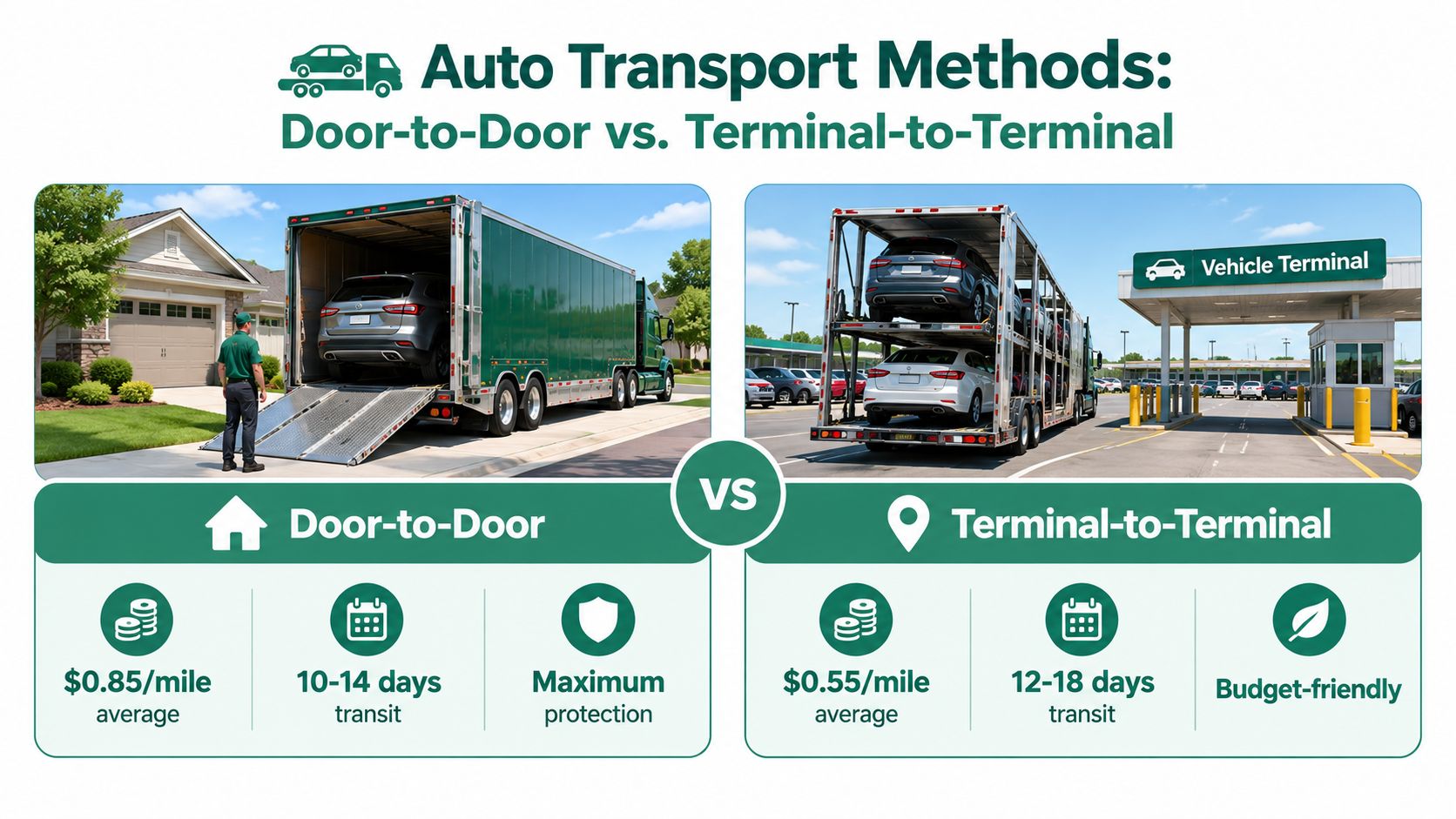
Professional transport trades some flexibility for controlled logistics. Open transport is generally the practical choice for ordinary used vehicles, daily drivers, dealership inventory, and relocation moves. Enclosed transport offers greater protection from road debris and weather for collector vehicles, luxury cars, restored automobiles, and vehicles whose owners want more controlled handling. Terminal-to-terminal service can work for buyers who can reach both facilities, while door-to-door service reduces extra driving and handoffs when safe access is available.
Compare the real trade-offs
| Option | What works well | What can go wrong |
|---|---|---|
| Drive it yourself | Immediate control, direct route changes, personal inspection at pickup | Travel expenses, added mileage, breakdown exposure, and permit complications |
| Open carrier | Broad availability and practical pricing for most vehicles | The vehicle is exposed to ordinary road conditions |
| Enclosed carrier | Added protection for valuable or delicate vehicles | Higher pricing and less flexible capacity |
| Door-to-door delivery | Fewer handoffs and convenient residential or business delivery | Large trucks may need a nearby safe meeting point |
| Terminal-to-terminal delivery | Useful when pickup or delivery locations lack carrier access | Requires arranging transportation to and from terminals |
Whether you drive or ship, document the condition at handoff. Photograph every visible panel, wheel, glass surface, interior area, and existing mark in good light. The pickup inspection should record mileage, fuel level, keys, accessories, and whether the car has any operational limitations.
A reliable open car transport option can suit a conventional used vehicle, while enclosed service is more appropriate when the vehicle's condition or value justifies additional protection. Ask for the carrier's insurance information, pickup and delivery terms, cancellation policy, payment schedule, and process for reporting damage. Transparent flat-rate pricing is useful only when the quote clearly states what it includes and whether the final meeting location may change because of access restrictions.
The delivery address matters. A carrier may not be able to enter a narrow street, gated community, downtown loading zone, or steep driveway. Give the transport coordinator accurate address and access information early, and agree on a safe nearby location if the truck must meet you elsewhere.
The following video can provide a visual overview of the shipping process before you choose a service:
For buyers covering the mainland, domestic vehicle transport can be arranged between major markets and smaller communities across the 48 contiguous states. That includes routes involving New York, Boston, Philadelphia, Washington, D.C., Baltimore, Atlanta, Miami, Tampa, Jacksonville, New Orleans, Houston, Dallas, Austin, San Antonio, Denver, Phoenix, Las Vegas, Los Angeles, San Diego, San Francisco, Sacramento, Portland, Seattle, Chicago, Detroit, Cleveland, Columbus, Nashville, Charlotte, Indianapolis, Minneapolis, Milwaukee, Kansas City, Omaha, Albuquerque, Tucson, and many other origin and destination points.
Handling Complex Routes to Puerto Rico
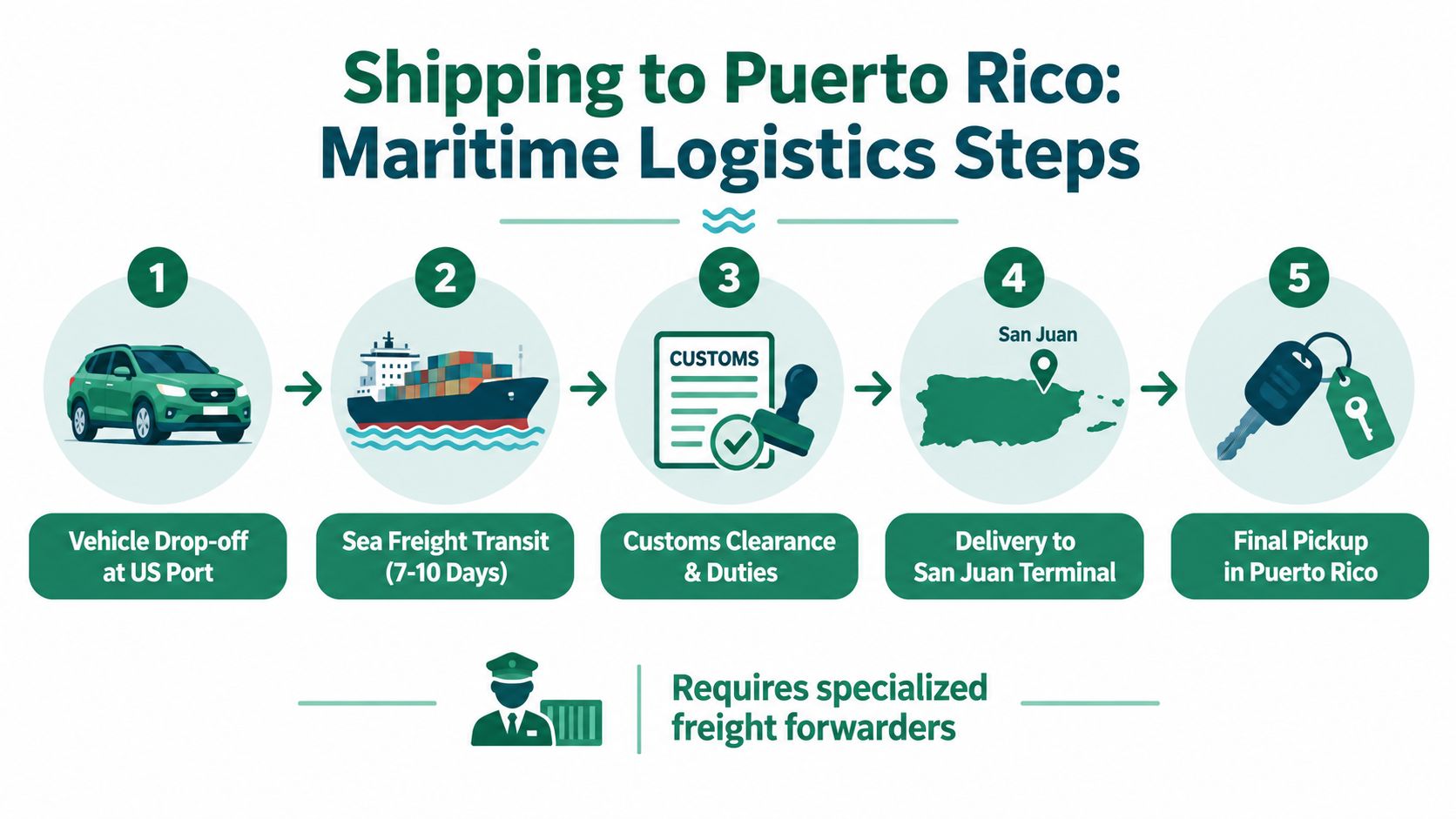
A vehicle moving between the U.S. mainland and Puerto Rico doesn't follow a standard domestic route. The journey usually has two physical legs. First, a truck carries the vehicle from its origin to a mainland departure port. Then an ocean vessel carries it to the Port of San Juan, where local release, tax, and delivery procedures begin.
Jacksonville, Florida, is identified by one industry source as a typical mainland sailing point. Miami, Savannah, Houston, and New York may also serve as departure points depending on the route, sailing availability, cargo arrangements, and the vehicle's origin. A buyer in Los Angeles, Chicago, Atlanta, Dallas, or another mainland market therefore needs a trucking plan before the ocean portion can be scheduled.
The mainland leg and port handoff
The vehicle should arrive at the port with ownership documents, identification details, keys, and shipping instructions organized. Confirm whether the port accepts personal drop-offs, whether the vehicle must be delivered by a carrier, what condition it must be in, and whether personal belongings are permitted. A non-running vehicle may require special equipment or advance approval.
Port schedules aren't as flexible as a local carrier pickup. A missed receiving window can affect the sailing, storage, or the next available movement. Build the plan around the port's cutoff and receiving requirements rather than assuming the truck can arrive whenever convenient.
After ocean transport, the vehicle must clear Puerto Rico's local requirements before it can legally be driven on the island. This includes the Puerto Rico Department of Treasury's excise tax process, locally called arbitrios, as outlined in this Puerto Rico vehicle shipping overview. The buyer should confirm the documentation needed for tax evaluation, customs release, registration, and terminal pickup before the vessel arrives.
Returning a vehicle from Puerto Rico
The reverse route has its own paperwork. A shipper exporting a vehicle from Puerto Rico may need proof of ownership, lienholder authorization when the vehicle is financed, a negative ACAA certificate, police inspection, and a USDA-standard underbody wash. These requirements appear on the U.S. Coast Guard vehicle export checklist, and missing one item can delay release at the island-side port.
Use a provider familiar with car shipping to Puerto Rico when the move involves a mainland pickup, port transfer, ocean freight, San Juan terminal coordination, and final island delivery. The buyer should receive a clear explanation of which party handles each handoff, which documents must be supplied by the owner, and when the vehicle becomes available for pickup.
Puerto Rico routes can serve individuals, snowbirds, military families, students, dealerships, and businesses, but the correct plan depends on ownership status, vehicle condition, origin, destination, port requirements, and local tax obligations. Treat the island move as a coordinated freight project, not as ordinary door-to-door trucking.
Mitigating Risk with Expert Logistics Support
A successful interstate purchase depends on handoffs. The seller releases the vehicle, the carrier receives it, the port or terminal accepts it, the destination agency processes ownership, and the buyer confirms condition at delivery. A dedicated logistics agent can keep those handoffs aligned, especially when the buyer is working remotely or the route includes Puerto Rico.
The provider should explain the transport method, quote assumptions, carrier assignment, insurance limits, pickup window, delivery process, and damage-claim procedure in plain language. Ask who will answer questions after booking, whether the shipment is monitored during transit, and how schedule changes are communicated.
A practical provider checklist
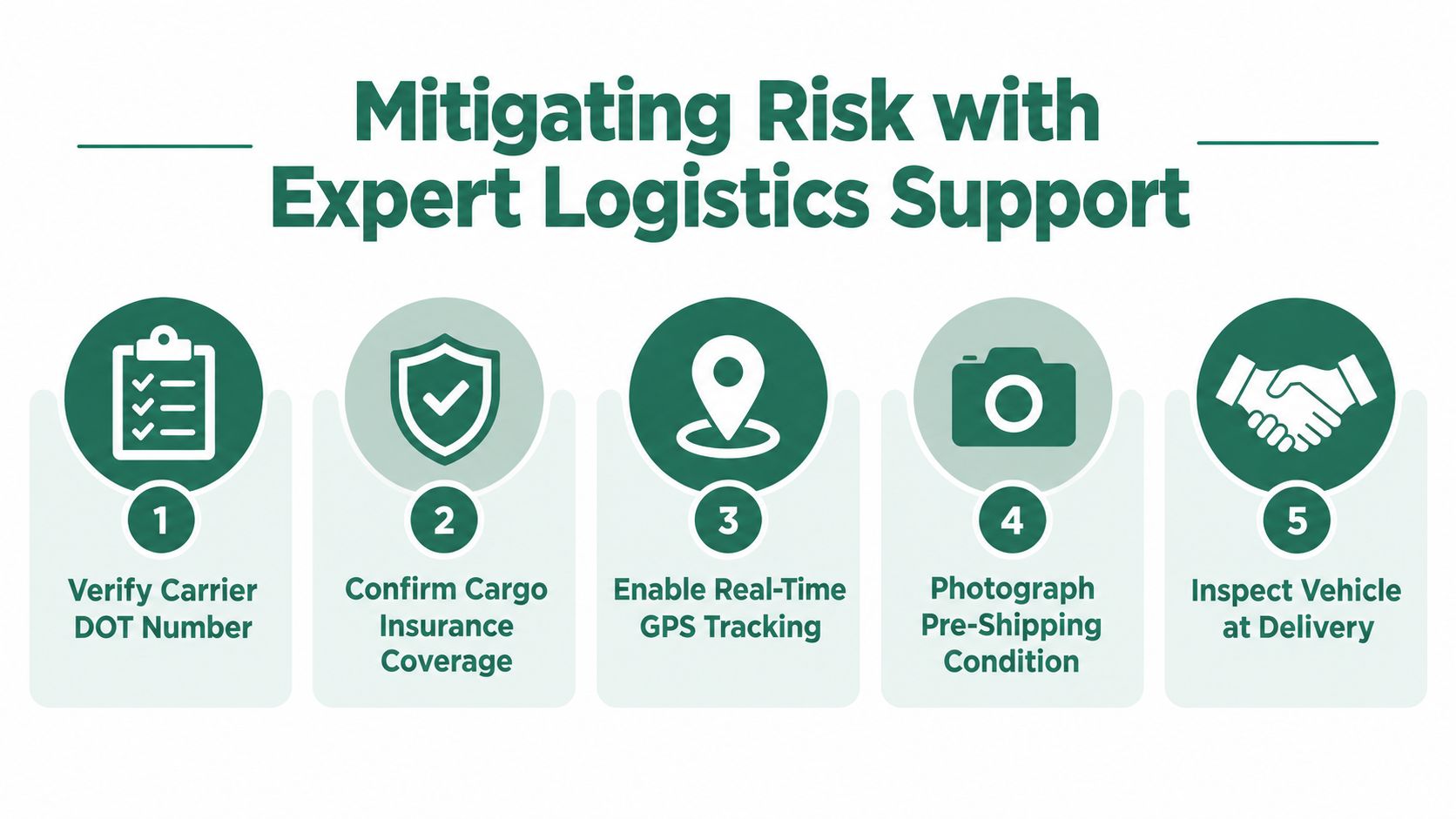
- Carrier verification: Request the assigned carrier's licensing and operating information before pickup.
- Insurance confirmation: Ask for the applicable cargo coverage and understand exclusions, deductibles, and the claims process.
- Condition records: Photograph and review the pickup inspection before the vehicle leaves.
- Communication plan: Confirm who provides status updates and how delivery appointments are changed.
- Final inspection: Compare the vehicle with the pickup record before signing delivery paperwork.
Dedicated bilingual support is particularly valuable for families and businesses coordinating across jurisdictions. National Car Transport is a U.S.-based provider with 25+ years of experience, an A+ BBB rating, transparent flat-rate pricing, and a network of 25,000+ vetted carriers. Its English and Spanish agents are based in the United States and bring over 20 years of experience in auto transport logistics, helping customers coordinate mainland routes, Puerto Rico moves, dealership transfers, military relocations, snowbird travel, student moves, and online purchases.
No two vehicle transports are alike. A car that runs reliably and fits an open carrier may need a different plan if it has limited ground clearance, an inactive registration, a lien, a port deadline, or a Puerto Rico export requirement. An experienced agent can identify those differences early, explain the practical options, and make the process simpler and quicker at a reasonable value.
For vehicles leaving Puerto Rico, the owner should begin document collection early because proof of ownership, lienholder authorization, a negative ACAA certificate, police inspection, and an underbody wash may all be required. Coordinating those requirements with the carrier and port prevents a completed purchase from becoming a delayed shipment.
National Car Transport can coordinate door-to-door vehicle shipping across the mainland and specialized transport to or from Puerto Rico, including carrier matching, inspections, port transfers, and delivery updates. Visit National Car Transport to request a clear transport plan and speak with a bilingual English/Spanish agent about moving your out-of-state purchase safely.