

Shipping a standard car from Massachusetts to Florida usually lands around $975 to $1,325, with 3 to 8 days in transit after pickup. If you're trying to line up a move, a snowbird trip, or a delivery date around work or school, that range gives you a realistic starting point before carrier assignment tightens the number.
You're probably comparing open and enclosed service, wondering whether winter weather changes the math, or trying to figure out how much flexibility you really have if your dates move. The route itself is straightforward, but the pricing isn't random, it follows a long East Coast lane where timing, load availability, and seasonality matter more than simple mileage.
Table of Contents
- Your Guide to Shipping a Car from MA to FL
- Estimated Costs and Transit Times for MA to FL Shipping
- The Step by Step Shipping Process Explained
- How Carrier Choice and Key Factors Affect Your Price
- Preparing Your Vehicle for Transport
- Special Considerations for Snowbirds and Military Moves
- Why Choose a Trusted Partner for Your MA to FL Transport
Your Guide to Shipping a Car from MA to FL
A lot of customers start with the same situation. They're leaving Massachusetts for the winter, heading to Florida for a new job, or sending a vehicle down for a seasonal stay and want a straightforward answer without sales fluff.
For a standard car on this lane, a practical budget is usually $975 to $1,325, and the pickup-to-delivery window typically lands in the 3 to 8 day range. That gives you a realistic starting point before you compare quotes and decide how flexible your schedule can be.
The lane is busy enough that booking can feel simple, but the details still matter. A dependable broker or carrier has to line up pickup timing, equipment type, and seasonal demand, and that is where an experienced coordinator earns their keep. In practice, companies like National Car Transport work well for customers who want a direct quote, a clear handoff, and a human being who can explain the options in plain English or Spanish.
Practical rule: if your dates are flexible, do not lock in the first quote you see. On this route, timing can matter as much as vehicle size.
Booking flexibility matters most for snowbirds and seasonal movers because north-south demand shifts with the calendar. If you can give the carrier a wider pickup window, you may get a better rate than someone who needs a tighter schedule, since the truck can be matched to other Florida-bound freight more easily. For a broader sense of how carriers price that flexibility, see car shipping cost guidance.
Customers shipping auto transport Massachusetts to Florida usually want two things, price clarity and delivery certainty. That is the focus here, with the budget ranges, carrier choices, prep steps, and seasonal trade-offs that change the outcome.
Estimated Costs and Transit Times for MA to FL Shipping
A car shipped from Massachusetts to Florida is priced like a long-distance freight move because that is what it is. The lane runs roughly 1,352 to 1,372 miles, and market data places standard pricing around $975 to $1,325 with transit in 3 to 8 days after pickup per route data. Larger vehicles can move that range higher, with pricing around $1,468 to $2,403 on the same corridor.
Those numbers make sense once you look at how carriers fill trailers. The quote is shaped less by the miles alone and more by trailer space, the carrier's next destination, and how easily your pickup window fits the route already on the truck. On a busy north-south lane, a flexible schedule often changes the price more than a short change in distance.
Sample MA to FL Auto Transport Rates & Times
| Route (From MA to FL) | Estimated Cost | Estimated Transit Time |
|---|---|---|
| Boston to Miami | $975 to $1,325 | 3 to 8 days |
| Worcester to Orlando | $975 to $1,325 | 3 to 8 days |
| Springfield to Tampa | $975 to $1,325 | 3 to 8 days |
| Cambridge to Fort Lauderdale | $975 to $1,325 | 3 to 8 days |
| Lowell to Jacksonville | $975 to $1,325 | 3 to 8 days |
The table reflects how this lane is usually quoted for standard sedans and daily-driver vehicles. A route calculator such as National Car Transport's shipping cost page is useful because it forces the quote to account for vehicle size, running condition, and service level instead of relying on a broad average.
A separate timing guide puts the trip at roughly 1,345 to 1,495 miles and 3 to 8 days in transit, with the schedule affected by pickup coordination, carrier availability, and equipment type route timing guide. That overlap matters because it shows the same basic pattern from another pricing model. The move is long, but once the car is loaded, the in-transit window is usually fairly short.
For snowbirds, that is where significant savings show up. When winter demand pushes more Florida-bound freight onto the same routes, tight pickup dates can cost more because the dispatcher has fewer options for matching your car with an already-moving trailer. A wider pickup window gives the carrier more room to pair your vehicle with southbound freight, and that can lower the quote without changing the route itself.
Even if the truck can cover the drive in a few days, your total timeline can stretch if dispatch needs time to assign the load and confirm pickup.
That difference matters for lease returns, home closings, and family arrival dates. The drive itself is only part of the job. The bigger risk is a narrow pickup window that leaves little room for carrier assignment.
The Step by Step Shipping Process Explained
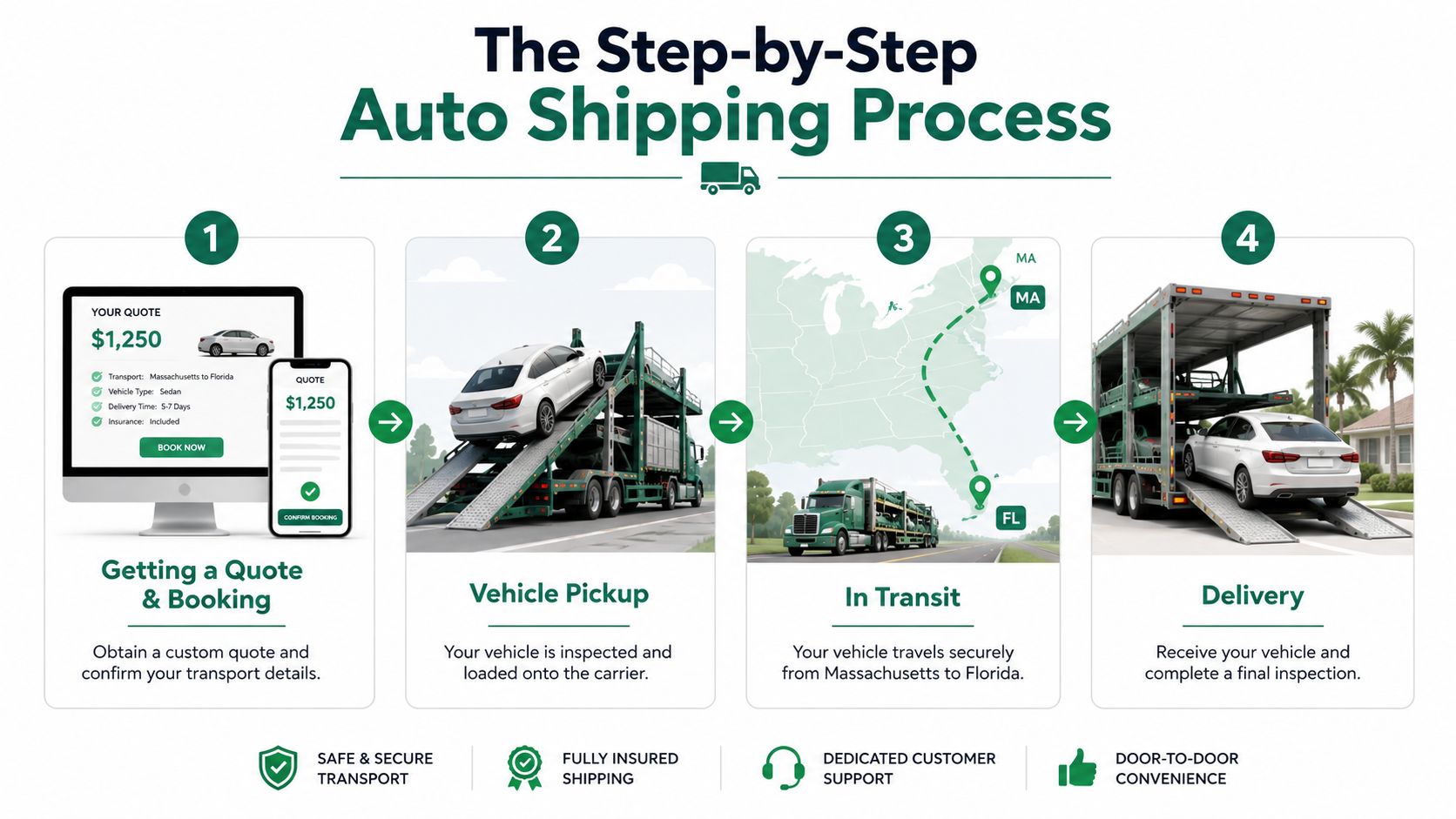
A clean Massachusetts to Florida move depends on handling each stage with clear instructions and no guesswork. An agent based in the U.S. can make that easier, especially when pickup details, vehicle condition notes, and schedule changes need to be communicated quickly and accurately.
Quote and booking
The process starts with matching your vehicle, route, and pickup window to a carrier that can cover the job. At that point, you decide whether open or enclosed service fits the car, whether it runs, and whether the pickup spot gives a large trailer enough room to work.
Flexible dates can lower the quote. That matters most for snowbirds, because Florida-bound demand often pushes rates up when everyone wants the same pickup window. A carrier with a little room to plan can place your car on a trailer that is already heading south, and that usually costs less than forcing a narrow date.
Pickup and inspection
Once a truck is assigned, the driver inspects the car before loading it. The condition report is what both sides use later at delivery, so the details need to be accurate, and it helps if you are there to review them.
Small issues matter here. A scratch, a ding, or even a note about existing wear is easier to handle before the car leaves than after it arrives in Florida.
In transit
After pickup, the vehicle moves down the route and toward Florida. The main issue at this stage is communication, not the drive itself, so clear updates from the dispatcher or agent keep the process under control.
If your timing is tied to a lease return, a closing date, or a family arrival, the loaded trailer is only part of the timeline. Dispatch also has to assign the car, confirm the pickup, and keep the handoff on track.
Delivery and handoff
At delivery, the car is unloaded and checked again. If the drop-off inspection matches the pickup record, the handoff is quick and straightforward.
For customers who want fewer handoffs and less time spent coordinating extra stops, door-to-door auto transport keeps the job tied to real addresses instead of terminal runs. That is useful for families, students, and businesses that need the vehicle delivered without an extra trip to retrieve it.
If you need more protection for a higher-value vehicle or one with a sensitive finish, enclosed auto transport is the better fit. It adds another layer between the car and road debris, which is why owners of restored cars or special builds often choose it.
How Carrier Choice and Key Factors Affect Your Price
Open transport is the default for a reason. National shipping data shows that open-carrier transport accounts for 85% to 90% of shipments, and it usually stays the least expensive option on a Massachusetts to Florida lane industry statistics. For most cars, that means a standard multi-car trailer and a quote that tracks the normal market range.
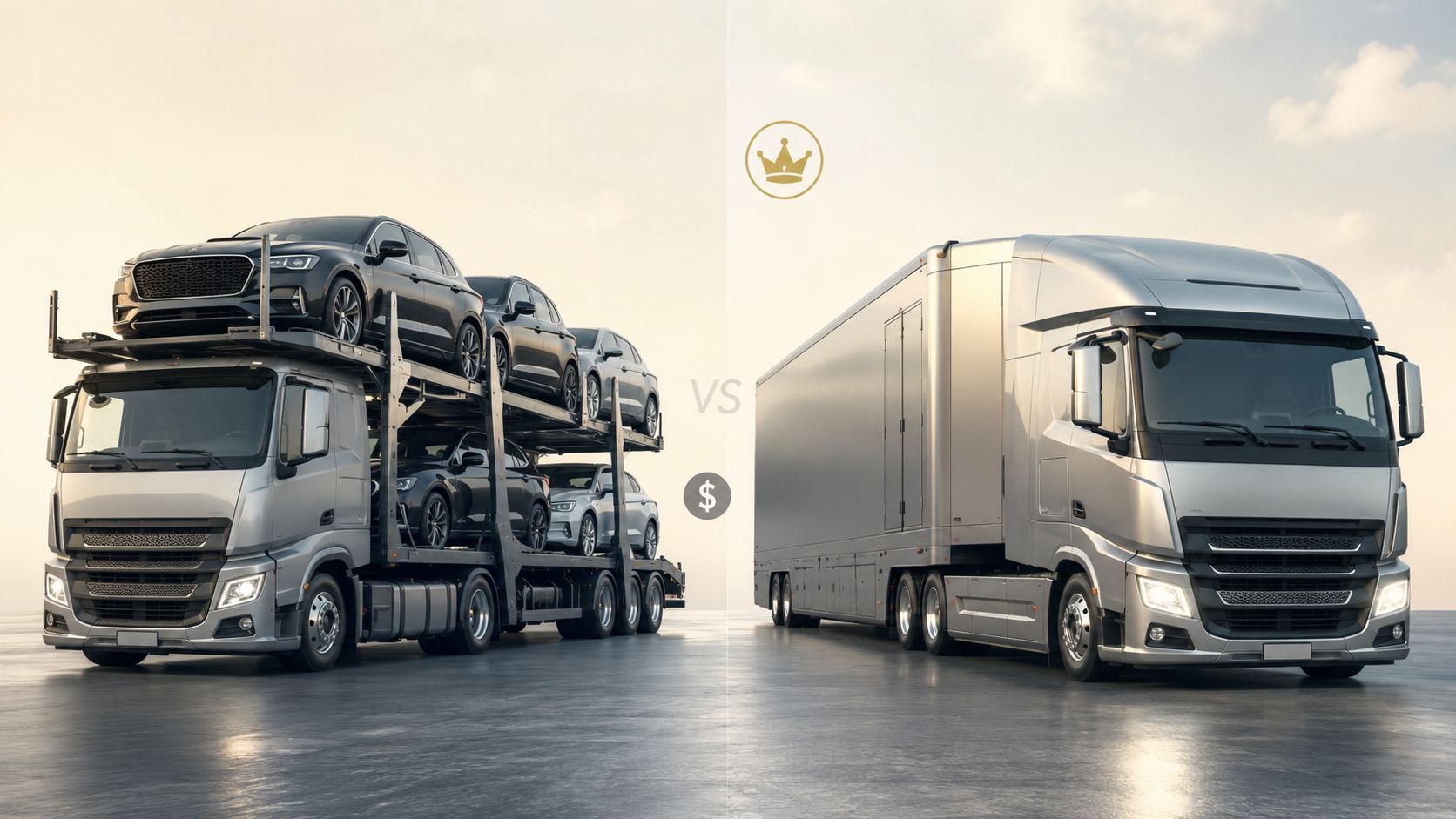
Open versus enclosed
Enclosed transport usually adds a 40% to 60% premium for the extra protection industry statistics. That cost makes sense for high-value vehicles, freshly restored cars, or shipments where winter salt and road debris are a real concern.
For a Massachusetts departure in colder months, enclosed service is easier to justify than it might be on a mild route. New England weather can leave a car exposed to grime before it even reaches the trailer, and some owners do not want that risk on a newer vehicle.
The choice is not only about prestige cars. If a vehicle has a pristine finish, unusual bodywork, or a sensitive delivery requirement, the premium can be reasonable even if it is not a classic.
Other factors that move the quote
Vehicle size still matters. Bigger SUVs, pickups, and vans take up more trailer space, and that changes the rate. A non-running car also tends to cost more because loading takes specialty equipment and extra time.
Seasonality moves the price as well. Snowbird traffic pushes more cars south at the same time, so carriers can tighten capacity and raise rates. That is why flexible pickup windows often save money on this route, while fixed-date shipping can cost more when demand is heavy. If you can book outside the busiest rush, the quote is usually easier to keep under control.
If you are comparing providers, ask whether they are quoting open or enclosed service, whether the car needs winch loading, and how insurance is handled during the trip. I have seen clients focus on the headline price and miss the fact that the cheapest quote was built on assumptions that did not match their vehicle.
For a dedicated enclosed option, National Car Transport's enclosed auto transport is one of the service types customers commonly compare when protection matters more than saving a few dollars.
Rule of thumb: if the vehicle would bother you to see dusty, salted, or exposed on an open trailer, enclosed service is worth asking about.
Preparing Your Vehicle for Transport
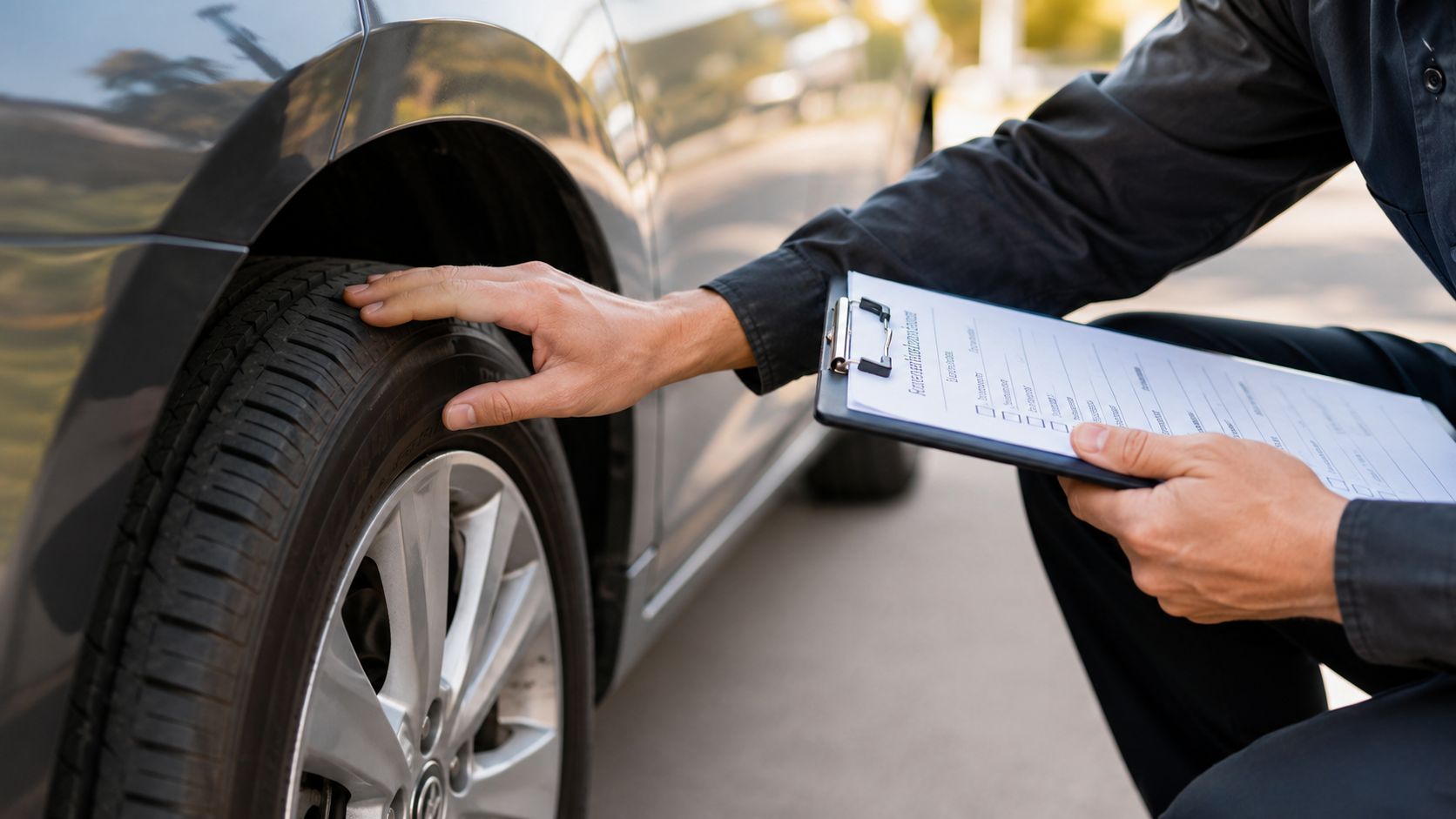
A clean handoff starts before the truck arrives. If the vehicle is ready, the driver can complete the inspection faster, loading moves along without extra back-and-forth, and you reduce the chance of a delay at pickup.
Simple prep checklist
- Clean the vehicle: A washed car makes scratches, dings, and pre-existing marks easier to document accurately.
- Remove personal items: Loose belongings can shift in transit and often complicate transport handling.
- Disable alarms: A dead battery or a chirping alarm creates unnecessary problems during loading and unloading.
- Keep fuel low: The tank should be no more than one-quarter full prep guidance. Less fuel keeps the car lighter and lowers the chance of spills or extra handling during loading.
- Have paperwork ready: Title, registration, and insurance details should be within reach before pickup, and the same prep guidance covers the documents you should organize before the driver arrives.
The reason for this checklist is straightforward. Drivers need room to inspect the vehicle, clear access to load it, and an accurate condition record. If anything slows that down, the pickup takes longer and the handoff gets messier. A clean vehicle also helps if there is ever a claim question later, because the before-and-after photos are easier to compare.
I always tell customers to take photos from multiple angles before pickup. Front, back, both sides, wheels, roofline, and close-ups of any existing blemishes give you a defensible record if the condition changes during transit. Keep a copy on your phone and another set where you can find them quickly if the driver asks for a comparison at the curb.
Keep the handover boring. A boring pickup usually means a good pickup.
If the car is clean and the paperwork is organized, the driver can focus on loading instead of waiting around for missing details. That is the kind of prep work that saves time without adding cost. For customers who want door-to-door convenience, door-to-door auto transport keeps the pickup and delivery process simple as long as the addresses are accessible. Military customers should also keep Forever Florida's military car insurance advice handy if they need to review coverage before shipment.
Special Considerations for Snowbirds and Military Moves
A Massachusetts-to-Florida move can cost more or less depending on the calendar. Southbound snowbird demand usually tightens capacity and pushes rates up during the busy fall and winter stretch, while shoulder months like spring tend to give you more room to save seasonal pricing data. The reason is simple. Carriers already heading south can fill spots faster when seasonal demand is strong, so the price reflects that pressure.
What snowbirds should watch
If your dates are fixed, you usually pay for that certainty. If your dates can move, you can often avoid the worst of the seasonal surge and get a better quote from carriers who are still trying to fill a truck.
That flexibility shows up in more than one place. A pickup window that can shift by a day or two, a delivery address with easy truck access, and a willingness to accept a wider delivery range all give dispatchers more options. In practical terms, that can be the difference between paying a premium and getting a fair lane rate.
What military families should factor in
Military moves usually hinge on schedule control rather than seasonal demand. PCS timelines leave less room for drift, so the work is in coordinating base access, delivery timing, and clean paperwork before the vehicle leaves.
Service members should also review insurance and coverage details before shipment, especially if registration or policy changes are happening at the same time. Forever Florida's military car insurance advice is a useful reference for that step.
For families who need a straightforward pickup and delivery path, door-to-door auto transport reduces the need for terminal drop-offs and extra handoffs. That matters most when the move is tied to report dates, short notice orders, or a base location that makes extra driving a poor fit.
If your move falls inside the peak fall window, book early. Waiting usually gives you fewer carrier options and less room to negotiate.
Students, dealership buyers, and relocating families face the same core issue. On this route, timing affects both availability and price, so booking flexibility is one of the few ways to keep costs down without changing the destination.
Why Choose a Trusted Partner for Your MA to FL Transport
The hardest part of auto transport Massachusetts to Florida isn't the drive. It's the coordination, the seasonal pressure, the carrier match, and the fact that a bad handoff creates stress on both ends of the move.
A trusted partner matters because this job depends on consistent communication and good dispatch judgment. The provider needs to match the right equipment, explain open versus enclosed service transparently, and keep the shipment moving without forcing you to chase updates.
National Car Transport fits that kind of job because it offers 25+ years of experience, an A+ BBB rating, transparent flat-rate pricing, and a network of 25,000+ vetted carriers. It also supports customers with bilingual English and Spanish agents based in the U.S., which helps when the shipment needs to be explained clearly and quickly to different family members or business contacts.
That combination is useful for more than one kind of customer. Snowbirds want predictability, military families want timing discipline, students want simple communication, dealerships want fewer surprises, and businesses want a process that doesn't eat up staff time. Value is not hype, rather it's having one experienced coordinator who can keep the shipment moving and answer questions before they become problems.
When the route is busy and the dates are tight, experience is part of the product. A company with a broad carrier network and a structured dispatch process is more likely to match your car with the right truck at the right time, which is what most customers need.
A CTA for National Car Transport.