
You’re probably here because the move is already in motion. Maybe you’re relocating out of Las Vegas for work, heading in for a military assignment, sending a car home after college, buying a vehicle online, or splitting time between the mainland and Puerto Rico. At that point, “Should I ship my car or drive it?” stops being a theoretical question and becomes a scheduling, cost, and risk decision.
In auto transport las vegas, the best outcomes usually come from planning early and knowing which parts of the process matter most. The difference between a smooth shipment and a frustrating one usually isn’t luck. It’s route timing, the right carrier type, accurate vehicle details, and a clean handoff at pickup.
Table of Contents
- Planning Your Vehicle Move in Las Vegas
- How Auto Transport Works Step-By-Step
- Choosing Between Open and Enclosed Transport
- What Determines Your Car Shipping Price
- Timelines and Special Considerations for Nevada Routes
- Your Pre-Shipment Checklist for a Smooth Handover
- Common Questions About Shipping Your Car
Planning Your Vehicle Move in Las Vegas
A lot of customers start with the same assumption. They think driving the vehicle themselves will be simpler. Sometimes it is. On a short move, that can be the right call.
But long-haul vehicle moves out of Las Vegas are where the hidden costs show up. Driving on deficient roads in the Las Vegas urban area imposes an annual cost of $1,744 per driver, and 24% of Nevada’s major urban roads are in poor condition, according to Nevada transportation data from TRIP. For a customer moving cross-country, that means added wear before the car even reaches its new home.

Why shipping often beats driving
If you’re relocating with kids, coordinating a military move, or sending a second vehicle to Puerto Rico after a mainland move, your car is only one piece of the puzzle. Flights, housing, paperwork, and work start dates usually matter more than adding a multi-day road trip.
These are the cases where professional transport makes sense:
- Job relocations: You can fly ahead and start work instead of losing days on the road.
- Snowbird moves: You avoid repeated seasonal mileage and desert-to-coast wear.
- Online car purchases: The vehicle moves directly from seller or auction pickup to your address or terminal.
- Military and student moves: You keep the move simpler by reducing one major travel variable.
Practical rule: If driving the vehicle creates extra hotel stops, missed workdays, or unnecessary mileage, shipping is usually the more controlled option.
Las Vegas also has a lot of customers moving more than just a standard sedan. SUVs, trucks, family vehicles, and towable setups all create planning issues. If you’re moving an RV-adjacent setup or thinking through safe towing before deciding whether to ship the car instead, these travel trailer towing tips are worth reviewing.
What experienced shippers look at first
Before booking, nail down four basics:
- Pickup window so the carrier can route your vehicle properly.
- Delivery situation including gated communities, condo access, or military bases.
- Vehicle type so you know whether open, enclosed, or port-connected service fits best.
- Personal schedule because the easiest move is the one that removes time pressure.
Customers new to auto transport las vegas often focus only on the quote. Seasoned shippers look at the whole chain. A realistic pickup window, the right trailer type, and clear delivery instructions do more for a smooth shipment than chasing the lowest price.
How Auto Transport Works Step-By-Step
Most first-time customers expect auto shipping to be vague. It isn’t, if the order is handled correctly. A vehicle shipment follows a simple sequence from quote to final inspection.
Start with an accurate quote
The quote is only useful if the details are right. Give the exact year, make, model, operable status, pickup city, delivery city, and your preferred timing. If the vehicle has low ground clearance, oversized tires, or modifications, say so early.
A strong quote should also clarify the service type:
- Open transport for standard daily drivers
- Enclosed transport for higher-value or specialty vehicles
- Port-connected service for Hawaii or Puerto Rico moves
- Inoperable handling if the vehicle doesn’t start, steer, or brake normally
If anything about the vehicle is unusual, mention it before booking. Last-minute surprises are one of the fastest ways to delay pickup.
What happens after you book
Once you confirm the order, dispatch starts working on a carrier match that fits your route, vehicle type, and schedule. The important part isn’t speed alone. It’s matching the shipment to a carrier that can perform the job cleanly.
A typical booking flow looks like this:
Order review
Your shipment details are checked for route, timing, and equipment fit.Carrier assignment
The vehicle is matched to a vetted driver operating that lane.Scheduling call
You get a pickup window and contact instructions.Preparation check
You’re reminded to clean the car, remove personal items, and have keys ready.
Good dispatch work feels quiet. The shipment moves because the route, equipment, and communication were aligned before pickup day.
Pickup transit and delivery
Pickup is where the paperwork matters most. The driver performs a visual inspection with you and records the vehicle’s condition on the Bill of Lading. That document matters because it becomes the reference point at delivery.
After pickup, the vehicle moves on the assigned route. Communication can vary by lane and carrier, but good coordination usually includes check-ins when timing shifts, weather changes, or delivery access needs to be adjusted.
At delivery, repeat the inspection before signing off. Don’t rush that part. Walk around the vehicle, compare it to the pickup record, and note anything that needs attention.
Here’s what customers should expect at each milestone:
| Stage | What you do | What the carrier does |
|---|---|---|
| Quote | Provide accurate vehicle and route details | Review lane and equipment fit |
| Booking | Confirm timing and contact info | Schedule dispatch |
| Pickup | Inspect car and sign Bill of Lading | Load and secure vehicle |
| Transit | Stay reachable | Move vehicle on route and communicate updates |
| Delivery | Final inspection before acceptance | Unload and complete delivery paperwork |
The process is straightforward when everyone handles their part. Where shipments get messy is usually not transport itself. It’s bad info at booking, poor pickup access, or rushed inspections at handoff.
Choosing Between Open and Enclosed Transport
The biggest decision most customers make is whether the vehicle belongs on an open trailer or inside an enclosed one. There isn’t a universal right answer. It depends on the vehicle, your tolerance for exposure, and how much protection you want built into the move.
When open transport makes sense
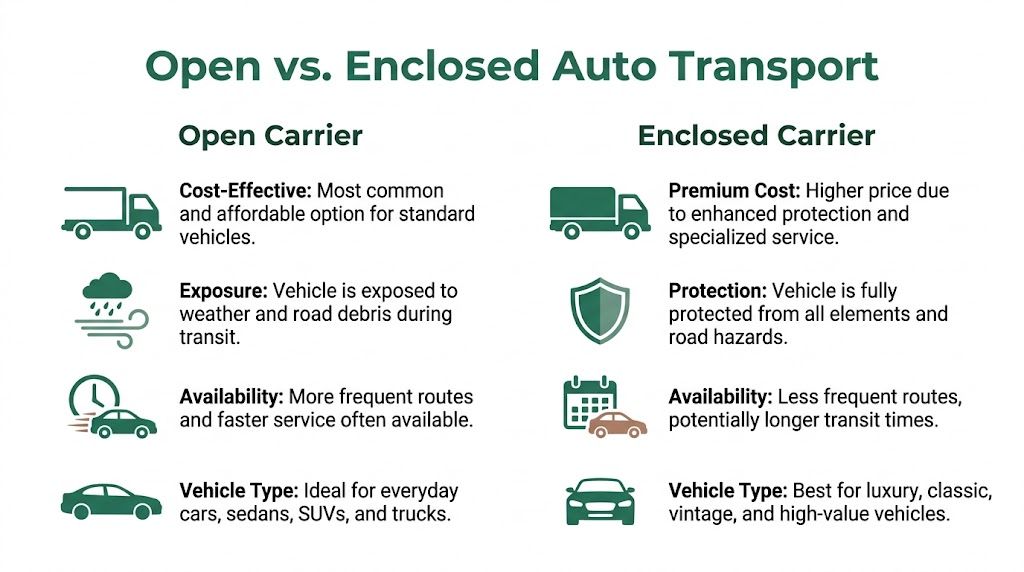
Open transport is the standard option commonly utilized. It works well for daily drivers, leased vehicles, family SUVs, and routine interstate moves. If your car spends every day outside in parking lots, highways, and normal weather, open shipping is usually a practical fit.
Open transport works best when your priority is:
- Cost control
- Faster carrier availability on common lanes
- Routine transport for standard vehicles
- Simple dealer, auction, or relocation moves
For most mainstream cars, open transport is what works. It’s efficient, widely available, and easier to schedule on popular routes.
When enclosed transport is worth it
Enclosed transport is for customers who care more about maximum protection than lowest cost. That usually means classics, exotics, luxury vehicles, restored collector cars, or any unit with fragile paint, custom trim, or sentimental value.
The protection difference is significant. For high-value vehicles, enclosed trailers reduce environmental damage risk by 85%, and Las Vegas heat can reach 110°F, which can accelerate paint oxidation. The same source notes that enclosed options are recommended for high-value or classic vehicles to help keep scratch or damage incidence below 0.1%, according to Precision Auto Transport carrier benchmarks.
If replacing a windshield, trim piece, or custom paint correction would make you sick to your stomach, book enclosed and move on.
That’s especially true in Las Vegas. Desert heat, road dust, and long outbound lanes aren’t ideal conditions for a freshly detailed collector car sitting on an open deck.
Open vs. Enclosed Auto Transport at a Glance
| Feature | Open Carrier | Enclosed Carrier |
|---|---|---|
| Cost | More budget-friendly | Higher due to added protection |
| Exposure | Open to weather and road debris | Protected from outside elements |
| Availability | More common on most lanes | More limited and more specialized |
| Best fit | Daily drivers, sedans, SUVs, trucks | Luxury, classic, vintage, high-value vehicles |
A few practical trade-offs matter more than marketing language:
- Open is not “bad.” It’s the normal solution for most shipments.
- Enclosed is not “necessary” for every expensive car. But it’s the safer call for collector-grade or specialty units.
- Route availability changes the experience. Open carriers typically offer more frequent scheduling on common mainland routes.
- Vehicle height and ground clearance matter. Some low-profile cars load better on enclosed equipment with lift gate support.
People searching auto transport las vegas often ask which option professionals choose for their own vehicles. The answer is simple. Daily-use vehicles usually go open. Vehicles that would be hard to repair, hard to replace, or hard to forgive damage on go enclosed.
What Determines Your Car Shipping Price
Price questions are usually framed the wrong way. Customers ask, “What’s the cheapest way to ship my car?” The better question is, “What changes my quote, and which of those things can I control?”
What the Las Vegas ranges look like
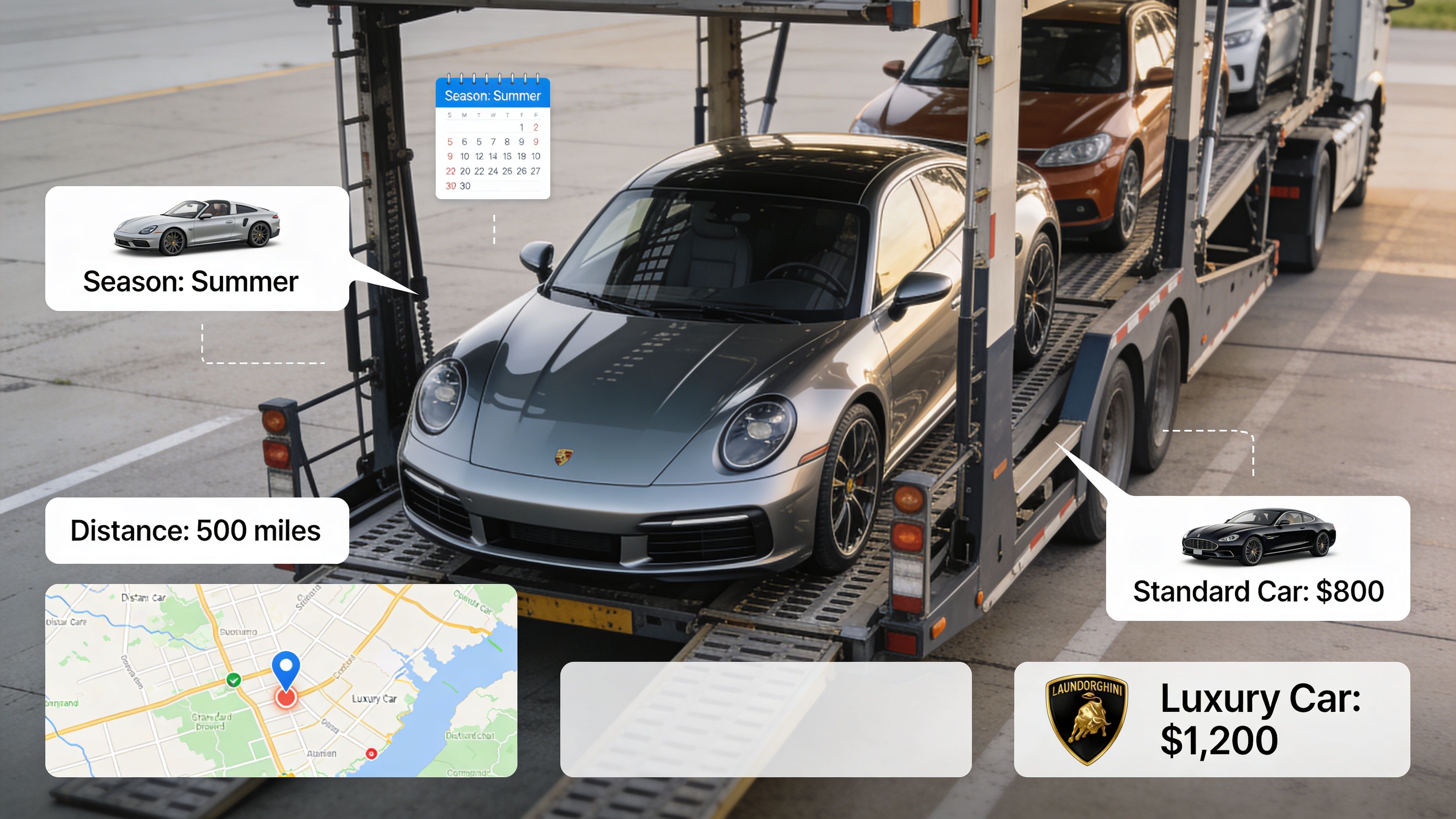
For a realistic baseline, auto transport costs from Las Vegas typically range from $950-$1,250 outbound and $900-$1,200 inbound, according to recent Las Vegas route pricing data. On a longer route, Las Vegas to Chicago can cost $1,300-$1,500 for an open carrier.
Those figures are useful because they show range, not a fake universal average. Real quotes shift with route demand, season, and the exact vehicle.
The variables that change your quote
A quote usually moves for a handful of practical reasons:
Distance and lane popularity
Major routes are generally easier to price and schedule than out-of-the-way pickup or delivery points.Vehicle size
An SUV or truck takes different deck space than a compact sedan.Trailer type
Enclosed transport costs more than open because the equipment is more specialized.Season
Timing affects availability. Snowbird periods, holidays, and event-heavy windows can tighten capacity.Vehicle condition
Inoperable vehicles require the right loading equipment and more planning.
The part many customers miss is access. If a full-size car hauler can’t safely enter your street, the driver may need to meet nearby in a large parking lot or commercial access point. That doesn’t mean the service is bad. It means the carrier is protecting the truck, your vehicle, and the neighborhood.
Why timing matters more than people expect
Price pressure often comes from avoidable timing mistakes. If you wait until the last minute, insist on a narrow pickup window, or book during a crowded seasonal rush, the lane becomes harder to cover.
This short explainer gives a useful overview of how carriers think about rates and scheduling:
The most expensive shipment is often the one that has to move immediately after sitting unplanned for a week.
If you want a cleaner price, give the dispatcher room to work. A flexible pickup window, accurate vehicle details, and realistic expectations usually produce a more stable quote than trying to force a rushed move at the last second.
Timelines and Special Considerations for Nevada Routes
Las Vegas is one of those cities that can be easy or difficult depending on the lane and the calendar. On strong corridors, vehicles move quickly. On crowded event weeks or seasonal surges, timing can tighten fast.
Why Las Vegas moves efficiently on many lanes
Las Vegas benefits from direct highway access and heavy shipping volume on western and cross-country lanes. Its position on Interstate 15 allows carriers to achieve door-to-door delivery to Los Angeles in 1-3 days, based on Las Vegas shipping route guidance from RoadRunner.
That matters because common lanes tend to give carriers more routing options. A vehicle leaving Las Vegas for Southern California, Arizona, Texas, or other major mainland destinations usually has better odds of fitting into an active route than a shipment starting from a remote town.
Where delays usually happen
Fast lanes still get disrupted. Las Vegas has a unique event calendar, and transport customers feel it most when major conventions or citywide traffic restrictions affect access and routing. The same RoadRunner source notes that major events like SEMA can add 20-30% to route delays.
A few practical triggers show up again and again:
- Major event traffic around convention centers, resorts, and restricted access zones
- Seasonal snowbird volume when many customers are moving vehicles on similar schedules
- Tight urban delivery points where large haulers can’t safely stop
- Holiday timing when drivers, terminals, and customers all compress their schedules
Try not to schedule a same-day handoff with your flight, lease signing, or home closing. Build in buffer on both ends.
Customers moving on a deadline should also think about local access. A flexible meeting spot can save hours if your street, apartment complex, or casino-area address won’t accommodate a large transporter.
How Puerto Rico shipments connect from the mainland
Puerto Rico moves are different from standard state-to-state transport because they combine inland trucking with port coordination and ocean shipping. The vehicle first moves from Las Vegas or another mainland pickup point to the port side of the move. From there, it transitions into the island shipment process.
What works best on Puerto Rico shipments is simple:
- Get the mainland leg scheduled early
- Make sure title and identity documents are ready
- Confirm who is receiving the vehicle in Puerto Rico
- Ask whether the route is door-to-port, port-to-port, or full coordinated delivery
Experience is paramount. Customers often focus on the sea portion, but delays usually begin with the mainland handoff if paperwork, timing, or receiving details aren’t fully aligned. That’s especially true for snowbirds, military families, and dealerships moving vehicles between the mainland and San Juan.
Your Pre-Shipment Checklist for a Smooth Handover
Pickup day should feel routine. If it feels chaotic, something was left too late. A clean handoff usually comes down to vehicle prep, access planning, and taking the inspection seriously.
What to do before the driver arrives
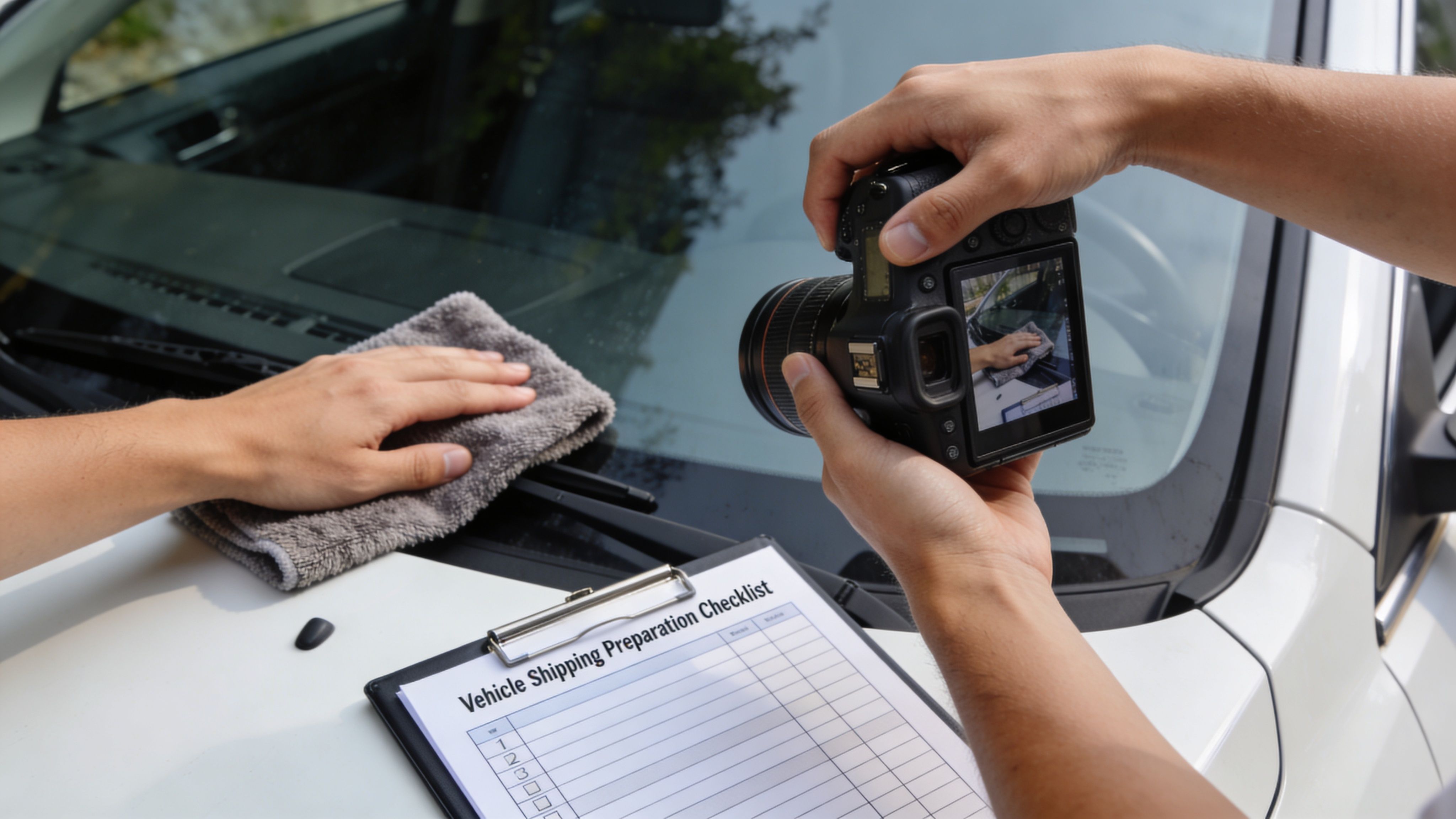
Use this checklist before pickup:
- Wash the vehicle: Dirt hides chips, scratches, and small dents that should be visible during inspection.
- Remove personal items: Carriers are moving the vehicle, not household goods.
- Leave only a small amount of fuel: About a quarter tank is the standard practical target for loading and unloading.
- Turn off alarms and toll devices: That prevents unnecessary interruptions during transit.
- Check battery and tires: A vehicle that starts cleanly and rolls properly is easier to load.
- Have one full set of keys ready: Don’t hand over your only key if you can avoid it.
If you live in a tight residential area, scout an alternate meeting point in advance. Shopping center lots, wide commercial roads, and truck-friendly side streets often work better than forcing the carrier into a cramped neighborhood entrance.
What to check on the Bill of Lading
The Bill of Lading is the document customers tend to sign too quickly. Slow down there. Walk the vehicle with the driver and make sure existing marks are noted before loading.
Focus on these points:
- Body panels and bumpers
- Windshield and glass
- Wheels and low front valances
- Mirrors, trim, and spoilers
- Mileage note if relevant to your records
At delivery, do the same walk-around before final acceptance.
Don’t inspect the car in poor lighting if you can avoid it. If delivery happens late, use your phone light and take fresh photos before signing.
That small habit prevents most post-delivery disputes. Good paperwork and clear photos protect everyone involved.
Common Questions About Shipping Your Car
Some questions come up on nearly every order, especially when the route involves Las Vegas, a military move, or Puerto Rico.
What documents are needed to ship a car to Puerto Rico
The exact document set can vary by shipment type and who owns the vehicle, but customers should expect to provide proof of ownership or authorization, government-issued identification, and shipment details that match the vehicle. If there’s a lienholder, leased status, or dealership transfer involved, ask for document requirements before pickup is scheduled.
For Puerto Rico, don’t wait until the inland carrier is already assigned. Get your paperwork reviewed first.
How does insurance work if the vehicle is damaged
The carrier’s cargo insurance applies during transport, and the Bill of Lading serves as the condition record at pickup and delivery. If there’s an issue, the first step is to note it on the delivery paperwork before signing off.
That’s why inspection matters so much. If damage isn’t documented at delivery, the claim process gets harder.
Can you ship a non-running vehicle or an EV
Yes, but you need to declare it accurately.
A non-running vehicle may require winch access or special loading equipment. If the car doesn’t start, steer, brake, or roll normally, say that upfront. For electric vehicles, carriers also need to know it’s an EV because handling can differ. The Las Vegas market has a growing EV shipping need, and customers should ask about battery charge level, heat exposure, and any vehicle settings that should be disabled before transport, as noted in Montway’s Las Vegas car shipping page.
How far in advance should you book
Earlier is better, especially for enclosed shipments, long-haul routes, and Puerto Rico moves. If your timing is flexible, book once your move dates are reasonably firm. If your route is tied to a port, a college term, a military report date, or a home closing, give yourself extra lead time.
The biggest mistake isn’t booking too early. It’s waiting until every other part of the move is locked and then expecting vehicle transport to appear on command.
If you want experienced help with auto transport las vegas, cross-country shipping, or a mainland-to-island move, National Car Transport is a reliable place to start. Their U.S.-based team includes bilingual English and Spanish advisors with deep auto transport experience, and they handle everything from standard mainland routes to Puerto Rico vehicle shipping with transparent flat-rate pricing, no upfront charge until carrier matching, and practical guidance that makes a complicated move feel manageable.