
Auto transport insurance is typically included in the carrier's service at no extra charge, but standard cargo coverage often ranges from $100,000 to $350,000 per load, while federal public-liability requirements for many interstate carriers commonly begin at $750,000. The important question isn't only whether your car is insured, but whether the policy, exclusions, and limits adequately protect that specific vehicle.
You may be waiting for a vehicle to arrive after a relocation, a dealership purchase, a military move, or a seasonal trip between the mainland and Puerto Rico. The driver unloads the car, and you notice a scrape that wasn't there at pickup. At that moment, the phrase “insured during transport” matters less than the paperwork, the type of coverage, and the vehicle's documented condition.
Auto transport insurance is usually part of the carrier's service rather than a separate customer charge, as summarized by MarketWatch's explanation of auto transport insurance. Still, coverage isn't a blanket warranty. A veteran shipping advisor will ask a more useful question: What happened, which policy responds, and can the evidence prove it?
Table of Contents
- Understanding Insurance in Auto Transport
- Liability vs. Cargo Insurance Key Differences
- What Typical Policies Cover and Exclude
- How to Verify Carrier Insurance and Handle Claims
- Shipping to Puerto Rico Insurance Considerations
- Best Practices for Shippers to Stay Protected
Understanding Insurance in Auto Transport
A customer once called after a vehicle arrived with a fresh mark along the lower door. The customer remembered clean paint at pickup, while the driver recalled ordinary road wear. Neither memory resolved the dispute. The pickup and delivery inspections, photographs, and bill of lading supplied the evidence.
That example shows why auto transport insurance is more than a general promise that a vehicle is “insured.” Two commercial coverages usually address separate risks:
- Carrier liability insurance: Responds to bodily injury or property damage caused by the transport truck.
- Motor truck cargo insurance: Protects the shipped vehicle while it is in the carrier's care, custody, and control, including loading, transit, and unloading.
The FMCSA insurance filing requirements distinguish these functions. Commercial auto liability forms generally exclude cargo, so a carrier needs separate policies for the truck's operations and the vehicle being hauled. Liability protects third parties affected by the truck. Cargo coverage addresses loss or damage to the customer's vehicle.
Why the distinction matters at pickup
If a transport truck strikes another vehicle on the highway, its liability policy addresses third-party bodily injury or property damage. If the shipped car is damaged in that collision, cargo coverage is intended to address that vehicle's loss.
The same reasoning applies when loading equipment damages a bumper. The applicable policy still depends on the carrier's terms, exclusions, deductible, and records. High-value vehicles deserve particular attention because a cargo limit, valuation rule, or exclusion can leave a gap between the car's market value and the amount available for a claim. International shipments to Puerto Rico may require the same careful review of transit stages and exclusions rather than relying on a domestic assumption.
Ask for both the liability filing and cargo coverage details before the vehicle leaves your driveway. Request the policy limits, covered transit period, exclusions, and claim instructions in writing.
National Car Transport draws on 25+ years of auto transport experience to help customers raise these questions before booking. Its advisors coordinate shipments through a network of 25,000+ vetted carriers. Customers reviewing commercial coverage terms may also find relevant background in this resource on garage liability policies Florida. The goal is practical: match the policy to the vehicle, route, and documented condition before an uncovered loss becomes a claims dispute.
Liability vs. Cargo Insurance Key Differences
A carrier can arrive with a valid certificate and still leave a high-value vehicle partly exposed. Liability and cargo insurance may appear on the same document, but they answer different questions: who was harmed by the truck, and what happened to the vehicle being transported?
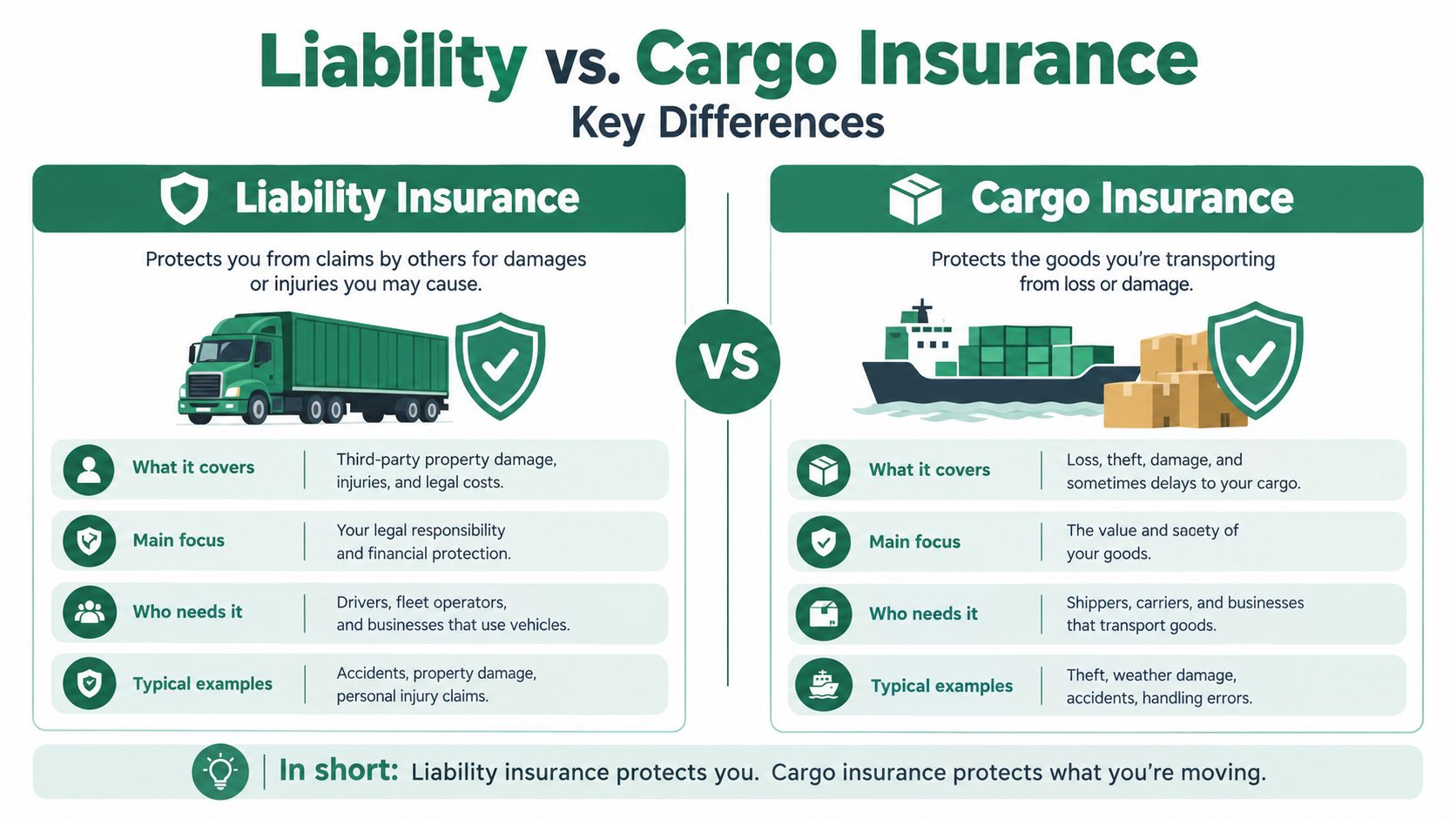
| Insurance Type | What it protects | When it usually responds | What to ask for proof of |
|---|---|---|---|
| Automobile liability | Other drivers, pedestrians, and property affected by the carrier's vehicle operations | A transport truck causes third-party injury or property damage | A current certificate, the insurer's contact details, and confirmation that the policy covers the planned operation |
| Motor truck cargo | The shipped vehicle while it is in the carrier's care, custody, and control | A covered event damages the vehicle during a defined part of loading, transit, or unloading | The cargo limit, deductible, valuation method, covered transit period, and exclusions for the vehicle and route |
Federal filing requirements establish the carrier's insurance obligations. For a practical explanation of policy types and driver coverage, see DAT's insurance guidance for truck drivers. The distinction remains practical: liability may address another driver's medical claim or a damaged traffic barrier, while cargo coverage is the policy normally considered for physical damage to your car.
The certificate is only the starting point. Ask whether the cargo limit applies per vehicle or is shared among several vehicles in one incident. Confirm how the policy treats a luxury, classic, modified, or non-running vehicle, since its valuation may not follow an ordinary market estimate.
Questions that expose coverage gaps
Before booking, ask the carrier or shipping advisor:
- What cargo limit applies to this shipment, and is it shared across one incident?
- What deductible would reduce the claim payment?
- Does the valuation method reflect the vehicle's documented value?
- Which exclusions apply to weather, personal contents, mechanical conditions, and pre-existing damage?
- Does coverage continue through every stage of this route, including international handling to Puerto Rico?
A high-value vehicle needs written answers before pickup. A policy can be active while still failing to cover the full loss, a particular transit stage, or an exclusion-triggering circumstance. Save the certificate, policy details, vehicle photos, and condition report together so the insurance record matches the shipment.
What Typical Policies Cover and Exclude
Most customers don't need to study every insurance form, but they do need to understand the boundary between transit damage and everything else. Standard auto transport insurance generally addresses the vehicle itself while it is being loaded, moved, and unloaded. It doesn't automatically cover every item inside the car or every mechanical problem discovered after delivery.

Commonly covered situations
A cargo claim may be appropriate when a covered event causes physical damage to the vehicle. Examples include a highway collision involving the transport truck, carrier equipment damage during loading, theft while the vehicle is in the carrier's custody, or a severe weather event covered by the policy.
The carrier's responsibility usually begins when the vehicle is accepted for transport and ends after delivery under the shipment terms. That timeline matters because a problem discovered days later may be harder to connect to the carrier's custody.
The policy limit matters just as much as the event. Public industry summaries commonly place cargo coverage in the $100,000 to $350,000 range per load, with some providers citing $150,000 to $350,000 per load. These are shipment-level figures, not an automatic promise that every vehicle on a multi-car load receives the full amount. See Progressive Commercial's auto hauler insurance overview for background on the separate liability and cargo structure.
Frequent exclusions and misunderstandings
- Personal belongings: Household goods, electronics, documents, and loose items left inside the vehicle generally aren't protected by cargo insurance.
- Pre-existing damage: Existing dents, scratches, paint defects, and mechanical conditions aren't new transit losses.
- Routine mechanical failure: A weak battery, an existing leak, or an unrelated breakdown usually requires a different form of coverage.
- Weather and road exposure: Some policies exclude certain minor cosmetic effects or specific weather events, while additional protection may be available in defined circumstances.
- Valuation gaps: A policy can exist without providing enough coverage for a luxury, classic, or heavily modified vehicle.
For higher-value vehicles, enclosed shipping can reduce exposure to road conditions and may come with stronger cargo terms, but it doesn't eliminate the need to inspect the policy. National Car Transport describes its enclosed auto transport service as an option for vehicles needing added protection.
Before pickup, remove personal items, photograph every side of the vehicle, and disclose modifications or unusual conditions. Clear records won't change an exclusion, but they can establish what damage was present before the carrier took possession.
How to Verify Carrier Insurance and Handle Claims
Verification should happen before scheduling, not after a problem appears. A professional carrier or broker should be able to identify the actual motor carrier, provide insurance information, and explain how the claims process works.
Verify before the vehicle moves
Use this sequence:
- Identify the motor carrier. If you booked through a broker, ask which carrier will physically transport the vehicle.
- Confirm federal authority and filings. FMCSA records and required insurance filings help establish whether the carrier has the coverage needed to operate.
- Request cargo details. Don't stop at a liability certificate. Ask for the cargo limit, deductible, policy period, and relevant exclusions.
- Match the coverage to the vehicle. Tell the advisor if the car is classic, exotic, modified, unusually valuable, inoperable, or carrying special equipment.
- Read the shipping documents. The bill of lading should identify the vehicle and record its condition at pickup.
A certificate can be useful, but it isn't the same as understanding the policy's application to your shipment. Customers who want a broader checklist can review avoid denied claims by verifying before signing a transport agreement.
Build the evidence at both inspections
At pickup, walk around the vehicle with the driver in adequate light. Record existing scratches, dents, chips, cracked glass, wheel damage, and any unusual condition on the bill of lading. Take clear photographs that show both the individual mark and its location on the car.
At delivery, repeat the inspection before signing. If you find new damage, describe it specifically on the bill of lading, photograph it immediately, and ask the driver for the carrier's claims instructions. Avoid vague wording such as “damage found.” Identify the panel, type of damage, and approximate location.
A signed condition report is your timeline. It shows what existed before transport and what appeared by delivery.
Submit the claim to the carrier's insurer using the required form and include the bill of lading, pickup and delivery photographs, repair estimates, and relevant correspondence. Keep copies of everything and communicate in writing when possible. National Car Transport states that it maintains an A+ BBB rating, transparent flat-rate pricing, and advisor support designed to keep customers informed, but the carrier's insurer remains central to a claim against the motor carrier.
If the insurer questions whether damage occurred during transport, return to the evidence rather than relying on memory. The strongest file connects the pickup condition, the delivery condition, the carrier's custody period, and the requested repair.
Shipping to Puerto Rico Insurance Considerations
A mainland shipment to Puerto Rico is not just a longer version of a domestic highway move. The vehicle may pass through trucking, terminal handling, ocean transport, and destination delivery, with different contracts and insurance terms at each stage.
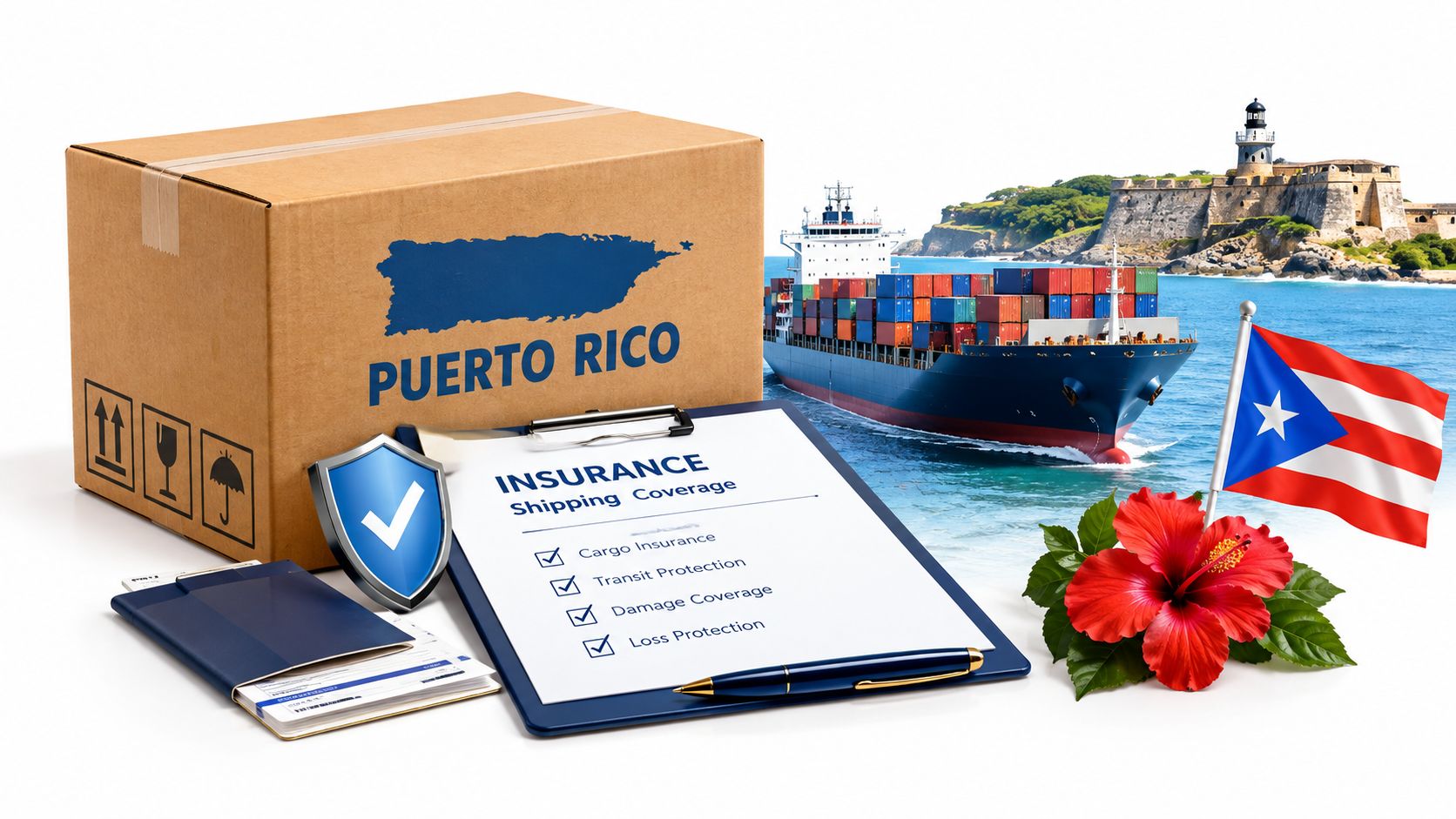
For a mainland pickup, the motor carrier's cargo coverage applies during its defined custody period. The ocean leg may introduce marine cargo terms, container conditions, carrier liability limitations, and optional insurance. San Juan is a major logistics point, so customers should ask exactly where one policy ends and another begins.
One published route example illustrates the difference. Crowley lists optional cargo insurance at $313 for up to $25,000 of coverage and $625 for up to $50,000 of coverage, while also stating that declining insurance can limit liability to $500 per unit under U.S. COGSA. These terms come from the carrier's specific Puerto Rico route guidance, so they shouldn't be assumed to apply to every ocean shipment. Review Crowley's Puerto Rico vehicle shipping guidance and request the current terms for your booking.
Plan for the destination, not only the crossing
After arrival, a mainland-shipped vehicle typically must be registered in Puerto Rico, obtain local plates, and carry automobile insurance meeting Puerto Rico's minimum requirements, as described in this Puerto Rico relocation guide. Insurance planning therefore continues after the port handoff.
A snowbird may need to coordinate seasonal residence, port timing, and local registration. A military family may need a documented chain of custody across a change of duty station. A dealership moving inventory should reconcile the bill of lading, condition report, commercial invoice, and ocean documents for every unit.
National Car Transport's Puerto Rico car shipping service supports mainland-to-island and island-to-mainland planning with container and ocean shipping options. Its bilingual English and Spanish agents are based in the USA, and the company says its advisors have more than 20 years of experience in auto transport logistics. That human support matters because no vehicle transport is alike. A customer needs one person who can explain the handoffs, identify the applicable policy, and make the process simple and quick at a fair value.
Best Practices for Shippers to Stay Protected
Protection starts with choosing a shipment plan that matches the vehicle, route, and risk. A standard sedan moving between mainland cities may have different needs from a collectible vehicle traveling by ocean to San Juan. The insurance question should be part of the booking conversation, not an afterthought.
Use this practical review before pickup:
- Confirm both coverages: Verify the carrier's automobile liability and motor truck cargo insurance separately.
- Check the limit: Compare cargo coverage with the vehicle's actual value, especially for luxury, classic, and modified cars.
- Document condition: Complete the pickup inspection, photograph the vehicle, and retain the signed bill of lading.
- Remove contents: Take out personal items, documents, valuables, and loose equipment.
- Clarify exclusions: Ask about pre-existing damage, mechanical issues, weather, road exposure, deductibles, and ocean-shipping limitations.
- Inspect before signing: Record every new mark on the delivery document and report it promptly.
Carriers' insurance economics help explain why limits and underwriting vary. Industry material places carrier premiums at roughly $700 to $1,500 per month per truck, while higher-risk operations can exceed $1,500 to $2,500 or more, as discussed in LogRock's auto transport insurance cost overview. That cost is part of the carrier's operating structure, not a reason to assume every policy provides unlimited protection.
For customers comparing providers, National Car Transport offers transparent flat-rate pricing and works with a network of 25,000+ vetted carriers. It also supports open, enclosed, and island shipping, with bilingual English and Spanish agents based in the United States. Customers moving a classic vehicle can review its classic car shipping service, then ask specifically how the assigned carrier's cargo coverage fits the car's value.
The best provider won't just say “your car is insured.” It will explain who carries the policy, what the limit means, which exclusions apply, how inspections work, and whom you contact if damage appears.
National Car Transport helps individuals, snowbirds, military families, students, dealerships, and businesses arrange domestic and Puerto Rico vehicle shipping with carrier insurance included in the quote, transparent flat-rate pricing, and dedicated bilingual advisors. Visit National Car Transport to discuss your vehicle's route, value, shipping method, and coverage questions before booking.