

You're trying to get a car out of Florida and into New York without turning it into a week of phone calls, guesswork, and surprise fees. That usually means one of two things. You're either managing a seasonal move, or you've already learned that driving the East Coast yourself is a miserable use of time.
The Florida to New York lane is busy for a reason. It serves snowbirds, military families, students, dealers, and anyone moving between two dense markets where timing matters as much as distance. The challenge isn't just finding a carrier, it's understanding how seasonality, vehicle type, and delivery location change the job.
Table of Contents
- Understanding the Florida to New York Auto Transport Corridor
- Breaking Down Auto Transport Costs and Seasonal Pricing
- Choosing Between Open and Enclosed Transport Options
- Preparing Your Vehicle and Managing the Pickup Process
- Navigating New York Delivery Challenges and Urban Access
- Special Considerations for Snowbirds, Military Moves, and Classic Cars
Understanding the Florida to New York Auto Transport Corridor
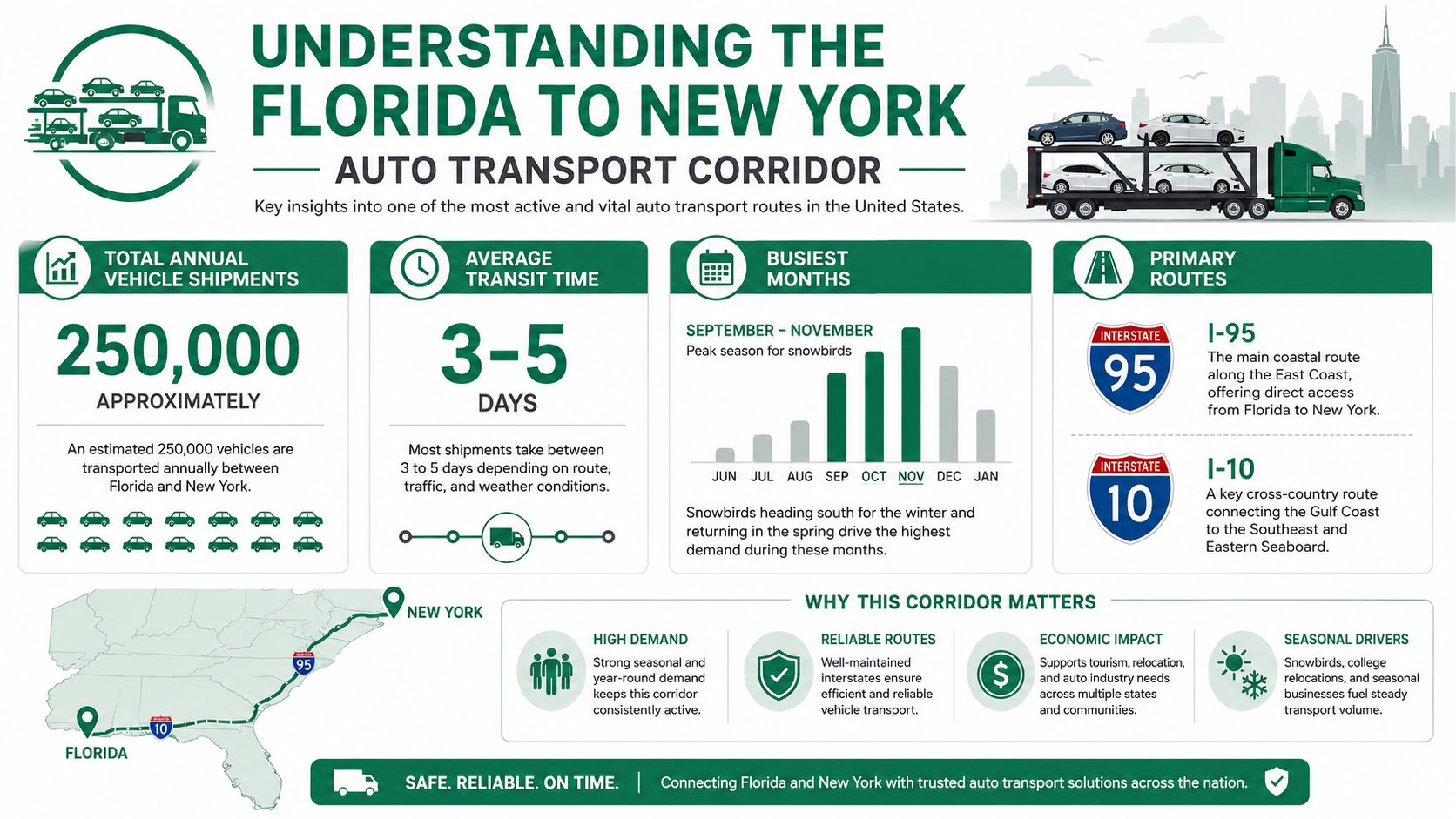
A couple in Naples calls every spring with the same problem. They have spent the winter in Florida, they are heading back north, and they need the car in New York before the calendar gets crowded. That kind of shipment sits on one of the busiest East Coast lanes, and the seasonal pattern is part of the reason. Commercial Carrier Journal reported a 15% winter surge in Florida-bound vehicle moves and a 12% winter decline in New York, which helps explain how carrier capacity shifts as snowbirds move in both directions. Commercial Carrier Journal's report on seasonal auto transport shifts is the clearest public marker for that imbalance.
Why this lane behaves differently
The Florida to New York corridor is not a quick regional move. Independent route guides place it at roughly 1,195 to 1,281 miles, with some major city pairs running farther, such as Miami to New York City at about 1,284 miles and Jacksonville to New York City at about 1,032 miles. Transit usually takes 1 to 5 days after pickup, but the final timeline depends on origin, destination, and how the carrier works its East Coast route. A1 Auto Transport's Florida to New York route guide and the corridor data in Commercial Carrier Journal's report point to the same practical reality, this is a long-haul lane that needs planning, not guesswork.
The load order matters as much as the mileage. A truck leaving South Florida may travel a familiar northbound line, but each pickup changes the sequence and each delivery changes the window. A shipment from Tampa to upstate New York can follow a very different schedule than one moving from Miami into the New York metro area, even when both sit on the same general corridor.
Practical rule: treat the Florida to New York move like a corridor shipment, not a local delivery. The carrier's route, pickup order, and drop-off access matter as much as the miles.
Where National Car Transport fits
For shippers who want a route-specific quote, National Car Transport's Miami to New York car shipping page is a useful starting point because it reflects how the lane is booked, by pickup city, delivery city, and vehicle profile rather than by a broad statewide average.
If you are trying to estimate the full bill before booking, jak policzyć koszty importu is a useful reminder that route pricing is only one piece of the calculation. Carrier availability, access at both ends, and timing can change the final number quickly.
The bigger takeaway is straightforward. Northbound demand tightens when seasonal moves ramp up, so carriers fill faster and the better pickup windows disappear before the lowest quotes do. During a busy migration period, flexibility matters more than chasing a small discount on a lane where capacity is already under pressure.
Breaking Down Auto Transport Costs and Seasonal Pricing
A quote for auto transport from Florida to New York shifts with more than mileage. Vehicle type, pickup timing, delivery access, and whether the car rides on an open or enclosed trailer all affect the final number. Sherpa Auto Transport places a standard vehicle move in a broad range that reflects a straightforward shipment, and their Florida to New York route guide is a practical baseline for understanding how the lane is priced.
What pushes the quote up or down
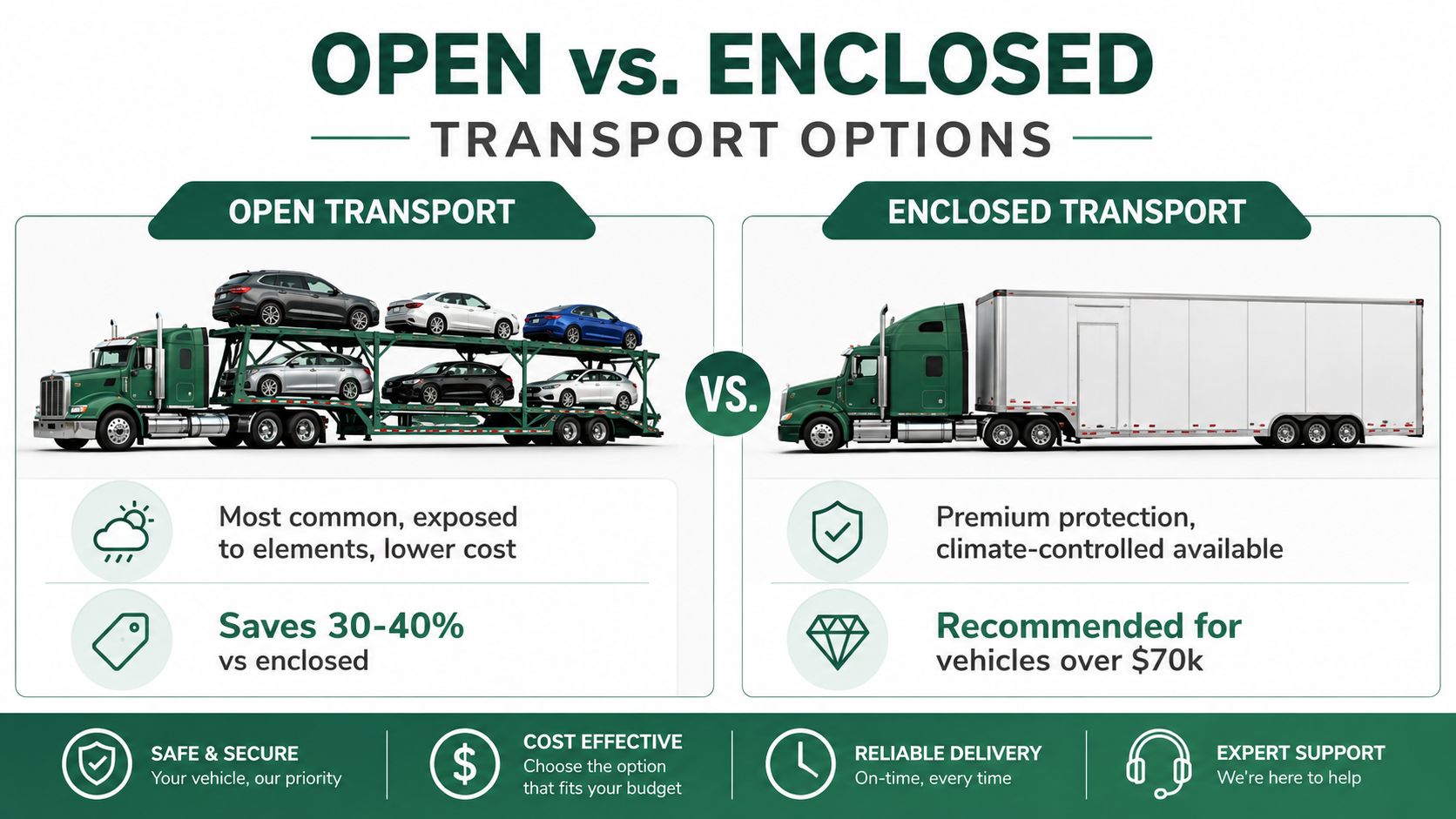
Open transport usually keeps the bill lower. Enclosed transport adds a meaningful premium because it gives the car more protection and uses capacity that is harder to fill. AmeriFreight says open transport on this route typically runs $1,100 to $1,300, while enclosed transport usually lands at $1,900 to $2,300. Their Florida to New York auto transport guide makes the gap hard to miss, and the same kind of spread is why open shipping is the default for ordinary daily drivers. For a route-specific comparison of open service, open car transport options are usually the starting point.
Timing changes the quote as much as mileage does. Spring demand from snowbirds and other northbound movers can tighten carrier availability, which means fewer open spots and less room to bargain. If your pickup window is flexible, you usually have more options. If your dates are fixed, the carrier has less routing freedom and the price tends to reflect that.
| Origin City | Destination City | Estimated Cost |
|---|---|---|
| Jacksonville, FL | New York, NY | $849 |
| Tampa, FL | Rochester, NY | $939 |
| Orlando, FL | Yonkers, NY | $809 |
| Miami, FL | Buffalo, NY | $879 |
| St. Petersburg, FL | Syracuse, NY | $929 |
Those city pairs show how much the final quote can vary inside the same Florida to New York lane. The difference is not random. It comes from pickup density, delivery complexity, and how easily a carrier can keep the load moving through the Northeast without deadheading or wasting time on access-limited streets.
New York delivery access matters more than many shoppers expect. A quote into Manhattan can look very different from one headed to a suburban driveway, because truck size, curb access, and building rules change the delivery plan. Brooklyn can be just as tricky, especially if the car needs to reach a narrow block, a low-clearance area, or a location where a full-size carrier cannot stage safely. Those realities often show up as higher handling costs or a wider delivery window.
If you are trying to understand why one quote looks low and another looks high, jak policzyć koszty importu is a useful comparison point. The article covers a different shipping context, but the method transfers well, separate transport type, timing, and handling before you treat the first number as the final bill.
Cost rule that holds up: the lowest usable quote is usually the one that matches your timing, access, and vehicle type without forcing the carrier to work around avoidable constraints.
Choosing Between Open and Enclosed Transport Options
A daily-driver sedan headed back to Queens does not need the same setup as a collector car going to an indoor storage facility in Westchester. The decision should start with the vehicle, not the sales pitch. If the car is ordinary, drivable, and not especially vulnerable to road grime, open transport usually makes sense. If the vehicle is high-value, low-clearance, freshly restored, or not something you want exposed to weather and highway debris, enclosed transport is the safer fit.
Open transport versus enclosed transport
Open carriers are the standard shipping method for the majority of vehicles on this lane because they're common, flexible, and easier to dispatch. Open transport is usually the cheaper option, while enclosed service costs more because it adds protection and narrows the pool of available carriers. That pricing gap is one reason open shipping usually wins for mainstream cars on budget-sensitive moves.
Enclosed transport earns its place when the car needs extra protection. That includes classic cars, luxury SUVs, low-clearance vehicles, and anything that would be expensive or difficult to repair after road exposure. It also tends to be more selective on routing, so availability can tighten during busy periods.
If the car is replaceable, open transport is often the practical choice. If the car is special, enclosed is the cleaner decision.
Door-to-door versus terminal handoff
The delivery model matters just as much. Door-to-door service is convenient when the truck can physically reach the address, but that isn't always realistic in dense New York neighborhoods. Terminal or meet-point handoff can be the smarter move when a full-size carrier cannot safely get to the final block, or when the street layout makes unloading awkward.
For readers comparing service types on the Florida to New York lane, National Car Transport's open car transport page is a practical reference because it stays focused on the standard service most carriers use for everyday vehicles. For low-volume specialty vehicles, though, the decision should still be driven by protection needs, not just price.
A quick decision lens
- Choose open transport when the vehicle is a regular daily driver, you want broader carrier availability, and you're trying to keep the quote efficient.
- Choose enclosed transport when the car has high value, low clearance, custom paint, or you want protection from weather and road debris.
- Use a meet-point or terminal when the delivery address creates access problems, especially in dense New York neighborhoods.
That last point matters more on the Florida to New York corridor than many shoppers expect. Winter timing can tighten capacity, and northbound snowbird traffic often pushes carrier schedules and pricing in the same direction. A quote that looks fine on paper can become less attractive if the carrier has to work around a hard Manhattan curb, a Brooklyn block with tight access, or a delivery window that gets squeezed by seasonal demand.
Preparing Your Vehicle and Managing the Pickup Process
The cleanest shipments start before the carrier reaches the curb. The trucking company handles the long haul, but the vehicle's condition at pickup is your responsibility, and that matters if a damage claim ever needs to be reviewed. The process should be treated as two inspections, one at origin and one at delivery, with the Bill of Lading tying those records together. Dealer's Choice Auto Transport's Florida to New York process guide lays out that workflow in a way that matches how reputable carriers operate.
What to do before the carrier arrives
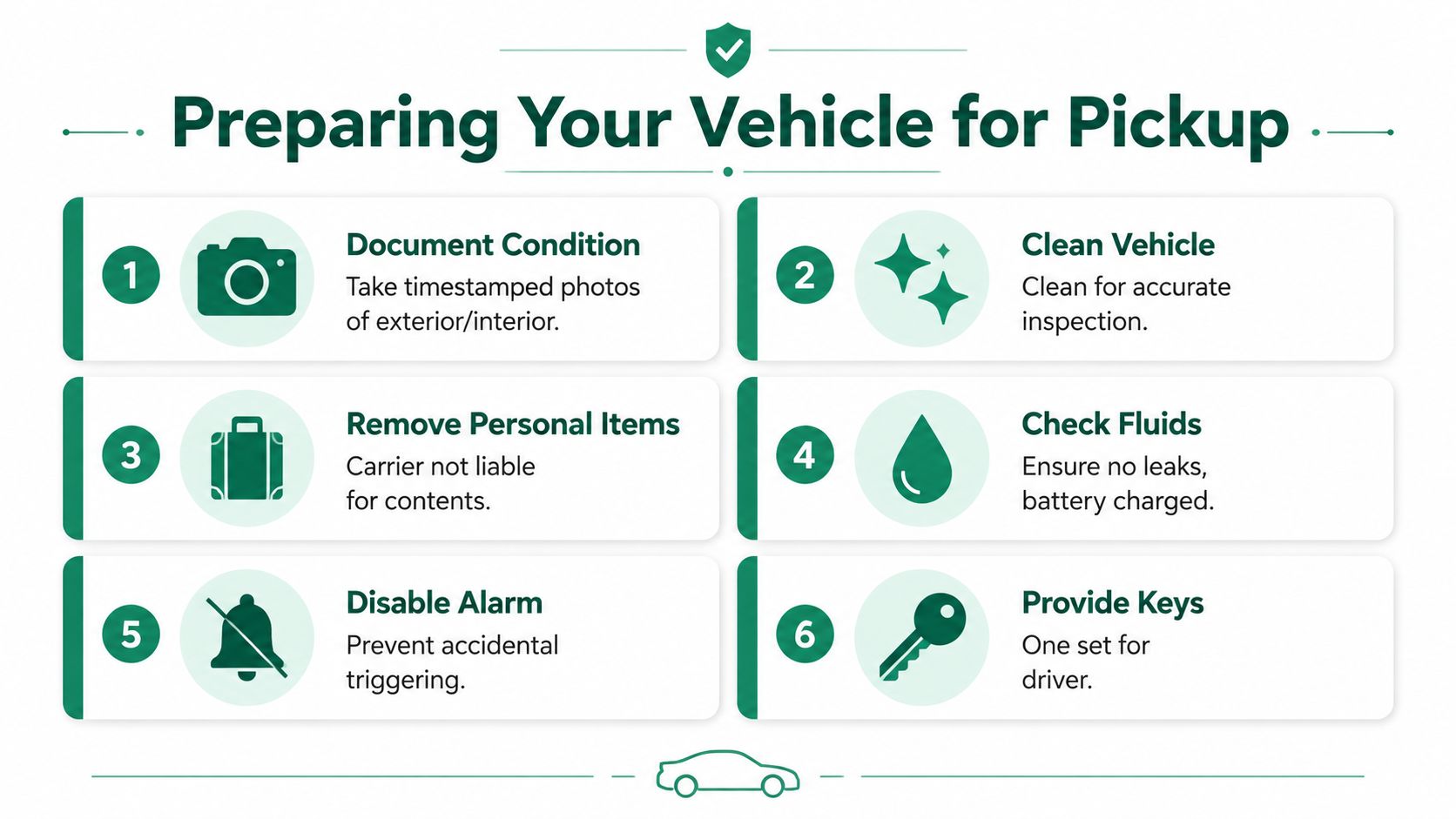
Start with photos. Take timestamped shots from every angle, including the roof, wheels, bumpers, and interior. Clean the vehicle enough that existing dents and scratches are easy to spot. That sounds basic, but it is one of the easiest ways to avoid a dispute later.
A practical pickup checklist stays short:
- Document the condition: take clear photos before the driver loads the car.
- Remove personal items: carriers generally do not want loose belongings in the vehicle.
- Check fluids and battery: make sure there are no leaks and the car can be loaded without surprises.
- Leave about a quarter tank of fuel: enough for loading and unloading, not enough to add unnecessary weight.
- Disable alarms: a false alarm on pickup day slows everyone down.
- Hand over one key set: the driver needs to move the vehicle during loading and unloading.
Those details may seem minor, but they prevent avoidable friction. If the car is blocked in, filled with luggage, or has a dead battery, the pickup window becomes harder to manage. On the Florida to New York lane, the carrier also has to think about winter demand and northbound snowbird traffic, so a ready vehicle helps protect your place in the schedule.
What happens at pickup and during transit
Most route guides describe pickup windows of about 1 to 3 days, and that is a realistic expectation for this lane when the shipment is booked properly. The driver inspects the car, notes the visible condition on the Bill of Lading, and loads it for the northbound run, usually on I-95 or a similar major route. Dealer's Choice Auto Transport's Florida to New York process guide reflects that sequence from dispatch through delivery.
Practical rule: if it is not written down on the Bill of Lading, do not assume it is protected in a later claim.
The best pickups are the ones where the driver can arrive, inspect, load, and leave without extra back-and-forth. That usually means the car is ready, the paperwork is in hand, and the pickup window has enough flexibility to absorb traffic, route changes, or a tighter carrier schedule. On this corridor, that flexibility can matter just as much as the quote itself.
Navigating New York Delivery Challenges and Urban Access
Many car owners assume door-to-door delivery means the truck can stop at the exact address. In New York, that assumption causes problems. Manhattan, parts of Brooklyn, and other dense neighborhoods can block access for a full-size carrier because of street width, low overpasses, weight limits, or parking restrictions. Navi Auto Transport's route guidance is unusually direct about this, noting that Manhattan deliveries often require meet-points in Queens, the Bronx, or northern New Jersey rather than a curbside drop at the apartment building. Navi Auto Transport's Florida to New York route page is one of the few public guides that treats urban delivery as a real operational issue.
Why location matters more in New York than people expect
A suburban driveway in Westchester is not the same as a block in Brooklyn. One can usually handle a full-size car carrier without much planning. The other may require a wider street, a parking lot, or a nearby handoff point, and that difference affects both timing and final cost.
The same route guide says exact cost and timing depend heavily on pickup and delivery location, and that flexibility around main routes can lower cost. That matters because the carrier is optimizing the whole run, not just your stop. If your address forces a detour, the dispatcher may have to adjust the route or set a meet location that fits the truck's size.
What to confirm before delivery day
Before the vehicle reaches New York, confirm the following with the dispatcher or driver:
- Exact delivery access: ask whether your street can physically handle a carrier.
- Meet-point fallback: know the nearest legal handoff location if the truck can't enter your block.
- Contact timing: make sure the driver has the right phone number and can call ahead.
- Inspection readiness: be ready to walk the car, compare it with pickup notes, and sign the final Bill of Lading.
Don't treat delivery as a formality. The final inspection is where you close the loop on the shipment, and it's the last chance to catch any damage on paper before the driver leaves.
The difference between a clean New York delivery and a stressful one is usually planning, not luck. If the address is urban, dense, or access-limited, solving the handoff location early prevents the kind of day-of scramble that wastes time for everybody.
Special Considerations for Snowbirds, Military Moves, and Classic Cars
Snowbirds, military families, and classic car owners all use the same corridor, but they are solving different problems. Snowbirds are usually watching timing and rate swings. Military families are working around orders, reporting dates, and tight coordination windows. Classic car owners are focused on protection, handling, and whether the carrier has the right equipment. Those shipments should not be priced or scheduled the same way.
Snowbirds and seasonal timing
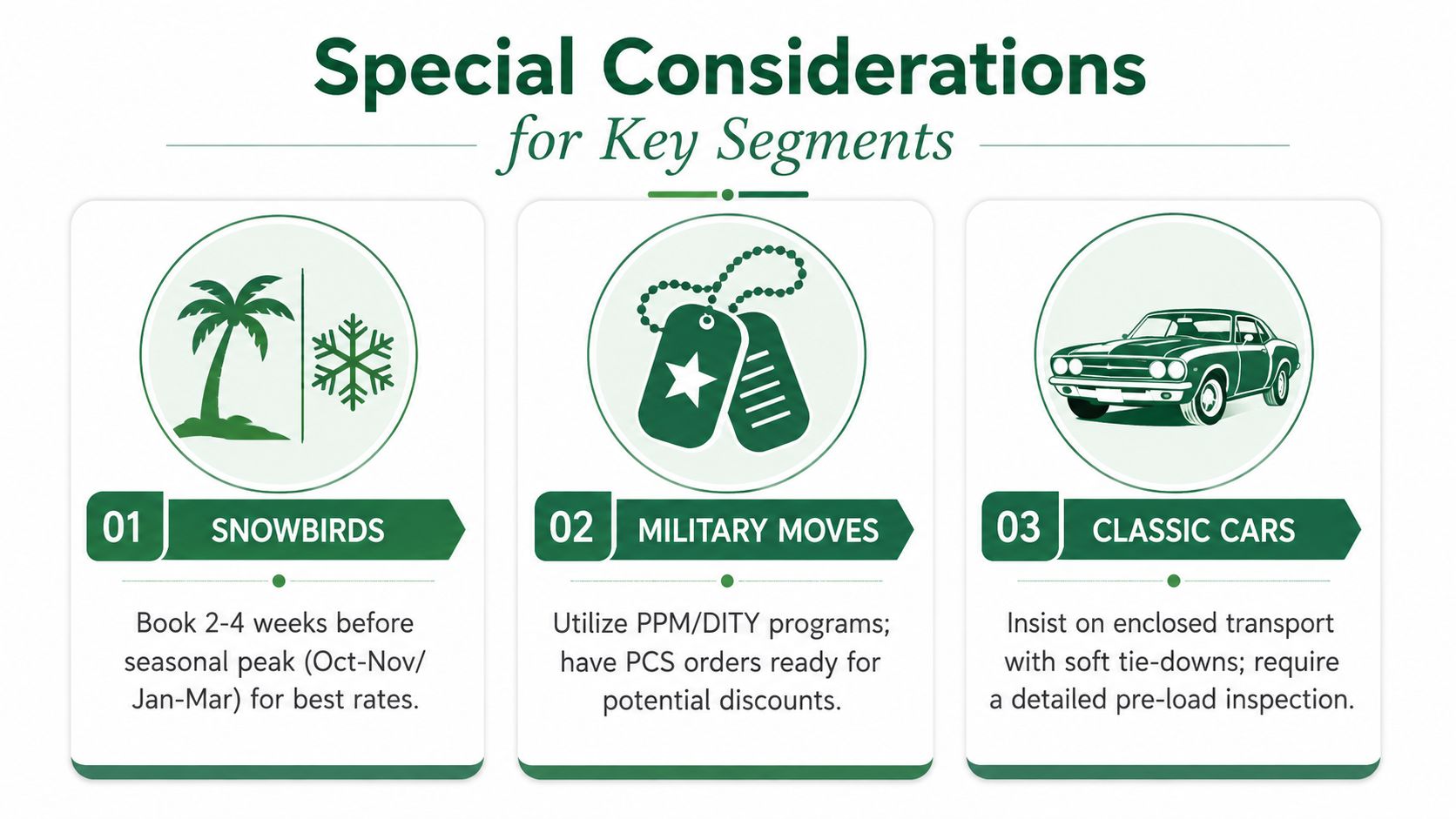
The biggest mistake snowbirds make is waiting until the peak window to book. Northbound demand usually tightens in spring, and the best rates and pickup windows go to the people who plan ahead instead of assuming they can book at the last minute. As noted earlier in route guides from Navi Auto Transport and Sherpa Auto Transport, flexibility around timing and routing matters because carriers are filling a run, not staging a private appointment for one stop. If your dates are locked in, expect less room on price. If your dates are flexible, you usually have more options.
That seasonal pressure also shows up in New York delivery planning. A truck can get through some suburban streets without much trouble, while Manhattan, Brooklyn, and other dense areas often force a carrier to arrange a nearby handoff instead of a driveway drop. Snowbird shipments that land in the same window as northbound demand can be harder to book, especially if the final address has access limits. The more the driver has to work around city restrictions, the more important it is to sort out pickup and delivery details before the booking is finalized.
If you are planning the rest of a seasonal move, book through Approved Experiences for background on Florida snowbird living patterns. That kind of planning context helps when your car shipment has to line up with housing, flights, or a reverse seasonal move.
Military moves and classic cars
Military shipments are different because orders drive the calendar. PCS timing can be tighter than a personal relocation, and the paperwork should be ready before dispatch starts. A transport coordinator should work around those dates instead of asking you to reshape a move that is already set by duty requirements.
Classic and luxury cars need a different conversation. Enclosed transport is the better fit when you want protection from weather and road debris, and specialty loading matters even more when the car has low clearance or valuable finishes. For owners comparing that service level, National Car Transport's classic car shipping page is a useful reference because it frames the move around enclosed handling rather than commodity shipping.
Useful habit: for high-value cars, ask about loading method, inspection detail, and how the carrier handles soft tie-downs before you book.
A provider such as National Car Transport can be a practical option for these cases because a long-standing operation and a broad carrier network help when the move needs careful coordination. That matters when the shipment is time-sensitive, the vehicle is high-value, or the delivery point has access problems that need a real plan.