

Shipping a car in the U.S. in 2026 typically runs about $1,020 to $1,215, with a median shipping distance of 987 miles and a median cost per mile of $1.23 according to RoadRunner Auto Transport's calculator data. That range moves fast based on distance, vehicle type, transport method, season, and how flexible you are on pickup timing, which is exactly why an auto shipping cost estimator matters.
Those looking for a quote often face a real deadline. A job transfer. A student heading to campus. A military move. A snowbird getting south before the weather changes. Or a Puerto Rico shipment that looks simple online until the port details, customs steps, and timing start complicating the price.
That's where most online calculators help, and where many of them also fall short. They're useful for narrowing the range. They're not the final word. The best estimator gives you a realistic starting point. The best human advisor catches the variables the form didn't ask.
National Car Transport's experience is the foundation for that kind of advice. With 25+ years of experience, an A+ BBB rating, transparent flat-rate pricing, a network of 25,000+ vetted carriers, and bilingual English and Spanish agents based in the USA with over 20 years focused specifically on auto transport logistics, the company has seen every version of this problem. And that matters, because not one vehicle transport is alike. A good agent makes the process simple, quick, and fair.
Table of Contents
- Decoding Your Car Shipping Quote
- How an Auto Shipping Cost Estimator Calculates Your Price
- The 7 Key Factors That Determine Your Final Cost
- Auto Shipping Cost Examples for Popular Routes in 2026
- How to Use an Estimator for an Accurate Quote
- Insider Tips to Reduce Your Auto Shipping Costs
- Frequently Asked Questions About Car Shipping Costs
Decoding Your Car Shipping Quote
You enter your route, see a price, and assume you have your answer. Then additional factors emerge. The car does not run. The pickup address is on a tight residential street. The shipment is headed to Puerto Rico and needs port handling. That first number stops being useful fast.
A car shipping quote is a market snapshot based on the information provided at that moment. If the shipment is simple, the estimate is usually close. If the shipment has special handling, the gap between an online estimate and the actual price can be wide.
National Car Transport has priced thousands of shipments, and the pattern is consistent. Online estimators do a decent job with standard mainland routes. They miss the hidden variables on complex moves, especially non-running vehicles, lifted trucks, low-clearance cars, remote pickups, and Puerto Rico shipments that involve terminal schedules, vessel space, and documentation.
What an estimator is doing
An Auto Shipping Cost Estimator takes the basics, pickup and delivery locations, vehicle type, transport method, and timing, then assigns a price range based on current lane conditions. That gives you a planning number.
A planning number is not a final dispatch price.
A serious quote requires a human review of the route, the vehicle, and the equipment needed to move it. That matters even more for Alaska, Hawaii, Puerto Rico, and any vehicle that cannot be driven onto the trailer. The same principle applies in other industries. A self storage cost calculator can give you a starting point, but special access, inventory volume, and timing still change the final bill.
Use this rule: treat the first online quote as a screening tool. Treat the agent-reviewed quote as the number you can budget around.
Why quotes change
Price changes usually come from missing shipment details, not mystery fees.
A customer selects “sedan” and “open transport,” but leaves out the fact that the battery is dead, the tires are oversized, the car sits inches off the ground, or the delivery point requires a smaller shuttle truck. For Puerto Rico, many tools also fail to account for port fees, booking cutoffs, title requirements, and the handoff between truck transport and ocean transport.
That is where cheap online quotes break down. The form was built for average shipments. Your vehicle may not be average.
What makes a quote useful
A useful quote helps you make three decisions:
- Is this a standard lane or a specialized shipment
- Does the vehicle need open or enclosed transport
- Is your timing flexible enough to lower the rate
For a routine lower-48 move, an estimator is a solid first filter. For a shipment involving San Juan, a non-running car, or a hard-to-access pickup point, skip the guesswork and speak with an experienced agent. National Car Transport uses estimator data as a starting point, then adjusts for the variables that generic tools miss. That is how you get a quote you can trust.
How an Auto Shipping Cost Estimator Calculates Your Price
You enter Chicago to Miami, pick “sedan,” choose open transport, and the estimator spits out a number in seconds. Then the real question starts. Is that number based on a normal dispatchable load, or did the tool miss something that will raise the price once a human reviews it?
The pricing model behind the quote
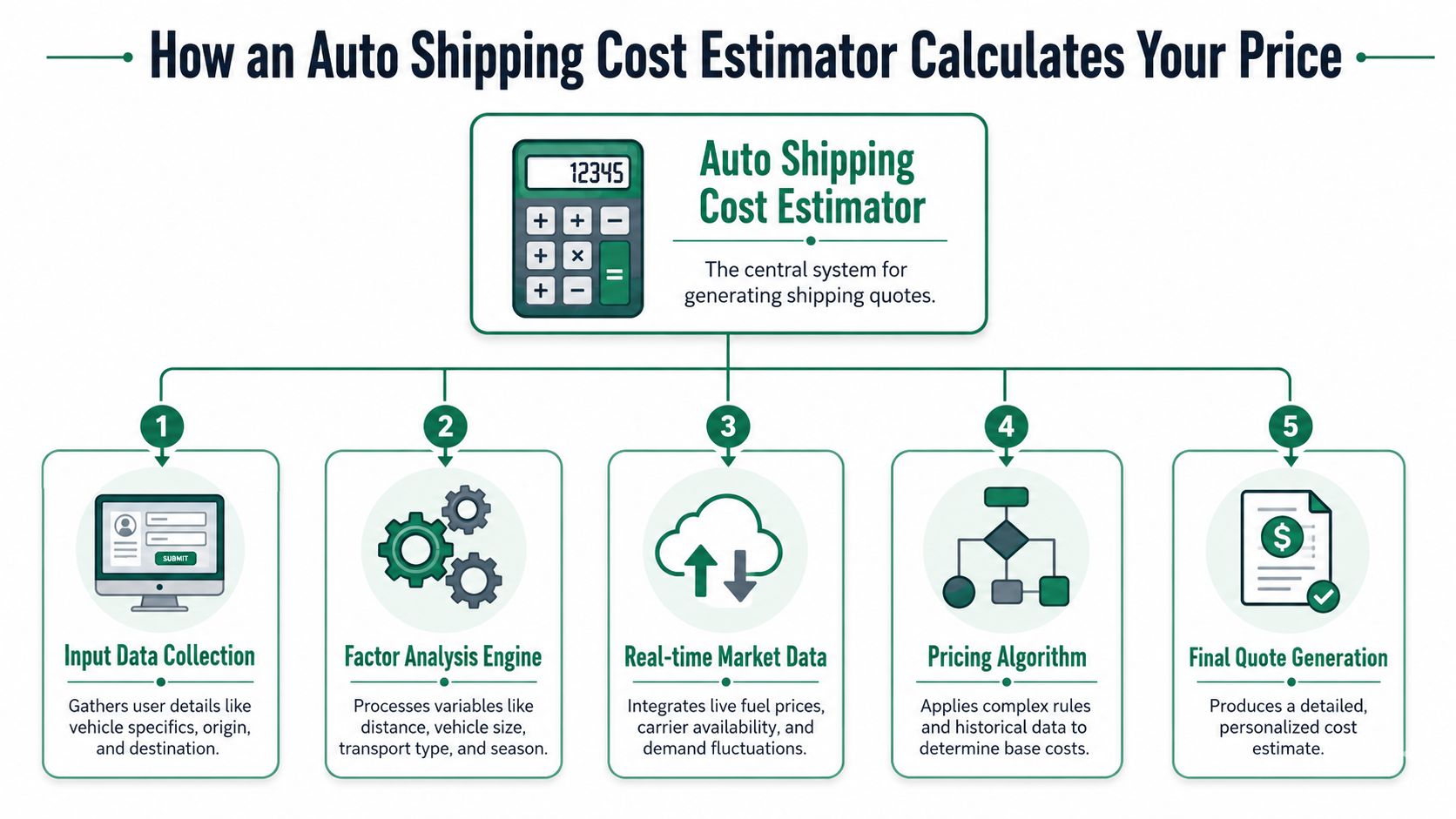
Most estimators start with three inputs. Route, vehicle profile, and shipping window. From there, the system assigns the shipment to a lane, checks current carrier demand, and builds a rate that a dispatcher could reasonably post to the market.
Distance usually lowers the per-mile rate on longer moves, but the quote is never just mileage multiplied by a flat number. Carriers still have fixed operating costs on short trips, including pickup coordination, loading time, insurance exposure, fuel, and unloading. That is why a 300-mile move can look expensive on a per-mile basis while a cross-country move often looks more efficient.
A useful tool follows a process like this:
- Collect the shipment details such as pickup and delivery ZIP codes, vehicle size, operable condition, trailer type, and target dates.
- Score the route based on how easy it is to cover with a carrier already running that corridor.
- Apply current market pricing based on lane demand, available truck space, season, and equipment type.
- Add shipment-specific adjustments for issues like inoperable status, oversized dimensions, low ground clearance, port handling, or limited-access addresses.
- Return a bookable range instead of a fantasy number that no carrier will accept.
If you have used a planning tool like this self storage cost calculator, the logic is familiar. You enter the basics first. The final price still depends on the details the form cannot fully judge on its own.
National Car Transport has priced enough shipments to know where online forms break. A standard lower-48 sedan move is easy for software to estimate. A non-running SUV headed to Puerto Rico is not.
Why the best estimators still need human review
The strongest estimator is not the one with the prettiest interface. It is the one that knows when to stop pretending the shipment is standard.
Generic tools do a decent job on common metro-to-metro routes. They struggle with the variables that change carrier acceptance in the actual market. Puerto Rico moves involve inland trucking, port schedules, paperwork checks, ocean booking coordination, and fees that many instant tools either bury or miss. Non-running vehicles need winch capability or forklift access. Lifted trucks, lowered cars, and oversized tires can change trailer fit. Condo buildings, narrow streets, military bases, and rural roads can force shuttle service.
Those are not edge cases. They are the reason one quote gets booked and another gets revised later.
If you want a realistic starting point, use a car shipping cost estimator built around real transport variables. Then have an experienced agent review anything unusual before you set your budget. The best quote is the one a carrier will take at the price you were given.
The 7 Key Factors That Determine Your Final Cost
A quote looks simple until a carrier has to accept it. That is where price changes happen.

National Car Transport has priced enough shipments to know the pattern. Standard moves stay close to the first estimate. Complex moves get mispriced when the quote tool misses details that affect trailer space, loading equipment, route access, or scheduling.
Distance and route specifics
Distance sets the base rate. Route quality decides whether that rate holds.
A major metro-to-metro lane usually costs less per mile because carriers run those corridors every week. Remote pickups, rural deliveries, mountain routes, and thin-demand lanes cost more because the truck has to go out of its way or wait longer to fill the trailer. Puerto Rico adds another layer. Inland transport, port handling, booking coordination, and documentation can all change the final number in ways a basic calculator often misses.
Vehicle size and weight
Bigger vehicles cost more to move. That is not sales talk. It is trailer math.
A full-size SUV, pickup, or van takes more deck space and limits what else a carrier can load around it. Weight matters too, especially on longer routes where carriers are balancing axle limits and fuel cost. If your vehicle is oversized, expect a higher starting price before you even choose open or enclosed service.
Transport type
Open transport is the standard option because it is widely available and usually the better value. Enclosed transport costs more because there are fewer enclosed carriers on the road and fewer available spots on each trailer.
Use enclosed service for classic cars, exotics, high-end luxury vehicles, and anything with very low ground clearance or fragile finishes. If you're comparing protection levels, enclosed auto transport options give you the right benchmark before you commit.
Seasonal demand and timing
Market timing changes price fast.
Snowbird season, summer relocations, military moves, and year-end congestion tighten capacity. Short notice also raises the rate because carriers choose the loads that pay best first. Flexible pickup windows usually get better pricing. Fixed dates, same-week bookings, and holiday pressure usually do not.
Pickup and delivery access
Door-to-door only works if the truck can legally and safely reach the address.
Narrow streets, low trees, sharp turns, apartment complexes, gated communities, and city parking rules can force a nearby meeting point or shuttle arrangement. That extra step is not unusual, but it needs to be identified before dispatch. If it is discovered late, the quote often changes late too.
Vehicle condition and modifications
This is the factor online estimators get wrong most often.
A non-running car is a different shipment from a running car. It may need a winch, extra labor, forklift help, or a trailer with the right loading setup. Modifications matter too. Lift kits, lowered suspension, oversized tires, roof racks, body kits, and bed accessories can affect clearance and trailer fit. The same problem shows up on Puerto Rico moves, where missing details can disrupt both inland pickup and port handling.
If your vehicle is not stock, skip the bare-bones quote form and use a car shipping cost estimator that accounts for real shipping variables. Then have an experienced agent review it.
A non-running vehicle, oversized truck, or Puerto Rico shipment should never be priced on autopilot.
Insurance and shipment handling
Insurance is part of the cost, but the bigger issue is how the shipment is managed.
A good quote reflects carrier vetting, inspection procedure, claims handling, and the actual level of care required for the vehicle. Cheap pricing falls apart when the carrier is poorly matched to the job or the order details are incomplete. Experienced agents catch those problems early. That is one reason National Car Transport reviews the shipments generic tools struggle to price correctly.
Auto Shipping Cost Examples for Popular Routes in 2026
A shopper in Los Angeles gets an online quote to New York, then tries to price Orlando to San Juan the same way. That is where cheap estimators fall apart.
Mainland long-haul routes are relatively predictable. Puerto Rico moves are not. National Car Transport has priced both for years, and the difference is simple. A standard coast-to-coast shipment usually follows a familiar carrier lane. A Puerto Rico shipment adds port timing, vessel space, release procedures, and more opportunities for a quote to miss the actual work involved.
2026 Estimated Car Shipping Costs for Popular Routes
| Route | Estimated Cost (Open) | Estimated Cost (Enclosed) | Approx. Transit Time |
|---|---|---|---|
| Los Angeles, CA to New York, NY | $1,000 to $1,600 | $1,700 to $2,000 | Varies by carrier schedule |
| New York, NY to Houston, TX | $1,000 to $1,600 | $1,700 to $2,000 | Varies by carrier schedule |
| California to Florida | $1,000 to $1,600 | $1,700 to $2,000 | Varies by carrier schedule |
| Orlando, FL to San Juan, PR | $1,649 | Higher than open, quote review required | 8 to 9 days |
| Mainland U.S. to San Juan, PR | $1,100 to $1,600 | Higher than open, quote review required | 5 to 10 business days once at port |
Use this table as a baseline, not a promise. The mainland examples reflect the kind of pricing commonly seen on major long-distance lanes. The Puerto Rico examples are narrower because island shipping depends on whether the vehicle is already at the port or still needs inland transport coordinated first.
The biggest mistake buyers make is comparing these rows as if they are priced by mileage alone.
A coast-to-coast open carrier move can price efficiently because carriers run those lanes regularly and fill trailers with similar loads. Puerto Rico pricing works differently. The ocean leg is only one piece of the job, and the hidden variables are the ones generic tools miss. Port cutoffs, document timing, storage exposure, inland-to-port handoff delays, and equipment needs for difficult vehicles can all change the final number.
That matters even more for complex shipments. A non-running car headed to Puerto Rico is not just “open transport plus boat.” It may need special loading support before the port ever enters the picture. The same goes for oversized trucks, low-clearance vehicles, and units with aftermarket accessories that affect loading or fit. Experienced agents catch those issues before dispatch. Basic estimators usually do not.
If you want a clean benchmark for a standard long-haul lane, this New York to Los Angeles car shipping example shows what a common coast-to-coast shipment looks like in practice.
Puerto Rico quotes go wrong when the tool prices distance but ignores the handoffs. That is exactly why experienced review matters.
How to Use an Estimator for an Accurate Quote
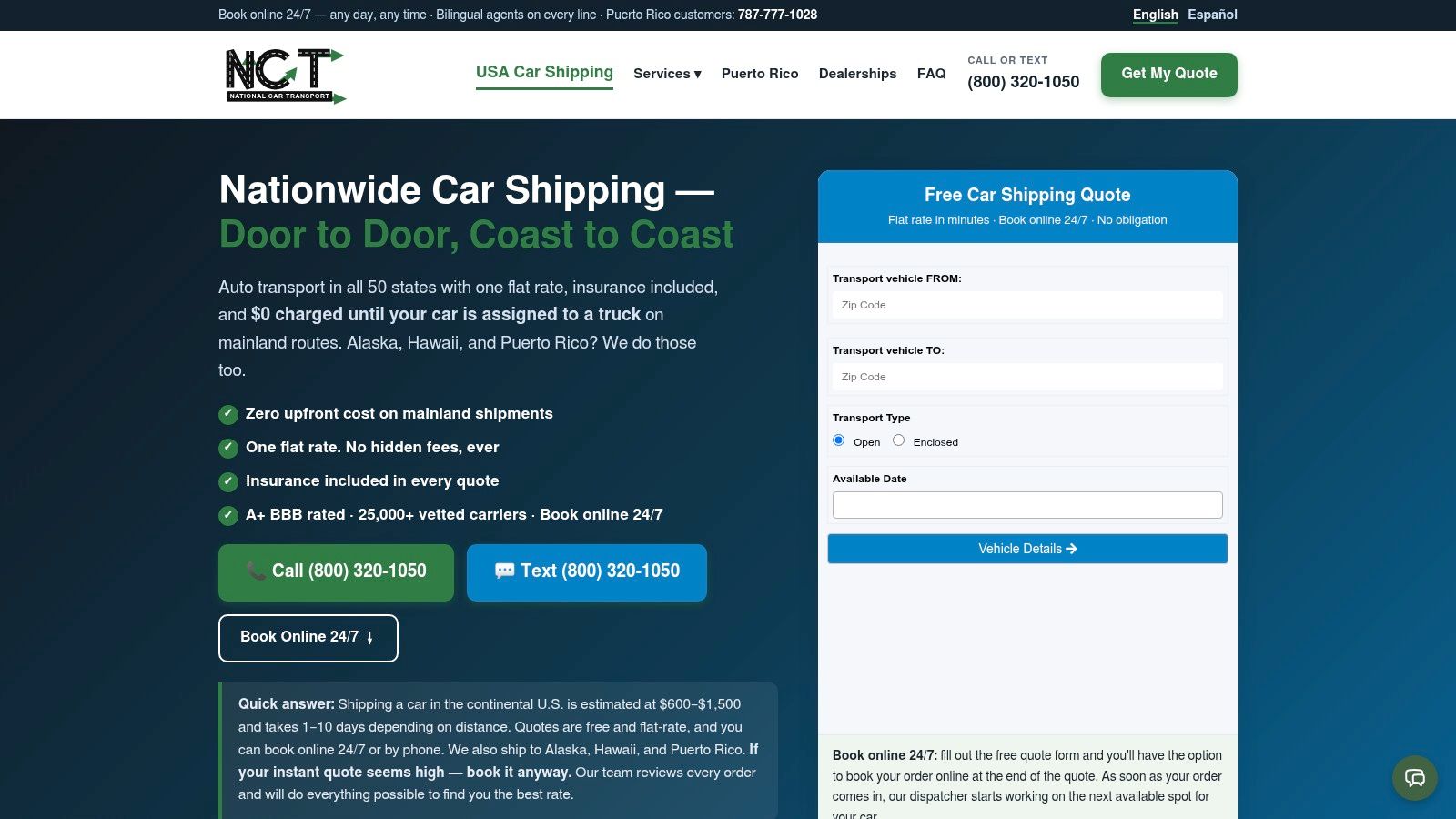
A quote gets accurate when you stop treating the form like a rough inquiry and start treating it like dispatch instructions.
Start with complete vehicle details
Don't just enter make and model if the car has anything unusual about it. Add whether it runs, whether it's oversized, whether it has aftermarket wheels, low clearance, a lift kit, missing tires, or body damage that affects loading.
That one step prevents the most common pricing disconnect. If the estimator doesn't ask, mention it anyway when you speak with an advisor.
Enter the route the right way
Use exact pickup and delivery ZIP codes, not the nearest large city unless that's where the car will be available. Route accuracy matters because urban center-to-center shipping behaves differently than suburb-to-port, rural-to-metro, or mainland-to-island logistics.
For Puerto Rico shipments, be especially clear about whether you need inland pickup from the mainland, port delivery only, or a full coordinated move ending near San Juan.
Read the quote carefully
A useful quote should tell you the transport type, whether it's door-to-door or terminal/port based, and whether the number is presented as a flat rate or an estimate subject to revision. Flat-rate pricing is easier to trust because it reduces room for surprise add-ons later.
Also check what happens if the pickup date shifts, if the route becomes temporarily tight, or if the vehicle condition is reviewed and found to be different than submitted.
Here's a quick walkthrough worth watching before you book:
Talk to a real shipping advisor
This is the part too many people skip. They compare three online numbers, choose the lowest one, and assume they've done smart shopping. Sometimes they've just selected the least complete quote.
The better move is to use the estimator to set the range, then confirm the shipment with someone who knows auto transport logistics inside and out. That's where National Car Transport stands out. Their bilingual English and Spanish agents are based in the USA, have over 20 years of experience in auto transport logistics, and guide customers through the details that generic forms miss. Not one vehicle transport is alike, and that hands-on review is what makes the process simple and quick.
Insider Tips to Reduce Your Auto Shipping Costs
A common mistake costs people hundreds. They wait until the week they need the car moved, ask for an exact pickup day, then wonder why the quote jumps.
The lowest safe price usually goes to the shipment that is easy for a carrier to load, route, and deliver. After pricing thousands of moves, National Car Transport has seen the same pattern over and over. Flexible dates, accurate vehicle details, and realistic service choices beat bargain hunting every time.
Cut cost where it matters
Give yourself a wider pickup window. Even two or three extra days can improve pricing because dispatch has more room to place your vehicle on an existing truck route instead of forcing a rush assignment.
Route access matters too. If your address is far from a major corridor, offer a nearby truck-friendly meeting point. That small adjustment can reduce detours, driver time, and rate pressure.
For standard sedans, SUVs, and daily drivers, open transport is the smart default. Reserve enclosed auto transport for classic, exotic, or high-value vehicles that need added protection. Paying for enclosed service on a routine vehicle is one of the easiest ways to overspend.
The pricing mistakes I see all the time
- Booking late: Short notice usually means fewer carrier options and a higher rate.
- Giving incomplete vehicle information: Non-running status, oversized tires, lift kits, low ground clearance, and heavy cargo inside the car can all change the final price.
- Choosing premium service without a reason: Expedited scheduling and enclosed trailers should match the vehicle and timeline, not habit.
- Using remote pickup or delivery points without expecting a surcharge: Rural access and difficult streets add time and risk for the driver.
- Assuming online estimators catch special cases: Puerto Rico moves, port coordination, and inoperable vehicles often need a human review because automated tools miss key cost drivers.
One more point. If the quote looks unusually cheap, check what is missing before you book. The gap often shows up later as a revised price, a delayed pickup, or extra charges tied to details that should have been addressed from the start.
If you want the best rate, make your shipment easier to handle. Book earlier, stay flexible, and give exact vehicle and route details from day one.
Frequently Asked Questions About Car Shipping Costs
Does insurance come with car shipping
Carrier cargo insurance is typically part of professional auto transport, but you should still verify coverage and understand the inspection process at pickup and delivery. The paperwork matters. So does using a company that vets licensed and bonded carriers carefully.
How is payment usually handled
The cleanest payment model is simple. You shouldn't be paying upfront before a carrier is secured. That reduces risk and helps you avoid feeling trapped in a booking that hasn't been dispatched yet.
What do I need for Puerto Rico shipping
Puerto Rico shipments usually require more documentation and coordination than a domestic 48-state move because the vehicle has to move through port procedures before the ocean leg. The exact paperwork can vary by shipment type, so get the checklist from your transport coordinator before pickup instead of guessing.
Why does a final quote sometimes differ from the first estimate
Because some estimates are based on incomplete inputs. Route tightness, timing changes, non-running status, vehicle modifications, and island logistics can all shift the final rate. That's why a reviewed quote is worth more than an instant number on a screen.
If you want a quote that reflects the actual shipment, not just the easiest version of it, talk with National Car Transport. With 25+ years of experience, an A+ BBB rating, transparent flat-rate pricing, zero upfront charges until a carrier is secured, 25,000+ vetted carriers, and bilingual USA-based agents in English and Spanish who have spent over 20 years in auto transport logistics, they make domestic and Puerto Rico vehicle shipping far simpler than most online estimators ever will.